Father Joe’s Villages is a homeless shelter and detox facility in downtown San Diego that can house about 800 people a night. On a campus spread across several city blocks, it offers on-site health and dental clinics, a therapeutic childcare centre and vocational training in disciplines such as welding and facilities management.
Father Joe’s also offers dog crates, kibble and pet-washing stations with friendly blue tiles, because anyone who stays there is welcome to bring pets.
Most shelters don’t allow pets, other than service animals, so if clients want a bed, they need to find somewhere else for the animal to stay. If they can’t, they have to surrender their beloved old cat or their kid’s pet bunny to animal control, an often devastating calculation at an already difficult time. And there are plenty of people who would rather sleep on the sidewalk than give up their dog.
As homelessness in cities across the United States has reached a crisis point, shelter operators and animal welfare agencies say more shelters have begun allowing pets, hoping it will encourage people to come inside or leave dangerous situations at home.
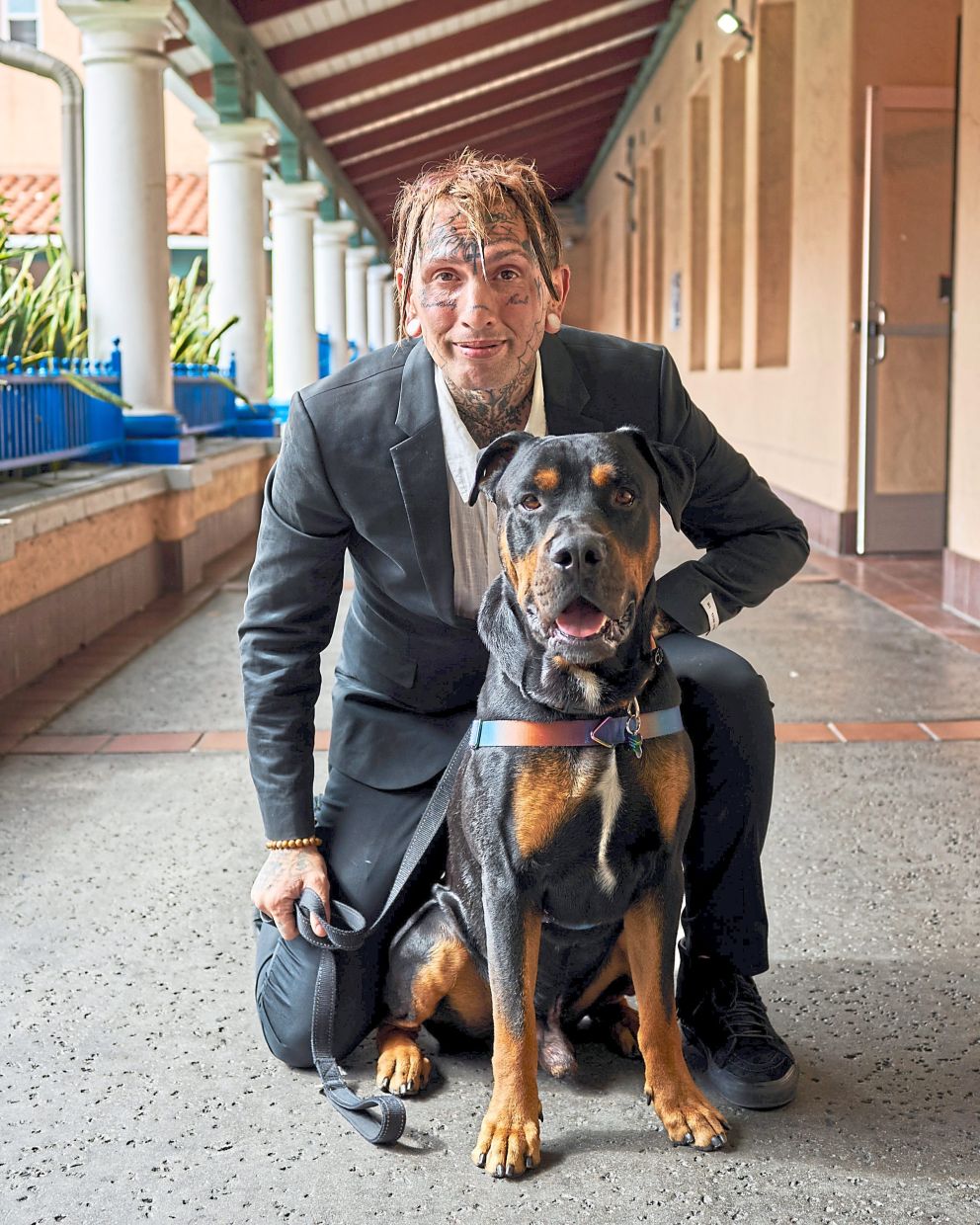
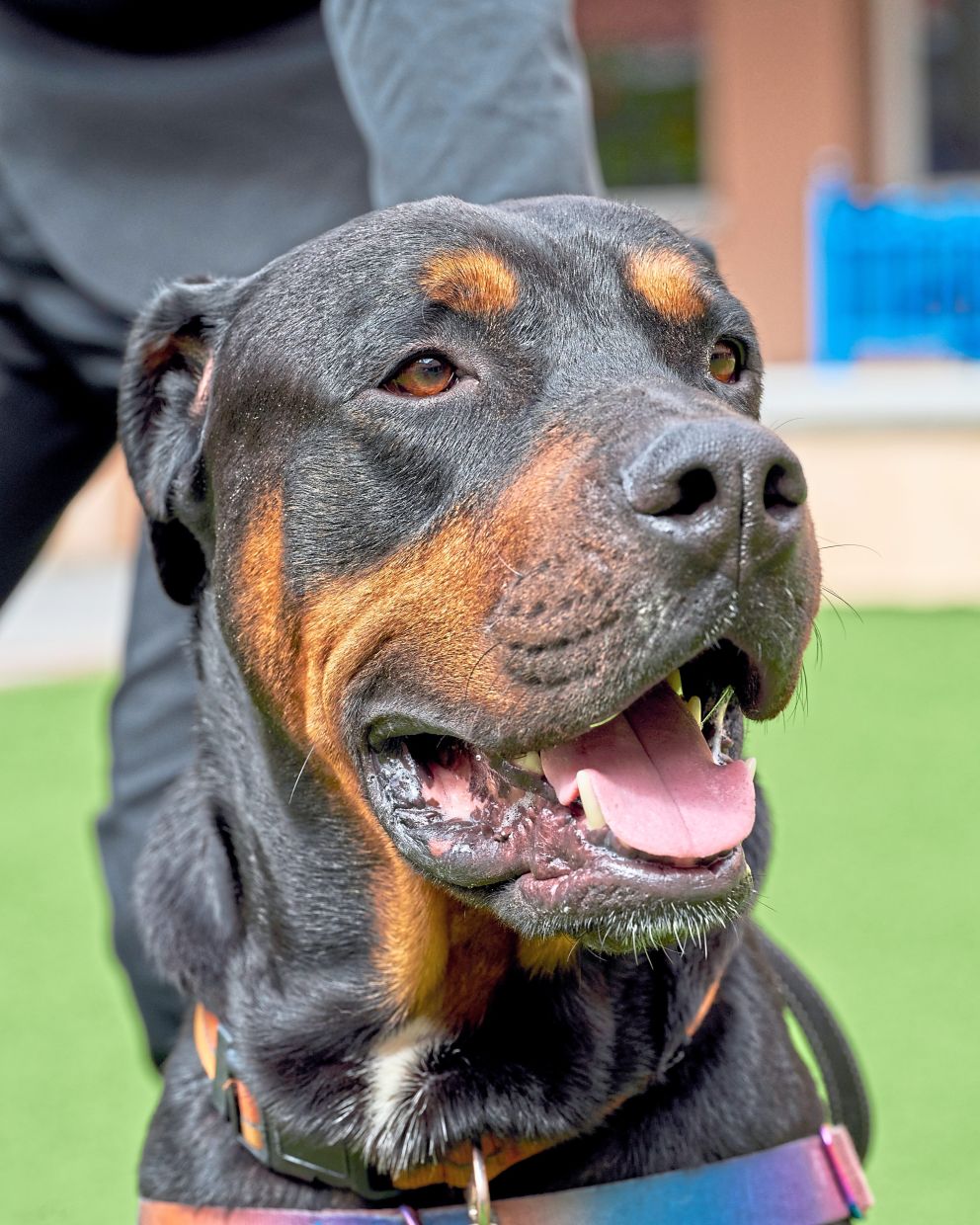
“I wasn’t going to abandon him,” said Anthony Lanigan, who is staying at Father Joe’s Villages alongside his gentle Rottweiler-Doberman mix, Mr Beans, whom he adopted about a year ago.
“I took him on as a responsibility because he was no longer wanted, and for me to leave him on the streets because I have nowhere to go, it’s not something I’m into,” Lanigan said. “I would have stayed out there with him,” he added. “And I think most people would.”
Most animal guests at Father Joe’s Villages, which started accepting pets in 2020, are dogs, but any pet that’s legal is welcome. The shelter has partnerships with animal welfare agencies, which provide food, training and veterinary services.
“We’re seeing shelters much more intentionally including pets now all over country, and in other countries too,” said Shoshana Mostoller, director of programmes at My Dog Is My Home, a nonprofit founded about a decade ago to increase access to shelter and housing for people with pets. She said the practice has been more prevalent at domestic violence shelters and is now growing at homeless shelters.
Comfort o the face of difficulty
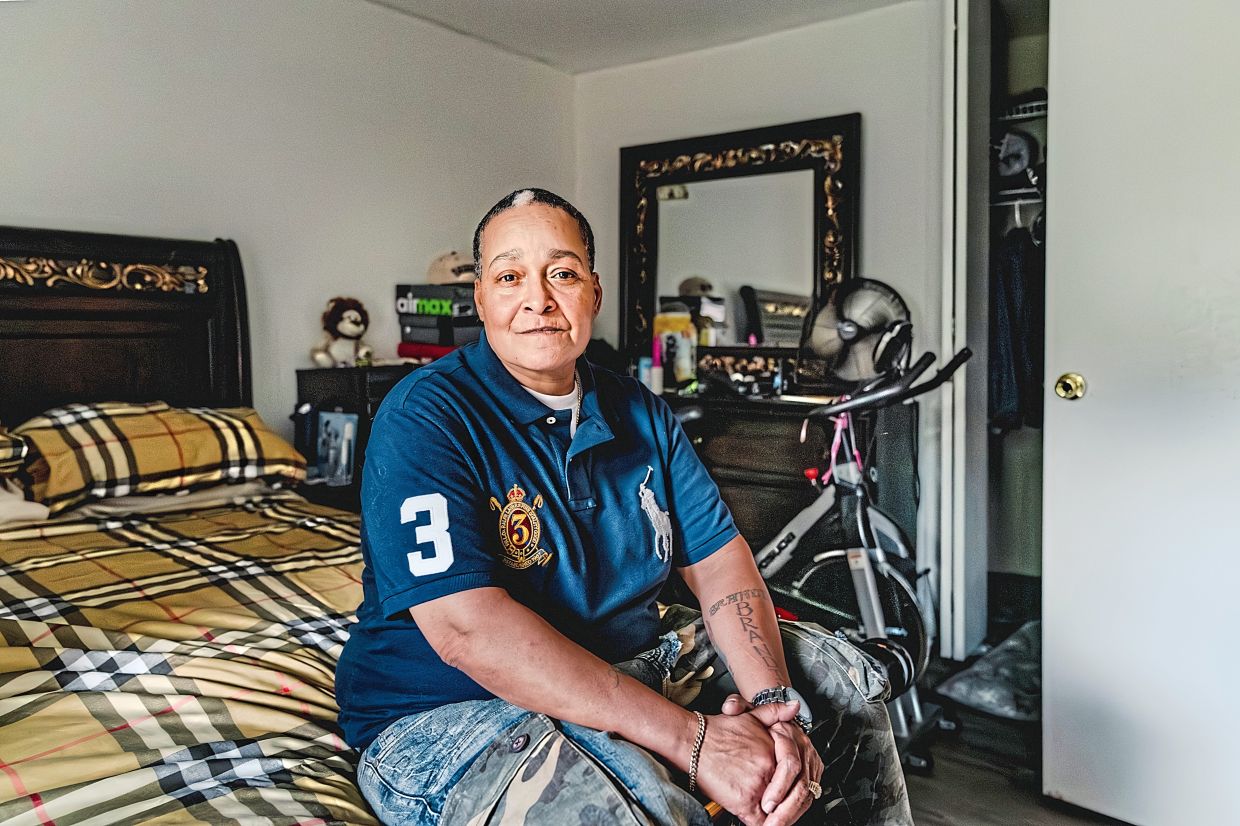
Brenda Santiago found her first cat, Rainbow, hiding under a van in the parking lot of an ambulette service she was working for in New York City’s Bronx borough.
The kitten, dark brown with a fluffy white belly and half a tail, was meowing miserably in a soaking rain. Santiago scooped her up, put her in her hat and went home. A few years later, she welcomed a second cat, a gray tabby named Kitty.
The cats were a comfort to her in the face of a difficult partner, who became volatile, then abusive. Eventually, Santiago decided it was too dangerous to stay, and walked out into the cold.
After she left, her partner smashed windows and broke their televisions. She pulled Santiago’s clothes out of the closet and bleached them.
“I have to get out of here,” Santiago recalled thinking. “But the first thing I thought about was Rainbow and Kitty. I cannot leave them behind.”
Santiago was given a bed at PALS Place in Brooklyn, a domestic violence shelter that has allowed pets since it opened in 2018. It has a small dog run in the back – with what looks like jungle gym equipment for puppies – and a roof deck with nontoxic bushes and plants.

Santiago said the cats are like family to her and helped her heal.
“I was broken to pieces,” she said. “But once I had my babies in their carriers and we went into my apartment in PALS Place, I said, ‘OK, I’m ready now.’ I said to myself, ‘I’m ready to begin my life once again.’”
PALS Place is operated by Urban Resource Institute, which runs 10 pet-friendly domestic violence shelters in New York City.
This spring, in Queens, the organisation opened a new shelter in partnership with the city, Magnolia Gardens, which was to be Urban Resource Institute’s first pet-friendly family shelter.
The city said it would provide US$250,000 (RM1.015mil) to cover veterinary care, pet food and an animal behavioural specialist, according to Urban Resource Institute, but that money was left out of Mayor Zohran Mamdani’s US$125bil (RM507bil) executive budget for New York City, which he announced in May.
The shelter is now in a holding pattern, and pets are not allowed.
Humans and animals
Riley Spigarelli, executive director of Bethesda House in Bowmanville, Ontario, which serves women fleeing gender-based violence, said the shelter began allowing pets in 2015 because women frequently called its hotline looking for help but refused to leave their pets behind.
Some worried that abusive partners would hurt the animals, or they were parents who didn’t want their children to lose their pets. “Mums don’t want to add more trauma and more separation when they already feel like their family is falling apart,” Spigarelli said.
Though more shelters have started allowing pets in recent years, she said the need is still far greater than what’s available. In the month of April, Bethesda House turned away 32 women in need of shelter who said they had pets, because there weren’t enough beds.
Garrett Parsons, services director at Found House Interfaith Housing Network in Cincinnati, said its pet programme started more than 10 years ago with a turtle named Slow Poke, whom a preteen was hiding in his Found House locker.
They set up kennels on the bottom floor of their facility, in what used to be offices, and created a programme that now takes pets for anyone in crisis, including people who are hospitalised, incarcerated or experiencing homelessness.
At Noah’s Animal House in Las Vegas, pets stay in a house next door to a family shelter. The house has “cuddle rooms,” with sofas and overstuffed chairs and cat play spaces attached to the walls.
Many spaces in shelters are shared – bathrooms, mealtimes, bedrooms – so families go to the cuddle rooms with their pets to spend time together privately.
Organisations like Urban Resources Institute and My Dog Is My Home say they sometimes field questions from shelters that would like to allow animals but worry that it might be too complicated or a liability.
“A lot of people think they can’t do it because of allergies or damages they think are going to be caused, but that’s just not he reality that we see,” Spigarelli said.
At Bethesda House, she said pets stay in their owners’ rooms, which minimises allergy exposure, and the most substantial damages they’ve seen in 11 years are scratch marks on doors.
At Father Joe’s Villages, many of the rooms are communal, and dogs sleep in crates next to their owners, who stay on the bottom level of bunk beds. If someone doesn’t want an animal nearby, the pet moves.
“And never mind the animals – sometimes two people can’t get along!” said Deacon Jim Vargas, chief executive at Father Joe’s.
“So we try to work with them. If it’s a change of room or a unit, we do that. We try to make it so it works for individuals.” – ©2026 The New York Times Company