WHEN Tunku Abdul Rahman University of Management and Technology (TAR UMT) public relations students stumbled upon a 15-minute documentary about gibbons, they unanimously knew that would be the focus of their social awareness campaign.
Titled Finding Solo – The Last Gibbon In Kuala Lumpur, the 2023 documentary, originally produced as a Master’s thesis, tells the story of Solo, a lone white-handed gibbon trapped in an urban forest patch in Bukit Serdang, Seri Kembangan, Selangor.
“The heartbreaking story of Solo really touched our hearts and encouraged us to make a lasting impact on gibbons,” says campaign chairperson Lim Jia Le, 20.
“As gibbons are known for their singing, the title of our campaign reflects the positive effect we hope to make.”
In August, the students staged a three-day event called Suara Hutan 2026: Keep the Gibbons Singing in Kuala Lumpur, in collaboration with the Gibbon Conservation Society (GCS).
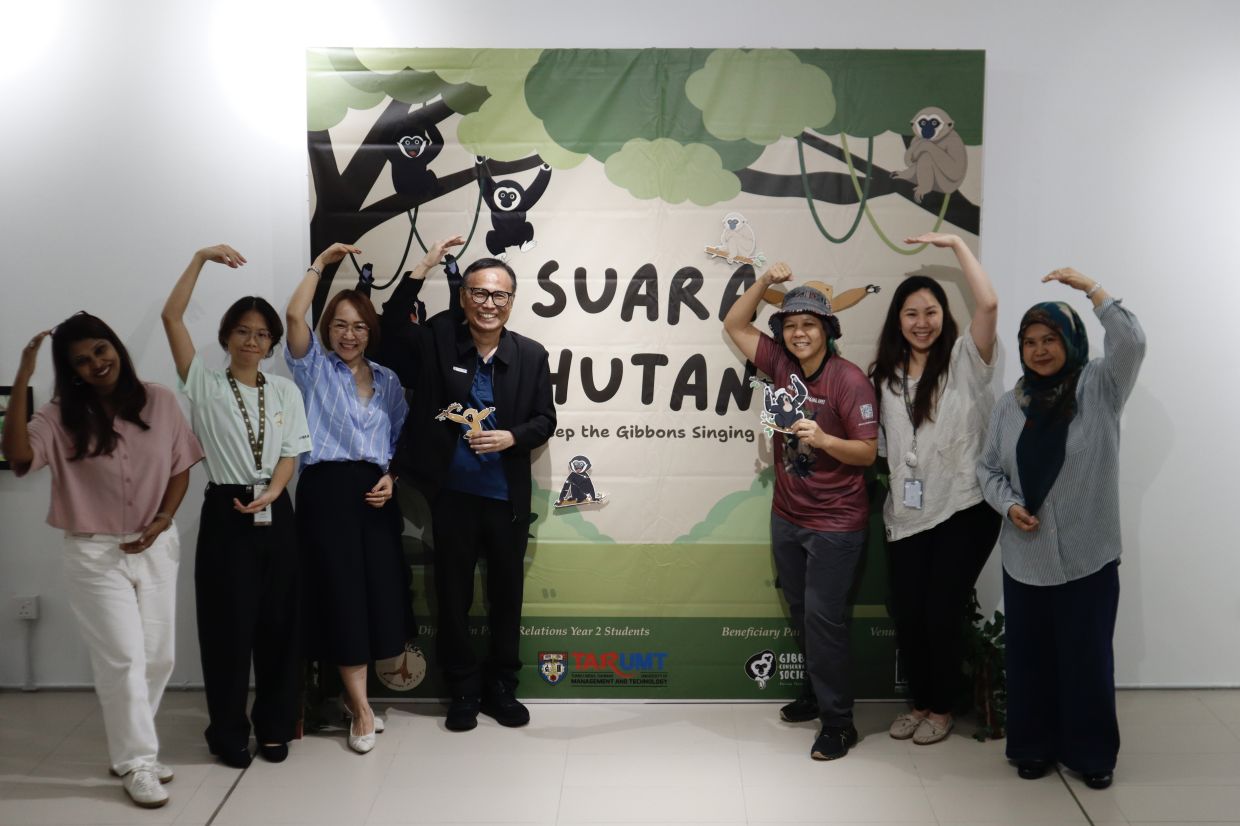
For Lim, keeping those songs alive also means preserving the forests where gibbons live.
But what the students discovered during their research was disturbing. It opened their eyes to the threats facing the primates, particularly illegal pet trade.
“Since the plight of gibbons often go unnoticed, I had to ensure our internal messaging was clear so that our public campaigns accurately addressed critical facts,” says Lim, who acted as the bridge between the student team and external partners.
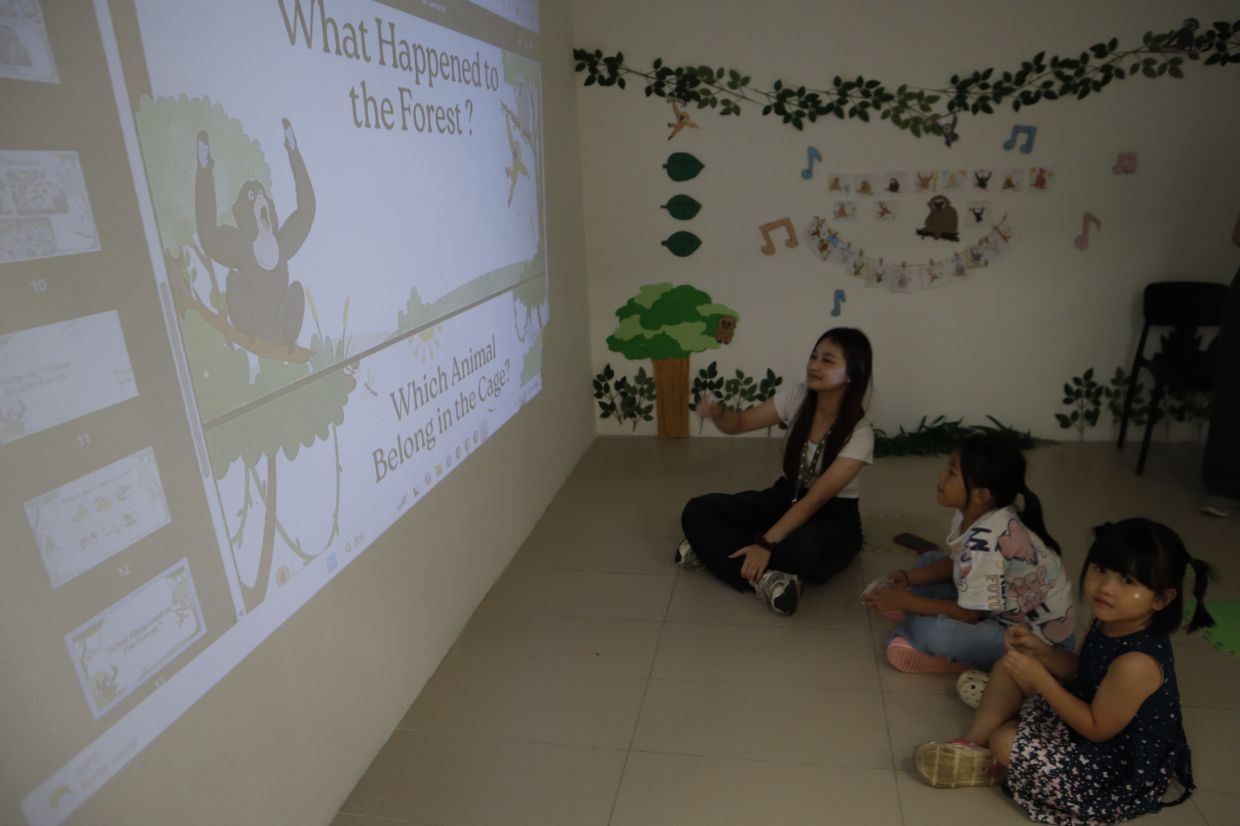
To achieve this, the students, with the help of GCS, designed the campaign’s centrepiece: Rescues, an interactive activity that took visitors through the gibbon conservation journey via nine game booths.
“At the end of that activity, passive visitors would be turned into educated advocates who understand precisely what it takes to bring Malaysia’s canopy singers back home,” Lim adds.

Overlooked victim
According to GCS founder and president Mariani Ramli, rehabilitation after a rescue can take between five and 15 years, depending on the animal.
Before its release, a gibbon must meet seven criteria set by the International Union for Conservation of Nature (IUCN) to ensure it is physically and psychologically prepared to survive independently.
“Once rescued, gibbons must heal physically and psychologically, unlearn human dependencies, learn to forage and eventually pair up with a mate before soft release,” she adds.
While the public are well aware of Malaysian endangered wildlife such as the Malayan tiger, Bornean orangutan and hornbill, gibbons are often overlooked.
But Mariani says all five gibbon species found in Malaysia, including the siamang, white-handed lar and agile gibbon, are listed as Endangered or Critically Endangered on the IUCN Red List.
“Gibbons are among the most forgotten victims of deforestation and the wildlife pet trade,” she explains.
“Because they are incredibly fast-moving canopy dwellers, they are difficult and expensive to study in the wild. This lack of baseline data directly affects funding, conservation priorities and legal protection.”
Even more devastating, Mariani says, is how gibbons are captured for illegal pet trade. Gibbons live in strictly monogamous, close-knit family units. When poachers target an infant, adult family members fight fiercely to protect it.
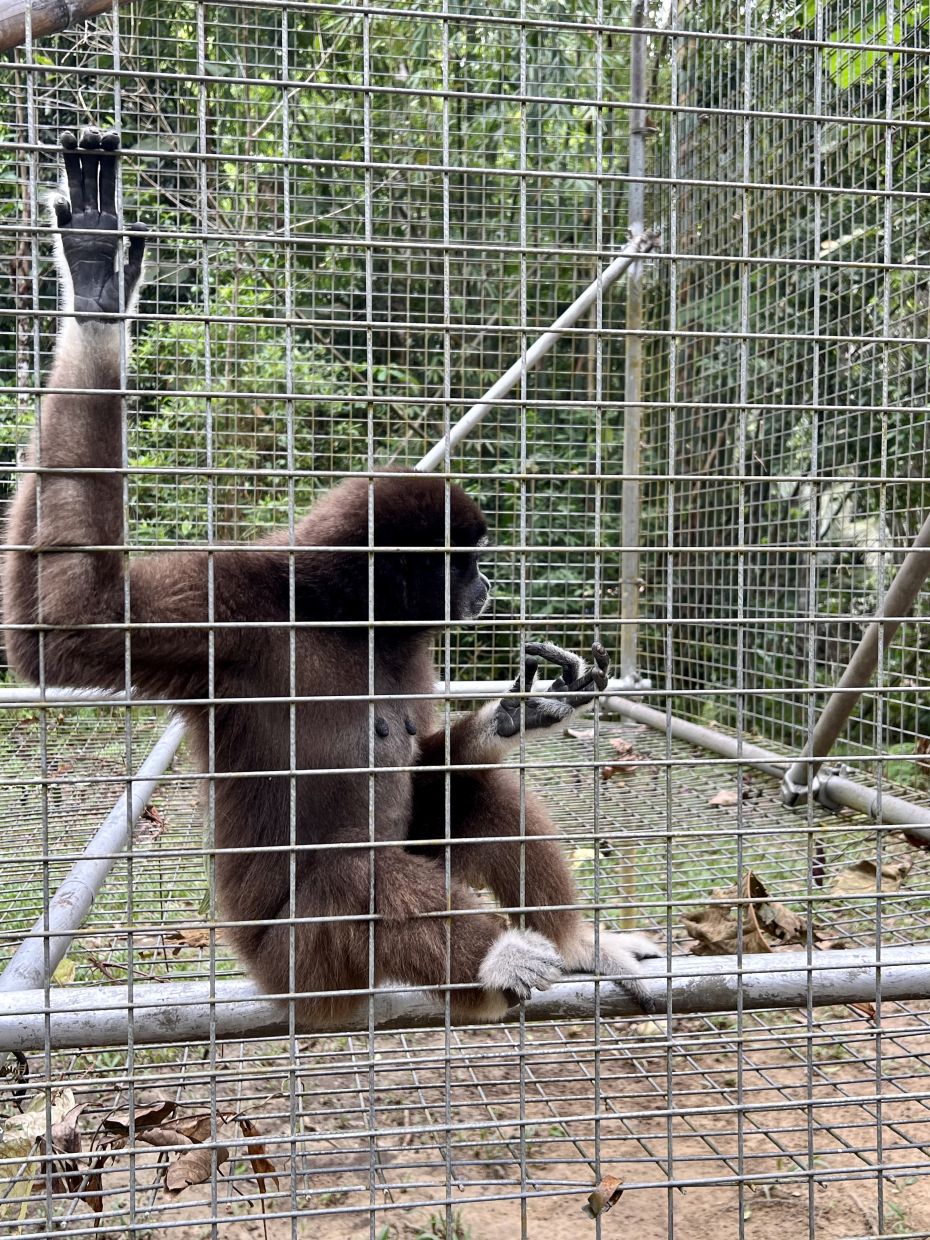
“Mothers are usually shot from the treetops, and in most cases, the baby dies from the impact of the fall,” Mariani reveals.
“Poachers simply move on to the next group – killing up to 20 wild gibbons just to capture a single surviving baby.”
Mariani adds social media posts displaying “cute” pet gibbons hide this grim backstory. Education, she emphasises, remains the single most critical weapon against demand.
Finding their voice
For Qua Yan Ting, who led the campaign’s programme and activity department, learning this was a far cry from what she expected from a college assignment.
“I was really surprised because I didn’t know anything about gibbons,” says Qua, 20.
“I have always loved wildlife and nature because I find them calming, but I had never really taken the time to learn in-depth about the current issues that wildlife is facing.”
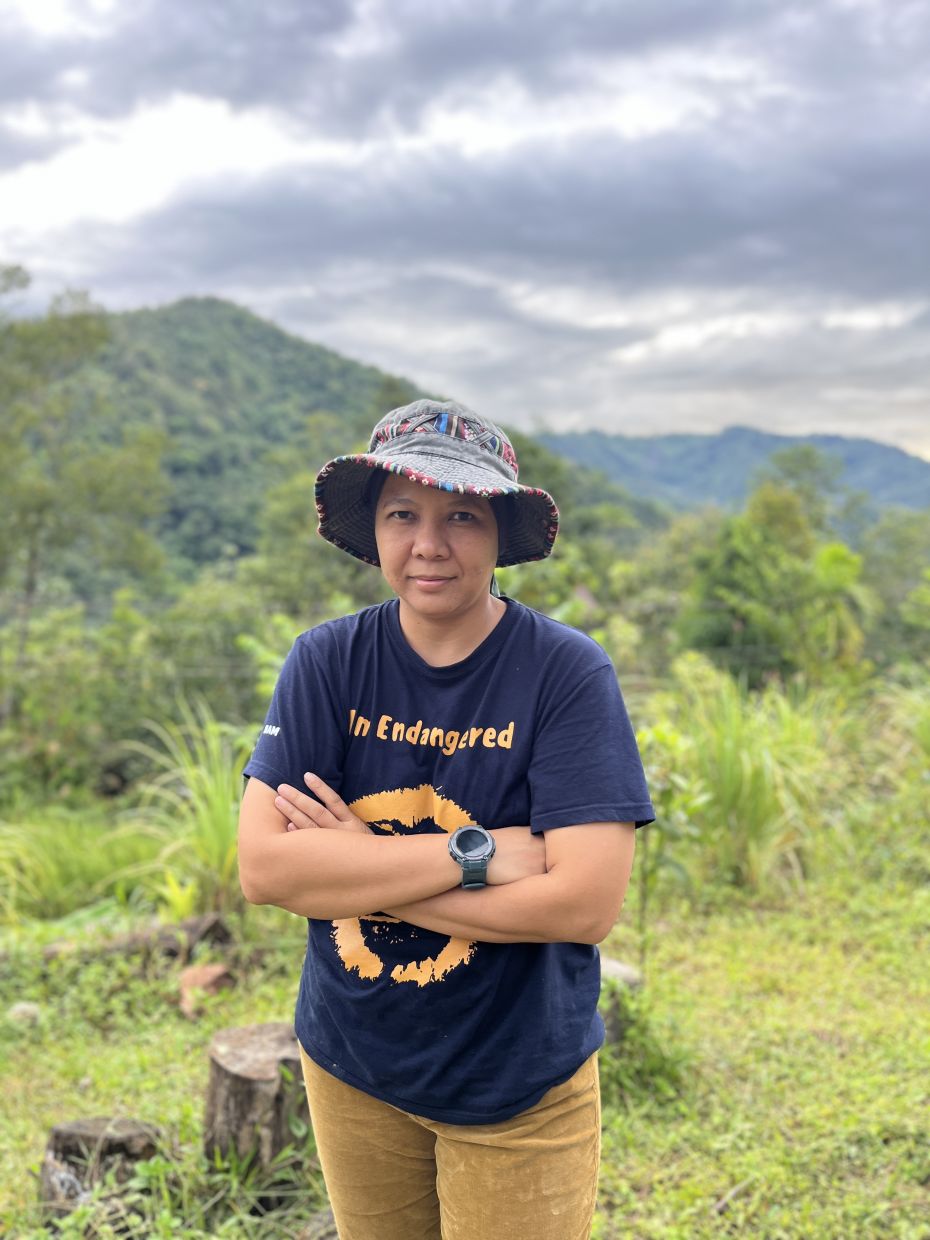
Qua says her perspective changed further during a visit with her team to the Malaya Grep Rehabilitation Centre, managed by GCS, as part of their research in preparation for the event.
There, she heard the gibbons’ calling. “The loud, distinctive calls echoing through the surroundings gave me a much more personal connection to them,” she says.
Hearing the animals sing made her realise that gibbons were not merely subjects for a college assignment, but living creatures with their own presence and importance.
For the students, turning that complex conservation process into an engaging public campaign was itself a lesson.
Qua says one of her biggest challenges was keeping a large team aligned when ideas were difficult to communicate.
But the three months of research, planning and learning also taught her to listen to different opinions and accept mistakes as part of learning.
“I feel that I have become more matured,” she says.
Lim, on the other hand, came away with a stronger appreciation of teamwork.
“Organising a campaign isn’t a one-person task – everyone plays a crucial role,” she says.
She hopes the campaign will leave Malaysians with a different understanding of gibbons – not simply as cute animals, but as an important part of the forest ecosystem.
For her, they are a reminder of what could be lost if these animals and their habitats are not protected.
“Even after Suara Hutan ended, I hope our audience realised that gibbons are nothing short of a national treasure – one that is slipping away in silence,” she says.
The funds raised throughout the campaign is channelled to support GCS’s target release of six rehabilitated gibbons.
The animals are scheduled to return to protected canopy habitats in conjunction with International Gibbon Day on Oct 24.