In every baker’s kitchen, one tool has quietly endured through time – the rolling pin.
Simple, sturdy and unchanged in form, it has shaped dough across generations.
Yet my mother’s rolling pin was more than a kitchen tool. It carried a story long before it reached our home.
As a child, I barely noticed it. The rolling pin and its wooden board sat in a quiet corner, always present, never discussed – seemingly ordinary, like any other household item.
Only years later did I learn they were made in Pudu Jail in the 1950s, crafted by prisoners whose names we will never know.
By then, the wood had darkened with age, and the board bore marks that no scrubbing could erase.
My mother never spoke much about it, except to say it was a gift from my father.
The idea that it came from a prison fascinated me. Prisoners spent their time making furniture, decorative items and religious objects. These were not idle tasks. They were part of rehabilitation – teaching skills, building discipline and offering dignity.
My father, a police investigating officer who often visited the prison, explained that these crafts reflected both survival and hope.
Some of the men were skilled, but poor choices had altered their lives. Through their work, they held on to something human.
My father ordered and bought the rolling pin set for my mother, from the prison. At that time, she was unsure of her cooking when it came to traditional Ceylonese food.
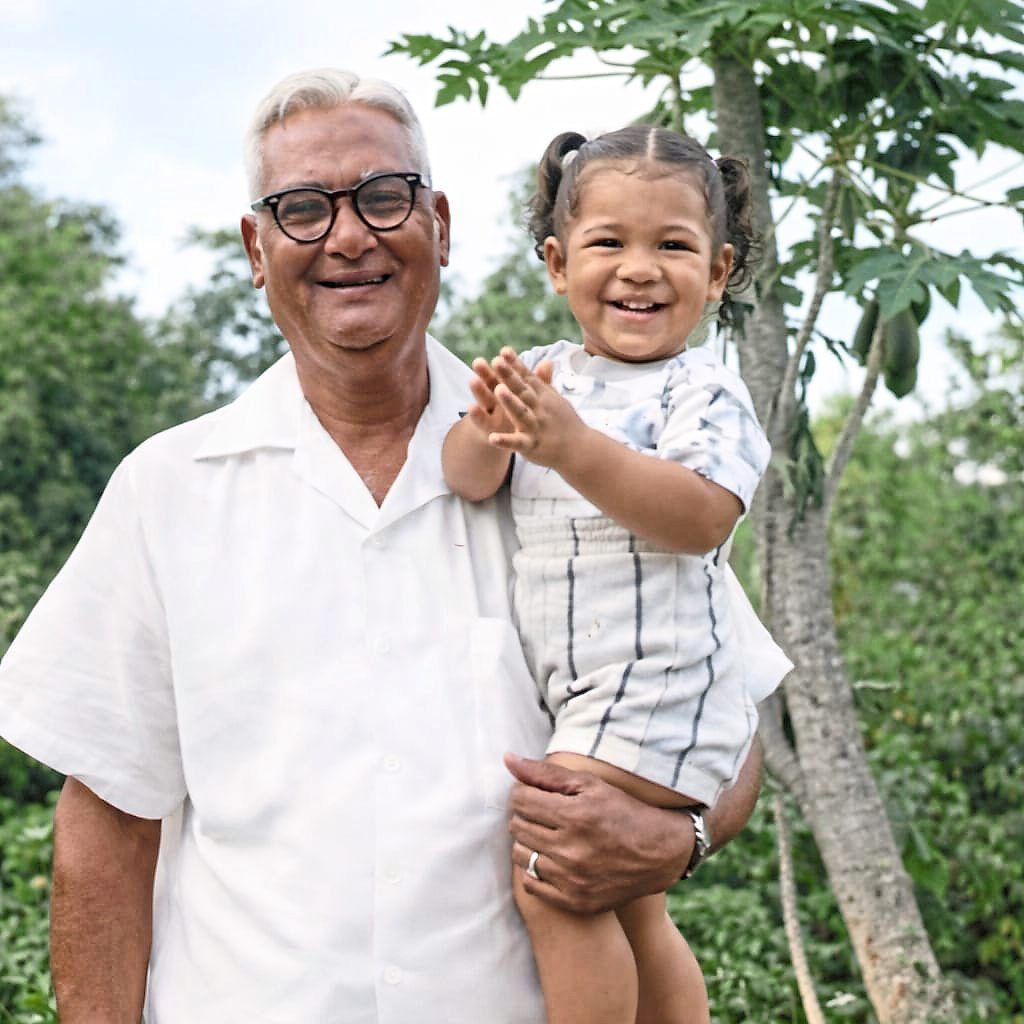
My grandfather, who later came to live with us in his late 70s, had very different expectations. He was a traditional Ceylonese man who loved hand-made food – chapati, poori and thosai from freshly fermented batter. He brought along his useful old thosai tawa, a flat iron griddle he had inherited from his grandmother.
A widower, he had learnt to cook for himself, making soft chapatis over a charcoal fire, using simple tools and patience. His meals paired with coconut chutney and vegetables.
When I was young, we rarely ate chapati at home. That was something we enjoyed only during visits to his village. My mother felt intimidated. Cooking these dishes seemed messy, time-consuming and unfamiliar.
My father saw this and quietly encouraged her. He gave her the rolling pin and board so she could try.
At first, she struggled. The dough stuck. The shapes were uneven. The kitchen felt chaotic. She found the process tiring and frustrating. But my grandfather never criticised her. Instead, he guided her gently. He showed her how to knead the dough, how to rest it, how to roll it evenly. He taught her how to cook chapati that would suit his diabetic needs.
Over time, the kitchen changed. The smell of warm chapati became familiar. I remember watching the dough puff up on the hot griddle, a small moment that felt almost magical. A light brush of ghee completed it.
That balance – softness, light char, and warmth was not easy to achieve, but my mother learned with quiet persistence. The rolling pin became part of that learning. It was no longer just an object. It carried the effort of unknown hands, the encouragement of my father and the patience of my grandfather.
My grandfather also taught my mother how to care for the wooden tools. He said wood is alive in its own way. It reacts to heat, moisture and time. Unlike metal or silicone, it absorbs and changes. If neglected, it cracks or warps. If cared for, it lasts for decades. He showed her how to clean it properly, dry it and keep it in good condition.
These small acts of care ensured the rolling pin remained useful, not just functional but meaningful.Looking back, I see how each person played a role. My father did not teach cooking, but he created the opportunity. He saw my mother’s hesitation and gave her a starting point. My grandfather passed down knowledge with quiet patience. He did not impose; he guided. And my mother, despite her doubts, chose to learn.
That rolling pin held all of this. It was shaped in a prison, carried into our home and used to build something far more important than food. It became part of how skills were passed down, how confidence was built, and how family adapted to change.
It also changed how I understood my parents. My mother focused on care – on daily needs, emotions and the small details that hold a family together. She paid attention, adjusted, and improved over time. My father, in his own way, focused on preparation. He looked ahead, thinking about what the family would need to grow and manage life’s challenges. They approached things differently, but both contributed in ways that mattered.
As Mother’s Day approaches, I realise that her love was never loud or effortless. It was built slowly, in small repeated acts. In trying and in not giving up, she shaped the life we came to know as home. And somehow, that has become the truest measure of who my mother is to me.