
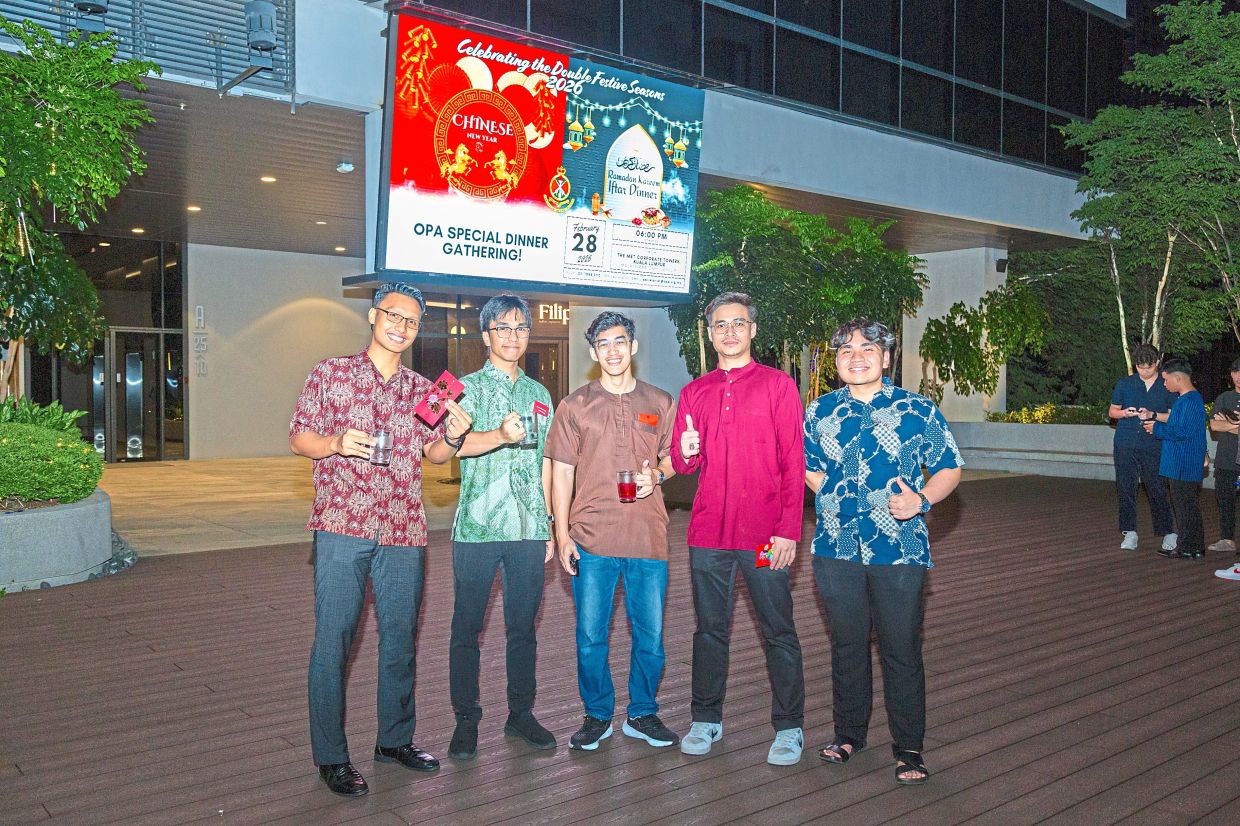
On the evening of Feb 28, 2026, just before Maghrib, the lion dance drums rolled to a close inside a hall at The MET Corporate Towers along Jalan Dutamas in Kuala Lumpur. Red lanterns still framed the stage. Yet within moments the atmosphere shifted. Dates were passed quietly from table to table, and water glasses were lifted in anticipation of the call to break fast.
Under one roof, prosperity and piety briefly shared the same space.
That evening, the Old Putera Association (OPA) – the alumni body of the Royal Military College (RMC) – hosted a combined Chinese New Year Open House and annual iftar gathering. About 400 guests attended, roughly 65% of them Muslim.
It was an unusual arrangement and one that prompted discussion among members beforehand. Some wondered whether Ramadan, a month associated with reflection and restraint, should be paired with festive cultural elements. Others questioned whether combining the events might blur the distinction between religious observance and celebration.
These concerns were not dismissed.
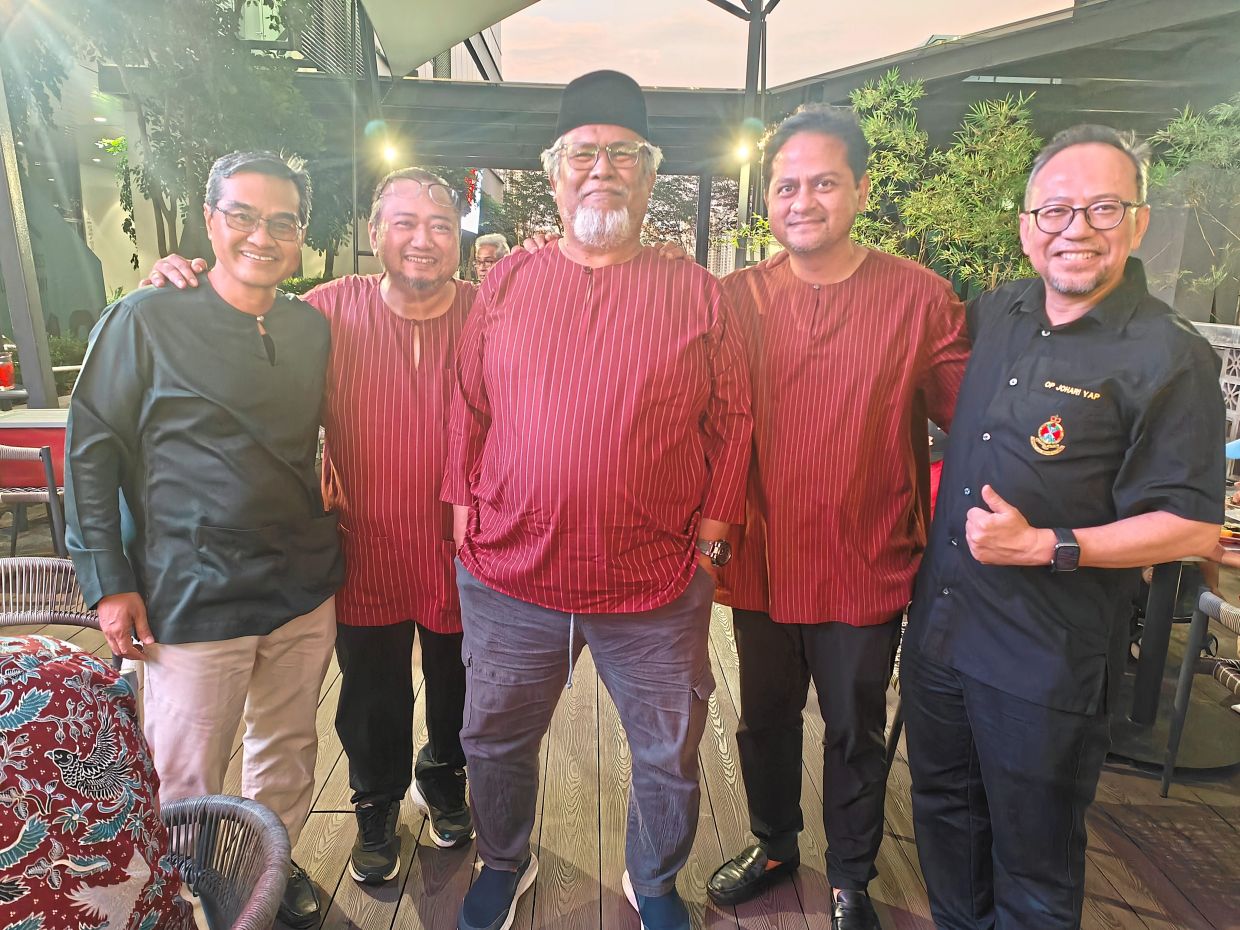
In a message circulated ahead of the gathering, the OPA president acknowledged that the overlap between the Chinese New Year season and Ramadan created an imperfect situation. After deliberation, the association’s executive committee unanimously agreed to proceed, while ensuring that sensitivities surrounding the fasting month were respected.
The guiding principle was simple: not to merge meanings, but to sequence them. Festive segments such as the lion dance performance and the traditional yee sang prosperity toss were deliberately scheduled to conclude well before Maghrib. Firecrackers and celebratory elements ended prior to the breaking of fast. A doa was recited before Muslim members adjourned to a designated surau on another floor for Maghrib prayers, followed later by Isya’ and Terawih. Only after prayers did many return to the hall to join the buffet dinner and continue the evening’s fellowship.
Culture was celebrated. Faith was observed. Neither displaced the other.
In many ways, the evening reflected the institutional character of the Royal Military College itself. Established in 1952, RMC remains Malaysia’s only military college and has long maintained a multiracial intake of cadets. Its motto, “Serve to Lead”, is more than ceremonial. For generations of students who passed through its gates, discipline, respect and camaraderie across ethnic and religious lines were daily realities.
Today, OPA comprises around 4,000 members worldwide across a wide range of backgrounds and professions. What binds them is not ethnicity or religion but a shared formative experience that emphasised brotherhood and mutual responsibility.
One member remarked during the gathering that the organisers had been “careful not to cross any lines”. Another observed that the evening demonstrated how “respect must come before celebration”.
Perhaps the most quietly symbolic detail of the night was that the lion dance performance had been sponsored by a Malay Muslim Old Putera. It was not highlighted as a grand gesture, yet many present recognised it as a natural expression of muhibbah.
What stood out most was not the blending of rituals but the discipline of boundaries.
Festive activities paused before prayer time. Religious observances were given proper space and privacy. No attempt was made to dilute the significance of Ramadan or trivialise Chinese New Year traditions.
If anything, the evening illustrated that coexistence often requires careful choreography.
Malaysia’s public discourse can sometimes give the impression that diversity is fragile or constantly under strain. Social media, in particular, tends to amplify disagreements. Yet beyond the noise, quieter examples of accommodation and mutual respect continue to unfold daily – in offices, schools, neighbourhoods and community associations.
This gathering was one such example.
Could the two events have been held separately? Possibly. But Malaysia’s festive calendar frequently produces overlaps. In the years ahead, similar convergences – sometimes dubbed “Gong Xi Raya” seasons – will inevitably recur.
The more relevant question may not be whether such overlaps should occur, but how communities choose to navigate them.
In this instance, the approach was consultative and measured. Concerns were voiced, adjustments made and celebratory elements moderated while preserving the spirit of Chinese New Year.
By the time Terawih prayers concluded later that evening, conversations resumed easily over shared dishes. Some guests had earlier exchanged angpow envelopes; others spoke quietly about fasting and the meaning of Ramadan.
There was no sense of contradiction in the room – only the natural rhythm of a society accustomed to living alongside difference.
For an alumni association shaped by the training grounds of a military college, the symbolism felt apt. Cadets once marched together regardless of race or religion. Differences were acknowledged, but cohesion was essential.
That evening, beneath red lanterns and crescent motifs, the same principle quietly played out.
Serve to lead.
And sometimes leadership is not expressed through grand gestures or declarations. Sometimes it simply means arranging an evening in a way that allows everyone to belong.