
Child development progresses rapidly during the early years of life. Early childhood education provides an important platform for introducing children to the school environment. Today, many parents choose to send their children to kindergarten as early as four years old.
For most families, this decision is not taken lightly. Financial considerations often come into play, as the cost of enrolling a child in kindergarten can be significant. Some parents therefore feel that kindergarten is unnecessary, reasoning that children will eventually enter formal schooling at the age of seven.
However, such thinking overlooks a crucial stage of development. Early childhood is a highly active period of exploration, during which children’s physical abilities, both fine and gross motor skills, develop alongside their social and cognitive capacities.
Parents need to be attentive to these developmental needs, particularly in preparing children for the key foundational skills of reading, writing and arithmetic – often referred to as the 3Rs. These basic skills help children adapt more easily to the structured learning environment of primary school.
A common challenge arises when children begin primary school without prior exposure to these fundamentals. Ideally, the foundations of literacy and numeracy should be introduced gradually from as early as two or three years old, during the period when children are naturally curious and eager to explore.
Modern lifestyles, however, can make this difficult. Many parents face demanding work schedules and economic pressures that limit the time they can spend guiding their children’s early learning. The little time available may be devoted to family activities rather than practising reading, writing or counting.
This situation is sometimes compounded when parents report that their children are unwilling to engage in learning activities at home. As a result, children may spend most of their time playing without opportunities to develop basic academic skills.
Kindergarten provides a learning environment suited to young children, where they develop literacy, numeracy, social skills and classroom habits. The curriculum is designed for children aged four to six, and the updated "Kurikulum Prasekolah" in 2026 will expand opportunities for broader learning activities.In most kindergartens, children are introduced to the alphabet, phonics and numbers up to 100, learning to read, write and perform simple addition and subtraction. Without such early exposure, some may struggle to keep pace when they enter primary school.
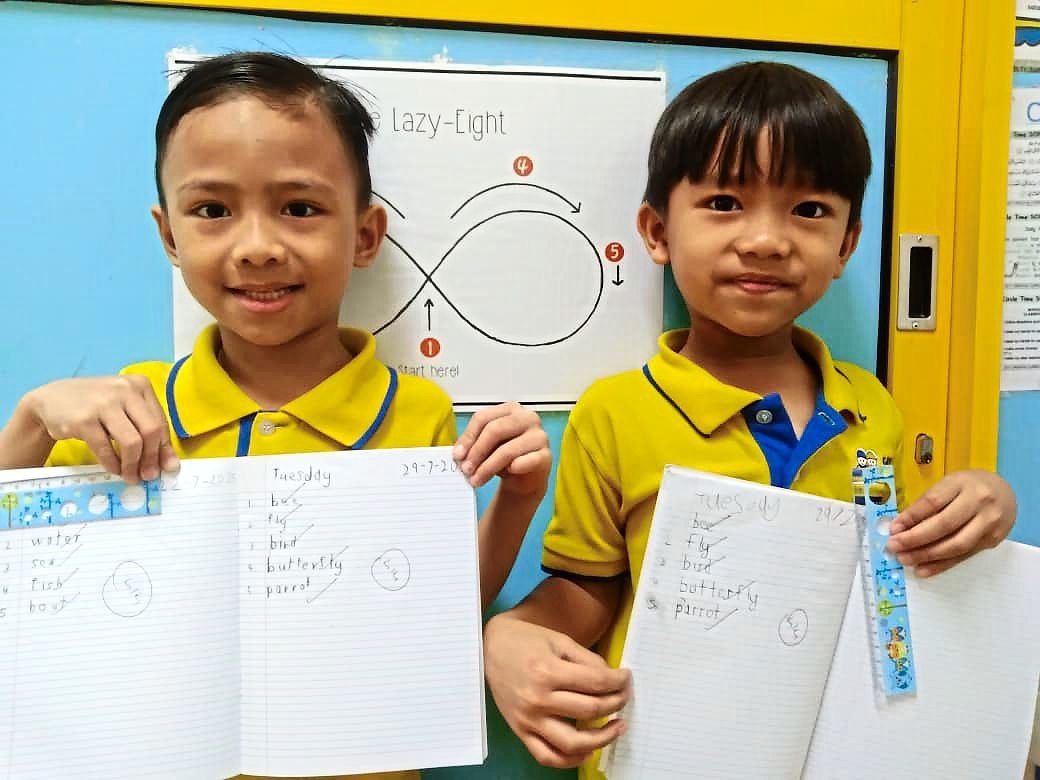
However, there are also children who begin kindergarten at six with little or no exposure to these basic skills. This can create noticeable gaps among children of the same age. While some children with strong cognitive development adapt quickly, others may need more time and support to catch up.
Kindergarten also provides an opportunity to identify developmental or behavioural challenges early. When such issues are detected, early intervention can help children reach a level of development comparable with their peers.
Parents, therefore, should remain open to feedback from teachers regarding their child’s development. Teachers do not highlight concerns to criticise, but rather to work with parents in finding appropriate solutions.
Educating young children is itself a demanding responsibility. Children at this age are energetic, emotional and still dependent on adults in many aspects of daily life. Teaching them requires patience, emotional awareness and specialised pedagogical skills.
Kindergarten teachers are trained to create engaging learning environments that match children’s developmental levels. Through structured activities, storytelling, play and creative exploration, children learn in ways that feel natural and enjoyable.
Even so, the role of parents remains essential. Learning does not stop when children leave the classroom. At home, parents can reinforce what children have learned by spending time reading with them, practising writing or playing simple counting games.
Children who attend kindergarten often enjoy sharing their daily experiences with their parents. Listening to these stories not only strengthens the parent-child bond but also reinforces children’s enthusiasm for learning.
When schools and parents work together, early childhood education can provide a strong foundation that prepares children for the next stage of their educational journey.