Almost a century before Bukit Bintang became a forest of glass and steel, Kuala Lumpur was a small but bustling city that served as a hub for British colonial activity in Malaysia.
To accommodate the massive wave of migrant workers and the resulting population surge, new and stylish buildings were constructed with European techniques and heavily influenced by the Art Deco architectural style.
This style was essentially then an “architecture of the future” from the 1920s, characterised by its sleek straight lines, bold geometric shapes and a streamlined look that reduced the “fussy” ornamentation of the past.
Buildings like these – a famous example being Pasar Seni – were larger and more durable, intended to supersede their timber counterparts.
With this wave of European-influenced architecture came the humble Tong Shin Terrace, built in 1937. Initially constructed as a residence for a wealthy Chinese kapitan (landlord), the shophouse has since endured both World War II and the Great Flood of Kuala Lumpur in 1971.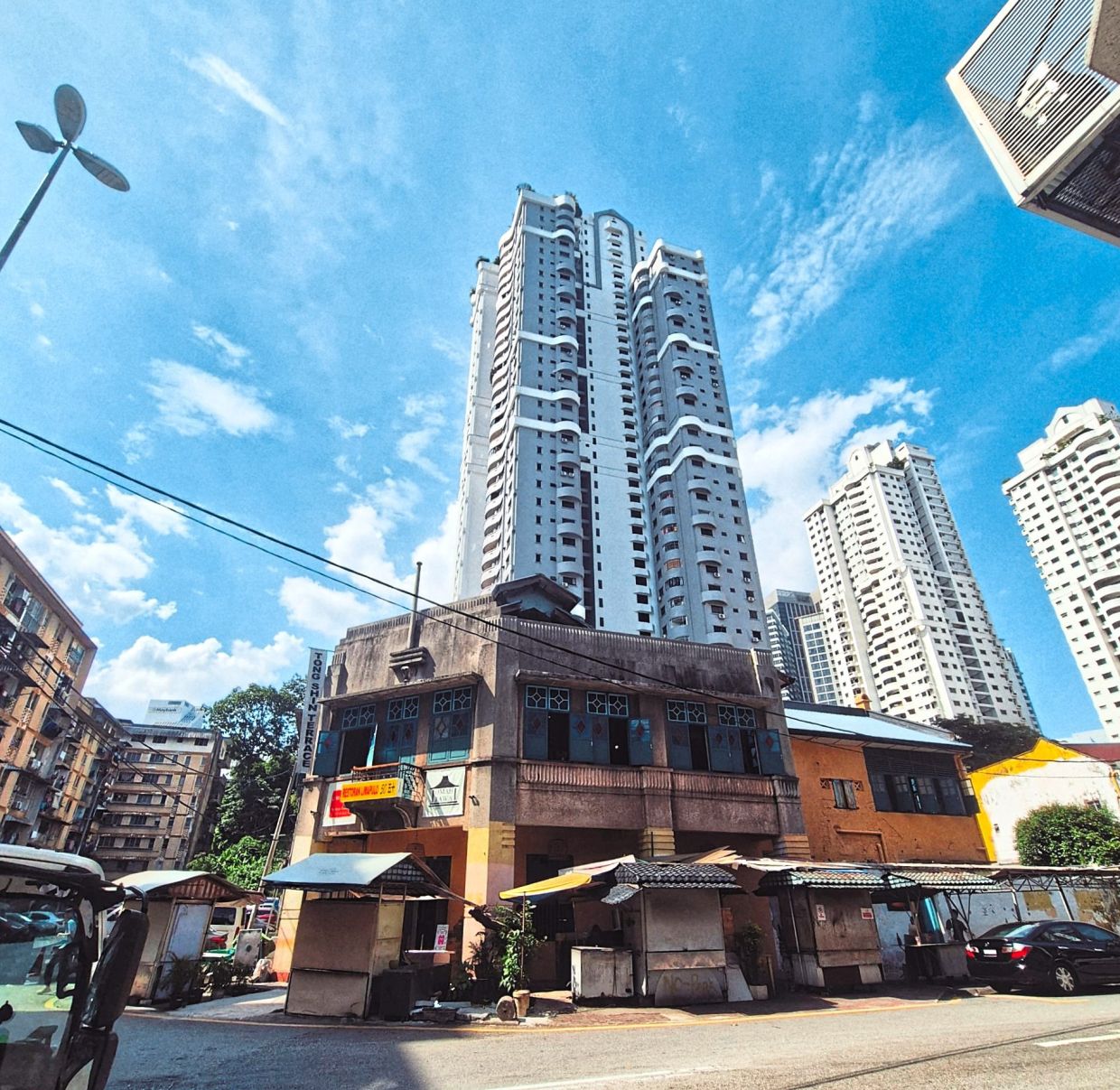
It subsequently housed both a brothel and a motel over the ensuing decades.
A piece of history
Today, Tong Shin Terrace stands proud in the heart of Bukit Bintang, a rare, remaining example of pre-war residential terrace houses from the 1930s.
But more importantly, the Terrace represents a physical record of the transition from the Late Straits Eclectic to the Art Deco architectural styles.
A good example of a building featuring a Straits Eclectic style is the Cheong Fatt Tze Mansion in Penang – a mash-up of European plaster columns and intricate Chinese carved wooden panels.
It was an era of details.
Conversely, the encroaching Art Deco movement streamlined this existing style by cutting down on excessive decoration and emphasising the building’s height.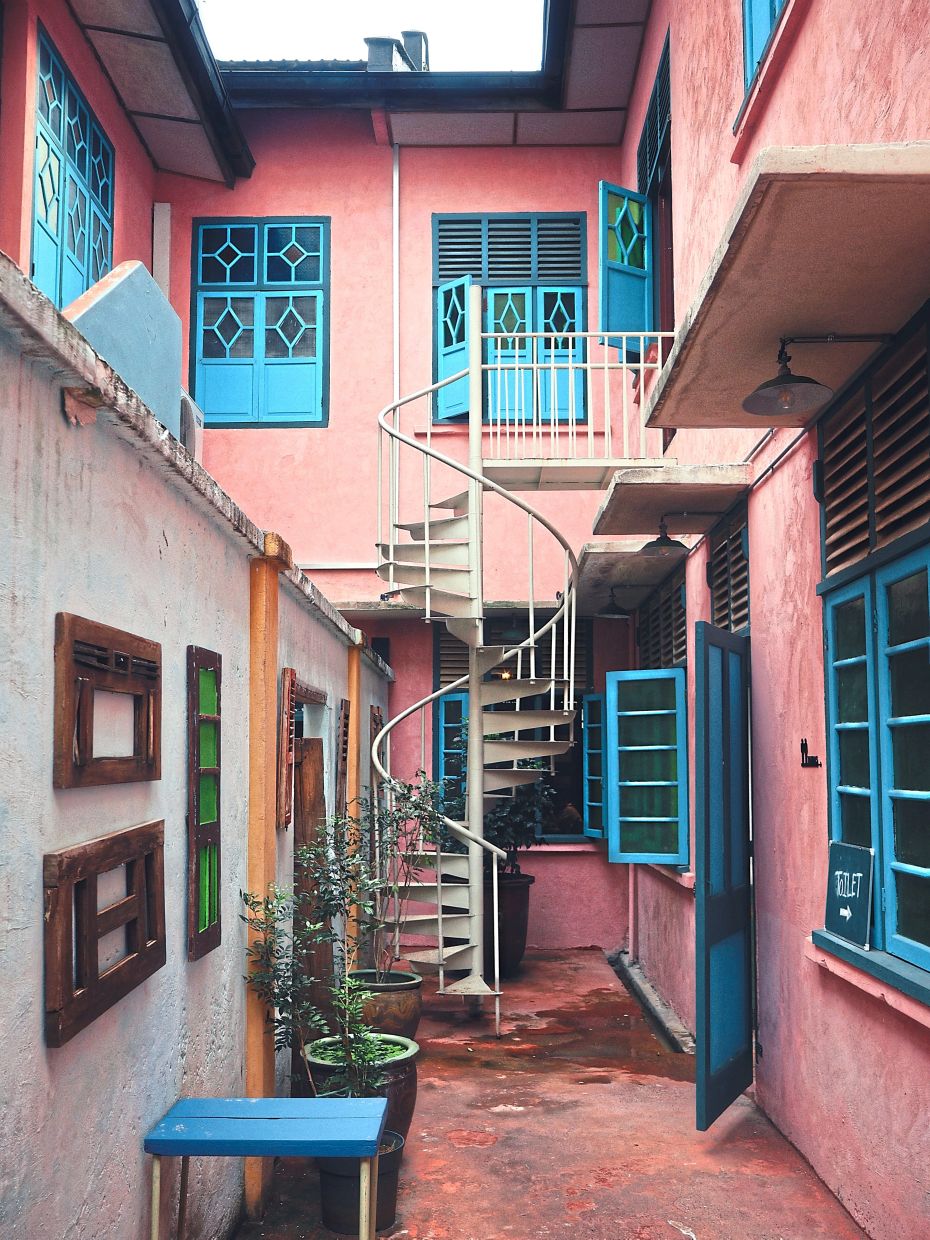
Tong Shin Terrace captures this exact paradigm shift. It retains the traditional Straits Eclectic interior layout – deep, narrow rooms placed around a central airwell – but adopts an Art Deco facade.
However, the true value of the Terrace lies not merely in its aesthetic survival, but also its active resistance to the forces of urban obsolescence.
In a district where rapid development constantly renders older buildings defunct, the Terrace argues that outright demolition is simply a failure of imagination.
Instead, it provides a much-needed “human” resistance in a city of glass towers.
One of the driving forces behind this resistance is a dedicated collective that includes the Terrace’s current curator, Ken Choong. A hardened academician turned history enthusiast, Choong has played a critical role in its revitalisation, though he is quick to emphasise the collaborative nature of the project.
When his team of four close friends discovered the building in early 2024, it ignited their shared passion for South-East Asian heritage. Emboldened by a vision of the Terrace returning to its former glory, the group kickstarted a privately funded restoration effort in June that year.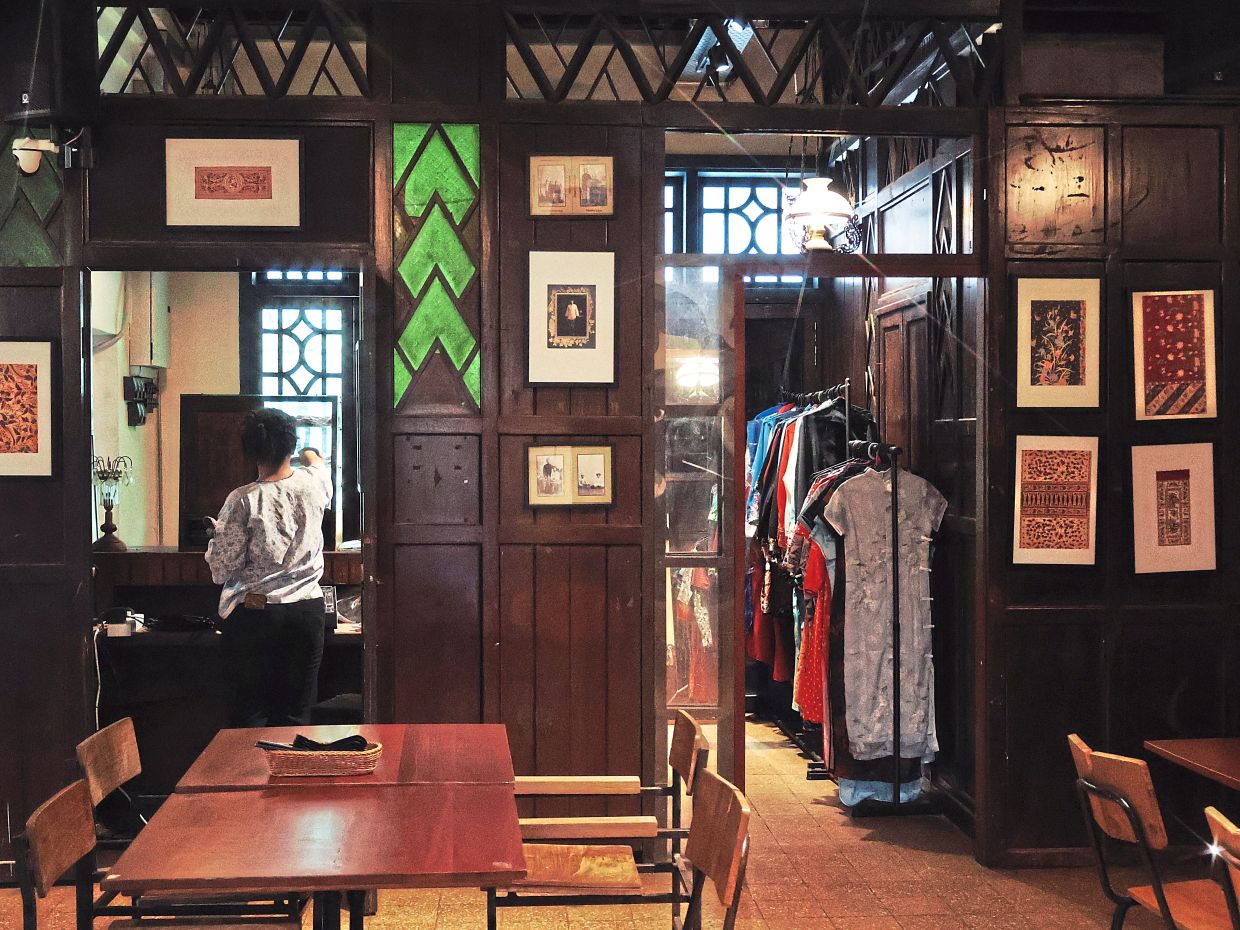
Together, they opened Limapulo, an authentic Peranakan restaurant within the Terrace, alongside Omah Jawa, an Indonesian cafe, and the Baba Ken Collection, a traditional garments rental service.
What makes Tong Shin Terrace stand out among its counterparts in the preservation scene was its restoration process. The team firmly believed in a more hands-on and detail-oriented approach, as opposed to a fast-paced and commercial-centric one.
A pervasive trend in Kuala Lumpur’s heritage conservation scene is “facadism”, a practice that involves restoring the exterior of the building whilst completely overhauling and modernising its interior volume.
Choong vigorously rejects this approach, which he finds disrespectful to a building’s character.
“A building is more than just a facade,” he stresses. “To keep the exterior but gut the interior is like keeping the cover of a book but replacing its pages with spreadsheets.”
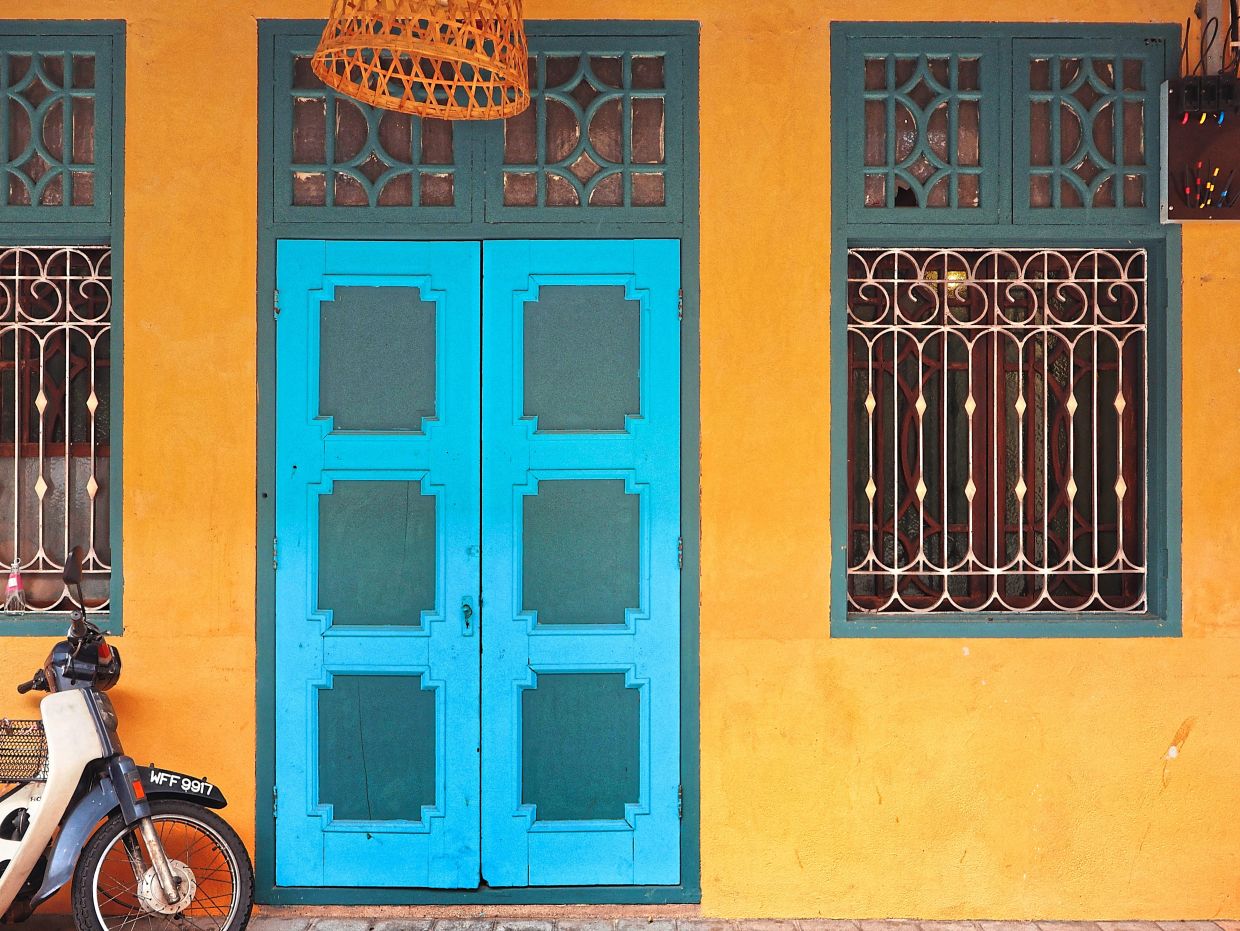
This philosophy of preservation guides the final look. From start to end, the restoration heavily prioritised the interior’s spatial integrity, recognising that the way air moves and light falls constitutes the Terrace’s very soul.
A strict material philosophy was enforced: If a building has survived for nearly a century, it must be repaired,
or at the very least, replaced with materials possessing the exact same qualities.
Hence, replacing or resurfacing the Terrace’s facade was not an option. Instead, Choong and his team chose only to wash it with water to remove any dirt and grime.
That way, the original materials could “speak for themselves” in their rawest form, uninterrupted by synthetic embellishments.
Commitment to authenticity
The project fundamentally became a duty to honour the building’s whole “body”. Hence, the commitment to this authenticity was intensely physical.
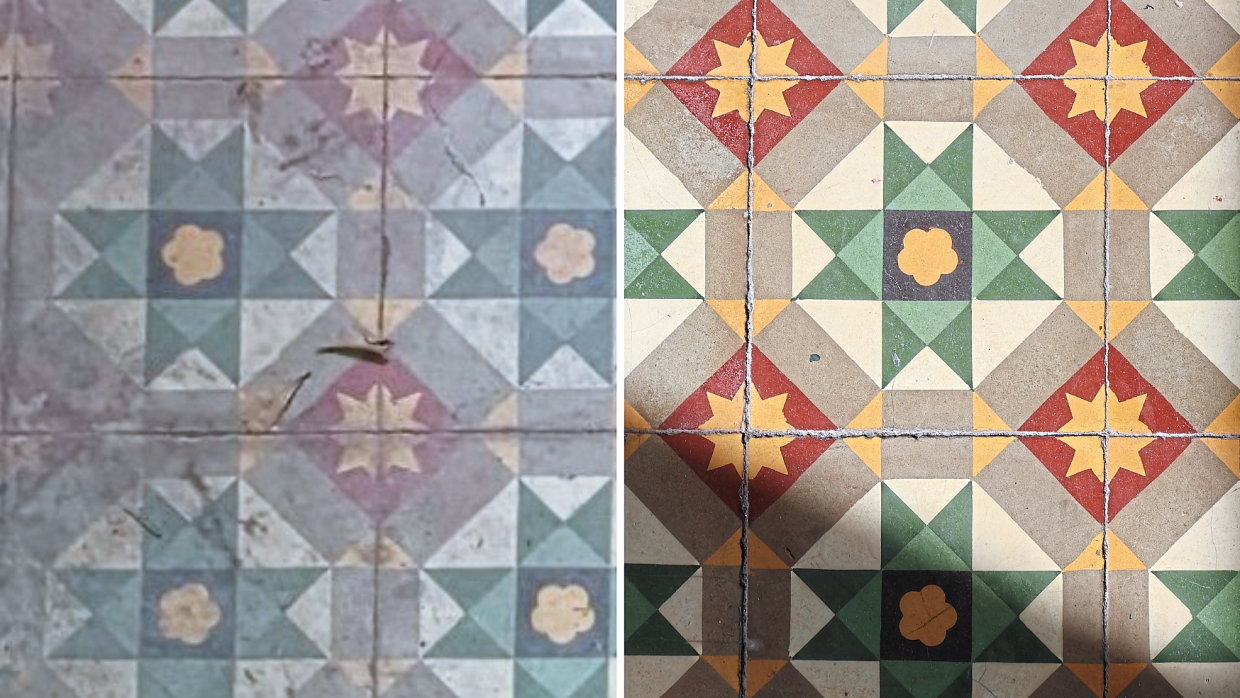
Take for example the Victorian-era minton tiles that line most of the floors, some of which are extremely detailed, with flowing peacocks and floral motifs.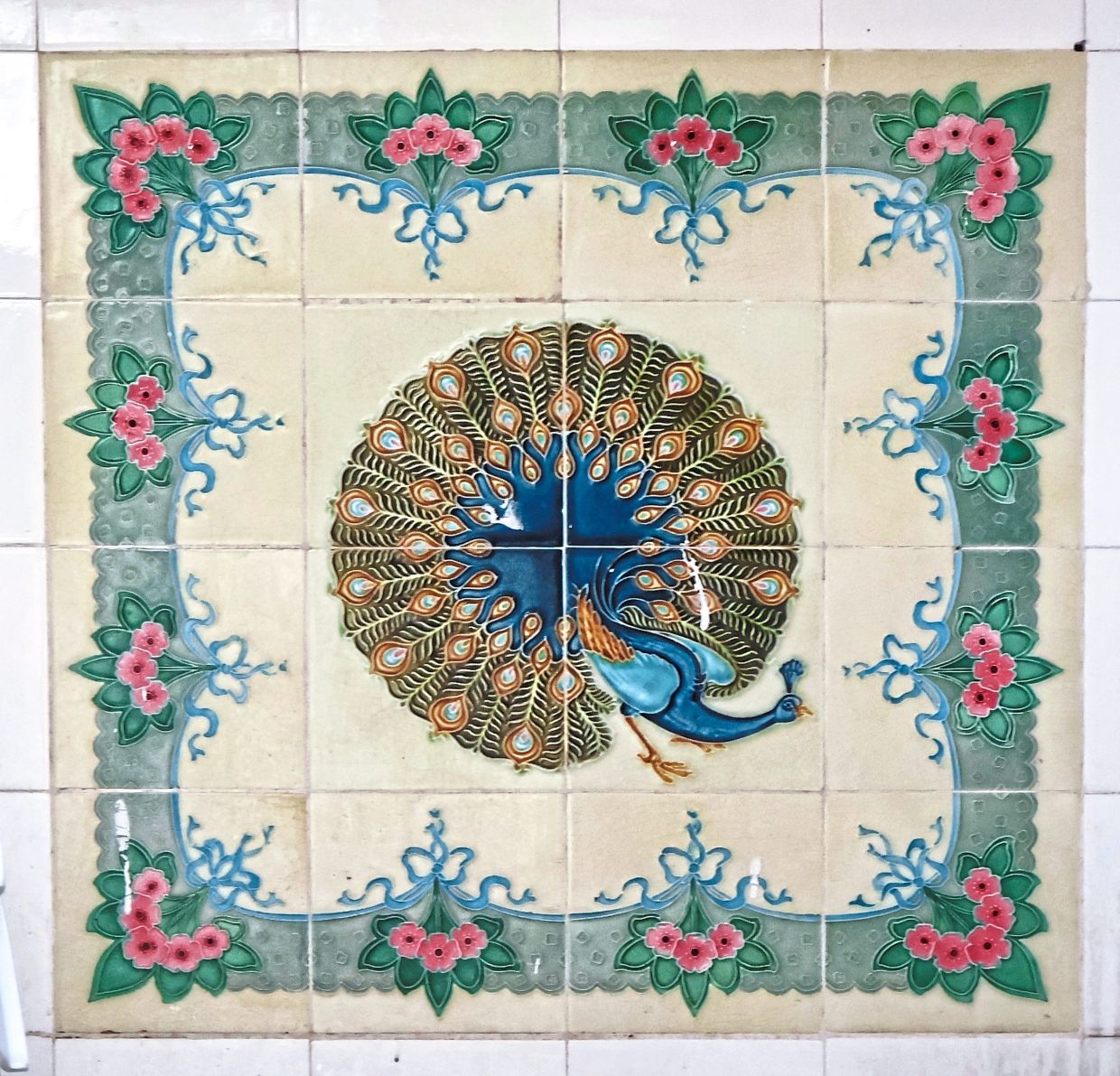
“Rather than taking the easy route and replacing them with modern tiles, we took a kitchen chemistry approach,” explains Choong, as he recounts his crew’s many afternoons spent scrubbing each tile with vinegar and baking soda until their original lustre returned.
“It was a back-breaking but immensely satisfying experience.”
Yet, the flooring speaks of only a fraction of the hard work expended upon the space. Joanne Eu, who conducts weekend tours of the Terrace, points out the hidden labour involved.
“Look at this frame,” she says as she points to the tinted windows. “It’s made from cengal wood, another piece we couldn’t find replacements for elsewhere. We simply had to fix it.”
Apart from the exotic tiles, Eu also mentions the preserved central staircase made from pest- resistant Burmese teak, and the original timber roof beams, all of which had to be disassembled, meticulously soaked, treated and cleaned by hand, and then accurately reinstalled.
Similarly, this respect carries forward to the very structure of the building. Not a single wall or partition was knocked down or altered in the process, and the restaurant kitchen was seamlessly integrated into the existing layout, allowing, in Choong’s words, for “the architecture to dictate the flow of the business instead of forcing it upon itself”.
Moreover, maintaining the original structure meant that patrons could experience the ingenious tropical climate adaptations that the Straits Eclectic design principles had mastered since the 19th century.
The architecture here relied on passive cooling systems rather than going against the tropical Malaysian heat. Although some portable air conditioning is utilised for comfort, especially during afternoons, reliance is reduced thanks to these features.
The central courtyard and airwell allow hot air to rise up and out of the building, while simultaneously providing cross-ventilation through the angled wooden slats of the windows.
Choong envisions Tong Shin Terrace contributing to a shared respect for KL’s heritage, achieved in part by creating parallels between the food and the architecture.
Just as the Straits Eclectic design combines Eastern spatial planning with Western ornamentation, Nyonya cuisine is a marriage of Malay and Chinese influences. He also views the restaurant as a “living classroom” through which he hosts free guided tours and cultural talks, turning Limapulo’s traditional gastronomy into a phenomenological extension of the architecture itself.
“The Terrace’s evolution proves that good design is never obsolete,” says Choong, reflecting upon its longevity. “If it has ‘good bones’, then it tells us that when you build with quality and character, the building will find a way to remain useful for centuries.”
Tong Shin Terrace is located at No. 21-23, Jalan Tong Shin, Bukit Bintang, Kuala Lumpur. Operating hours are from 11.30am to 9pm, Tuesdays to Sundays. Free guided tours are available on weekends from 12pm to 6pm.