Nelson George Lansam was never particularly drawn to tradition as a child.
Growing up, the Sarawakian didn't enjoy listening to traditional Iban music as he found it a little too old-fashioned for his taste.
"I grew up in the 1970s and back then, I preferred listening to Night Fever (Bee Gees), Bohemian Rhapsody (Queen) and Rivers of Babylon (Boney M). Compared to these songs, the sounds of the traditional Iban instruments sounded rather kuno (outdated) to me," quips Nelson, 66, during a video interview from his home in Kampung Siol Kandis, Kuching.
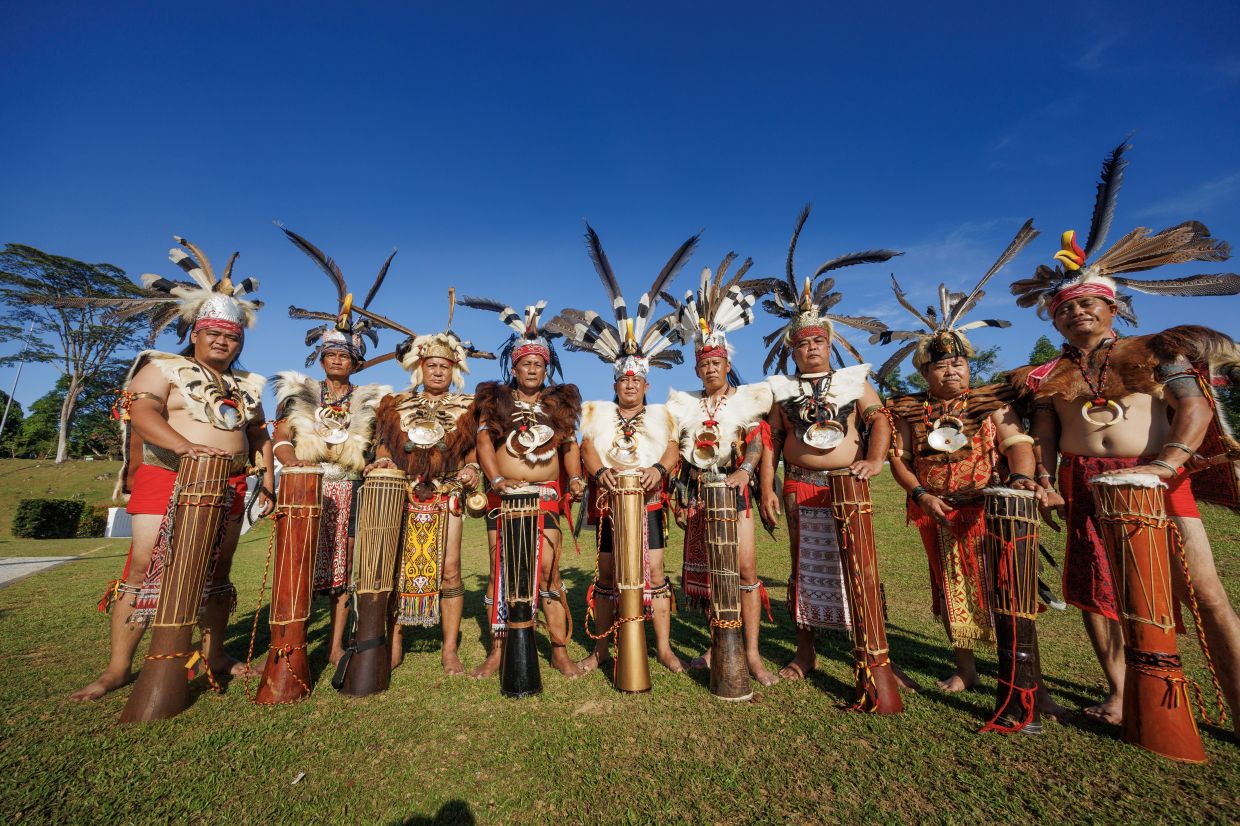
Ironically, the retired technician is now among the passionate custodians keeping the centuries-old Dayak musical tradition alive in Kuching.
Nelson plays the ketebong, traditional hand drums that form part of the gendang pampat ensemble. Gendang pampat is a collective term for a set of traditional Iban instruments that also includes the tawak (gong). Together, both instruments create layered rhythmic sounds.
"It was only when I reached my 40s that I truly began to appreciate these sounds," recalls Nelson. "I became fascinated by these traditional instruments and how each player contributes a different beat to create one beautiful rhythm.
"In my 50s, I learned to play the ketebong from friends, and in 2019 I joined Kelab Kesenian dan Kebudayaan Dayak Siol Kandis (KKKDSK), a cultural group dedicated to preserving traditional Dayak music and dance. I further honed my skills there," says the father of four, who serves as vice president of KKKDSK.
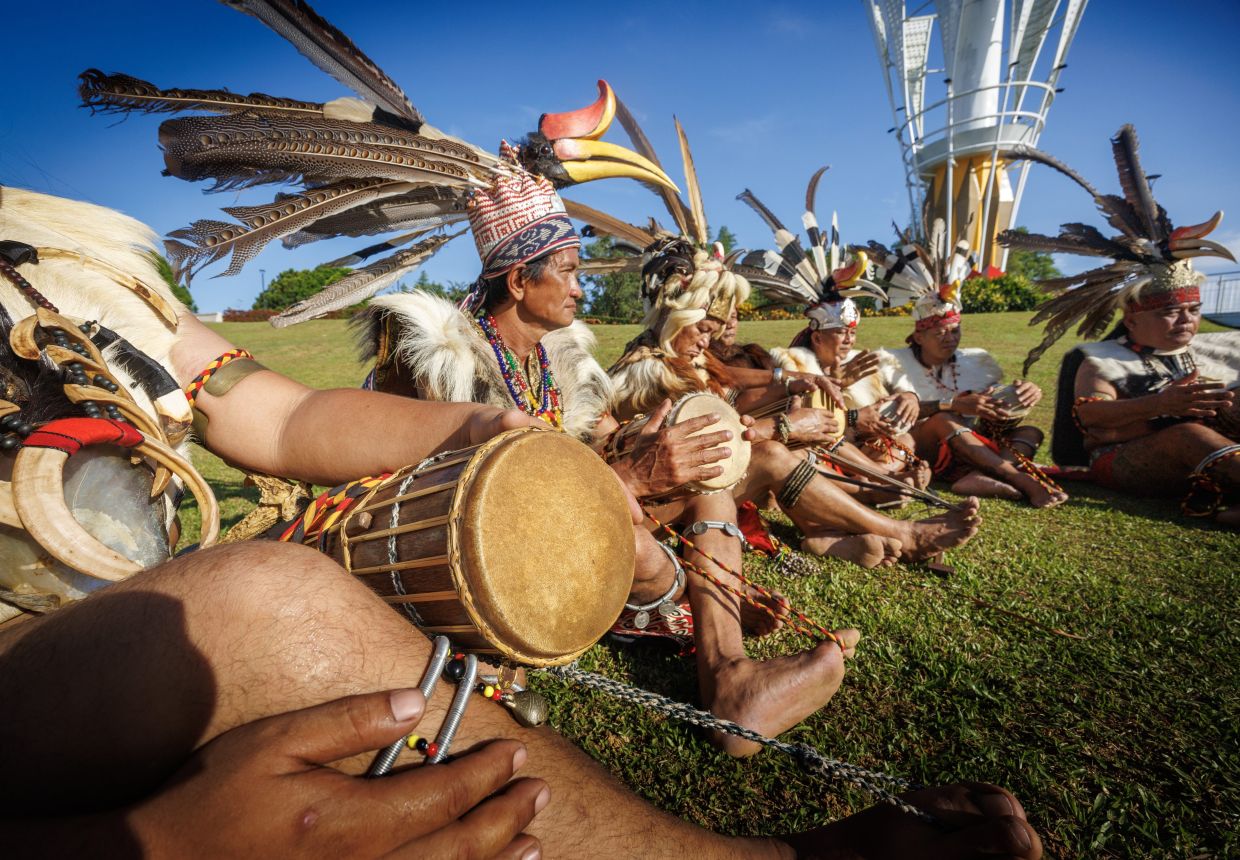
Nelson has several ketebong in his collection – cylindrical drums that come in different sizes, including tall, medium and short.
These drums are handcrafted in Sarawak using menggris wood (Koompassia malaccensis) and nibong palm (Oncosperma tigillarium), which are known for their durability. The drumheads are made from animal skin, including buffalo, goat and cow hide.
A shared passion
The group is regularly invited to perform at weddings, cultural showcases and traditional agricultural rituals.
"We meet once a week to practise and rehearse for upcoming performances. This club gives us a space to preserve and share our culture together. I hope more young people will join us and learn about these instruments and Dayak traditions," Nelson says.
In recent weeks, they have performed at events leading up to Gawai, Sarawak's annual harvest festival, celebrated on Monday.
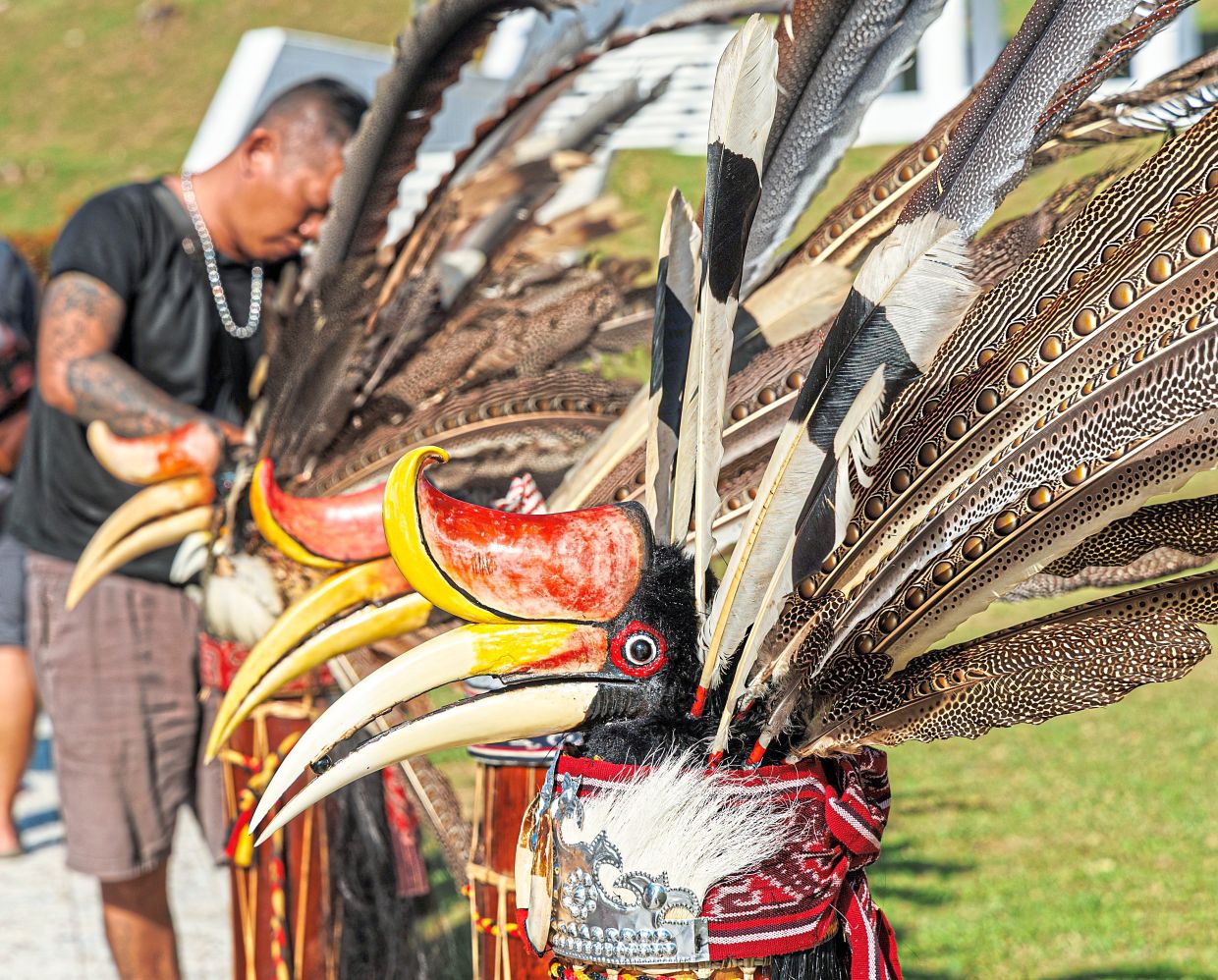
No performance is complete without members dressed in traditional Iban attire, complete with ceremonial accessories.
Just last weekend, they performed at the Borneo Native Festival 2026 at Central Market, Kuala Lumpur, which featured traditional Borneo crafts and cultural performances.
"Not many people are familiar with the sounds of our traditional instruments, so it is meaningful to showcase them to a wider audience," Nelson shares.
Considered the biggest celebration in Sarawak, Gawai is observed with much fervour among the Dayaks – the collective name for the Iban, Bidayuh, Kayan, Kenyah, Kelabit and Murut tribes.
During the festival, many return to their villages and longhouses to reconnect with relatives over traditional food such as manuk pansuh (chicken cooked in bamboo), kasam ensabi (fermented vegetables) and tuak, a rice-based alcoholic drink.
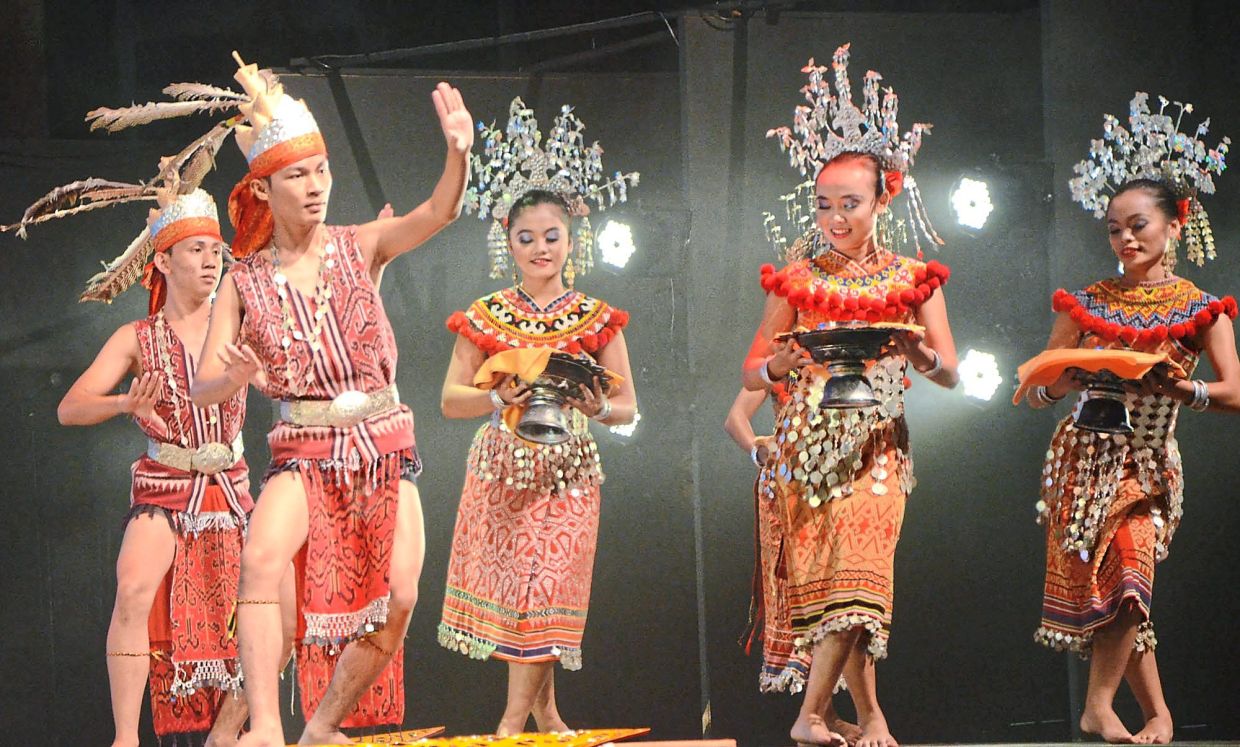
Drumming and ngajat dancing are central to these gatherings, with families often performing together late into the night.
This Gawai, Nelson will return to his longhouse, Rumah Bala Sungai Setubah in Bintangor, about a 50-minute drive from Sibu.
He is especially looking forward to reuniting with relatives and playing the ketebong together.
"Gawai in the longhouse is always so much fun. We catch up with relatives, enjoy food and drinks, and play music together. That is really what the celebration is about," he says.
Unlike modern music that follows written notation, gendang pampat relies on instinct, listening and chemistry among players.
"It follows feeling and experience," Nelson explains. "Everybody must understand each other's timing.
"It's not difficult once you understand the beat," he explained. "There are different roles. One ketebong drummer starts the rhythm, called mengepun. Another follows with timbal, responding to the main beat.
"Then the tawak or engkerumung players join in, adding another layer of rhythm called merarak. Slowly, all the sounds come together to form one irama (rhythm)," says Nelson, who usually leads as the mengepun drummer.
Gendang pampat rhythms vary across Sarawak, shaped by local traditions and community styles rather than fixed categories.
While the instruments remain the same, each city and longhouse develops its own way of playing – resulting in subtle differences in tempo, energy and rhythm, all passed down through generations.
A full performance usually involves eight to 10 players.
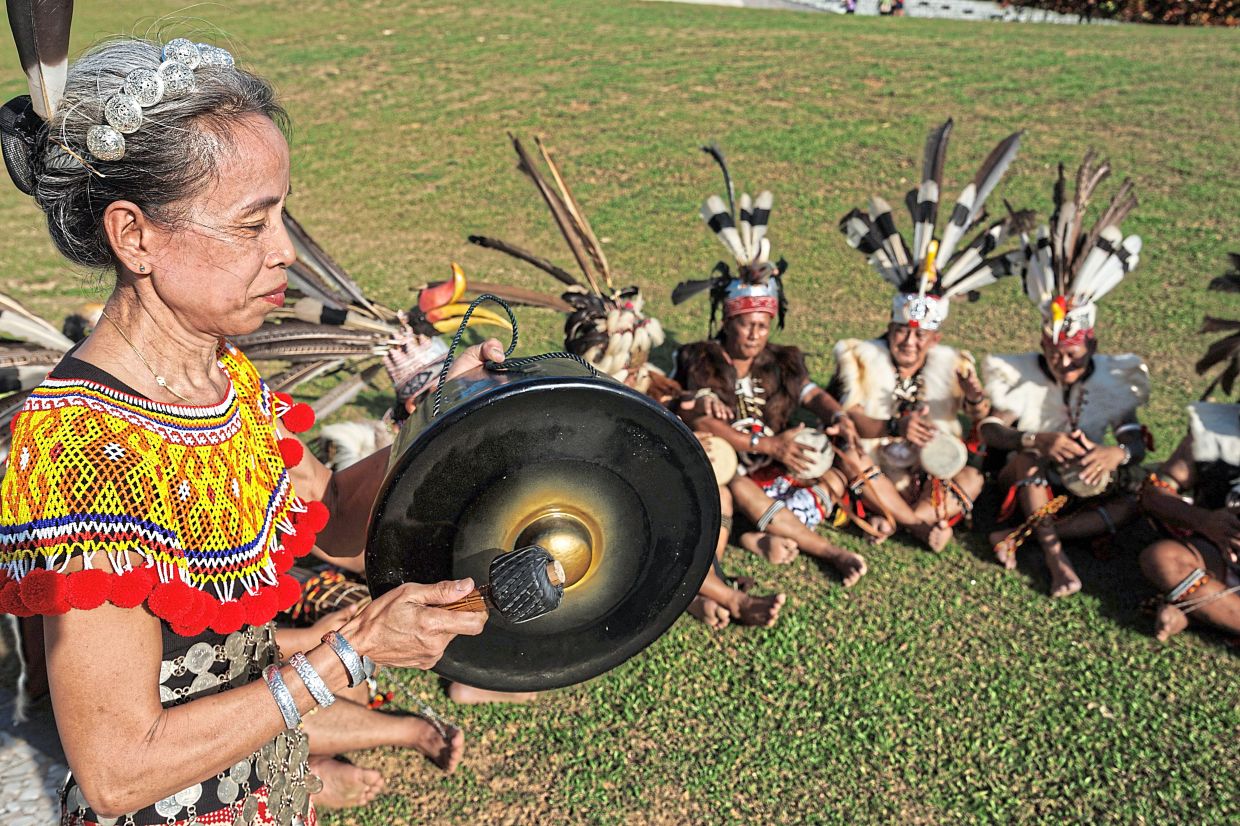
Fellow villager Doris Hilda Reji, 58, who plays the tawak, is the only female player in the group. She learned the instrument in 2019 after developing a deeper interest in her cultural heritage.
She says it is meaningful to take part in a male-dominated space, as it allows her to challenge stereotypes while staying closely connected to her cultural roots.
"Anyone can learn to play these traditional instruments as long as there is interest," says Doris.
"The beauty of the music lies in how each player contributes a different beat that eventually blends into one harmonious rhythm.
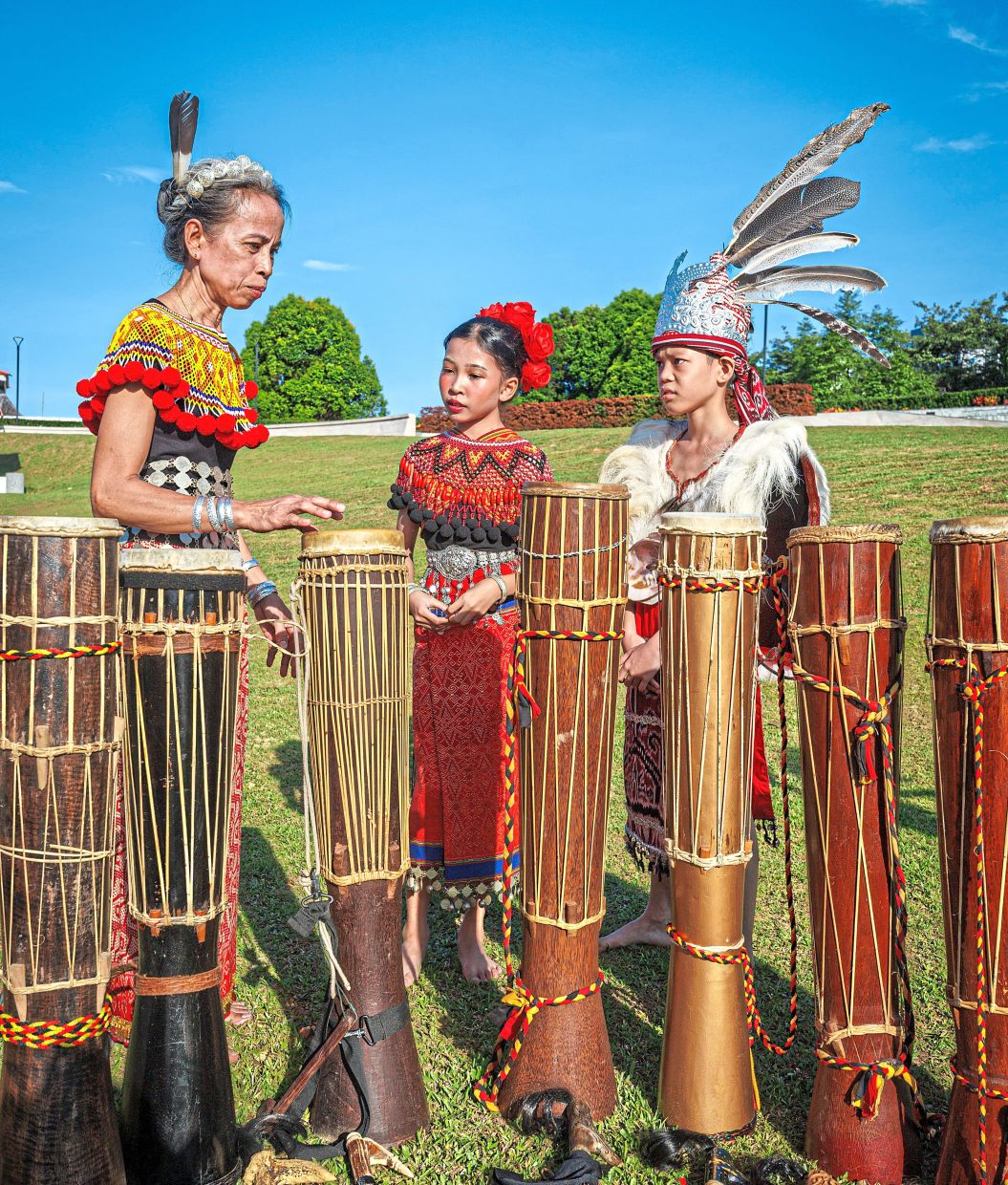
Doris, who also teaches ngajat at KKKDSK, says involving younger generations is key to keeping the tradition alive.
"We bring children along so they can watch and learn. If we don't teach them, this tradition may disappear."
Nelson and Doris agree that attracting younger people remains one of their biggest challenges. At present, Doris has only one female student, Roshilda Blassan, 10, who learns ngajat under her guidance, while there is just one boy, Xander Harrison, nine, taking up the dance.
"Many youths are heavily influenced by social media platforms like Instagram and TikTok, which feature so many modern dances ranging from hip-hop, shuffle dance to K-Pop. Hopefully the younger generation will understand that ngajat isn't just a dance – it is a reflection of our Iban identity, its history and values," Doris shares.
Nelson chips in: "It's the same for the instruments too. Not many young people are interested in learning traditional instruments. One of the best ways to reach out to them now is through social media."
He worries that the gendang pampat could become a dying heritage because fewer young people are interested in learning it.
"If nobody carries on this tradition, one day it could disappear."
But these instruments aren't the only ones at risk of disappearing. A 2017 study titled "Various Types of Instruments in the Inventory of Iban Cultural Music" found that very few young people today know how to play traditional Sarawakian instruments such as the belikan, engkeratung, engkerebab, serunai and engkerurai.
The study, published in the Muallim Journal of Social Sciences and Humanities, noted that the art of playing these instruments is rapidly fading, with the ruding – also known as the Jew's harp – considered among the instruments at greatest risk of disappearing.
Even within his own family, Nelson is the only one deeply interested in the tradition. His four children, aged between 27 and 36, have yet to take up any traditional instruments seriously.
"But I still hope one day they will become interested."
Nelson wishes there will be more community events to help promote traditional music to the younger generation.
"Our performances serve as a bridge between generations. And the key to preserving gendang pampat lies in balancing tradition with continued exposure through performances, festivals and community activities."
This Gawai, Nelson will once again be playing the drums with his relatives in his longhouse, hoping to spark interest among the younger generation.
Hopefully, they will not see the music as kuno – just as he once did decades ago.
Drumming up interest
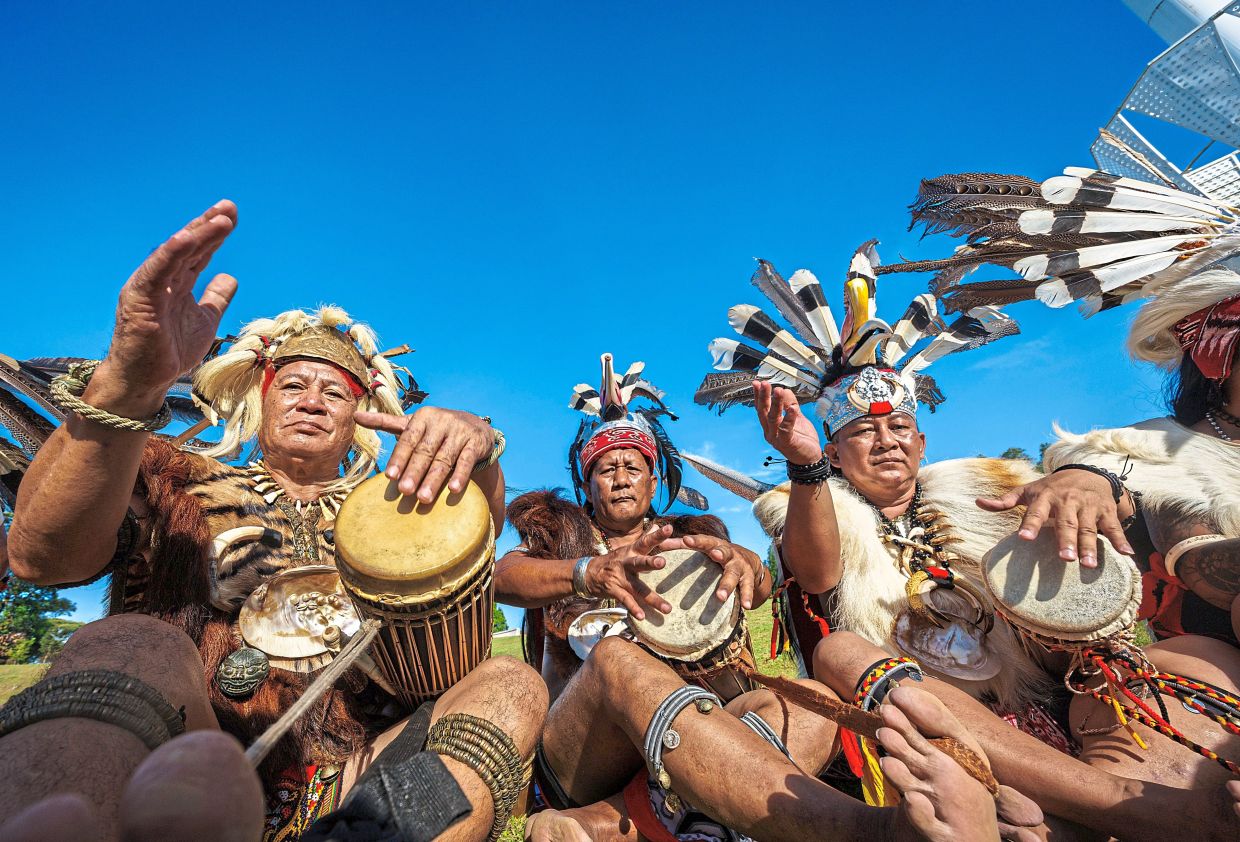
(From left:) Nelson, Johnson Sulau and Abit Joe are committed to keeping the gendang pampat tradition alive through their continued performances and cultural preservation efforts. Photos: The Star/Zulazhar Shebleee
'If nobody carries on this old tradition, one day it could disappear altogether,' says Nelson (third from left).
Photo: The Star/Zulazhar Shebleee
Ketebong drums are handcrafted in Sarawak using durable wood, with drumheads traditionally made from buffalo, goat and cow hide.
Photo: The Star/Zulazhar Shebleee
Doris striking the tawak as part of the gendang pampat ensemble.
Photo: The Star/Zulazhar Shebleee
Doris (left) hopes Roshilda (centre) and Xander will carry forward the ngajat tradition, keeping the cultural heritage alive for future generations.
Photo: The Star/Zulazhar Shebleee
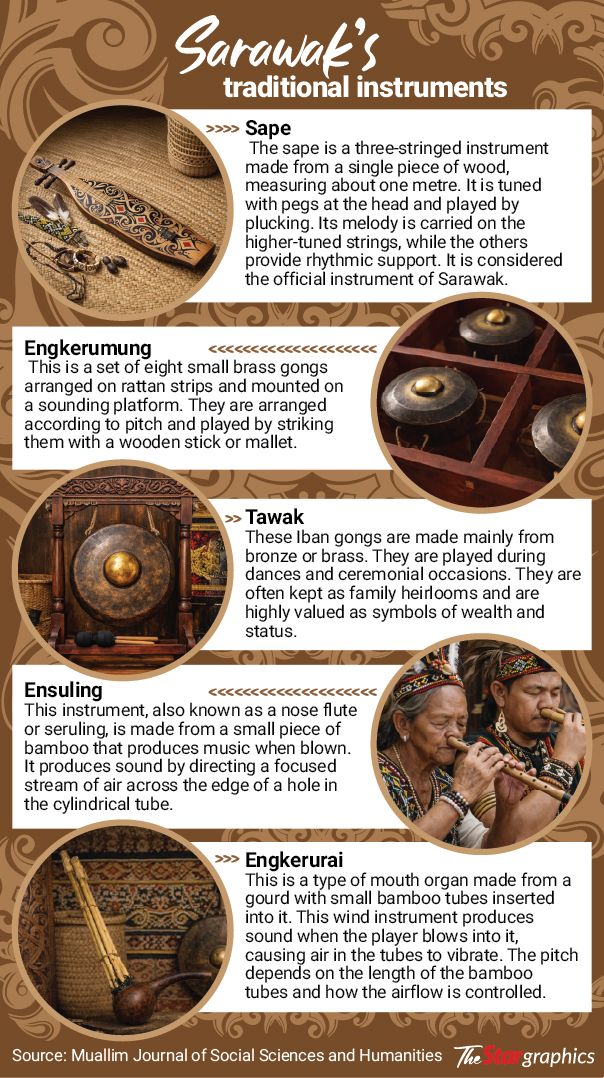
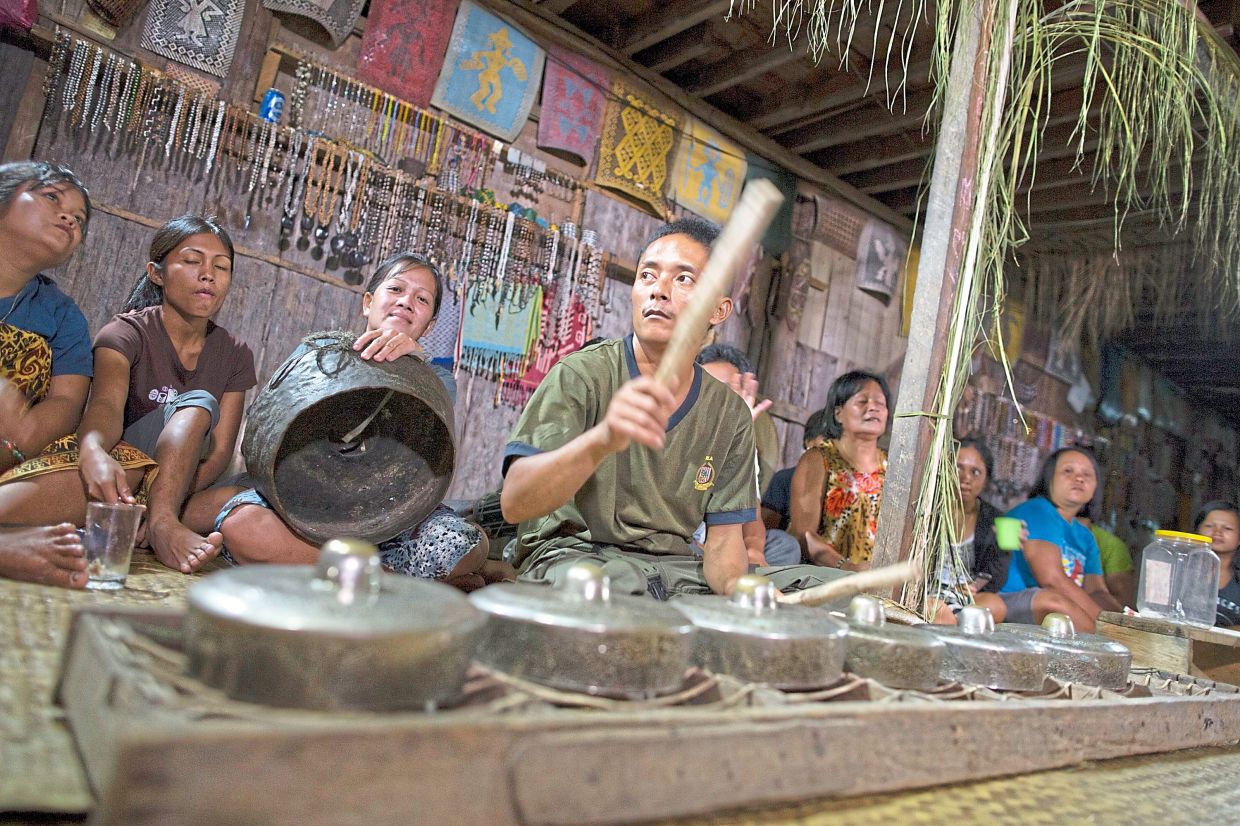
The engkerumung is a traditional Iban musical instrument that is played to accompany the traditional ngajat dance. Photo: Filepic
Ngajat is a traditional Dayak dance often performed during Gawai celebrations. Photo: Filepic
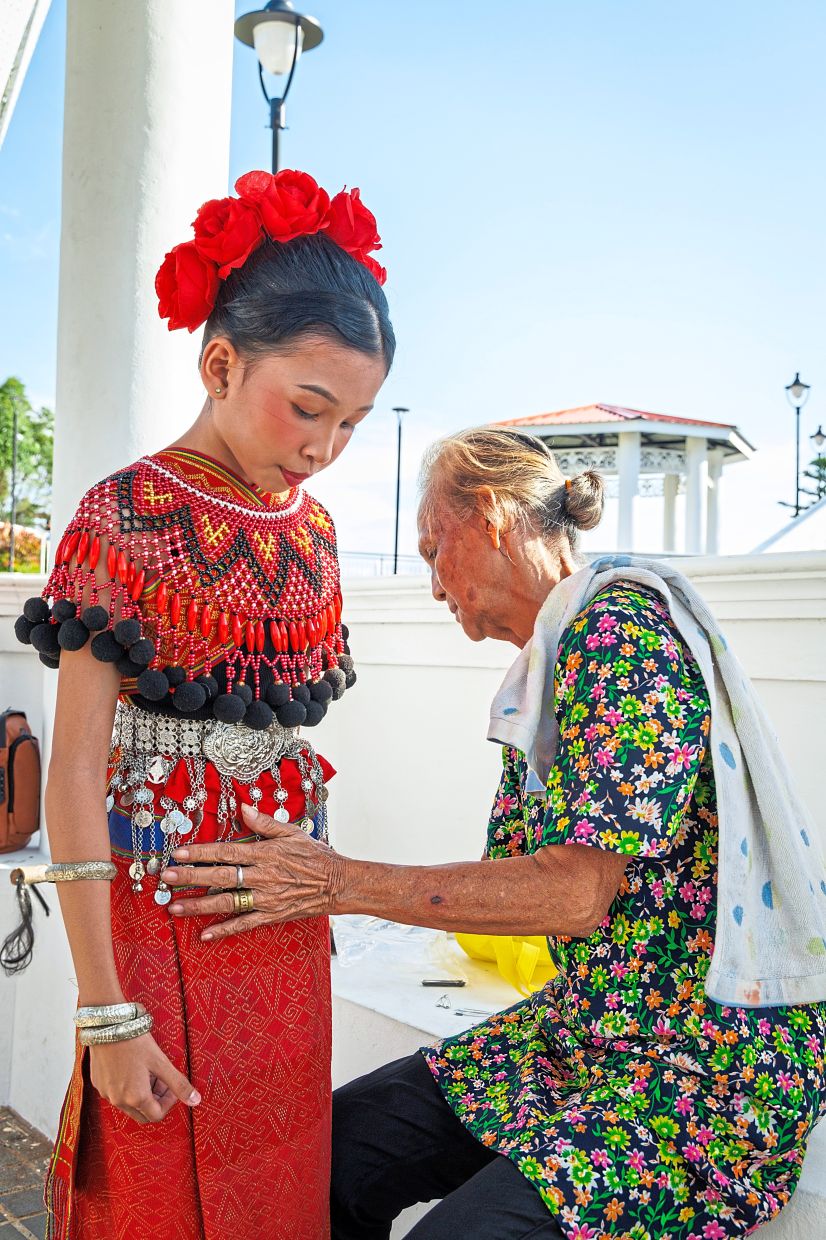
Roshilda (left) receives help from her grandmother, Nina Blassan, as she puts on her ngepan Iban costume in preparation for a traditional performance.
Photo: The Star/Zulazhar Shebleee
The Iban warrior headgear, decorated with feathers, is a symbol of pride for the community.
Photo: The Star/Zulazhar Shebleee
Traditional instruments from the Land of the Hornbills.
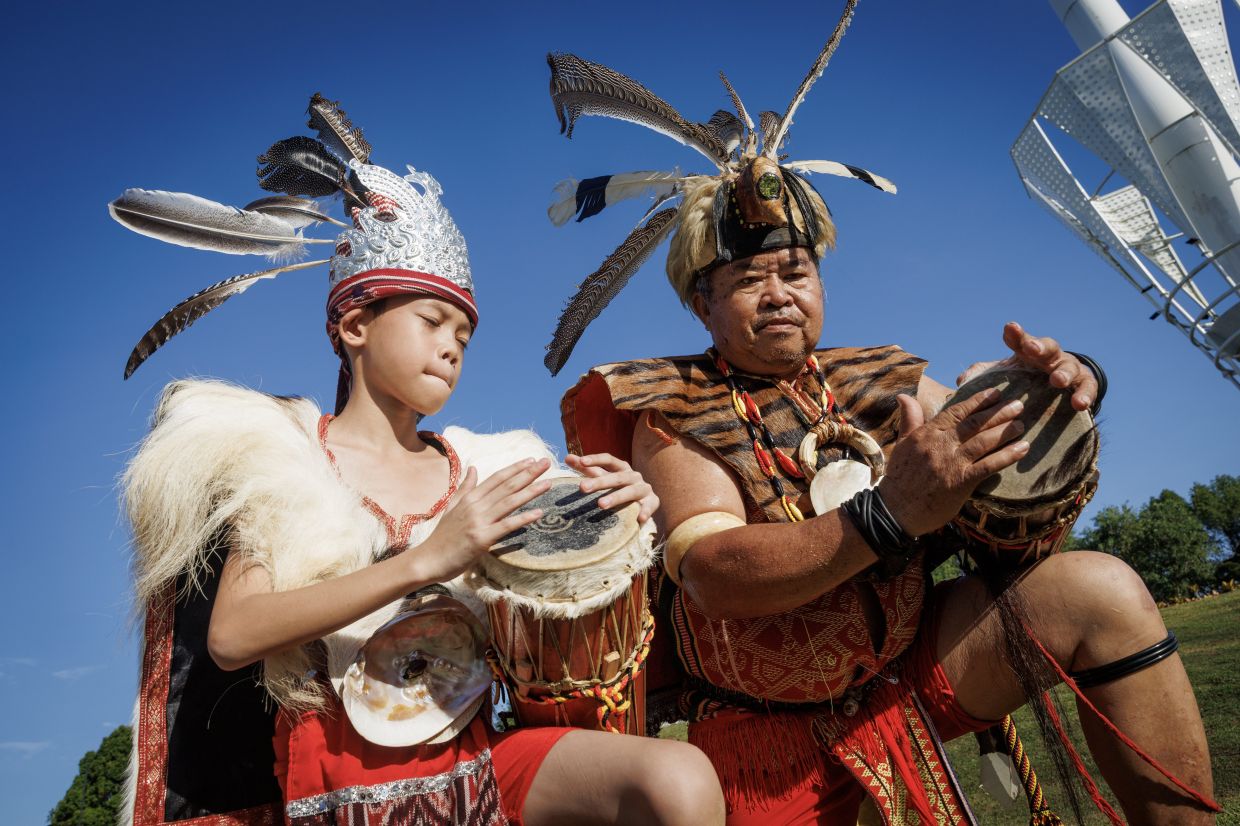
Albert Jaraw (right) teaches Xander the basics of traditional drumming.
Photo: The Star/Zulazhar Shebleee