IN 2022, Kevin Wong opened his now-vaunted Malay archipelago-focused restaurant Seroja in Singapore after 10 years of cooking French, American, Japanese and Korean food.
“I wanted to create something where I could view Malaysia in the way that I was brought up. But I opened the restaurant without knowing how to cook Malaysian food. So I went back to what I grew up eating, which became my guiding point, backed by my professional training on techniques,” he says.
Seroja earned a Michelin star within a year of opening and was the highest new entry on the Asia’s 50 Best Restaurants list in 2024 when it emerged at #31 (#40 in the 2025 rankings).
For Wong, Seroja is the culmination of years of culinary pedagogy interspersed with his own cultural heritage.
Wong grew up in Klang, Selangor on a street named Jalan Seroja, surrounded by a vibrant culinary scene. He recalls being exposed to banana leaf meals when he was very young.
His grandmother – a proud Penang Peranakan – also introduced some staples in his life, including asam pedas and otak-otak.

When he was 18, he took his first flight ever to France to attend a catering school. He had earned that privilege after being one of the top students at a culinary school in Malaysia. He spent a few years in France, gaining experience before making his way to the United States.
In the US, Wong had an intense, unorthodox experience when he applied for a position at a restaurant called Coi in San Francisco, California which was at the time helmed by a chef named Matthew Kirkley.
“The restaurant didn’t have any Michelin stars. But the chef posted on social media that his goal was to get three Michelin stars in a year, so I applied for a job there. There were six of us in the kitchen (including now celebrity chef Son Jon-Won) and it was very intense and dysfunctional – we worked 18 hours a day. But we got three stars in one year,” says Wong, laughing.
To complete his “triple trinity” as he calls it, Wong then headed to Japan and spent some time working in a three-Michelin-starred restaurant. But eventually, the pull of being closer to home became too hard to resist and he made his way to Singapore, where he worked at Meta and was instrumental in turning the restaurant into a Michelin-starred culinary hotspot.
At that point, Wong was 27 and realised he had been cooking other people’s food – never his own. It was then that he decided to open Seroja.
Wong says that earning a Michelin star early on gave him the carte blanche to do whatever he wanted, including swapping out imported produce for an entirely local canvas.
“We get to do what we really want to do. So we use everything local and that became a strong hit and the reason people came to our restaurant,” he says.
At Seroja, the Nusantara dinner menu is priced at S$288++ (RM922++) with an additional S$148 (RM471) for the non-alcoholic pairing. The restaurant’s non-alcoholic pairing is particularly interesting because it makes use of fruits and vegetable scraps that would otherwise be discarded. This endeavour also helped earn the restaurant a Michelin Green Star.
Stand-outs from the non-alcoholic line-up include the Infusion of Chestnut, Watercress & Lotus Root Aged in Apple Wood Barrel, which highlights the rusticity and earthy bloom of chestnuts whilst also reverberating with pronounced Oriental nuances.
The Pomegranate, Mulberries & Curry Leaves may seem quixotic – after all, who pairs pomegranate with curry leaves? And yet, Wong’s genius shines in this cheery beverage laced with Indian notes that elevate it from the first scent to the last sip.
The food menu meanwhile is a rich, pulsating affair, with the beating heart of Malaysian cuisine at its centre. It is interesting and vibrant – yet still retains the soul of the land from whence it comes from.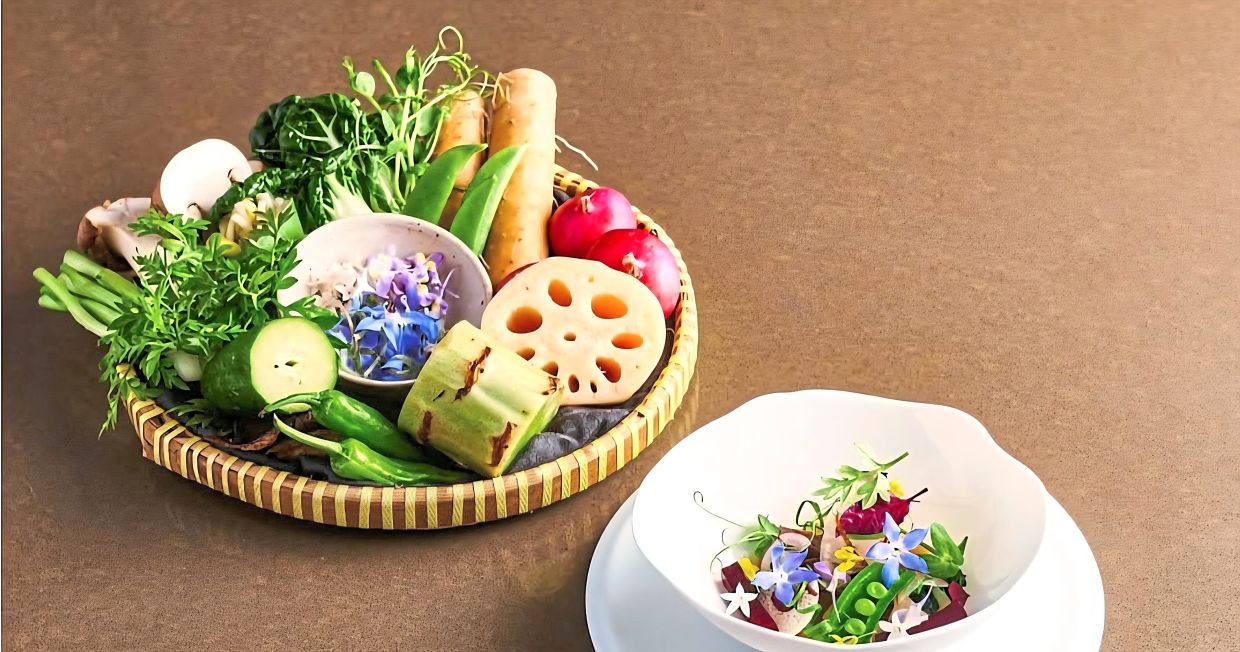
Highlights from the menu include the Fish Floss with Raita & Mint, a one-bite wonder that – if you’re Indian – is a little blast from the past featuring childhoods spent eating Amma’s hot fried fish and a cool raita to temper the heat. It’s so cleverly done that it encapsulates all these wonderful memories into a single mouthful.
The Slow-Cooked Octopus with Shrimp Sambal in Sesame Pie Tee meanwhile is an ode to good, old-fashioned sambal. This is not for the faint of heart – it’s a proper, gut-busting blast of heat – the sort you get in the best sort of home-cooked Malay sambals.
Wong’s Tropical Landscape meanwhile pays tribute to the repository of local ingredients and includes a wealth of produce like beansprouts, fruit tomato, king oyster mushroom, jellyfish, pink guava and various other ingredients, 25 altogether.
This is bathed in a mustard oil and peanut dressing that is a close cousin to rojak sauce. The entire assemblage is a vibrant, fun, floral odyssey into the bounty of Mother Malaysia.
There is no escaping Wong’s past and the constant allusions to Klang bak kut teh, which is why he simply had to come up with an ode to his hometown. This appears in the form of the Braised Beef Tripe & Cheek with Rice Ball in Chicken Broth.
This soul-warming broth is a lighter, less intense version of bak kut teh with beef forming a core replacement for the pork often used in the traditional dish.
Here, the meaty overtures are saturated in herbal elements (herbs like angelica root and cinnamon have an omnipresence) and it’s a dish that stands on its own perfectly well but also reminds you of where it comes from.

Perhaps one of the most memorable offerings on Wong’s menu is his Roti Paung with Johorean Milk Butter.
This is one of those dishes where you must offer praise to the heavens above for allowing you to partake in something truly magical. Because who can resist this pull-apart fluffy bread and unctuous, perfectly salted butter?
No living soul – I can guarantee you that. This stuff is like a drug – addiction is imminent; resistance is futile.
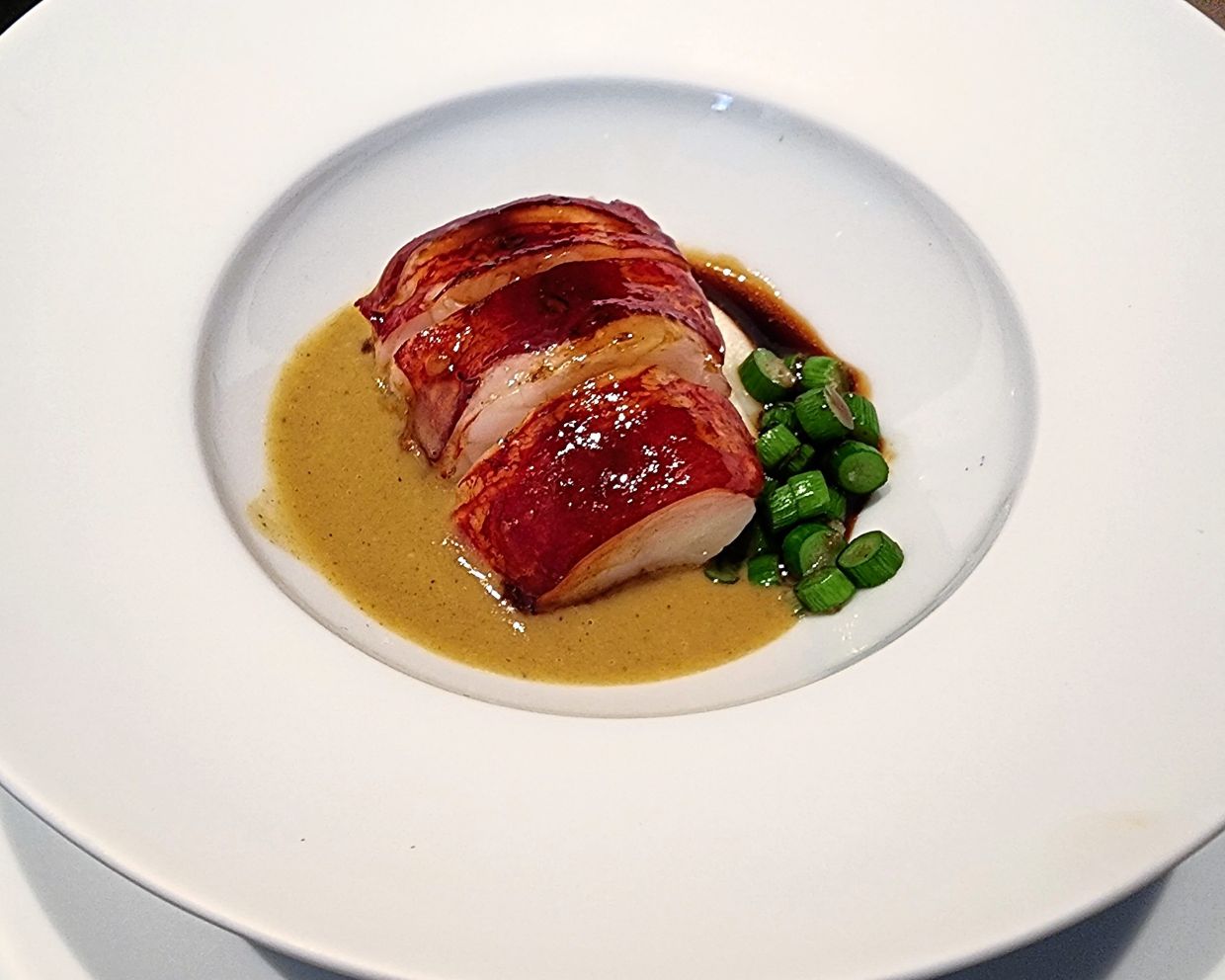
Then there is the Mangrove Wood Charred Blue Lobster with Laksa Leaf Sauce. The lobster is fabulous – succulent and soft with a firm bite and an easy yield.
Wong’s addition of the Indian podi (flavoured condiment) adds nutty, gritty bites and unleashes the essence of the Indian sub-continent in an understated way.
The laksa leaf sauce meanwhile pays tribute to Malay heritage and is rustic, rooted in the past and yet contemporary in its finesse and finish.
The big ticket item of the night is the Duck Percik with Crispy Sia Rice and Lauk-Pauk.
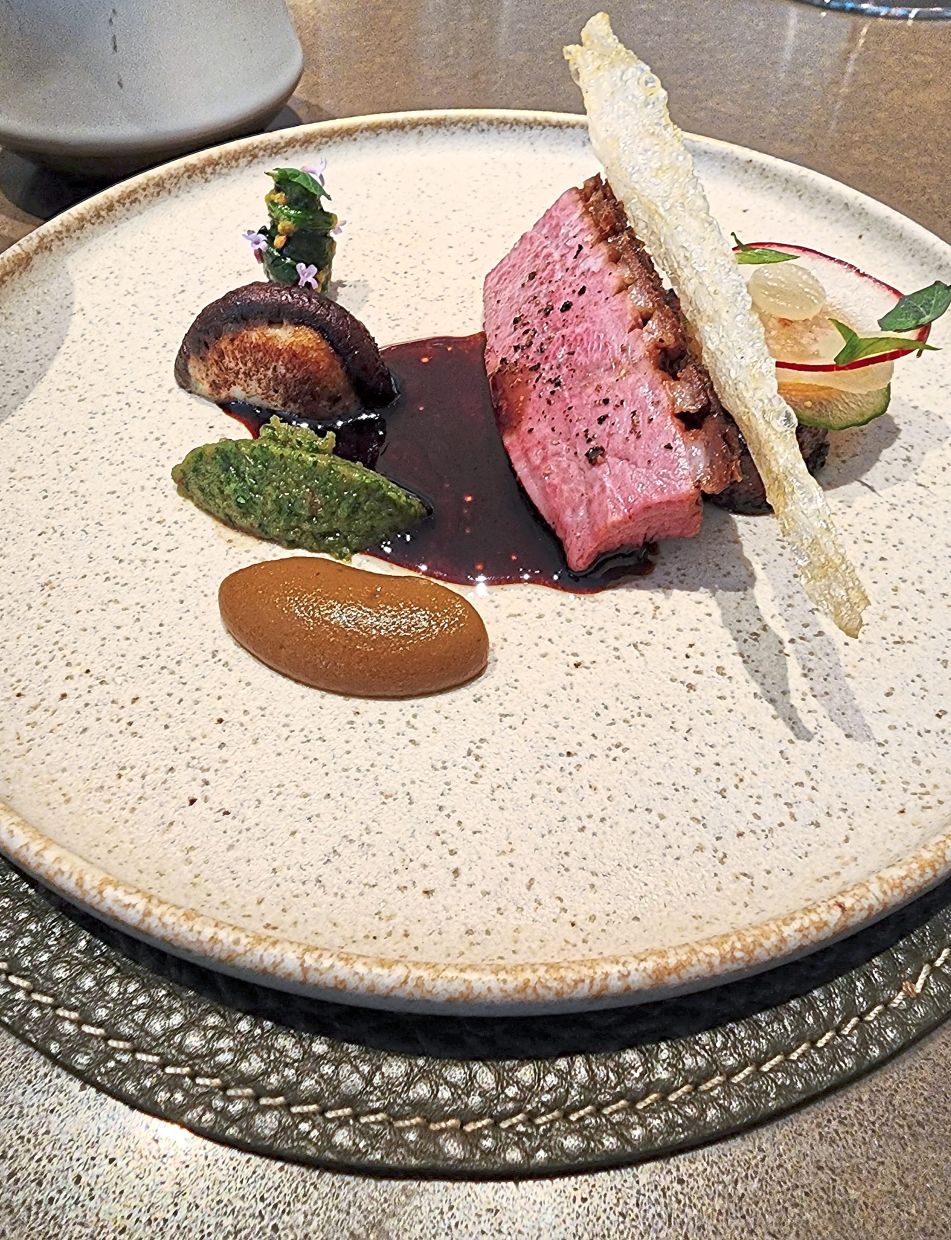
The show-stopper in this ensemble cast is the duck from Bidor, Perak, which has a crispy, crusty skin and tender, juicy flesh.
The percik sauce adds a rich, flavourful Malay slant to the meal and the rice is phenomenal – a puffed, airy flavour bomb.
From the sweet portion of the meal, the stand-out dish is the Cameron Highlands Sweetcorn Wafer.
Here, the wafer is fashioned out of corn husk while the ice-cream is made from popcorn.
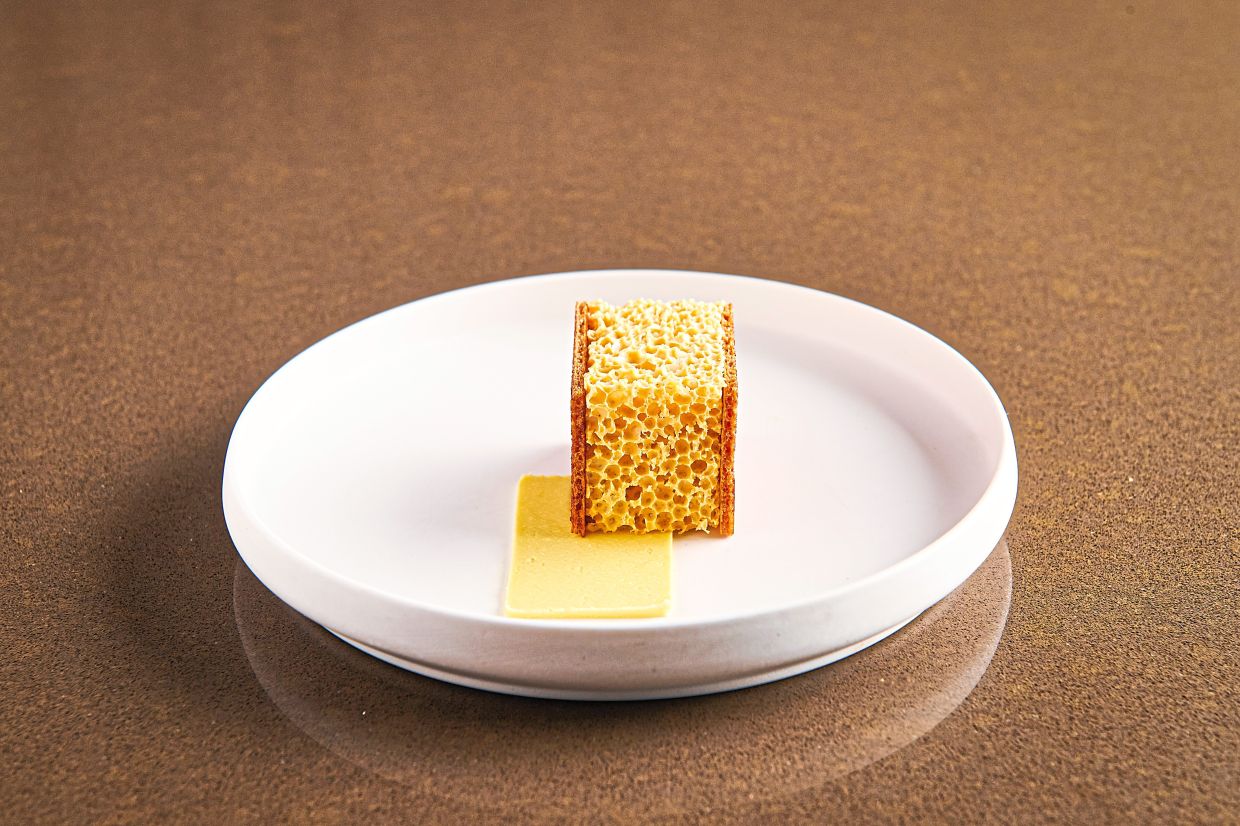
It’s a sweet, old-school snack that will likely remind you of those inexpensive treats once enjoyed in school tuck shops and Chinese sundry shops of yore.
Wong’s thoughtful, multi-layered menu marks a return to his true roots in the way it harnesses inspiration, flavours and ingredients from the land that nourished and fed him as a child.
In many ways, years after doing every other cuisine but Malaysian food, Wong has finally come home.