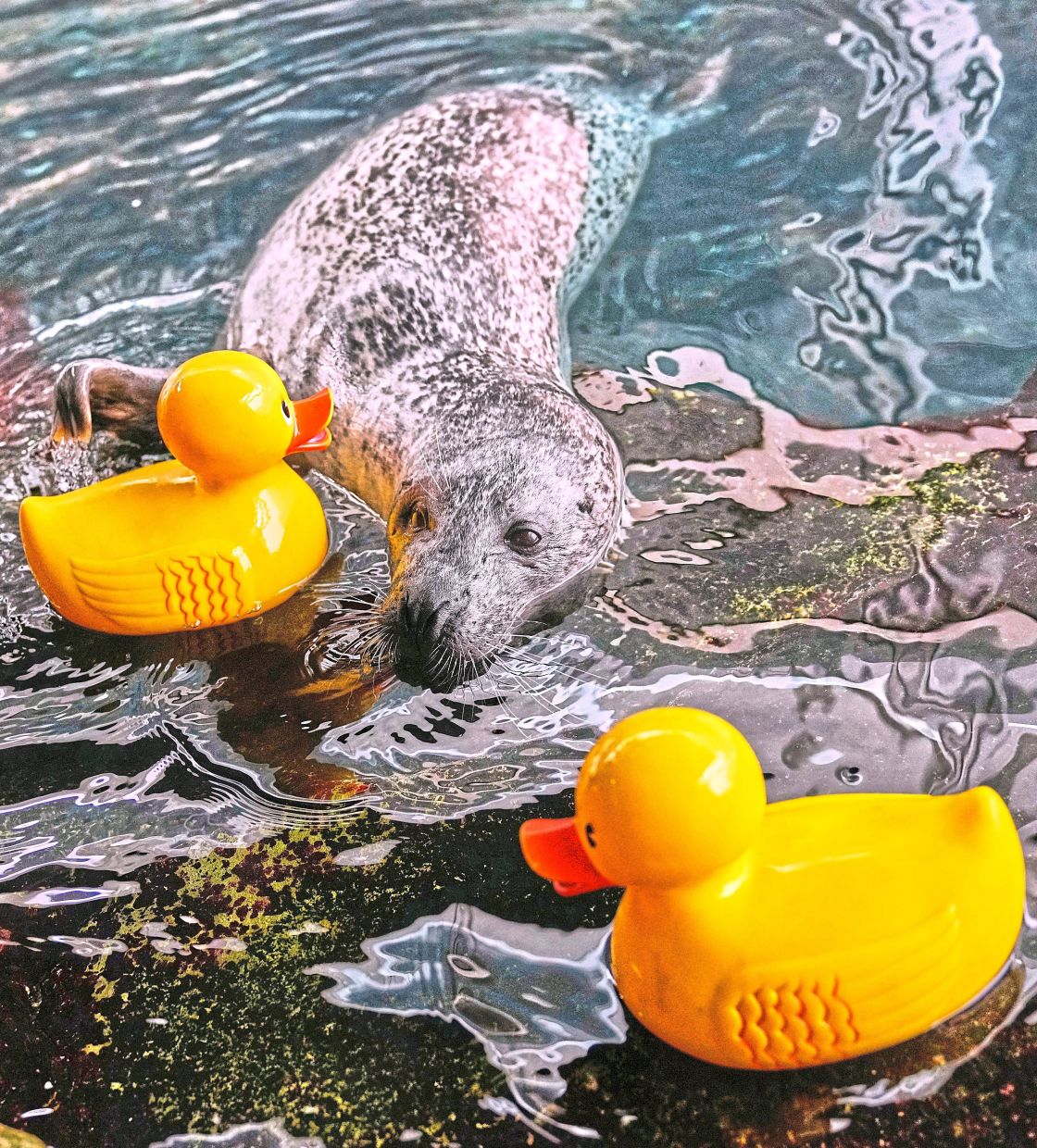
It looks like pure play: a harbour seal gleefully chasing a rubber duck. But for Reggae at the New England Aquarium in Boston, the toy is part of a training routine meant to keep him learning.
When the 33-year-old Atlantic harbour seal plays fetch with the rubber duck in his habitat built to mimic the region’s rocky shore, he’s practising memory, problem-solving and focus – skills trainers say are essential to keeping animals in human care mentally and physically engaged.
The routine drew attention on social media after the aquarium posted video of Reggae tightly hugging the duck while floating on his belly. In another moment, he sits on a rock with the duck tucked under his flipper, appearing to pat its head.
Rebekah Miller, the aquarium’s manager of the pinniped area overseeing the Atlantic harbour seals and California sea lions, said enrichment is central to the seals’ daily lives.
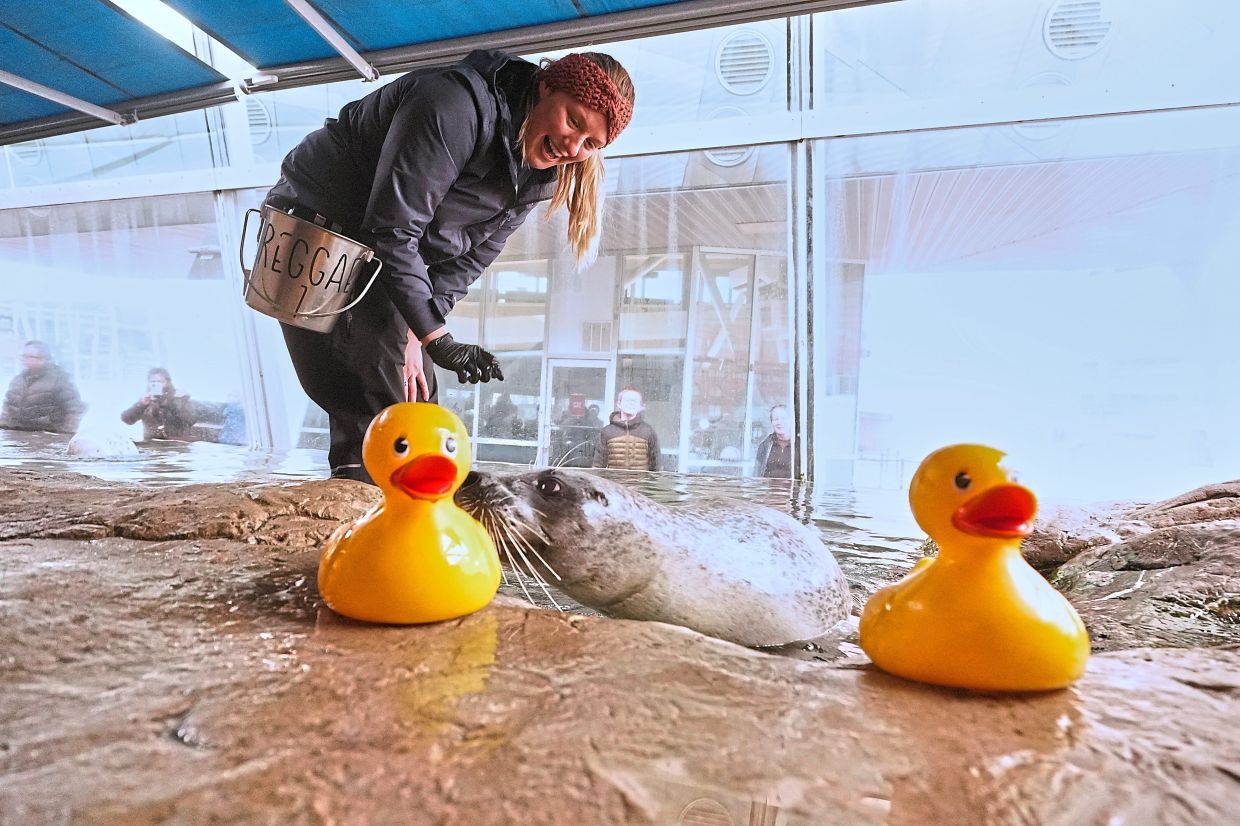
"He can use his great vision to look around the habitat, find these new items, and he can also use his other senses to kind of explore,” she said.
"It’s a great way to challenge our animals. We want to create challenges for them and really allow them to use those problem-solving skills that they have.”
The sessions are designed not just to stimulate the seals cognitively but to strengthen relationships with trainers, with even physical play – manipulating objects with their front flippers or moving a toy through the water – becoming part of that challenge.
On a recent morning, trainer Liz Wait stood at the edge of the exhibit with a silver bucket of fish clipped to her waist, tossing small rewards as Reggae followed cues.
"Target!” she called, pointing to one duck. Reggae swam over and nudged it with his nose. She repeated the cue with another duck.
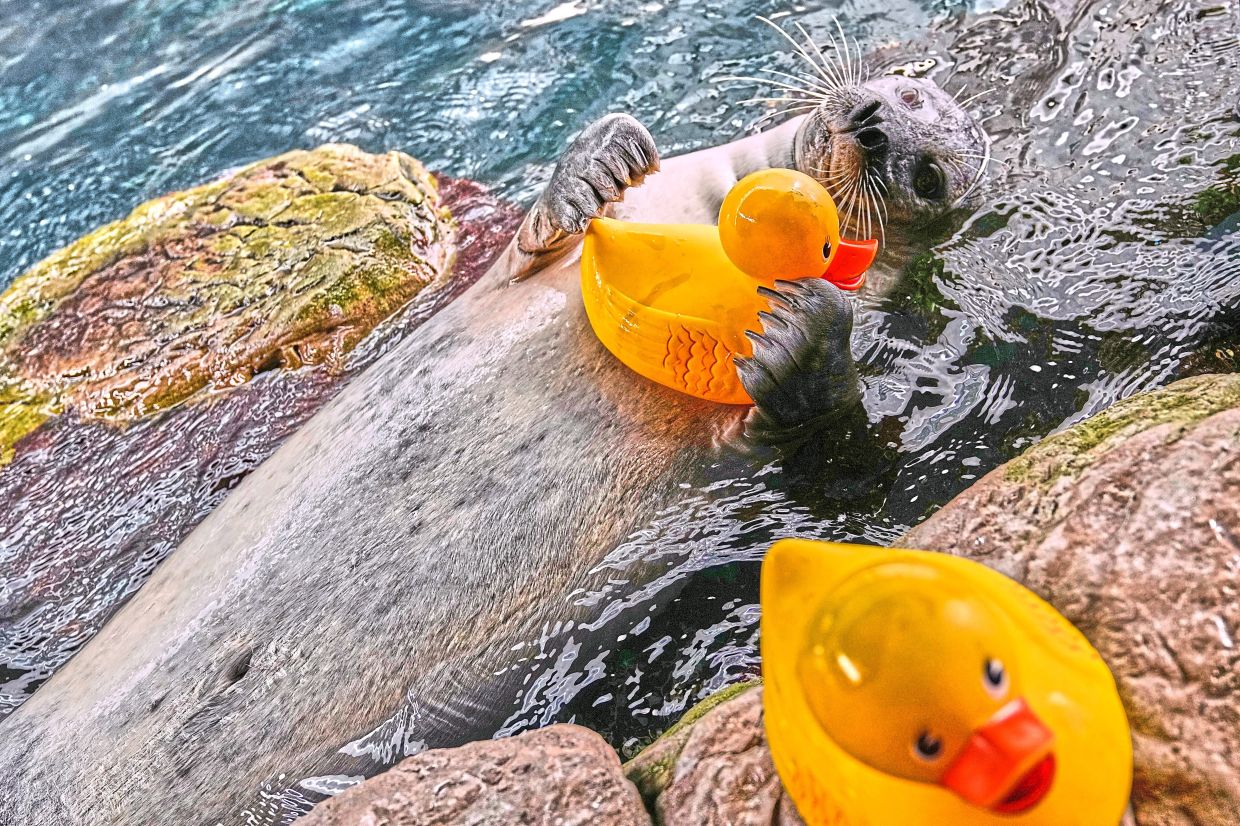
"Hold it!” she said, placing a rubber duck on his white belly. Reggae lifted his flippers to wrap them around it.
"Are you having fun with your ducks?” she asked as he climbed onto a rock, resting his chin atop one of the toys.
"You want to say, ‘Bye, everybody?’” Wait asked, waving her hand. Reggae hoisted his right flipper in response and returned a salute from his trainer. "Good, Bubba."
Unbothered by attention
Miller said Reggae appears to be unfazed by all the attention.
"We describe his personality as very mellow. He’s a very easygoing guy, he goes with the flow and he loves attention from people,” she said.
One family waved as Reggae swam toward the glass to retrieve a duck that Wait tossed near them.
"You never expect a seal to hug a rubber ducky,” said 13-year-old Tom Smith of Boston, who was visiting with his mother and younger brother during school vacation week.
The aquarium’s Atlantic harbour seals are among its most recognizable residents, living in a 42,000-gallon outdoor exhibit on the front plaza. The current seals were born at the aquarium to parents that were themselves longtime residents.
Many trace their lineage to Hoover, a harbour seal born in 1971 who was raised by a Maine fisherman after he lost his mother.
When it became too expensive for the fisherman's family to feed him, Hoover was brought to the aquarium, where he later gained national attention for mimicking phrases such as "hello there” and "get out of here” in a gruff New England accent.
Today, seals at the aquarium often live beyond the roughly 25-year lifespan typical in the wild. Several have surpassed 30 and even 40 years, longevity the institution attributes to veterinary care, structured training and daily enrichment. – AP