
There are many “firsts” that mark the start of something new – first love, first car, first house. And yet for many chefs, that long-held dream of a rainbow on the horizon is often marked by that most precious of “firsts” – a first restaurant to call your own.
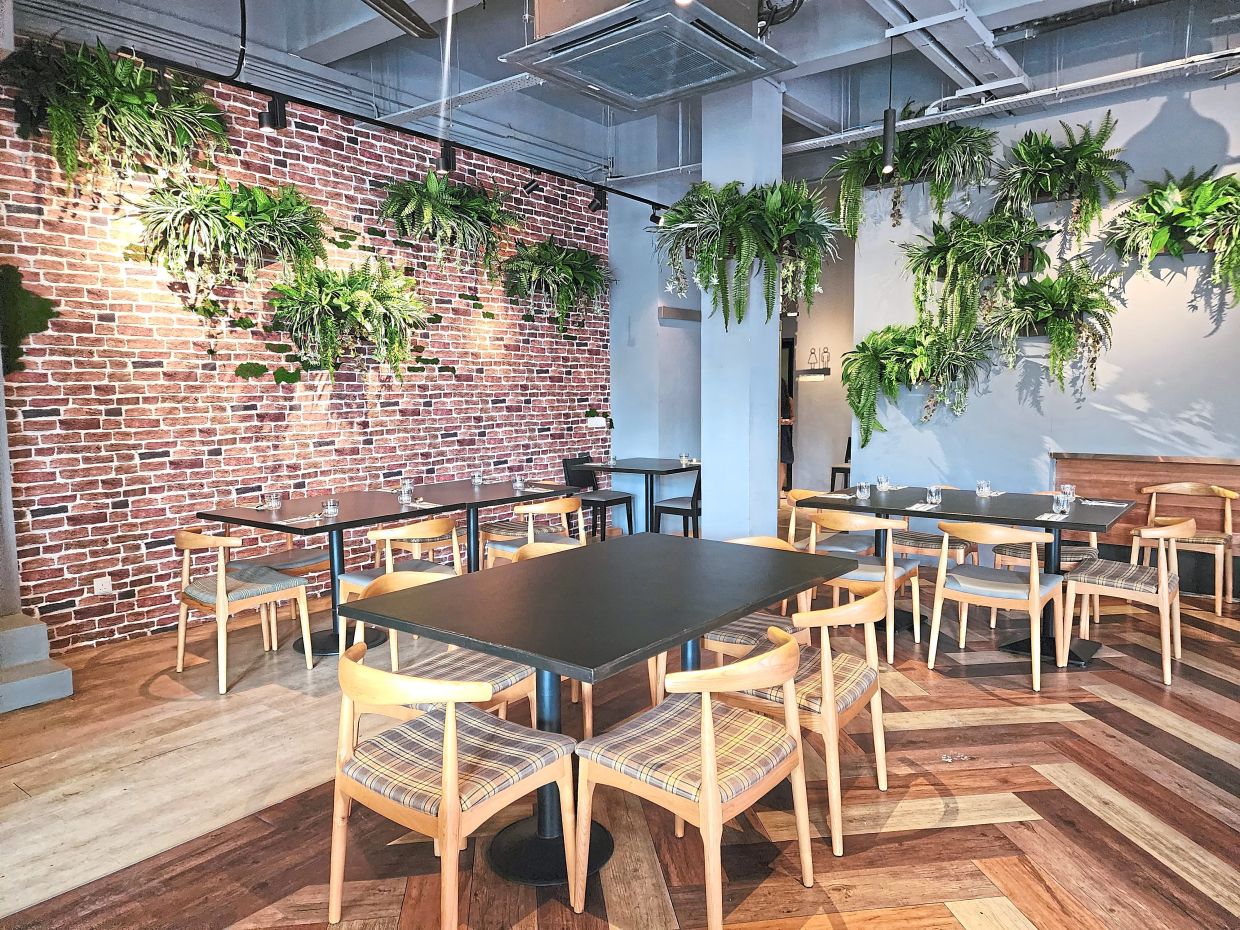
For chefs Lai Chee Hung and Barath Kumar M. Sakrapani, this dream finally came to fruition this year with the launch of Meraki Dining, ensconced along a row of shop lots in Petaling Jaya’s Section 17 neighbourhood.
The charming, contemporary eatery is also co-owned by Malcolm Goh, an experienced chef and restaurateur who some might recognise from his stints as a food personality on the Asian Food Network, where he featured on shows like Great Dinners Of The World.
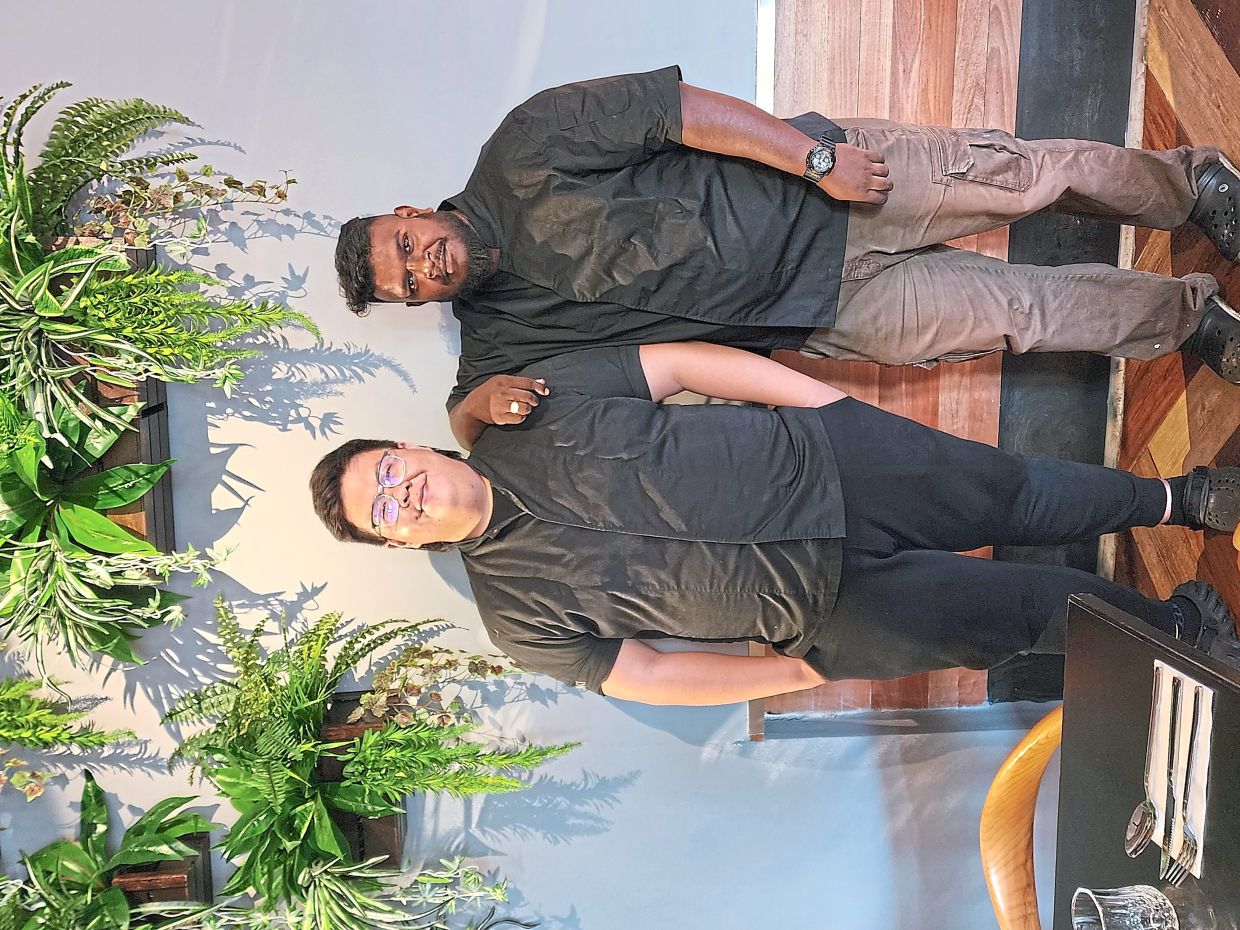
Lai and Barath meanwhile are seasoned kitchen mavens who each have a decade of experience in the industry. The two are also good friends who started a food delivery business with Goh during the Covid-19 pandemic. This then burgeoned into private dining events, which grew and bloomed to such a degree that they were constantly inundated with requests to open their own restaurant.
“So many clients asked us, ‘Do you own a restaurant?’ or ‘Where is your restaurant?’. At the time, we didn’t have a physical space to call our own. So it felt like every time, we didn’t have an answer to give.
“That was a trigger point for us where we thought, ‘It’s time to open one’,” says Lai.
At their fledgling restaurant, Lai and Barath focus on innovative Malaysian-inspired meals that offer a rollercoaster ride through local terrain with unexpected twists and turns galore.
“I think that in cooking, there is no right and wrong. So why didn’t we want to stick with traditional Malaysian meals? I guess because we wanted to educate our guests that we can use local ingredients and flavours in different ways and show them how this can be presented in a meal,” says Lai.
To begin a meal here, go with the Lux Fried Chew Kuih (RM48). Chew kuih, often spelt “chwee kueh” is traditionally a Teochew-style steamed rice cake topped with preserved radish.
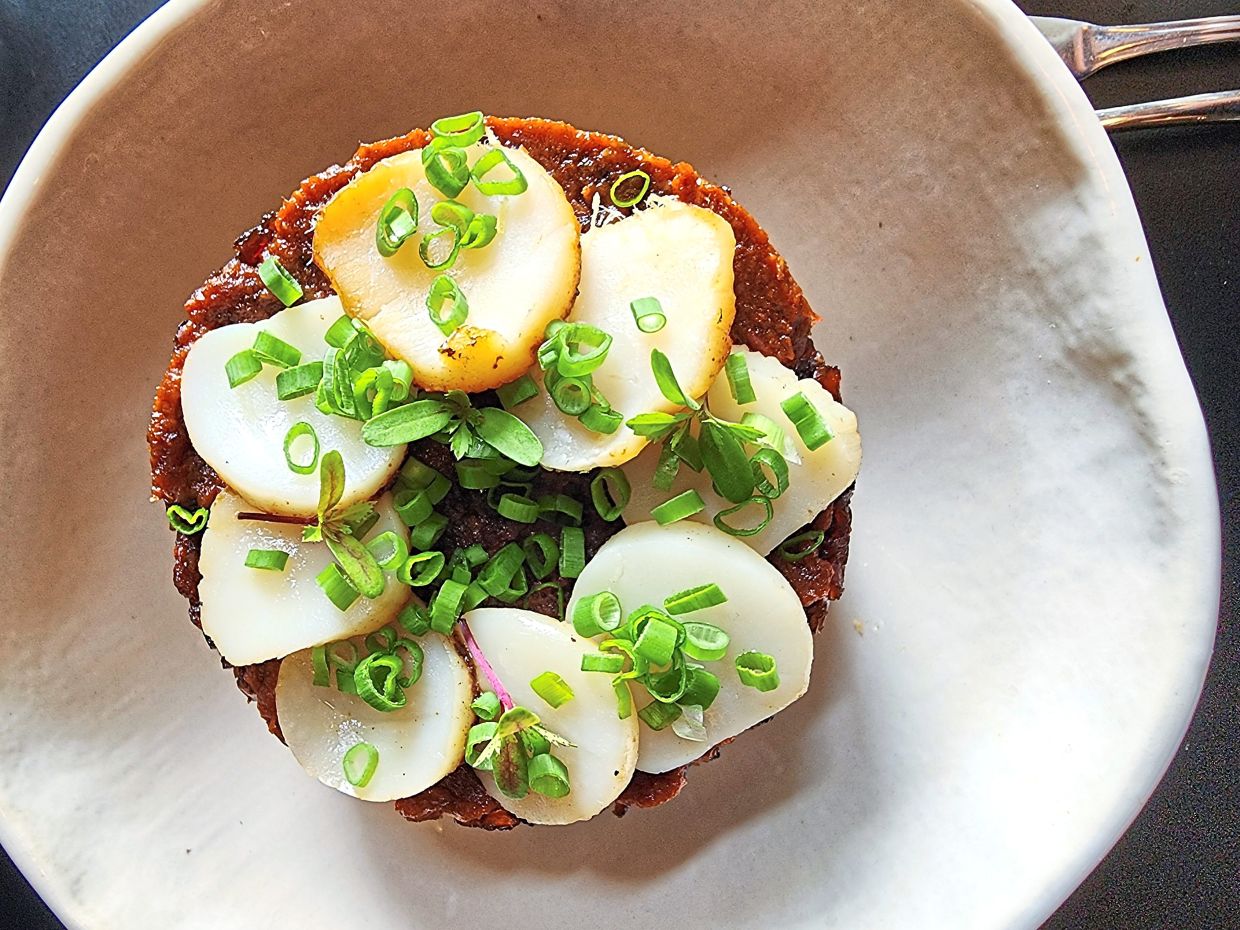
In the interpretation here, the kuih is deep-fried instead and topped with preserved radish, sambal and seared Canadian scallops.
This is an interesting take on a classic dish that combines the satisfaction of something crispy against the potency of the preserved radish and the supple, silken qualities of the scallop. The resulting flavour bomb disperses crunch and heat in a thoroughly satisfying way – sort of like a slow-burn movie with a compelling twist in the plot.
From the vegetable persuasion, look at indulging in the Highland Corn Ribs (RM30), which are laced with a sweet and sour spice rub and served with an umami-laden sour cream.
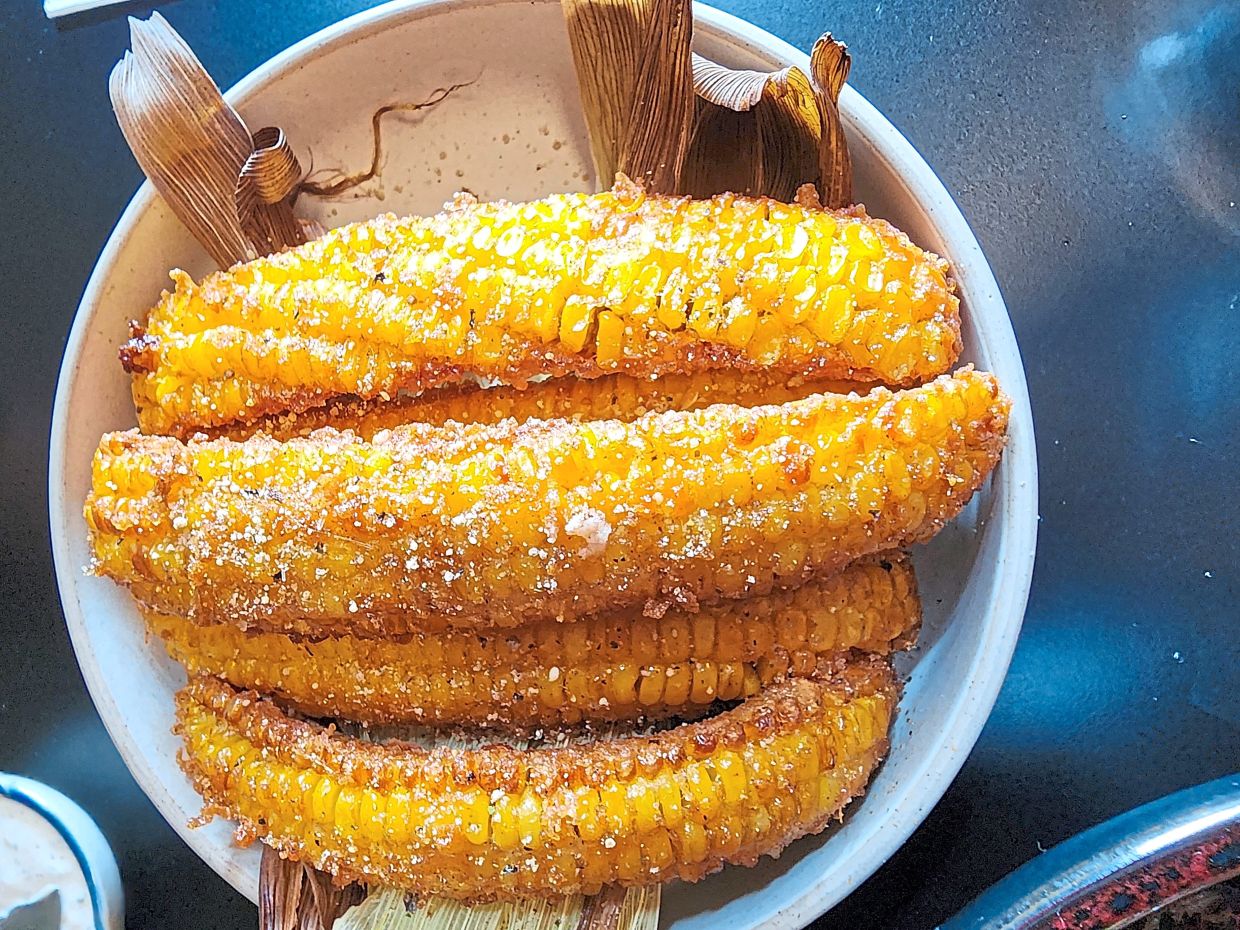
The ribs are very successful – the cob boast a crisp shield that isn’t uniform in its distribution, yet actually makes the dish even more successful because you get hits of crunchiness and samples of the purity of the corn kernels in one fell swoop.
The ribs have also been cut in a very user-friendly way that make them ideal hand-held implements, which bears mentioning because the corn rib craze has snaked its way around the city and yet rarely is there an iteration of this dish that is designed for ease of handling.
The restaurant also has a range of larger main dishes that are meant for sharing, so if you’re here with a partner-in-crime, look to these options for maximum satisfaction.
The Ayam Bakar (RM50) for instance, features a 24-hour brined chook with a gulai marination and ulam bearnaise.
“Last time, we used to serve a brined chicken at our events. It was really nice and juicy but guests’ feedback was that it needed more flavour. So Malcolm came up with this gulai marinade,” explains Barath.
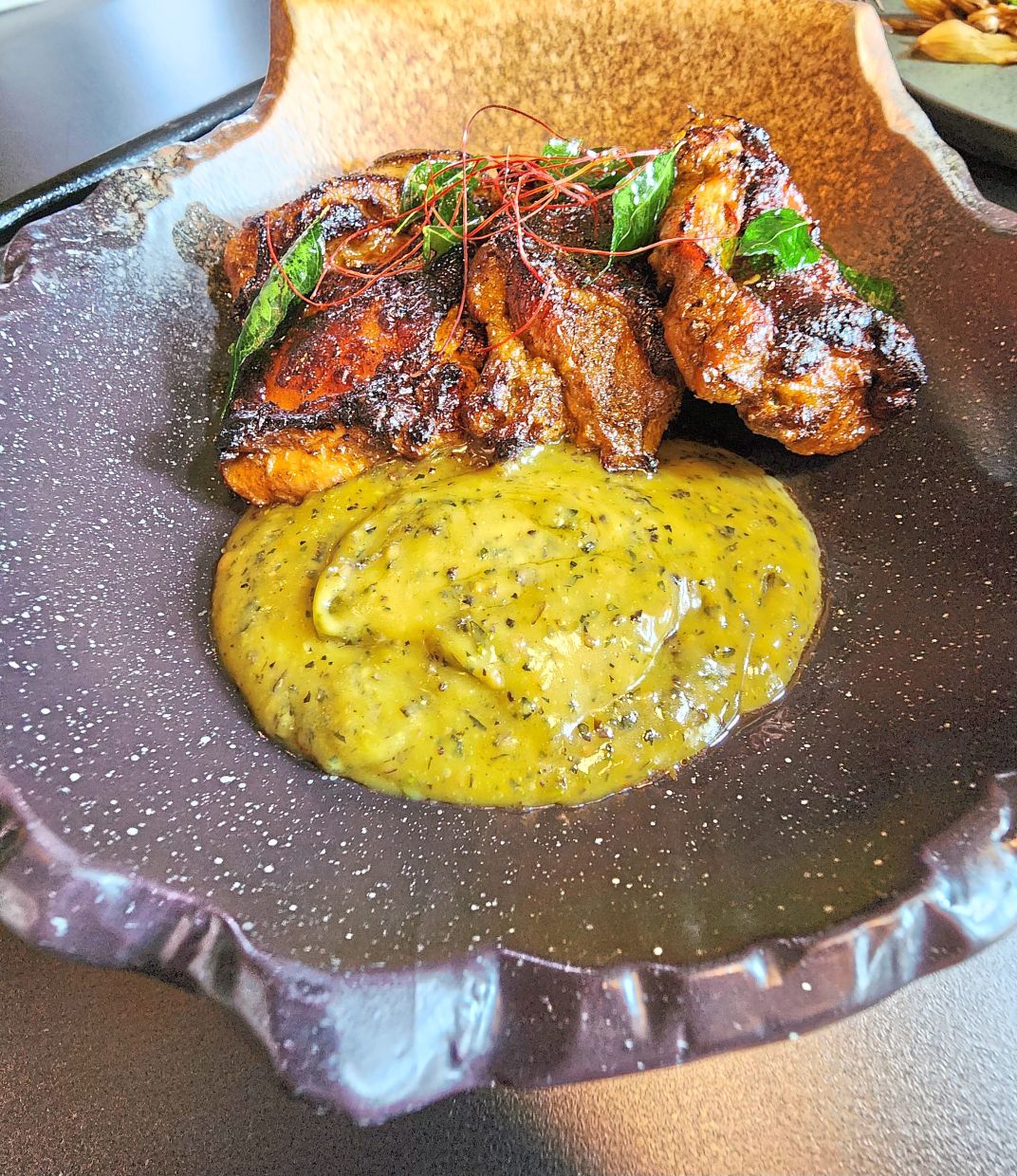
All those hours of R&D have yielded a chicken that has a burnished golden skin with blistered bits speckled throughout. This then segues into incredibly succulent flesh that is so juicy that the juices ladle the bottom of the plate.
In terms of flavour, there are hints of spices rendered evenly throughout the meat in a triumphant effort that takes it straight to the winners’ podium in the minds of most diners.
It’s difficult to be placed on the same plate as something so good, yet the ulam bearnaise exerts its presence in a wonderfully memorable way.
Essentially an emulsified butter infused with kaffir lime leaves, curry leaves and dried shrimp – this is a creamy operator with an herbaceous heart and a stealthy aquatic potency, courtesy of the shrimp in its constitution.
Then there is the Lamb Shoulder (RM86), which uses a harissa marinade inherited from Lai and Barath’s private dining days. The lamb is fantastic – grilled to perfection, malleable and tender and seasoned perfectly. This is accentuated by the asam boi Greek yoghurt drizzled over the meat, which offers a tangy counterpoint and a slight astringency that sluices through the overt carnivorous qualities of this meal.
Move on to the charms of Pak Aizat’s Portuguese Fish (RM65) which is based on a recipe that started out as a staff meal and ended up being a permanent feature on the menu.
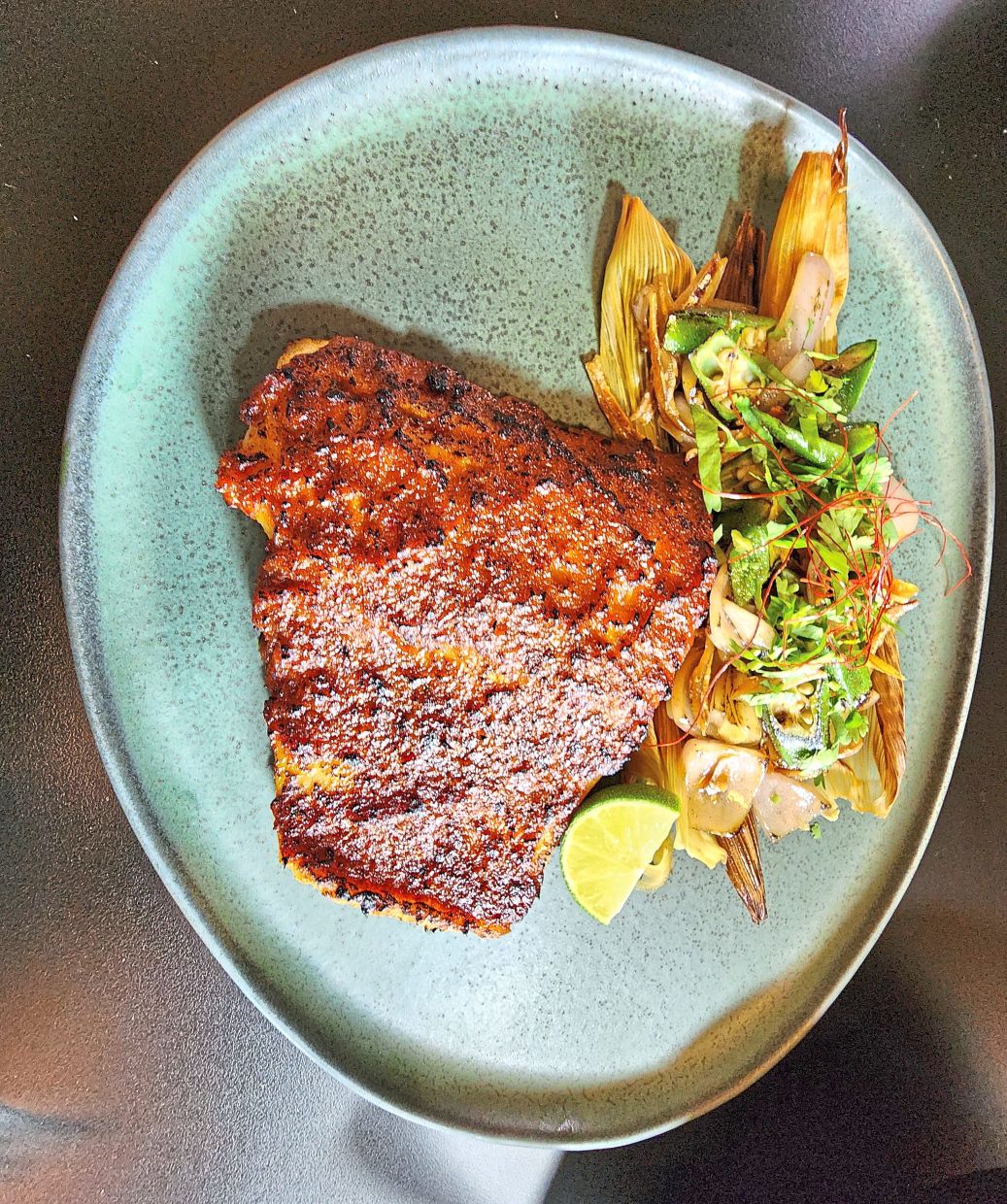
Here, the fish has been grilled and then slathered with a Peranakan sambal. The sambal is muted, perhaps not as spicy as some diners might like but infinitely less gut-busting for those with sensitive stomachs. Here, there is a quiet heat dispersion that tingles the gut lightly, rather than alarmingly.
Perhaps the unsung hero of this dish is the fried okra and ikan bilis served on the side, which is crunchy and blanketed by a pleasurably smoky aftertaste.
From the single portions on offer, look at indulging in the Chicken Rice Risotto (RM45). Lai and Barath say they have done various Malaysian renditions of risotto – from masak lemak to a black bean variant, but think they’ve nailed it with this one.
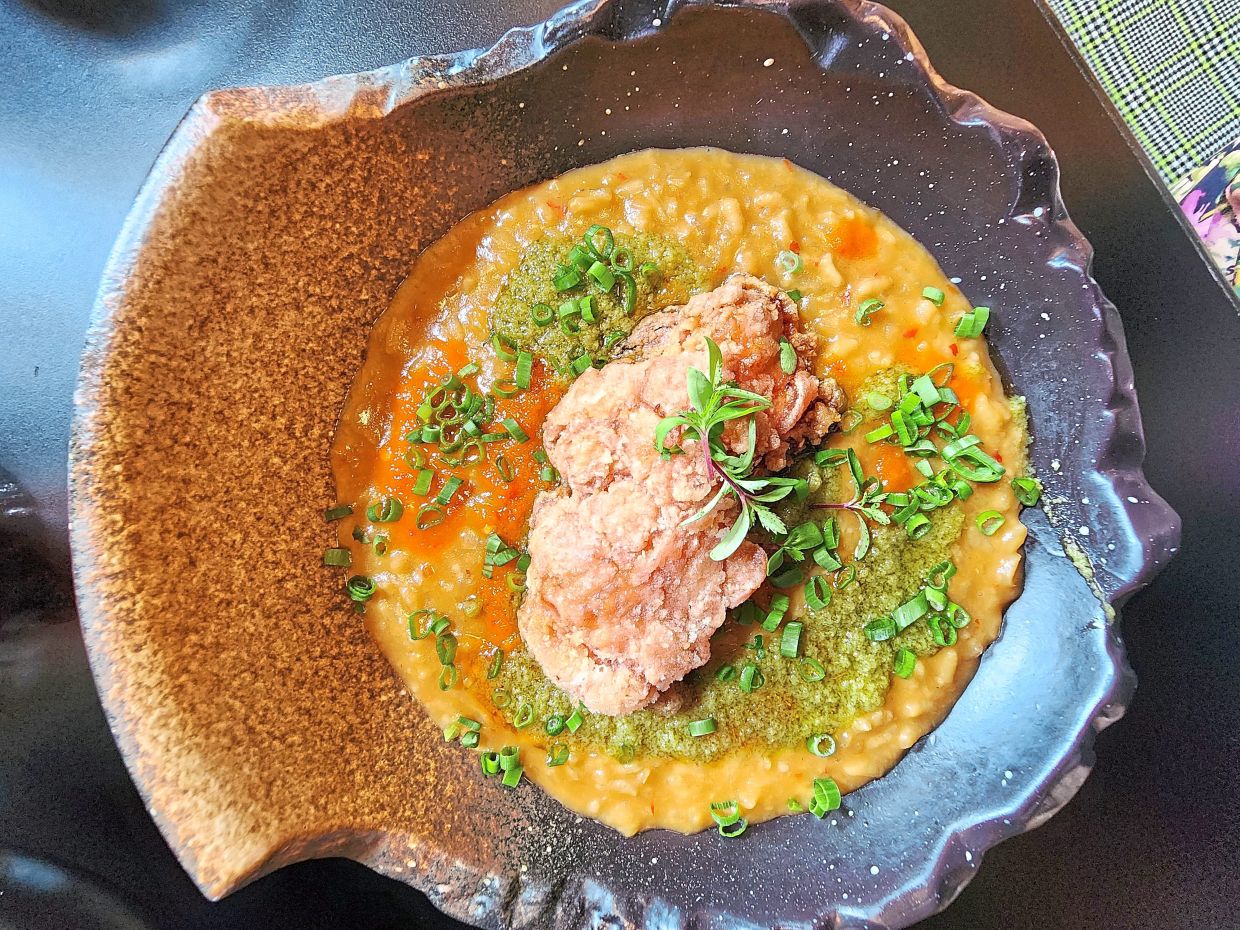
In this dish, you’ll find all the usual suspects associated with chicken rice – rice, chicken broth, spring onions, a pungent chilli sauce all cooked together until the rice absorbs the flavours and thickens into the creamy consistency so synonymous with risotto.
It’s like turning all the leftovers from chicken rice into a brand new – delicious – dish.
The only anomalous thing here is the fried chicken, which presumably was added for textural definition but somehow seems a little out-of-place.
Moving forward, Lai and Barath say now that they’ve had a taste of what it’s like to own their own restaurant, they are keen to charge forward with expansion plans.
“Oh, we’re definitely expanding. We’re already planning two more Meraki outlets in Kuala Lumpur,” says Barath, grinning.