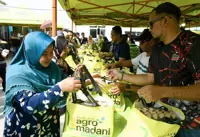
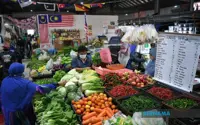
A brief list of culinary must- visits in Penang, curated by Penang chefs Su Kim Hock and Johnson Wong.
This modern coffee space is perpetually teeming with people. In fact, acclaimed Michelin-starred chef Su Kim Hock himself makes a daily pilgrimage here for his coffee fix.
The tiny little space is a 30- seater coffee bar that serves seasonal coffees from local and international roasters. Be prepared to wait a little, as queues seem to be an everyday occurrence.
ALSO READ: Two of Penang's best chefs are on a mission to tell the world about Penang food

But rest assured, it’s a fruitful wait, as the coffee haunt is so vaunted that it recently emerged No 56 on the inaugural The World’s 100 Best Coffee Shops 2025 list.
Nestled within the restored Yeng Keng Hotel, this old-timey place evokes memories of sepia-toned days long gone past and serves up a range of Hainanese, Peranakan and Western fare.
It is also one of Su and Wong’s favourite restaurants for Peranakan food (a blend of Chinese ingredients and Malay spices and cooking techniques).

At Yeng Keng, Peranakan staples like assam prawns reign supreme. The eatery’s version is superlative – yielding crusty fried prawns laced in a lightly astringent coating of flavours that are oh-so satisfying.
The kerabu kacang botol, meanwhile, is fabulous – filled with four-angled beans, plenty of coconut, torch ginger buds and fat, fluffy prawns in what proves to be a riotous tropical affair that is entirely, intoxicatingly good.
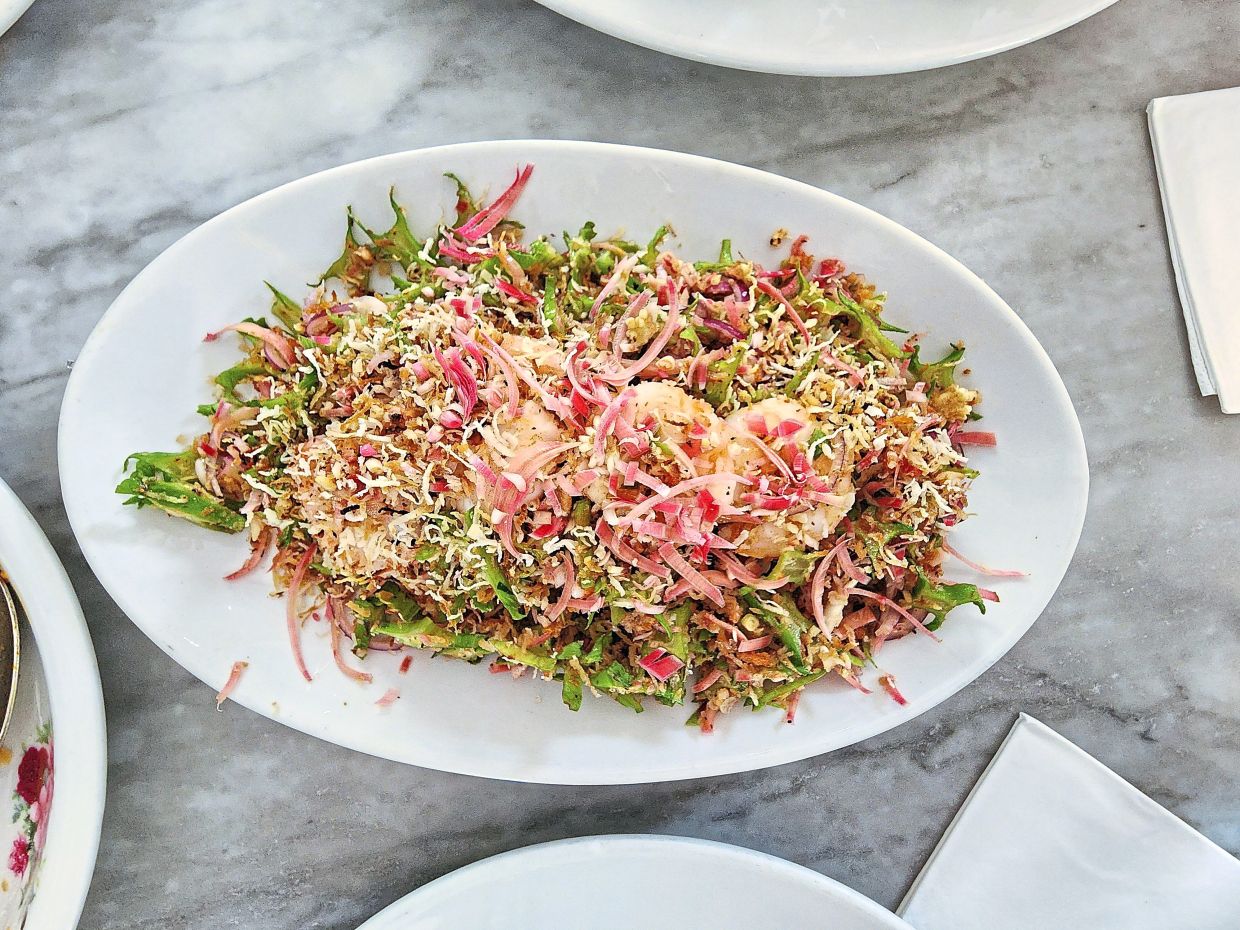
The eatery’s nasi ulam is incredibly good – fresh, floral, with a litany of julienned herbs and fried mackerel to complete this herbaceous assemblage. It’s a true treat for the senses that derives from the past and preserves its integrity to the fullest effect.
A meal here assures you’ll enjoy a good, old-fashioned Peranakan meal (or some Hainanese dishes, if that’s your thing) with few bells and whistles and an absolute focus on flavour.
A 40-minute drive away from Georgetown, Penang, is Balik Pulau’s famed Kim Laksa, which serves up piping hot bowls of Penang’s famed assam laksa.
In 2020, assam laksa was ranked No 20 on CNN’s World’s 50 Best Foods list and yet, according to Su, finding good assam laksa has become increasingly difficult since the advent of the Covid-19 pandemic.
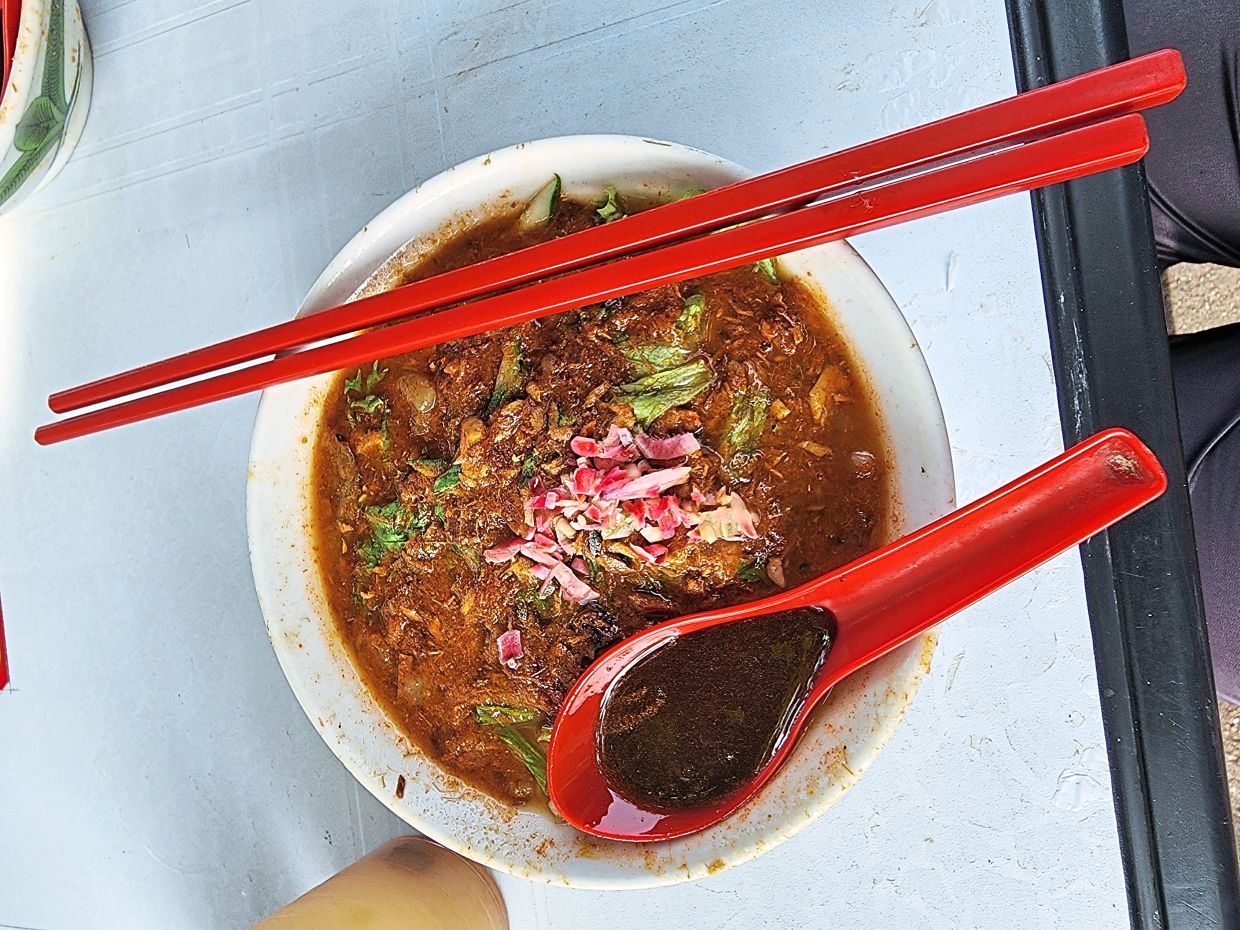
“Before, it was easy to find good assam laksa in George Town, but now, we bring people all the way here because it is getting harder to find good assam laksa everywhere else,” says Su.
The stall is helmed by 60-year-old Christina Ng and her son Patrick Loh, 29. The two sell between 200 and 300 bowls of assam laksa every day.
When asked what the secret is to their recipe, Loh simply says, “There’s no secret ingredient – it’s just pure passion.”

Assam laksa is essentially rice noodles laced in a gravy fashioned out of mackerel and tamarind with other ingredients like torch ginger bud and lemongrass.
Toppings for the noodles typically include cucumber, pineapple, chillies and hae kor (prawn paste).
So what does Kim assam laksa taste like? It’s very, very good. The noodles are thick and bouncy and this is accentuated by accompaniments like julienned cucumber, chillies and torch ginger buds, which elevate the swampy, fish-riddled laksa base that is thick, richly aquatic, suitably acerbic and utterly, ridiculously satiating.
Set far away from the city’s dense conurbation and snaking traffic, this four-acre plot offers quiet respite.
Started by husband-and-wife team Jerry Leow and Anna Cheng, the café here focuses on locally sourced ingredients, coffee and their most famous offering, a range of in-house kefir (a fermented beverage made with milk or water and kefir grains) drinks.

“I really love soft drinks. And I know that soft drinks like Sprite and Coke are not healthy. But I thought if we can make a beverage that is naturally carbonated, then it’s great,” says Leow.

After doing various rounds of R&D, Leow managed to unlock the secret to great kefir-based drinks and now makes them in various flavours, including mango, lime and passionfruit, many of which are supplied to cafes in Penang and Kuala Lumpur.
The drinks are great – fizzy, fun and entirely good for your gut.
But perhaps the bigger allure of the place is how peaceful it is there – just a few humans and the great outdoors.
When asked where to go for oh chien (oyster omelette) in George Town, Su and fellow chef Johnson Wong head straight to the original OO White Coffee along Carnarvon Street.
Oyster omelette (also called oh chien) is essentially made up of three core ingredients: oysters, eggs and a starch batter which can be made up of rice flour or tapioca flour.

These core ingredients are fried together until the concoction forms crisp outer edges and a starchy interior – all while retaining the plump attributes of the oysters.
At this stall, an older gentleman fries up oyster omelette quickly and without fanfare. While he once only sold a more traditional variant, Su says he capitulated to demands for a crispier option and now offers the original version as well as a crispier cousin to suit different palates and predilections.
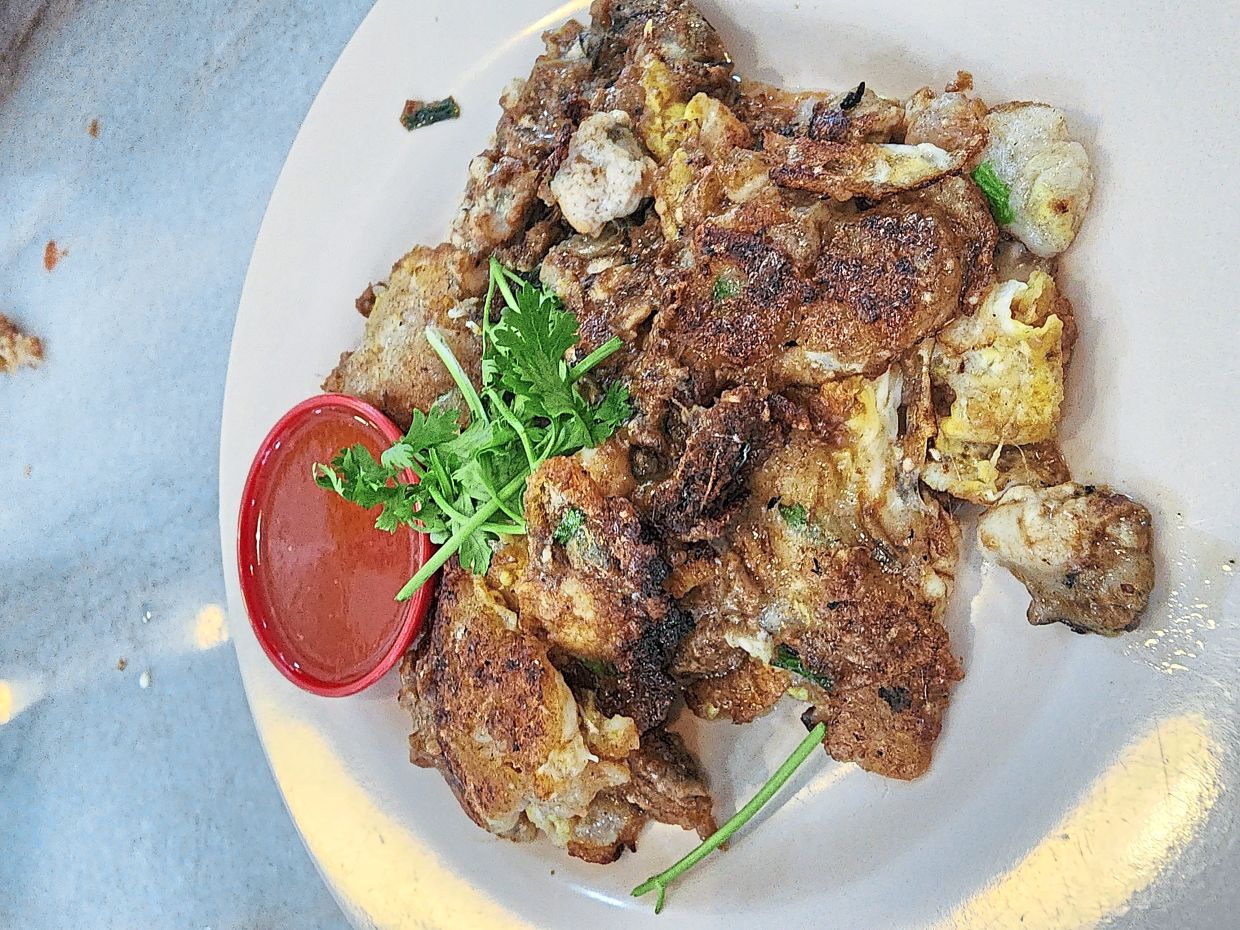
Of what’s on offer, the original oyster omelette is the clear winner. Starch-riddled, slightly gloopy with crisp edges, the oysters are plump and bouncy here, yet deeply intertwined in the starch-egg mixture that keeps this entire configuration together.
“This is more like it – it should have that kind of starch, then you know it’s a proper oyster omelette,” enthuses Su.
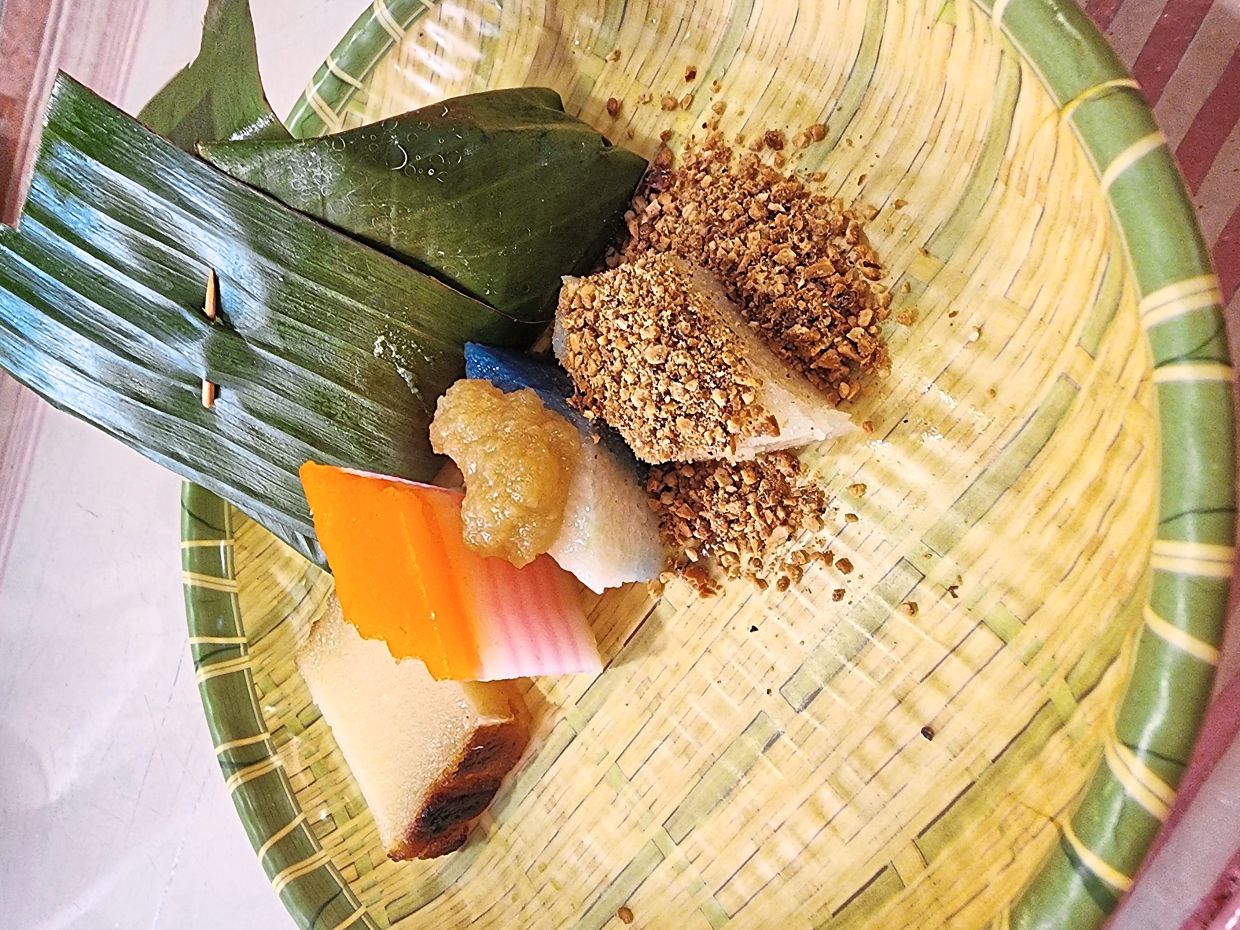
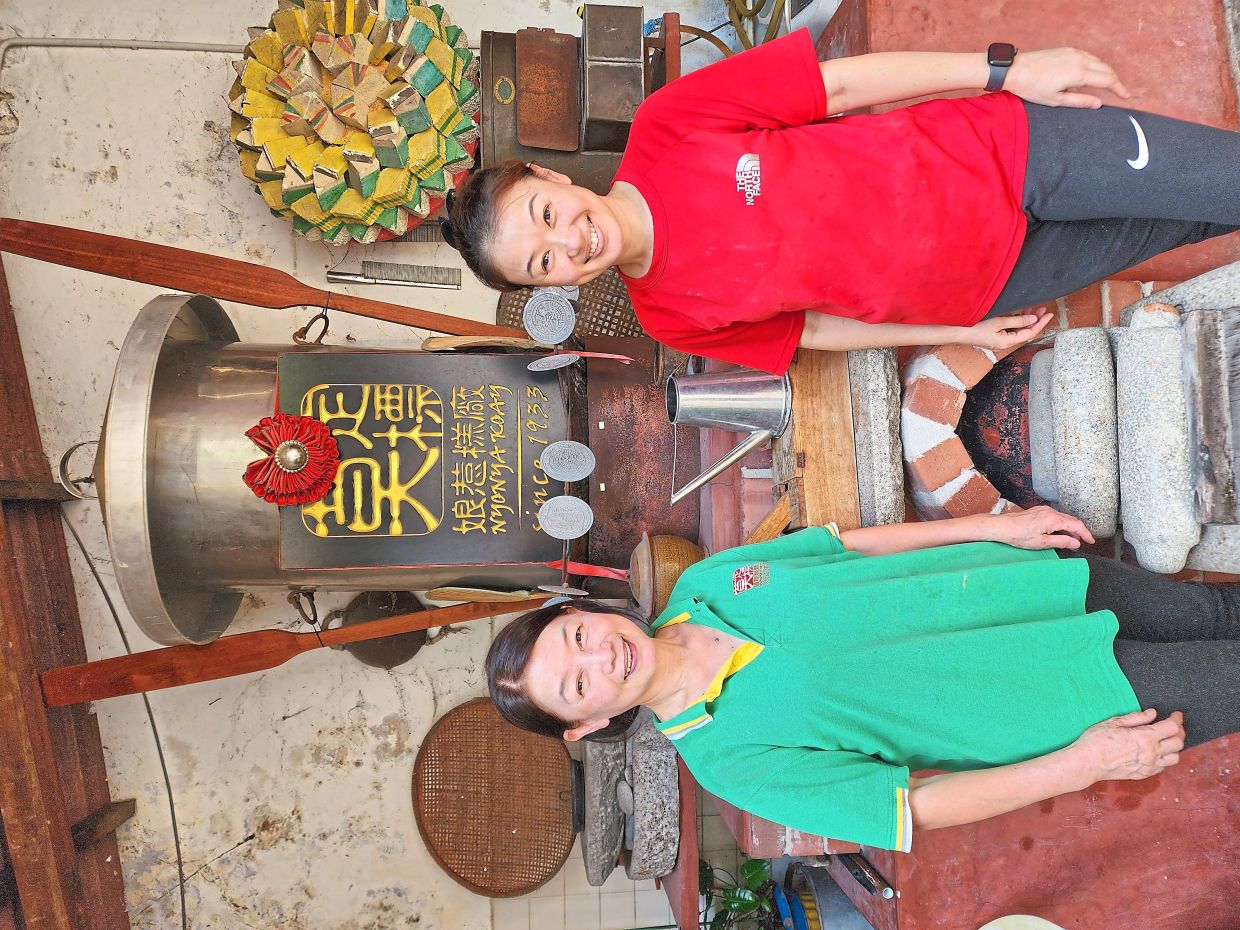
There is perhaps no more famous kuih maven in Penang than Moh Teng Pheow Nonya Koay. This Bib Gourmand eatery (listed in the Michelin Guide as a value-for-money establishment) has been around since 1933.
Its founder – the eponymous Moh Teng Pheow – started working when he was 14 for a rich Nyonya lady, helping her in her kuih business.
Moh’s son Mok Hian Beng took over the business in the 1970s. He became a legendary kuih-maker and married Teoh Kheng Sim – who came from another famed kuih-making family called Tua Bak. Teoh now runs the business (Mok has since passed away) with her son and daughter.
“We have maintained all the recipes; we don’t cut corners – the only thing we’ve done is cut the sugar levels because people are more health-conscious now,” says Teoh.
Sample a range of true-blue Peranakan kuih here, from pulut tai tai, which is essentially kaya and pulut (glutinous rice flour) that has a sweet, almost saccharine flavour profile that is very, very satisfying.
The mung bean-filled ang ku meanwhile is chewy and intensely satiating while the kuih kochi santan has a layer of coconut coating the filling of grated coconut infused with palm sugar in what proves to be an utterly triumphant foray through tropical sweets.
This porridge place is actually one of Su’s establishments and was set up last year when he realised there was a dearth of Teochew-style porridge in the market.
“When I was growing up and even right before the Covid-19 pandemic, we’d go out into the streets and there would be pushcarts selling Teochew porridge and other dishes. So after the pandemic, we went out looking for it and we found one place. The queue was super long and we waited for an hour and a half to get our food and ultimately, when we tasted it, we felt shortchanged.

“So I thought if they can make it work, I can make it work too. I’m half Teochew, so I thought, ‘If I can preserve this, I’m going to,’” says Su.
Teochew-style porridge is a runnier sort of porridge where the rice kernels are still intact. Sometimes the porridge is served with sweet potatoes, but always, there are a slew of side dishes to fill out the meal – from braised pork to omelettes, salted eggs and tofu dishes – all designed to complement the porridge.
At Teochew Club, the porridge itself is very good – runny and perfect for dipping the other dishes into – from braised pork to sticky, spicy pork belly and salted eggs.
Interestingly, the eatery is also run as a co-operative, so whoever works with Su in the restaurant owns a share of it. In fact, 70% of the restaurant is co-owned by the staff.