
Can a training restaurant aim higher or will it forever be stuck in the shadow of a culinary arts school?
For many years, training restaurants in culinary schools served purely as learning vessels. There was never any aspiration for them to venture beyond university walls or dream big because they functioned to meet the needs of students i.e. to provide a simulated experience of what a real-world restaurant is like.
And yet slowly but surely, the wheels of change have begun churning. Malaysia’s top-rated restaurant Dewakan, for instance, now has two Michelin stars to its name. But when it first opened in 2015, it was an university entrepreneurial effort set in KDU (now the University of Wollongong Malaysia).
As its fame progressed, new opportunities arose and it eventually moved to a more illustrious premise. But one immutable fact remains: the genesis of the modern Malaysian cuisine that Dewakan promulgated began in a humble university restaurant. It was an example of what a university-led restaurant could be if it aimed high.
In 2019, a training restaurant named Berceau des Sens, housed in Switzerland’s prestigious Ecole hoteliere de Lausanne hospitality school, achieved the seemingly impossible when it gained a Michelin star, becoming the first training restaurant in the world to do so.
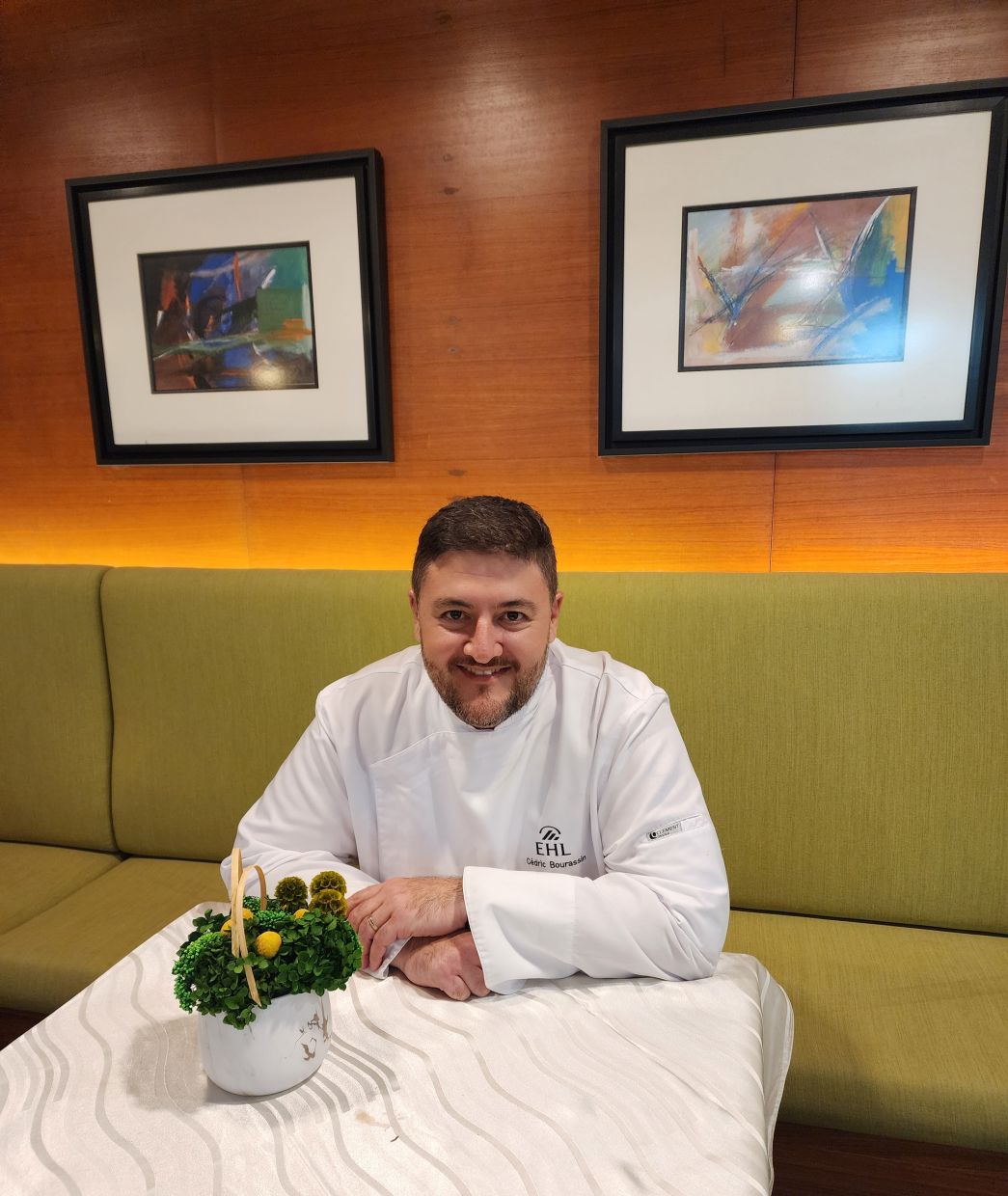
This was achieved when acclaimed chef Cedric Bourassin took over the kitchen in 2017 after working at the three Michelin-starred Michel Bras’ Toya Restaurant as well as Anna Sophie Pic’s three Michelin-starred Pic Restaurant in France.
“Yes, we got the Michelin star in 2019 in the first year that I started working there. And it was an absolute surprise – the cherry on the cake.
“I was working in Japan when the school chased me to work in this fine-dining training restaurant. And because I had been working in a three Michelin-starred restaurant in Japan, I think the Michelin inspectors heard that I had moved to this restaurant in Switzerland and they came to visit,” says Bourassin.
The restaurant is now fully booked three months in advance and while its guests were previously made up of 60% students and staff and 30% members of the public, it now counts 70% public guests and 30% students and staff.
But the student participation element has continued, because at its heart, it is still a training restaurant.
“If we have no students, the restaurant is always closed because it’s not just a business, we are a school – this is the most important part.
“In the kitchen, we have seven permanent staff and 20 students. And then we have 20 more students for the front-of-house to do service. And if they’re in the kitchen, they stay with me for one week. If they’re doing service, they stay for two weeks.
“So some of them, I see them for a week and I never see them again in my life. So it’s very interesting to implement a certain organisation and to show them what is real life, because it’s a very quick learning curve for them,” says Bourassin.
Bourassin also adds that for the students, there is a sense of pride in working at Berceau des Sens because they aren’t just working at a training restaurant; they’re working at a Michelin-starred restaurant.
“When they come to join us, they are super committed and involved and every year when we maintain the Michelin star, the students are very happy because they participated in the restaurant. So it’s a good balance,” he says.

In many ways, Berceau des Sens and even Malaysia’s own Dewakan serve as models of what can happen when you think beyond assigned borders. Because defying conventional boxes means you raise aspirations. Sometimes, it even means you change the game. Either way, you’re certain to inspire many others to follow suit.
Bourassin himself says that he believes his success at Berceau des Sens has motivated countless other training restaurants to reach for the stars. In 2020, for instance, Institut Paul Bocuse’s training restaurant Saisons in France also earned its first Michelin star.
“I think the fact that we got a star started some competition and other training restaurants are now trying to get it too. Because having a Michelin-starred restaurant is good for a school, although the most important thing is to keep it up,” says Bourassin, smiling.