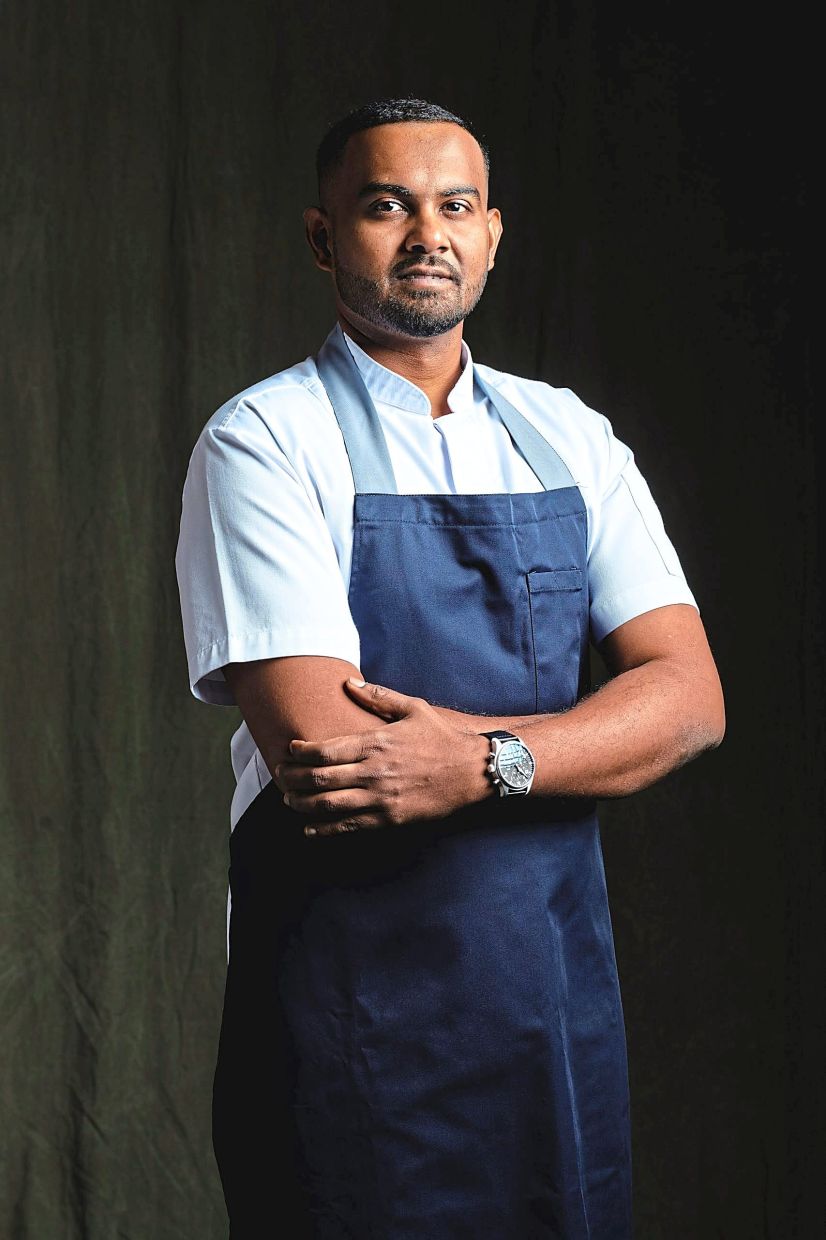
For a brief, solitary year, Mano Thevar had a unique distinction: he was the first Malaysian chef whose restaurant earned two Michelin stars.
Mano’s namesake restaurant Thevar in Singapore earned this accolade in 2022, one year before Malaysian-based chef Darren Teoh’s Dewakan was awarded with two Michelin stars.
In many ways, Mano’s rise to fame has been a little like him: humble and unassuming. Growing up in Penang, he recalls a childhood filled with family and food.
“I still remember my dad bringing us out to eat at hawker centres in Penang. We never went to fine-dining restaurants; rather, I grew up eating nasi lemak, char kway teow, nasi kerabu, nasi kandar and so much more. All those flavours just stuck in my mind and shaped me to be who I am today,” says Mano.
Right after he finished his Sijil Pelajaran Malaysia exams, Mano’s father passed away. That moment marked a turning point in his life where he had to decide what he was going to do.
“I think my life changed after my dad passed away. My mum was worried I would become a gangster or something because at that point in my life, I was young and naive. But I said, ‘You know what? I need to live. I need to start something for myself’.
“To be honest, until then, I didn’t know that I wanted to be a cook. I went to Singapore, met some people who offered me a job in a French restaurant. So I started there and all the way, I worked in French and Japanese restaurants,” says Mano.
Those restaurants were Guy Savoy and Waku Ghin, both of which influenced his culinary pedagogy and formal food philosophies. But when the opportunity to open Thevar came in 2018, he decided to go back to his Malaysian Indian roots and heritage instead.
“I was clueless about what I wanted to do. I wondered if I could make my name cooking Western food. In the end, I thought to myself, ‘I’m a Malaysian Indian chef in Singapore, and there is no one doing Malaysian Indian flavours – so why don’t I?’,” Mano shares.
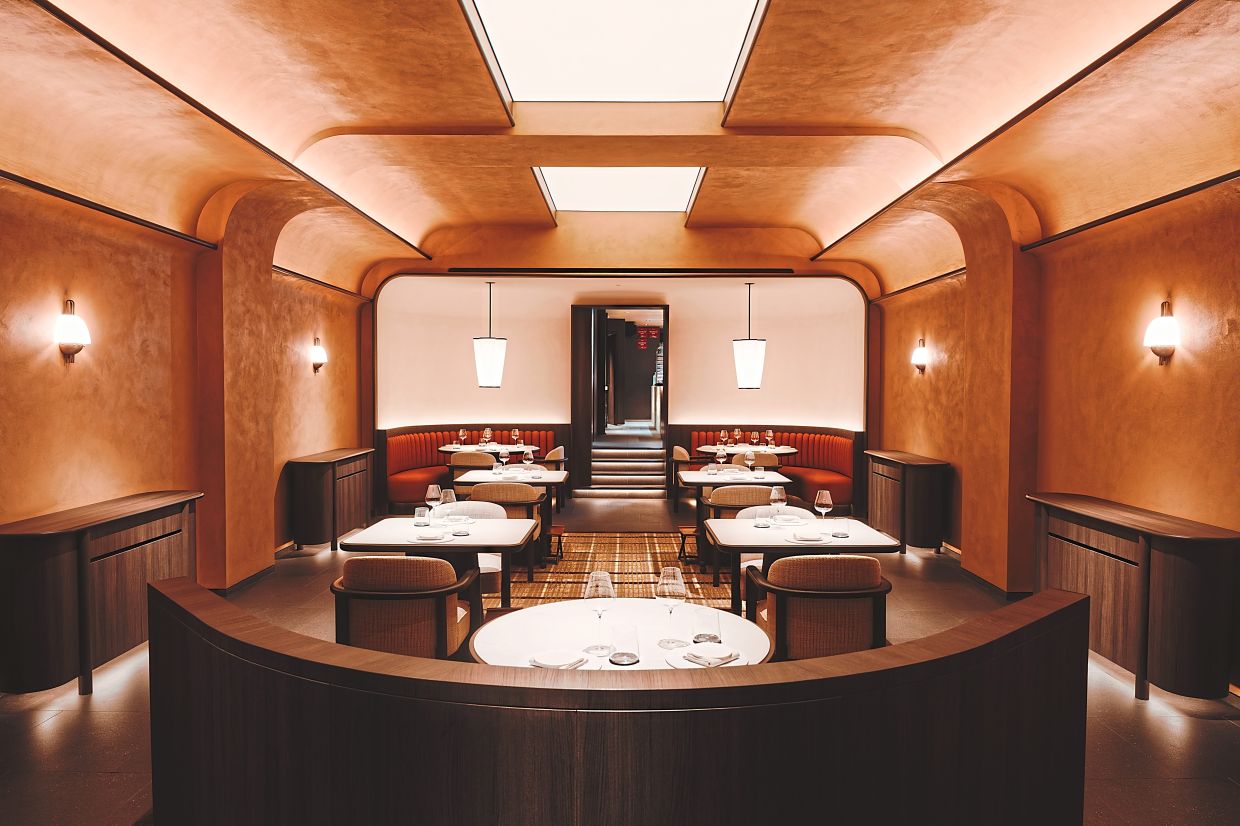
At Thevar, Mano promulgates soul food, the sort that evokes nostalgia and memories of Malaysian Indian fare while still pushing forward his Japanese and French culinary learnings.
Thevar’s Experience Menu is priced at S$298 (RM947) and takes diners on a wondrous journey through Mano’s childhood and cherished family recipes infused with his own creative streak.
To begin, there are snacks in the form of a Tomato Chaat, Obsiblue Prawn “Uttapam” and a Crispy Pork “Sambal Aioli” Betel Leaf.
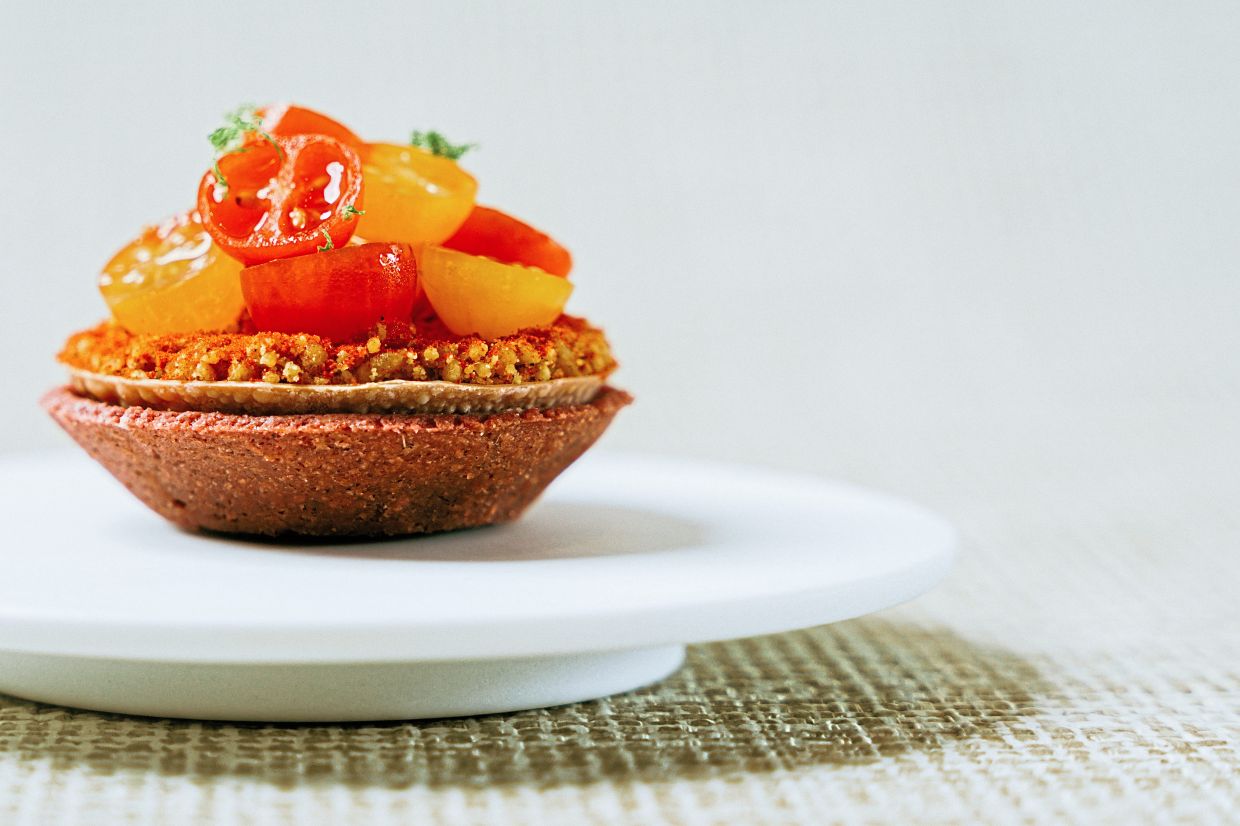
The tomato chaat makes use of the Tomberry tomato from the Netherlands, the world’s tiniest tomato. This is accentuated by a tamarind gel and coriander chutney. The tart offers lovely bursts of sweetness and traces of the Indian sub-continent running through its veins.
The uttapam meanwhile features the rare Obsiblue prawn, which is farmed in New Caledonia in pristine waters. The highlight here is the prawn which is very voluptuous with a silken undercoat.
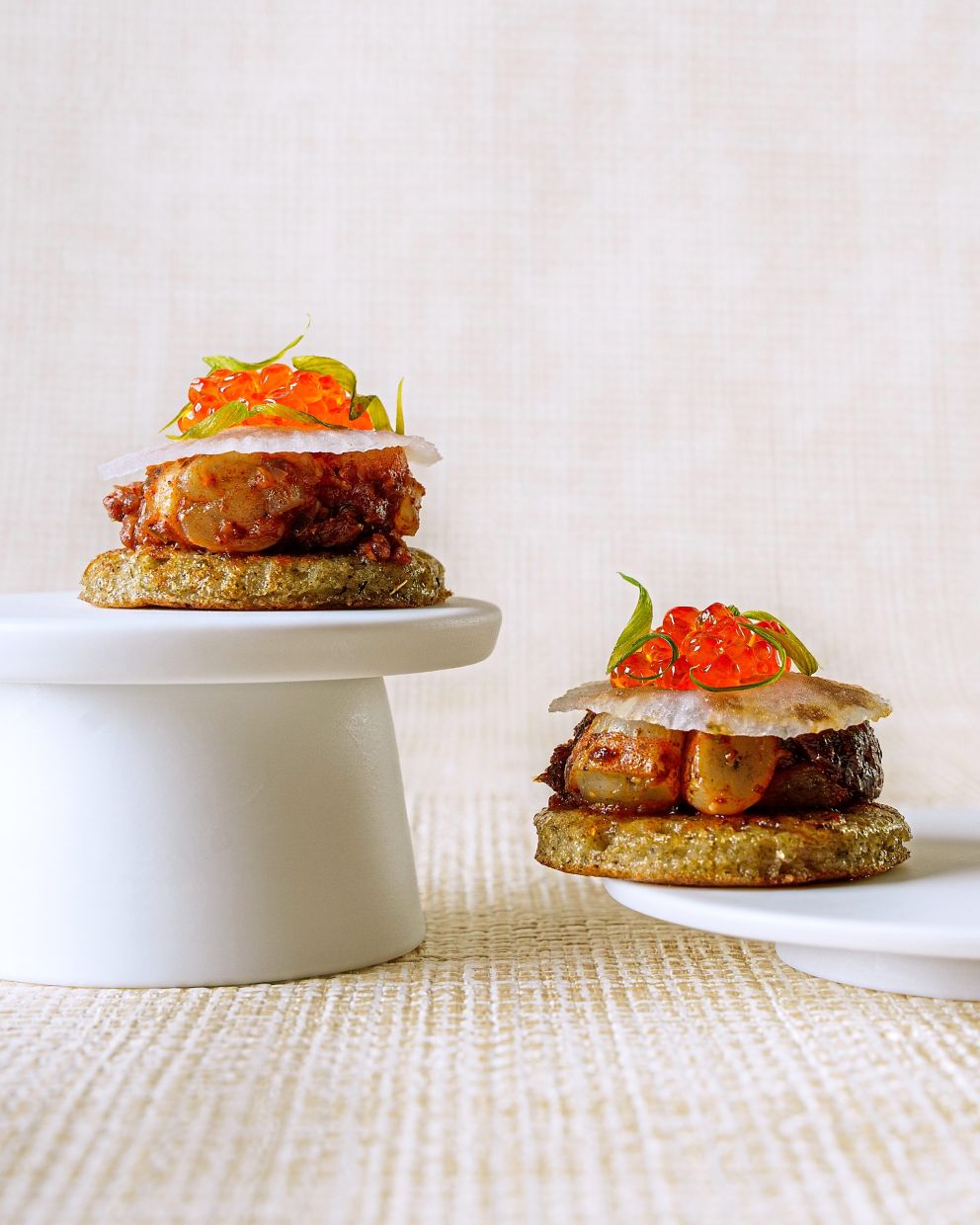
The most triumphant offering of this trio though is the crispy pork with jalapeno wrapped in a betel leaf. Combining a herbaceous overlay with crunchy pork and a layer of fiery heat – this is the culinary equivalent of a fun, feisty party animal.
Another highlight on the menu is the Shirako Vadai. Here, the vadai component has been fashioned to mimic a cheese souffle and this is topped with the Japanese delicacy of shirako (cod fish sperm sacs) which has been cooked with a spiced butter.
The souffle is light and spice-riddled and forms a lovely, spongy bedrock upon which the shirako is allowed to truly show off its core identity in the way that it bursts upon contact into creamy, pillowy hedonistic goodness.
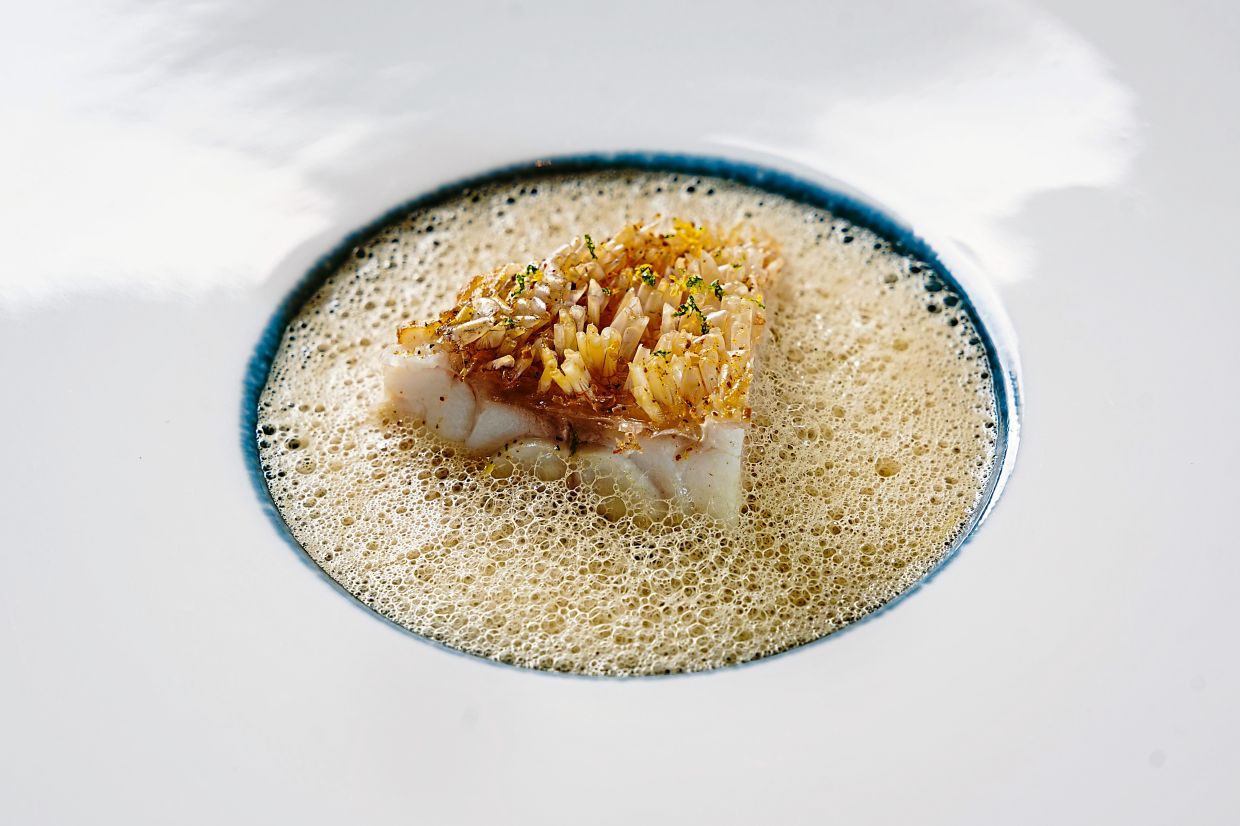
Then there is the Crispy Scale Amadai with Yuzu Ishtu. The fish has been cooked to a fine science – retaining crisp, punctuated scales and supple, flaky flesh.
This is countenanced by the ishtu foam, a take on a traditional Kerala stew that has been given a little bit of a perky, acidic facelift here.
The bread served on the side is a triumph on its own – a crunchy exterior gives way to perfectly fluffy insides – ideal for mopping up every last bit of the ishtu.
Some of the meals on the menu allude to Mano’s childhood memories. The Chettinad Chicken Roti for instance takes root in a meal Mano remembers eating with his sister.
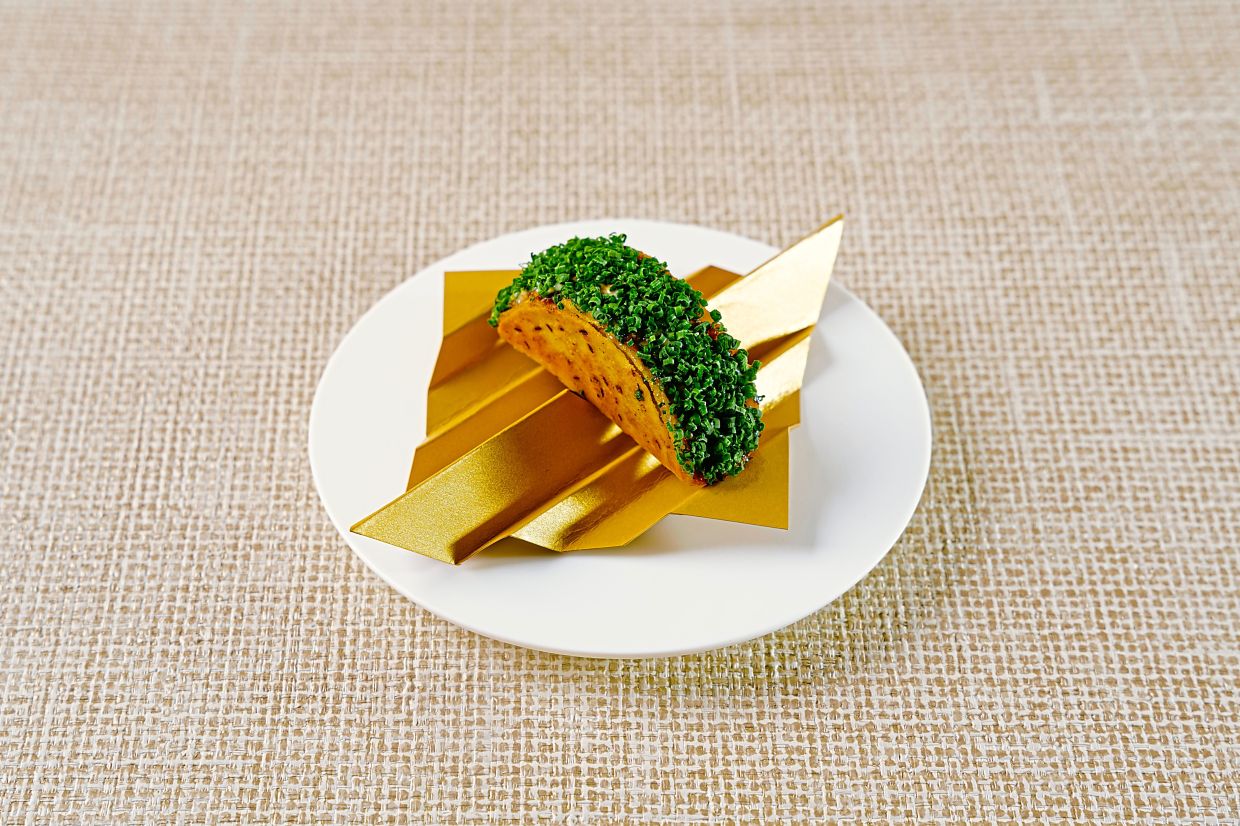
“We used to buy Chettinad chicken from the neighbourhood Indian restaurant, then we would smear mayonnaise over it, wrap it in bread and eat it,” recalls Mano, grinning.
The updated, two Michelin-starred version features chicken thighs cooked low and slow in an array of spices. The chicken is shredded and enlivened with yoghurt, garlic aioli, fried shallots and then wrapped up in a homemade naan bread.
This is an addictive little treat that is utterly satisfying. The naan has been toasted so it retains a crispness and this is wound around the tenderness of the chicken, which is juicy and packed with flavour. It’s so good that you could easily find yourself having an Oliver Twist moment and saying, “Please sir, may I have some more?”
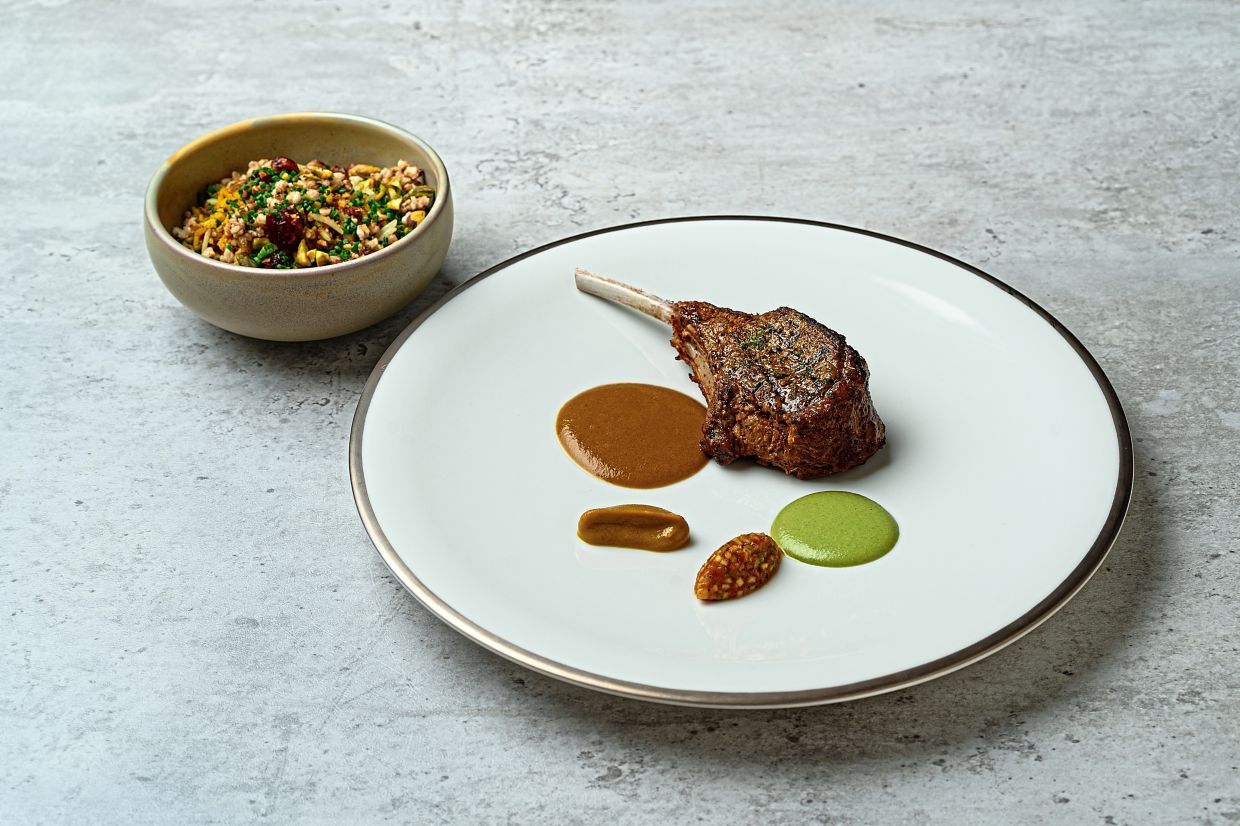
The substantial part of the evening arrives in the form of the Mysore Spiced Rack of Lamb with Butternut Squash Masala and Lamb Briyani. The jus is a cross between a jus and a curry that is made using the trimmings from the lamb, which is then infused with spices.
Overall, this is sort of a deconstructed version of a banana leaf rice or a large biryani meal with all the accoutrements to go with it. Here, they appear in little blobs and gobs, but they’re no less delicious. The show-stopper in this ensemble cast is the lamb, which is ridiculously tender and crusted with a rich array of spices.
The jus has a hint of spices charging through its core DNA and this gives it a distinctly south Asian appeal. All the other additions – from the raisin chutney to the butternut squash masala and the rice itself all add allure to the meal, in the same way a banana leaf meal is never about one thing; it’s about everything on the plate.
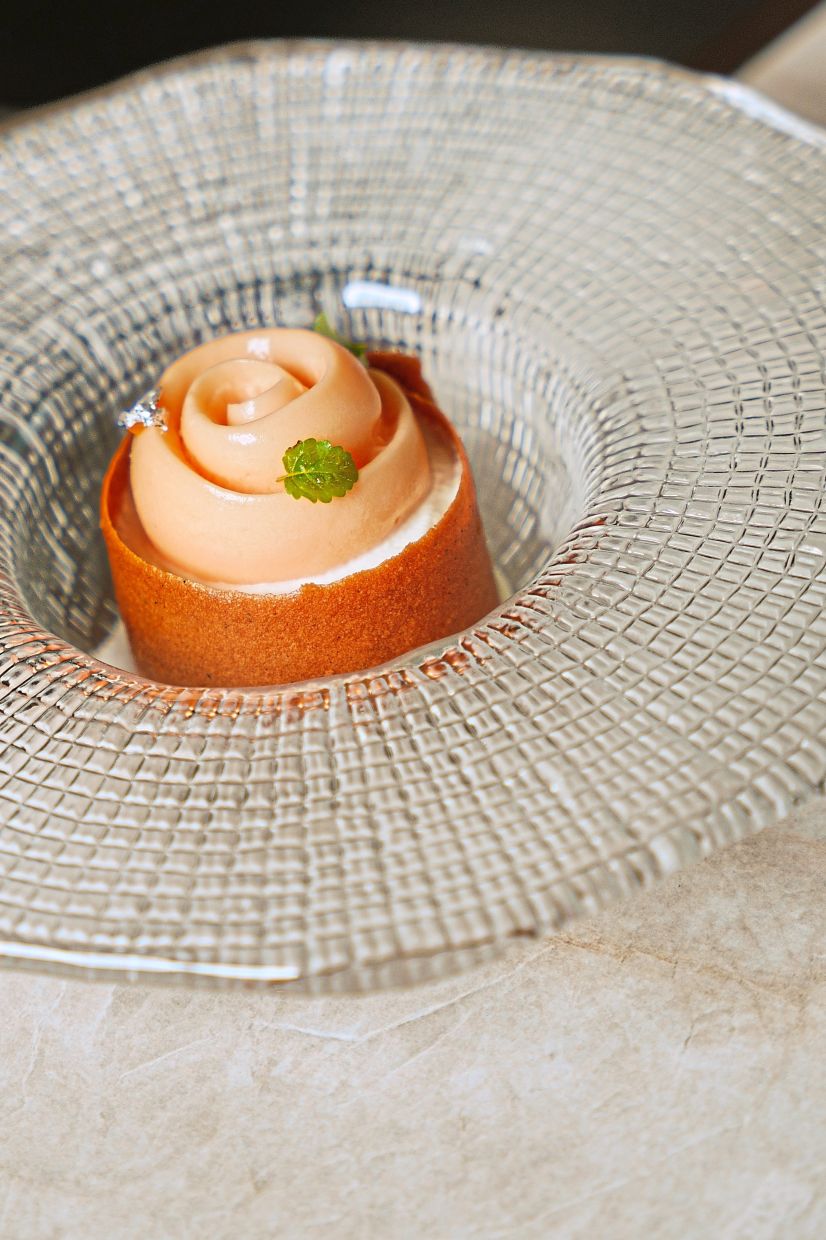
The sweet portion of your meal takes shape through the Muskmelon Payasam. As its name implies, the south Asian sweet sago dessert of payasam forms a large part of this dessert as does the musk melon sorbet, which is crafted using musk melon sourced from Provence in France.
When I was growing up, my grandmother made payasam every Friday without fail. It was a sweet, hot, soulful treat that I looked forward to every week. Mano’s version takes that nostalgia-laced dessert and turns it into something both familiar and new, with the addition of musk melon, which imbues it with uncharted new territory through its sweet fruity finish.
A meal at Thevar has a sharp focus on south Asian food – reconfigured and elevated through a global lens. It’s a masterclass in how to turn something from the halcyon days of childhood into something that verges on greatness.