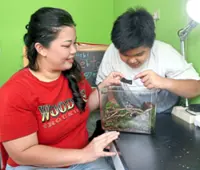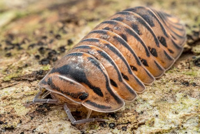
Evan Leonidas Lim Yit Ming, 12, isn't the kind of boy who keeps cats or rabbits as pets. Instead, his favourite companions are tiny creatures called isopods.
Isopods are a group of small crustaceans, which include the familiar woodlice often spotted in gardens or under damp logs.
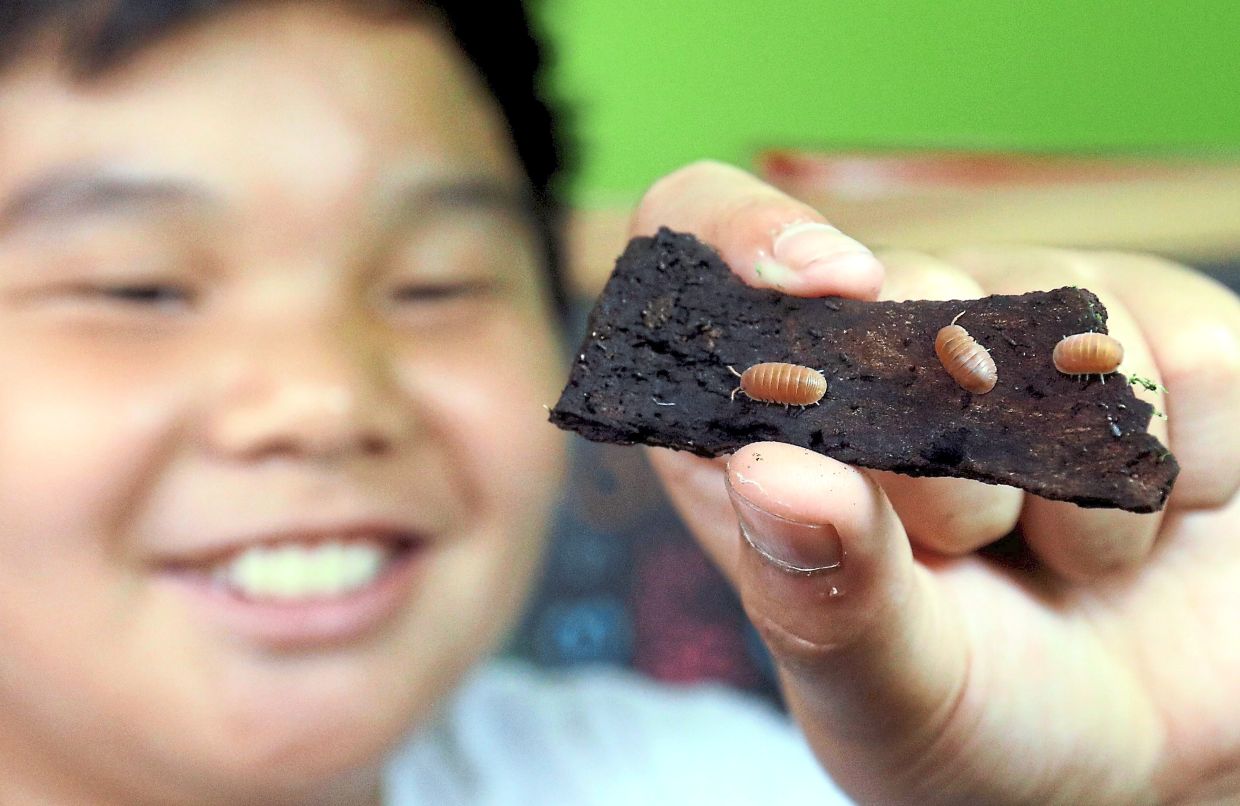
"I love my isopods, they're really so cute," says Evan, gently holding one in his palm.
The little creature, measuring about 1.5cm, scurries across his hand with surprising speed – enough to make photographer Azlina Abdullah flinch, half-expecting it to leap onto her.
"Jangan takut, Aunty. Dia tak boleh lompat (Don’t be scared, Aunty. It can’t jump)," Evan giggles as he places his miniature pet back into a terrarium.
While isopods may not be the pet of choice for most, they are slowly gaining a following in small communities.
For Evan, the appeal lies in creating his own miniature forest inside his room – one that is alive and teeming with tiny creatures.
"Every morning, I'll check to see if my isopods are moving around or if there are new babies. I've learned that even though they're so small, they play an important role by eating old leaves and keeping the place clean. It makes me happy to take care of them and watch them grow," says the Year Six student from SK Damansara Jaya 2 in Petaling Jaya, Selangor.
With more children spending hours glued to social media and gadgets, it's refreshing to meet one who is drawn instead to nature – even to something as tiny as an isopod.
"I like preservation, and I've always been interested in nature. I have kept different pets like praying mantises, freshwater shrimp and fighting fish," says Evan, the eldest of three siblings.
Getting the habitat right
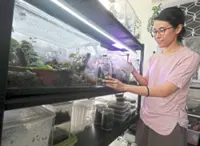
He first discovered isopods a year ago at a terrarium workshop in Jaya One, Petaling Jaya, organised by terrarium hobbyist and isopod enthusiast Aida May KB.
Unlike typical terrarium classes that focus solely on plants, this one stood out because it introduced isopods as part of the living ecosystem.
And he's grown so fond of his isopods that he takes great care of them, feeding them regularly and making sure their little habitat stays just right.
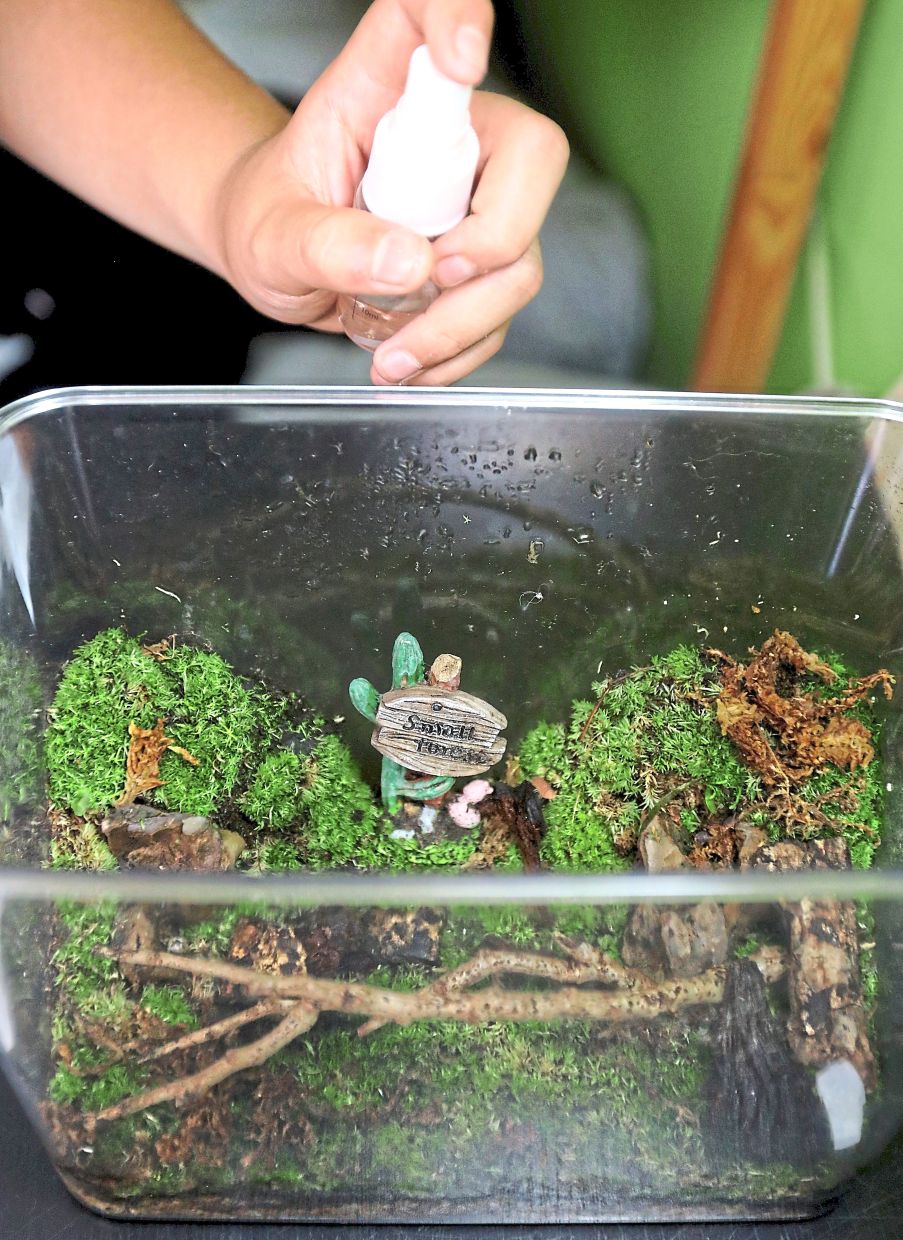
Like millipedes, isopods play an important role in nature by feeding on decaying leaves and helping recycle nutrients back into the soil.
"I have more than 20 isopods in my terrarium. I only keep two types – cubaris mandarin, the orange ones, and cubaris morina, which are grey," says Evan."I chose them because they were the cheapest. Mummy paid RM10 for five pieces of these isopods. My first choice was the Thai spiky isopods, because their spikes look like durians, but those are too expensive.
"I can't mix different species. They won’t really fight, but they will start taking over places and stealing things like wood and leaves. Cubaris species can stay together though – they are okay with each other," he explains.
The creatures also have different needs depending on where they come from. "They need lembap-lembap (damp) places to live," says Evan. "All isopods look kind of similar, but they are actually different. The ones on land can't breathe in water, and the ones in water can't live on land. The water ones can even swim!"
Despite his lengthy explanations, Evan views his pets with a child's honesty. "Isopods are honestly just small creatures that eat and live. They are just there – nothing really special," he says with a shrug.
Then his eyes beam with joy.
"But they reproduce really fast, so I get super excited whenever I see the tiny babies crawling around," says Evan, who also enjoys assembling Gundam model kit toys and tending to the garden during his free time.
Caring for critters
Evan's mother, businesswoman Eva Loy, 36, is glad to see her son invested in caring for something as small as an isopod. To her, it's not just about looking after tiny creatures, but about learning to appreciate nature in all its forms.
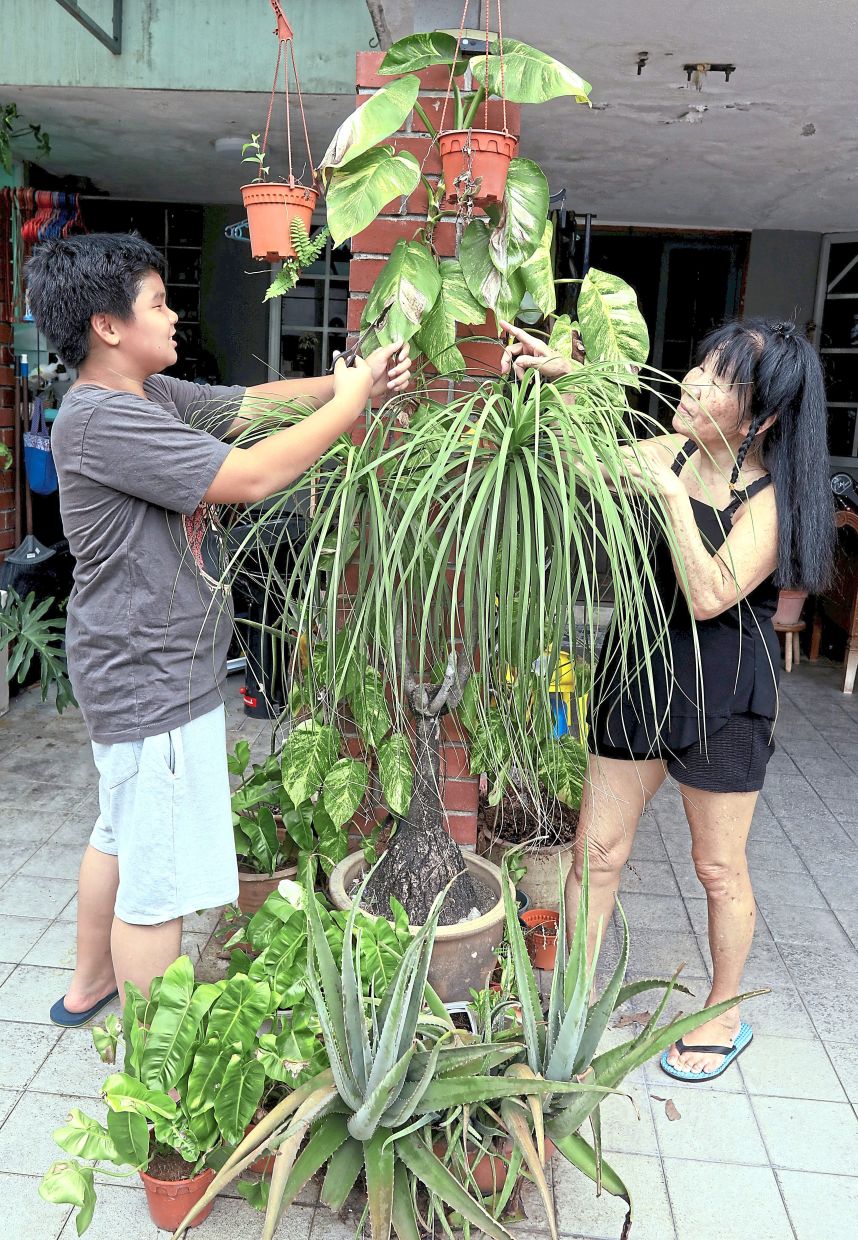
She is happy to see how much he enjoys creating little worlds of his own.
"I guess you could say he likes it because it’s like creating his own mini universe," Loy shares. "He will keep that terrarium until he gets bored of it, and then he'll redecorate. Having isopods living there makes it all the more interesting – plus, they don't try to escape!"
For Loy, the real value of this hobby lies in the lessons it teaches.
"Firstly, it shows him responsibility. If he doesn’t create the proper environment, the isopods may perish. It makes him realise the need to find balance and also the consequences of not caring properly. Secondly, I think it helps him understand that we're part of something bigger — that we are stewards and caretakers of our environment."
Since starting the hobby, Evan's curiosity about nature has only deepened.
"Sometimes he will suddenly talk about pitcher plants or Venus flytraps, or he'll be outside with his sisters looking for millipedes or tadpoles — like Coyote Peterson, the American YouTuber and wildlife educator!" quips Loy.
Loy, who sells artisanal soaps and bath boms, also appreciates how this interest keeps her son engaged in more meaningful ways than endless screen time.
"When Evan spends too long online, he becomes zombified, just sitting on the couch. But with isopods, he is active and curious. Even when he does go online, it's to research how to care for them, not to scroll aimlessly. That, to me, is far more valuable."