
Have you ever tried moving in slow motion?
No?
Try this: Sit on a chair and take 10 seconds to stand up straight, then take an equal amount of time to sit back on the chair.
Repeat this a few more times, but keep your movement fluid and continuous.
It requires a lot of focus and control, fires a number of muscle groups, and is, of course, tiring.
That’s what slow or super slow strength training entails; you’re doing the exercise at a much slower speed.
Instead of using a fast and explosive motion to lift weights, this method involves lifting weights deliberately and slowly, with each repetition taking around 10 seconds to complete.
It also helps avoid using momentum to cheat on the lift.
Need for safer speed
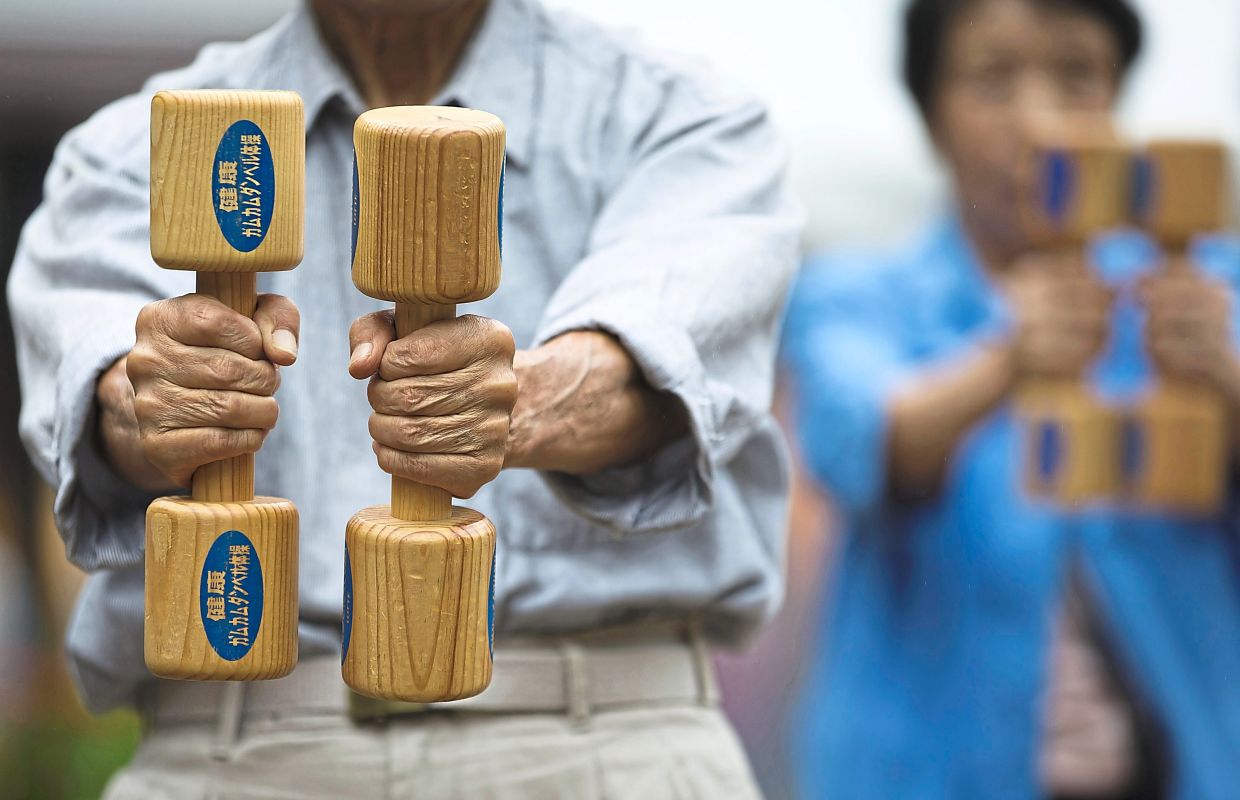
This technique was first popularised in 1982 by American inventor Ken Hutchins, after he led a team of researchers at the University of Florida, United States, on a study of osteoporosis in older women.
The team needed to utilise a safer speed for subjects to perform the resistance exercises.
So Hutchins worked out a protocol, which involved performing resistance exercises at a slower pace than traditional weightlifting.
The goal was to increase the women’s bone density, build muscle and improve blood circulation without putting excessive strain on the joints.
The result was the beginning of a new resistance training technique, which became known as super slow strength training.
Because the muscles are held under tension (contracted) for a longer period of time, it leads to greater recruitment and activation of muscles.
Hutchins eventually developed a methodology, trainer certifications and exercise equipment to specifically support the technique.
Since then, many fitness enthusiasts and trainers have adopted slow strength training as part of their workouts.
Typically done using gym equipment, free weights or resistance bands, the method can also be applied on bodyweight exercises such as squats, lunges, chin-ups, crunches and push-ups.
A single movement, depending on your fitness level, should take you 10 seconds or less to perform.
The key is to use lighter weights than you would normally use and perform fewer repetitions.
By moving at a snail’s pace, a heightened sense of the body arises and you are immediately able to feel which muscle is weak or needs tweaking, or if your alignment is off.
A 2001 study published in The Journal of Sports Medicine and Physical Fitness concluded that lifting slowly resulted in 50% more muscle strength in eight to 10 weeks for untrained, middle-aged men and women (74 subjects with the mean age of 53.6).
A 2018 study published in the Journal of Human Kinetics, was carried out on a cohort of 42 younger men (ages 20-37 years), who had a minimum of one year of strength-training experience.
The participants were expected to be able to perform a bench press with a load of at least 120% of their body weight.
Results found that the amount of load placed on the muscle (i.e. how hard it worked) with fewer repetitions at slow speed was equal to, or exceeded, the load placed by more repetitions at a moderate pace.
The risk of injury is also significantly lower as you’re more aware of your movements, compared to fast lifting methods where you may not go through a full range of motion.
People tend to get more injuries when the body is tired and they try to push through quickly, but with slow strength training, that risk is reduced because you stop when you’re no longer able to maintain proper form.
The appropriate speed
Before you start, think about what exercises you want to do and choose those that work all major muscle groups.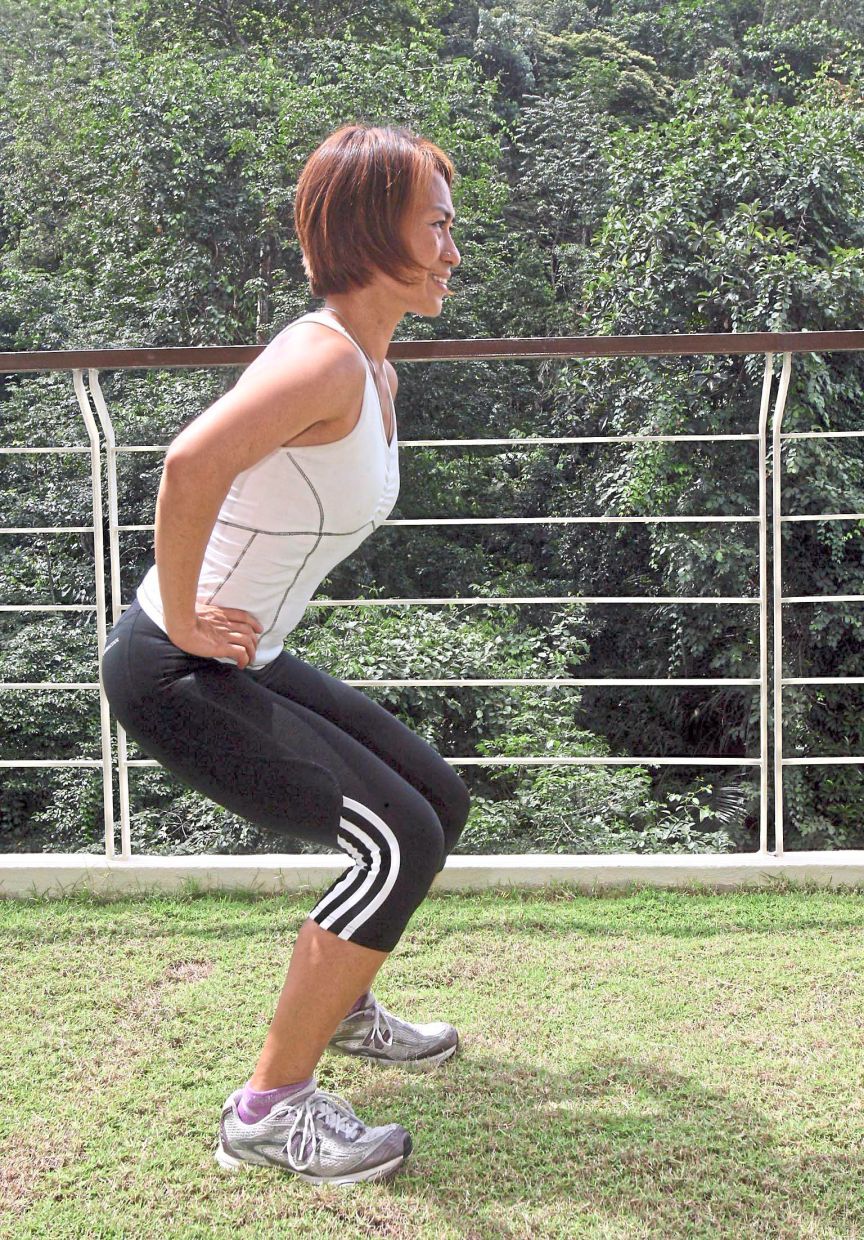
Examples include squats, push-ups, crunches, bridges and back extension.
Spend 10 to 15 minutes brisk walking or light jogging to warm up.
For easy remembrance, I suggest you start with a four-four-four ratio, i.e. four seconds up, four seconds down and four repetitions.
For example, if you’re doing a parallel squat, take four seconds to move down and four seconds to come back up.
You can opt to count manually or use the clock.
Once it gets easy, you can do one of the following to progress:
- Add in a pause, e.g. hold for four seconds when you reach the parallel squat position before coming back up.
- Slow down the pace further by doing the exercise in five-second intervals so that the ratio is five-five-five.
More importantly, find a steady rhythm you can stick to before changing the tempo.
- Use lighter weights or objects, such as a water bottle or dumbbell, to increase intensity with the four-four-four ratio.
- After one exercise, you’re guaranteed to feel the burn and will be shocked that you can’t do more.
Since you’ve worked the muscle to exhaustion, you don’t necessarily need a second set.
Continue on with the next exercise instead.
- Cool down after completing the exercises by walking around for five to 10 minutes.
Conclude with some stretches to minimise muscle soreness and promote recovery.
Slow strength training is really a sort of meditative experience that allows you to be more in tune with your body.
You don’t have to do this every time you exercise – perhaps once every fortnight or month just to wake your muscles up and give your body a challenge.
And the next time you revert to your regular strength training routine, you’ll notice the difference.
Bear in mind that post-workout fatigue is higher in people who utilise slow strength training as the muscles are held under tension for an extended duration, compared to those engaging in faster movement tempos.
Even if Hutchin’s method doesn’t make you gain muscle fast, it is effective for people who have difficulty adding and preserving muscle, especially women and the elderly.
Revathi Murugappan is a certified fitness trainer who tries to battle gravity and continues to dance to express herself artistically and nourish her soul. For more information, email starhealth@thestar.com.my. The information contained in this column is for general educational purposes only. Neither The Star nor the author gives any warranty on accuracy, completeness, functionality, usefulness or other assurances as to such information. The Star and the author disclaim all responsibility for any losses, damage to property or personal injury suffered directly or indirectly from reliance on such information.
Already a subscriber? Log in
Get 20% OFF The Star Digital Access
Cancel anytime. Ad-free. Unlimited access with perks.