Have you ever forgotten something and brushed it off as just part of getting older?
“Oh well, it must just be my age,” you might tell yourself.
While occasional forgetfulness is a normal part of ageing, more noticeable changes in a person’s memory, behaviour and ability to manage everyday activities may point to something more serious.
Consultant geriatrician Dr Nordiana Nordin explains that functional decline associated with ageing can sometimes resemble the decline caused by a medical condition.
However, dementia is not a normal part of ageing, and it does not always begin with obvious memory loss.
“Sometimes, the early signs are small changes that families may not think much about or easily dismiss,” she says.
“People need to understand that getting older doesn’t mean we should merely accept every change in our health as it is and not work around it.
“If something doesn’t seem right, it’s always better to seek help and assistance early.”
What is normal ageing?
As we grow older, our bodies and minds inevitably change.
Dr Nordiana explains that ageing involves the accumulation of cellular damage over time, which causes a decline in bodily functions and an increased risk of death.
“It’s a complex, multifactorial process which happens to all of us,” she says.
However, the effects of ageing vary from one individual to another, making it difficult to define what constitutes normal ageing.
As people grow older, a mild decline in mental function is considered normal, including difficulty learning new things, a shorter attention span and occasional forgetfulness.
Physical mobility may also decrease with age, she explains.
However, not all age-related changes are inevitable or unmanageable.
Some can be addressed through appropriate interventions.
Dr Nordiana gives tooth loss as an example, explaining that it can be managed through regular dental visits and adjustments to the type and consistency of food a person eats.
At the end of the day, maintaining independence is an important goal for older adults.
“Many older adults are still able to stay active and enjoy their daily lives, as well as make their own decisions,” she says.
How to tell the difference?
Although occasional forgetfulness and slower information-processing can occur as people grow older, dementia involves a more significant decline in cognitive function that interferes with a person’s ability to manage everyday activities.
Dr Nordiana explains that some people may take longer to recall information, become more easily distracted or find it harder to multitask.
“These changes are, in fact, more noticeable in middle age – as early as the 40s.
“For most people, these changes are part of normal ageing,” she says.
Dementia, on the other hand, affects cognitive functions such as memory, thinking, judgment and reasoning.
As these abilities decline, individuals may struggle to carry out their usual daily activities, whether at work, at home or within the community.
Dr Nordiana adds that the early signs of dementia are often first noticed by family members or spouses rather than the individuals themselves.
Don’t overlook these warning signs
Cognitive decline should not simply be accepted as an inevitable part of ageing.
Dr Nordiana explains that many people mistakenly regard senility as a natural consequence of old age.
Frequent forgetfulness and repeatedly asking the same questions, for instance, can be features of dementia as the condition progresses.
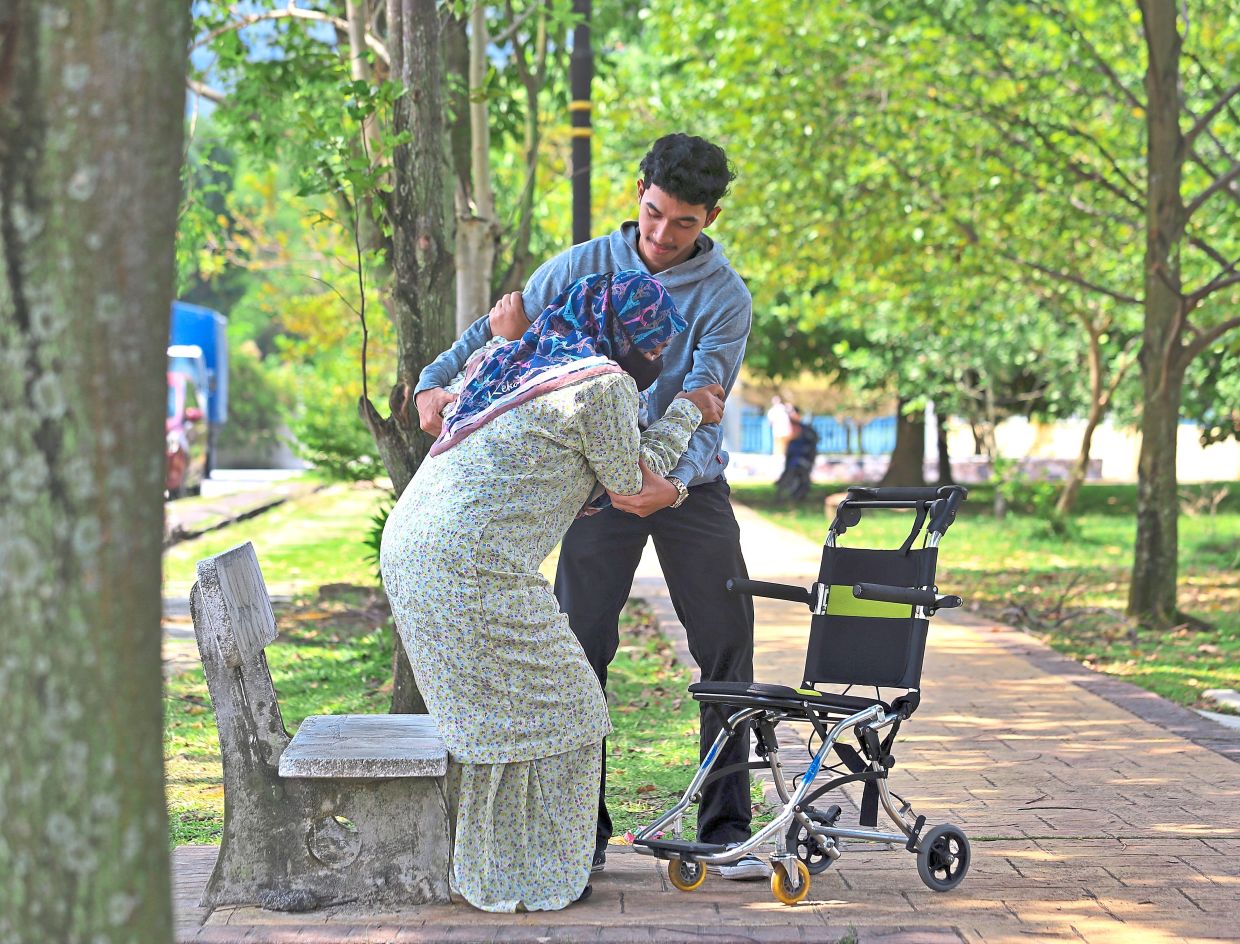
Another commonly overlooked condition is sarcopenia, which involves the loss of muscle mass and strength.
“It is frequently ignored until it causes a fall, which further reduces a person’s mobility and independence,” she says.
While families may assume that an older person is simply becoming weaker with age, frequent falls could indicate problems with balance, eyesight, medication-related effects like those associated with polypharmacy (the use of multiple medications), or other underlying health conditions.
Changes in mood and behaviour are another area that families should pay attention to.
Dr Nordiana explains that increased irritability, anxiety or apathy in older adults may be linked to underlying psychogeriatric disorders, or even undetected infections, such as urinary tract or chest infections.
For instance, someone who was previously outgoing may become withdrawn or lose interest in activities they once enjoyed.
They may also become increasingly nervous, irritable or fearful.
“Most times, families would blame ageing, mere tiredness, or even the reluctance to walk long distances due to joint pain, for example.
“This could possibly be an early sign of apathy, depression, or even early dementia,” she says.
Dr Nordiana identifies apathy, anxiety and depression as three common behavioural changes associated with early dementia.
A significant loss of interest or enthusiasm for daily activities, hobbies and social interactions may point towards early dementia, once other mood disorders have been ruled out.
Difficulty with daily activities
Besides changes in mood and behaviour, dementia can also affect a person’s ability to carry out familiar everyday activities, especially tasks that require more complex thinking.
“One should also pay close attention when an older person starts having difficulty performing familiar things, such as preparing meals, following a recipe or finding their way around familiar places,” says Dr Nordiana.
“Sometimes these changes happen rather slowly, hence, families may not notice them immediately,” she adds.
As these difficulties become more apparent, spouses, family members and caregivers may take over these responsibilities, assuming that the changes are part of ageing.
However, persistent difficulties with familiar tasks should not automatically be dismissed as a normal part of getting older.
Early recognition is important to identify the underlying cause of these changes and initiate appropriate treatment.
Dr Nordiana cautions that not all mood and behavioural changes indicate dementia.
Some may be caused by delirium, an acute state of confusion that can arise from underlying conditions such as infections, thyroid disorders, fever or electrolyte imbalances.
She stresses that recognising the early signs and clinical presentations of dementia is a priority in improving early detection.
“Not only can we facilitate prompt and early treatment, but we can also initiate preventive measures to help prepare both those affected and their caregivers,” she says.
Learn more at StarLIVE
These topics will be explored further at the upcoming StarLIVE event, The Ageing Roadmap: Spotting the Difference Between Normal Ageing and Red Flags, organised by the Star Media Group (SMG) in partnership with Sunway Medical Centre Damansara (SMCD).
Held at Menara Star in Petaling Jaya, Selangor, on Nov 14 (2026), the event will feature Dr Nordiana; consultant orthopaedic trauma, arthroplasty and robotic surgeon Dr Juzaily Fekry Leong; consultant endocrinologist and physician Dr Chan Pei Lin; and consultant physician, gastroenterologist and hepatologist Dr Hoo Chai Zhen.
Dr Nordiana will open with a talk titled Understanding Dementia: Recognising the Signs, Supporting Our Loved Ones.
This will cover the early signs of dementia, the differences between normal forgetfulness and dementia, and how families and caregivers can better support older adults living with dementia and other mood disorders, and will be followed by a patient-sharing session.
The programme will also feature a panel discussion titled Ageing Well: Stronger Bones, Better Health, Safer Living, featuring all four consultants.
The discussion will cover the differences between dementia and depression, fall prevention, the risks associated with multiple medications and diabetes management in older adults.
Those interested in attending the StarLIVE session can register online here.
The event is free for subscribers of The Star newspaper.
Non-subscribers will be charged RM30, which includes one month’s free access to The Star Online.