For medical students, human cadavers provide an opportunity to study the body’s structures firsthand, beyond what textbooks alone can teach.
Behind this learning is the work of preserving donated bodies so that they can be used for medical education and research.
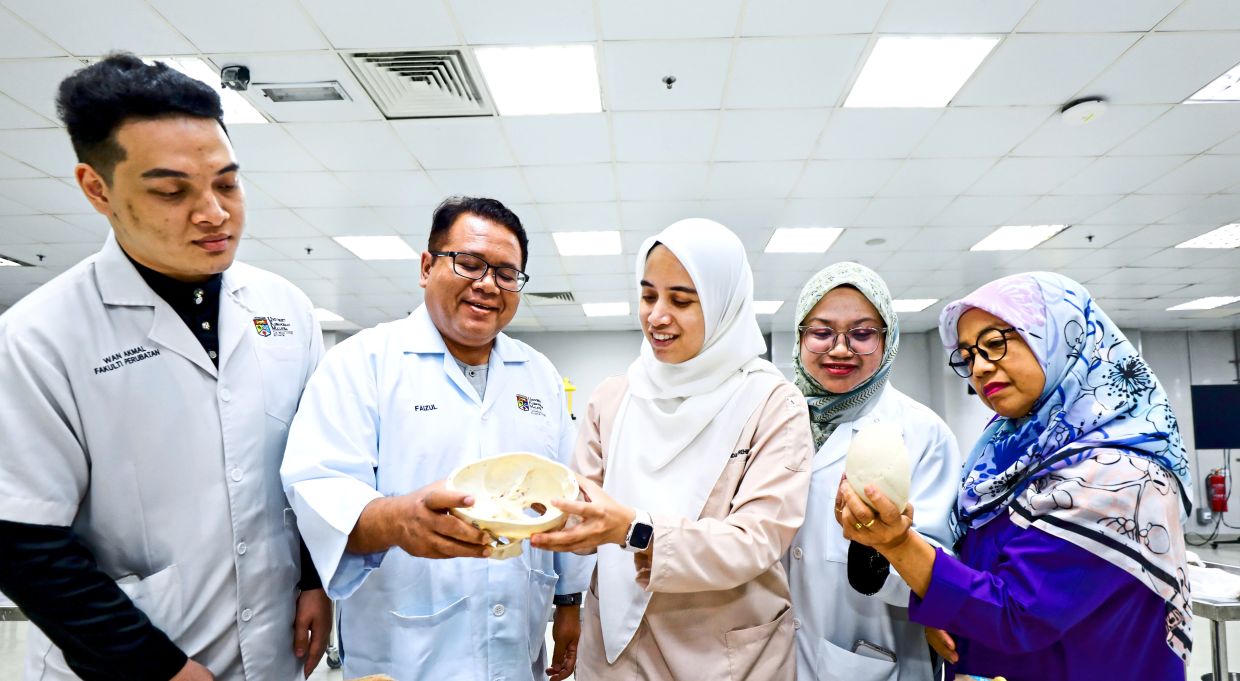
For Universiti Kebangsaan Malaysia (UKM) Faculty of Medicine Department of Anatomy medical lecturer Dr Rasyidah Rehir, her interest in preservation techniques has led her to explore ways to improve the quality of specimens used in medical education.
She is also helping to develop a proposed Human Cadaveric Centre at UKM to expand opportunities for anatomical research, education and practical training.
“My initial motivation was to teach students,” she says.
“Working with cadavers is part of my profession.
“As anatomists, we cannot completely avoid working with them because they are central to the study of human anatomy.”
An academic calling
Dr Rasyidah’s interest in anatomy developed during her medical degree at UKM, where she discovered that the subject suited her visual learning style.
“The first textbook I bought was an anatomy atlas,” she recalls of her first year at university.
An enthusiast of art and drawing, she shares that: “When I look at anatomy, it gives me the joy of learning.”
Although she initially aspired to become a surgeon, a different path beckoned after graduation.
While waiting to begin her housemanship, she worked as a research assistant at UKM, gaining her first exposure to research and academic work.
She subsequently completed her housemanship, then worked in private healthcare management, including during the Covid-19 pandemic.
As she began building a family, Dr Rasyidah also sought a more stable career.
Her interest in medicine remained, but she discovered that she was drawn to teaching and applied for a trainee lecturer position at UKM.
Her decision was influenced partly by her parents, who both worked in research.
Her father, a pharmacy graduate who later pursued a PhD, had also taught at UKM.
“My father was my role model and inspired me to be a lecturer,” she shares.
Although Dr Rasyidah grew up seeing her parents attend conferences and conduct research, she did not initially imagine research as her career.
Through teaching, she gradually developed an interest in cadaveric studies, which deepened during her Master of Science in Human Anatomy at the University of Edinburgh, Scotland.
“I like dissection, surgery, things that are tactile,” she says.
Exploring the body
Dr Rasyidah hopes her work studying the human body can eventually contribute to better patient care.
“Going forward, I want to explore how we can translate knowledge gained from studying the dead into improvements in patient care,” she says.
Her research examines the patterns and microstructure of small blood vessels, particularly their potential relevance to surgical planning.
“We can see the larger blood vessels, but I study the smaller vessels and their patterns,” she explains.
In reconstructive surgery, understanding blood vessel patterns can help surgeons plan procedures involving skin tissue while maintaining an adequate blood supply.
“If they get it wrong, the skin can die because it does not receive an adequate blood supply,” she says.
She also studies anatomical variations, i.e. differences in the body’s structures between one person and the next.
One example is the palmaris longus tendon in the wrist, which is absent in some people without affecting normal function.
Dr Rasyidah is interested in whether such structures could have practical applications in medicine, although the possibilities require further research.
“For example, if the tendon is present, but not essential for a particular function, could it be used as a donor tendon?” she speculates.
“These are some of the questions that need further research.
“That is part of my role as a researcher in this field.”
Scarcity of cadavers
When Dr Rasyidah first joined UKM, adapting to research was one of her biggest challenges.
“At first, I didn’t like doing research,” she says.
“There are a lot of technical skills we need, such as writing research proposals, securing grants and establishing collaborations.
“I think those have been the biggest challenges in my work here.”
Teaching, however, came more naturally to her.
“I like being a teacher. When I’m teaching and interacting with students, I’m happy, and I don’t find it difficult,” she says.
Another challenge is the limited availability of donated bodies for anatomical education and research in Malaysia.
“Body donation is not something that is well established in Malaysia,” she says, adding that UKM can struggle to obtain even one donated body in a year.
The shortage is pressing given that the university receives about 100-200 medical students in each incoming batch.
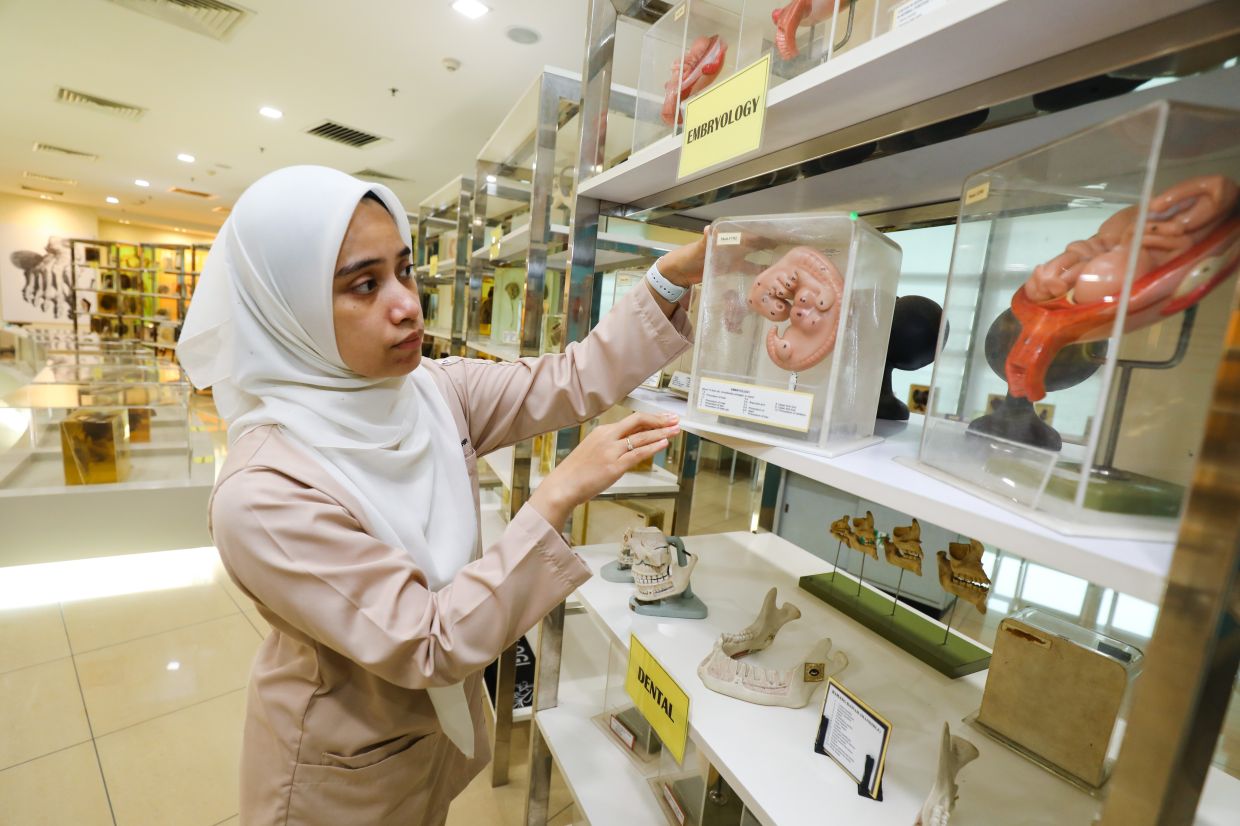
To support their training, the department relies on preserved cadavers that have been used for decades.
Repeated handling during practical sessions gradually wears down the specimens, sometimes damaging the anatomical structures students need to examine.
Although technical staff may attempt to repair damaged areas, some specimens eventually deteriorate beyond use.
“If we just kept them in the museum, there would be no problem,” Dr Rasyidah says.
“But because we use them for teaching, they can eventually become damaged.”
The shortage also limits the research she can undertake locally.
“When we do not have enough cadavers, I cannot carry out certain research projects.
“I therefore have to collaborate with universities and researchers in other countries that have access to cadavers,” she says.
Preserving the body
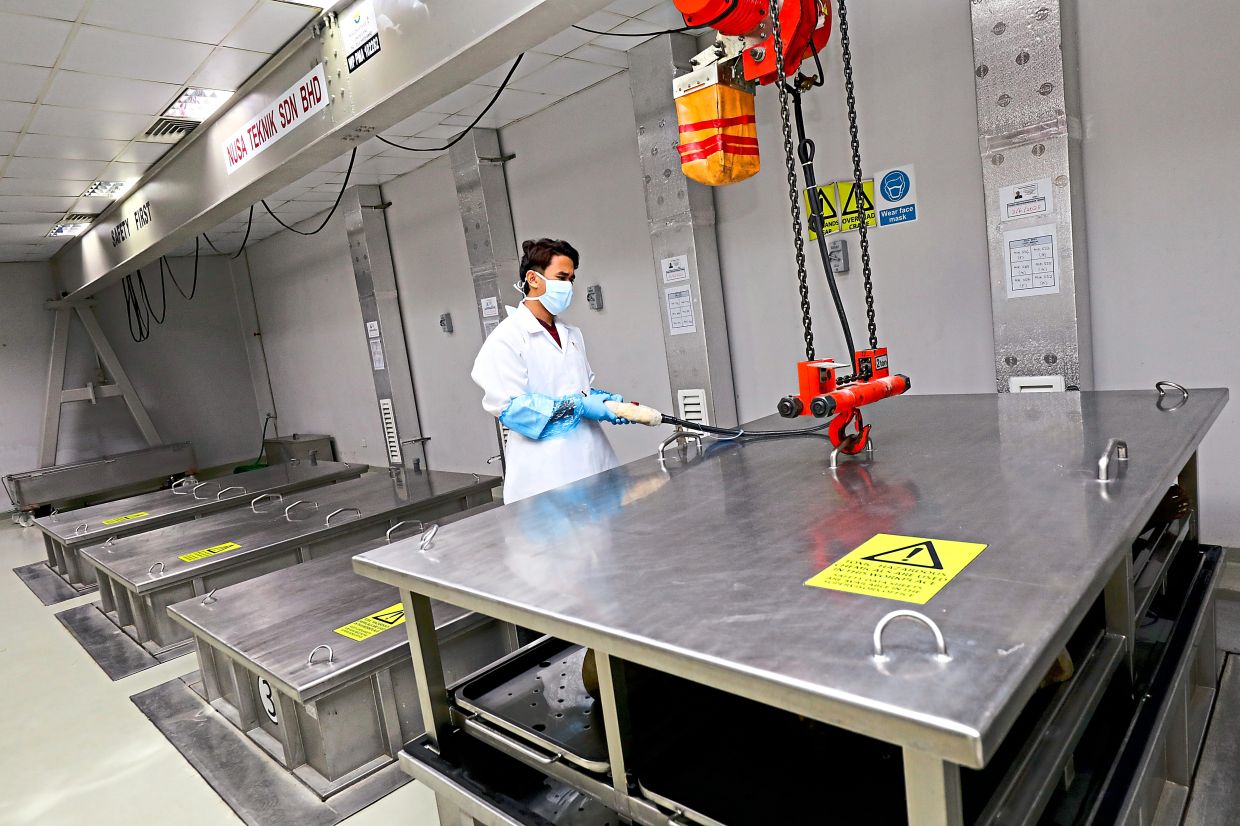
Conventional cadaver preservation commonly uses formaldehyde-based solutions to slow decomposition.
The method is relatively affordable and suitable for long-term preservation, but can leave tissues stiff.
Formaldehyde is also a known human carcinogen.
Therefore, prolonged exposure can increase cancer risk, making adequate ventilation and protective equipment essential for staff.
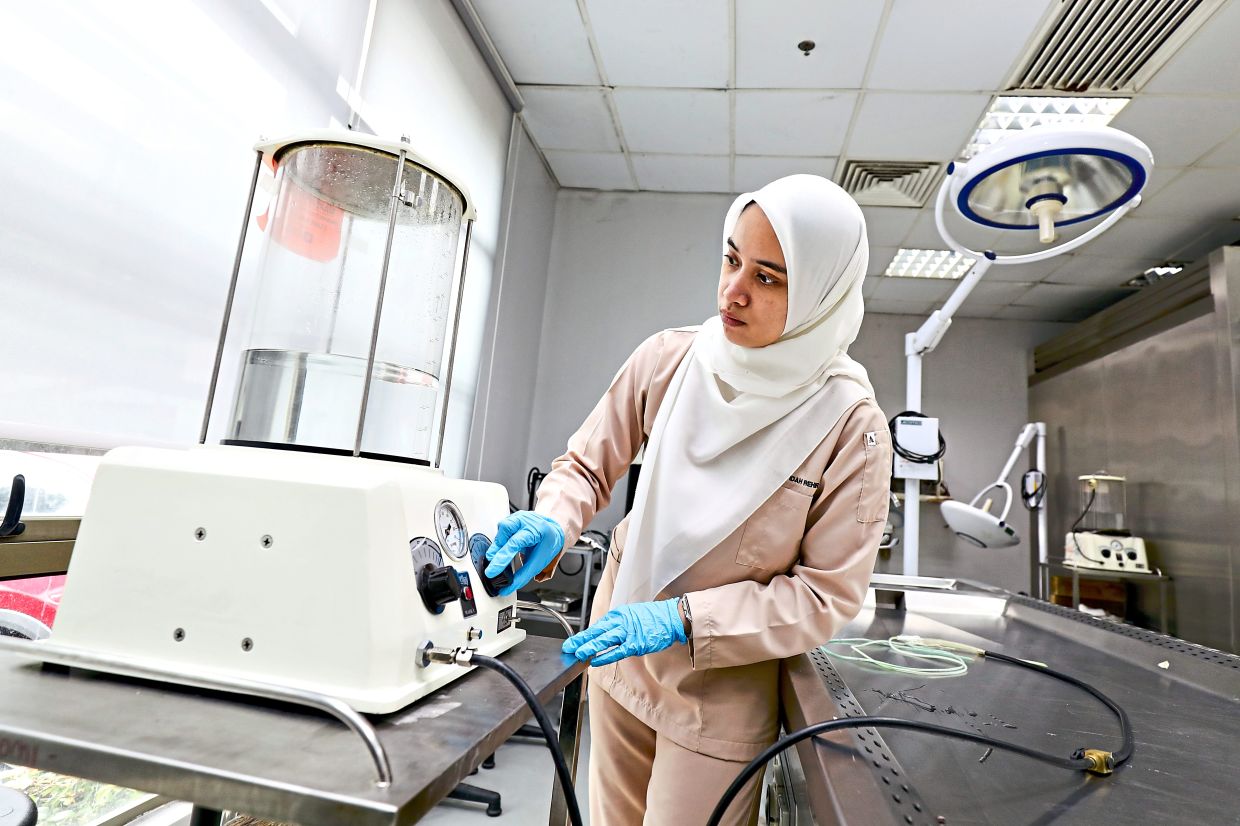
Seeking alternatives, Dr Rasyidah is interested in soft embalming techniques, which aim to reduce reliance on formaldehyde while preserving tissue with a more natural texture.
Through the Merdeka Award Grant, she travelled to Austria and Britain for training in Thiel embalming – a preservation technique that uses a specialised chemical mixture to keep cadaveric tissues soft and flexible – and other soft embalming methods.
She also learnt about managing a body donation programme – knowledge that she hopes to apply at UKM.
“We hope to introduce this technique to reduce our reliance on formaldehyde, or at least reduce the amount used, thereby lowering staff exposure to the chemical,” she says.
Soft embalming aims to preserve tissue in a condition closer to that of living human tissue, potentially making specimens more suitable for practical training.
“When surgeons practise procedures, they need to work with tissue that feels as similar as possible to living human tissue,” she says.
“This helps them develop the practical skills required for surgery.”
However, introducing the technique at UKM will require funding, technical expertise and further training.
The chemicals differ from those used in conventional embalming and may be more expensive.
The department would also need a donated body to test the method first.
A centre for anatomical research
The proposed Human Cadaveric Centre Dr Rasyidah and her team are working to establish is aimed at expanding existing cadaveric education and workshops to students from other universities and surgeons, while also providing a dedicated facility for research.
The idea of the centre was mooted by the Medical Faculty's management team, with Anatomy Department head Dr Fairus Ahmad in charge of the project, and the faculty's dean Prof Datuk Dr Marina Mat Baki as project adviser.
Dr Fairus was the one who appointed Dr Rasyidah as the project lead, given her research expertise in cadavers.
A key part of the centre's aims is a formal body donation programme and greater public awareness of its role in medical education and research.
“People usually hear about organ donation, but they don’t know what body donation is.
“So, we want to raise awareness about it,” says Dr Rasyidah.
The proposed facility could also serve medical device developers.
Companies could use cadaveric specimens to assess equipment designs before use in patients, or to study anatomical variations among Asian populations.
Establishing the centre, however, will require substantial funding and additional staff.
Dr Rasyidah estimates that it could take five to 10 years, depending on the financial support available.
She is considering crowdfunding as one way to involve the wider community, through financial contributions, manpower or awareness-raising.
“We need the whole nation to be with us,” she says.
In the longer term, she hopes the centre will serve people across Malaysia and that its model can be replicated at other local institutions.