
Backache may be the first warning sign that you are under a lot of stress.
We tend to hunch our shoulders and clench our muscles from the neck right down to the lower back when times are challenging.
Yoga can help in two ways: through movement and relaxation.
It not only promotes flexibility, body awareness, balance and muscle strength, but also reduces stress through the specific combination of movement and conscious breathing.
That helps your back, too, says the Healthy Back Campaign (AGR) in Germany.
Another advantage is that those who practise yoga pay closer attention to their posture and movement patterns.
This enables them to spot unfavourable habits in everyday life sooner, e.g. sitting for long periods without taking a break or constantly hunching their shoulders when stressed.
Once you see it, you can take the right countermeasures.
The AGR recommends gentle yoga styles such as Hatha, Yin or Restorative Yoga for beginners, and specifically back yoga for back pain.
It offers three exercises that help improve mobility and strengthen the back and shoulders.
But caution is advised if your symptoms are acute and you should seek professional advice beforehand.
Start on all fours, with your knees under your hips, and your hands, with fingers spread wide, under your shoulders.
From this position, as you breathe out, press your toes into the mat, lift your knees off the floor and push your bottom up and back.
Your arms and back should form a straight line, with your bottom as the highest point, so that your body forms an inverted V.
Hold the position for a few breaths, then gently return to the starting position.
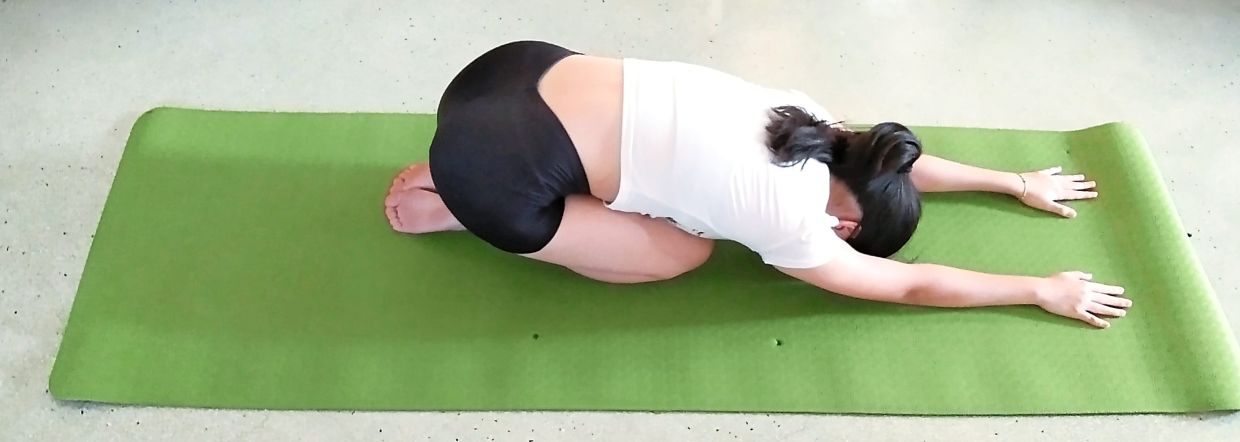
This is for your lower back.
From a tabletop position, sit back onto your heels, stretch your arms forwards and lower your head towards the floor – this gently stretches the lumbar spine.
Now, your back can "finally relax", the AGR says.
Hold the position for five to 10 breaths.
If needed, you can also spread your knees apart.
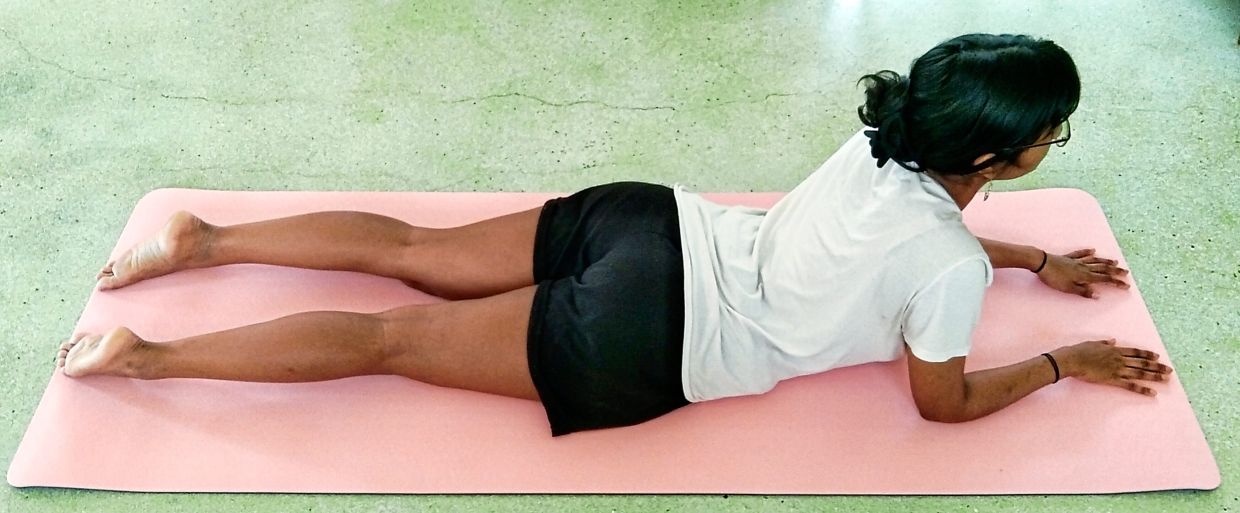
This is for your upper back.
Lie on your stomach with your legs hip-width apart.
Rest on your elbows so that they are positioned directly beneath your shoulders.
Your forearms should lie parallel to each other on the mat, with your palms facing downwards.
As you inhale, gently lift your head and upper body, supporting yourself on your forearms.
Do not actively push yourself up; the upper body should simply unfold with the support of your forearms.
Keep your neck long and direct your gaze downwards and forwards.
Hold this position for a few breaths and then gently release.
For these exercises, it's best to use a well-padded, non-slip mat to protect your joints and spine, the AGR says.
Yoga may feel intense, but it shouldn’t hurt.
What matters is correct execution, not how long or how ambitiously a pose is held.
You shouldn’t slip into performance mode, especially if you’re using yoga to combat stress.
It’s better to practise slowly, take breaks and stay in tune with your breathing. – dpa