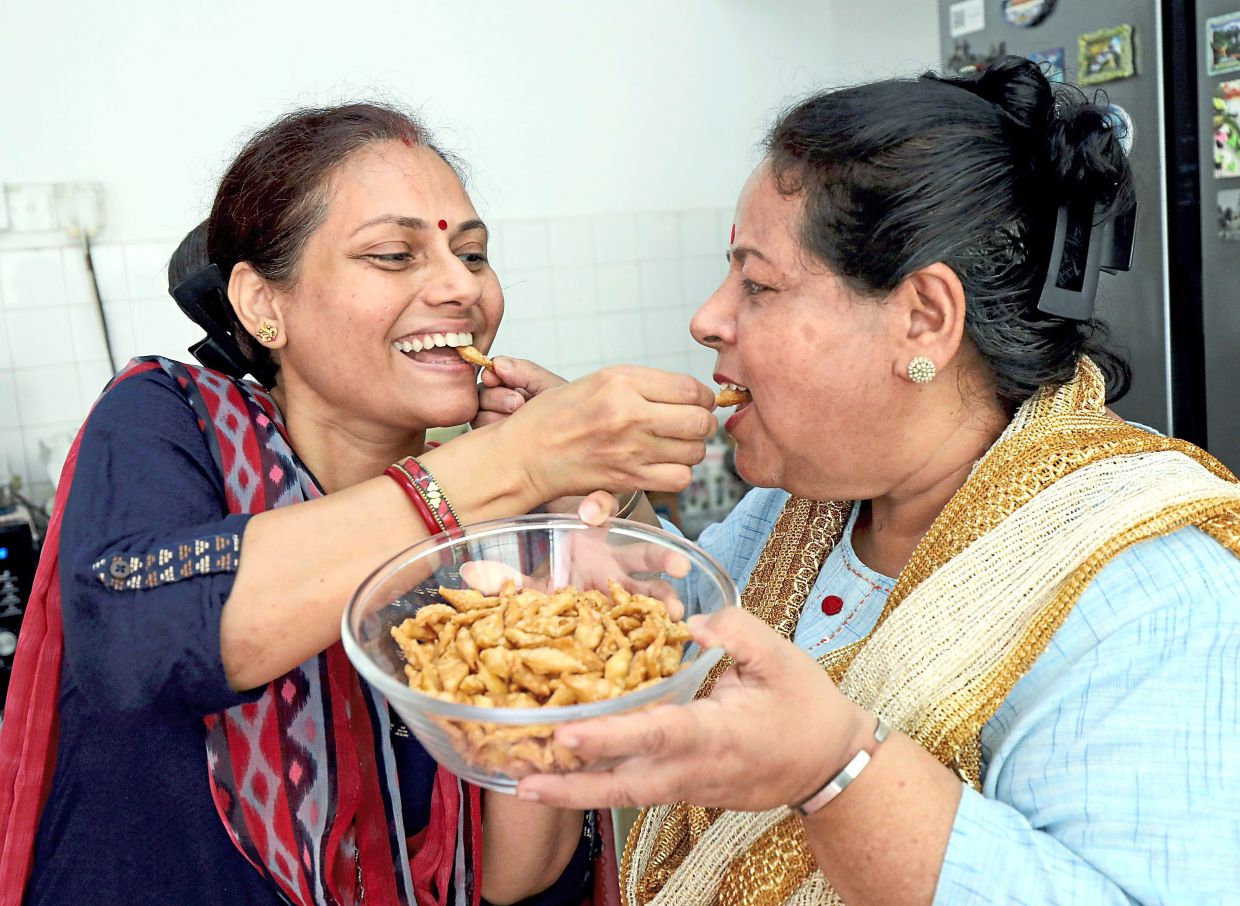
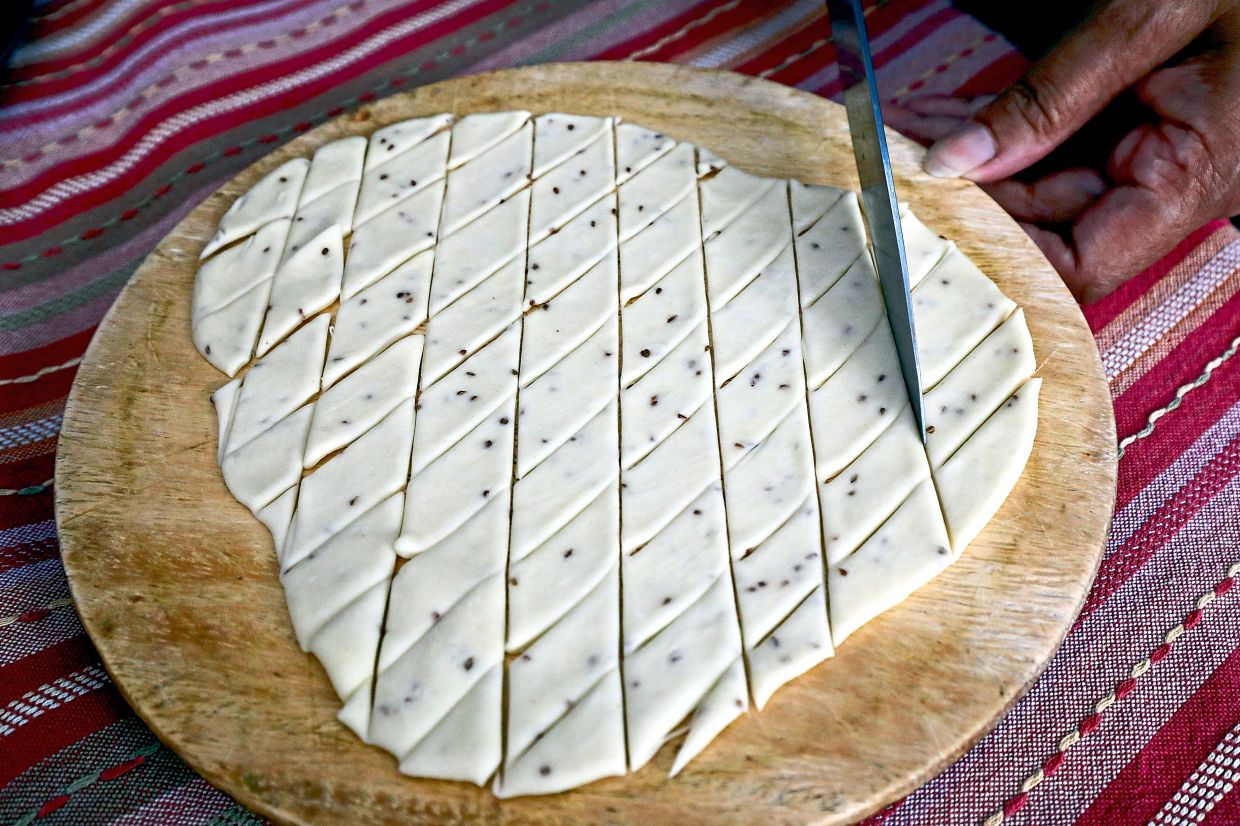
The aroma of fried nimki, a crunchy snack made from wheat flour and ajwain (carom seeds), fills Prodeep Kumar Roy's home.
Busy making them in the kitchen are sisters-in-law Ranjita Roy, 57, and Sangita Roy, 51.
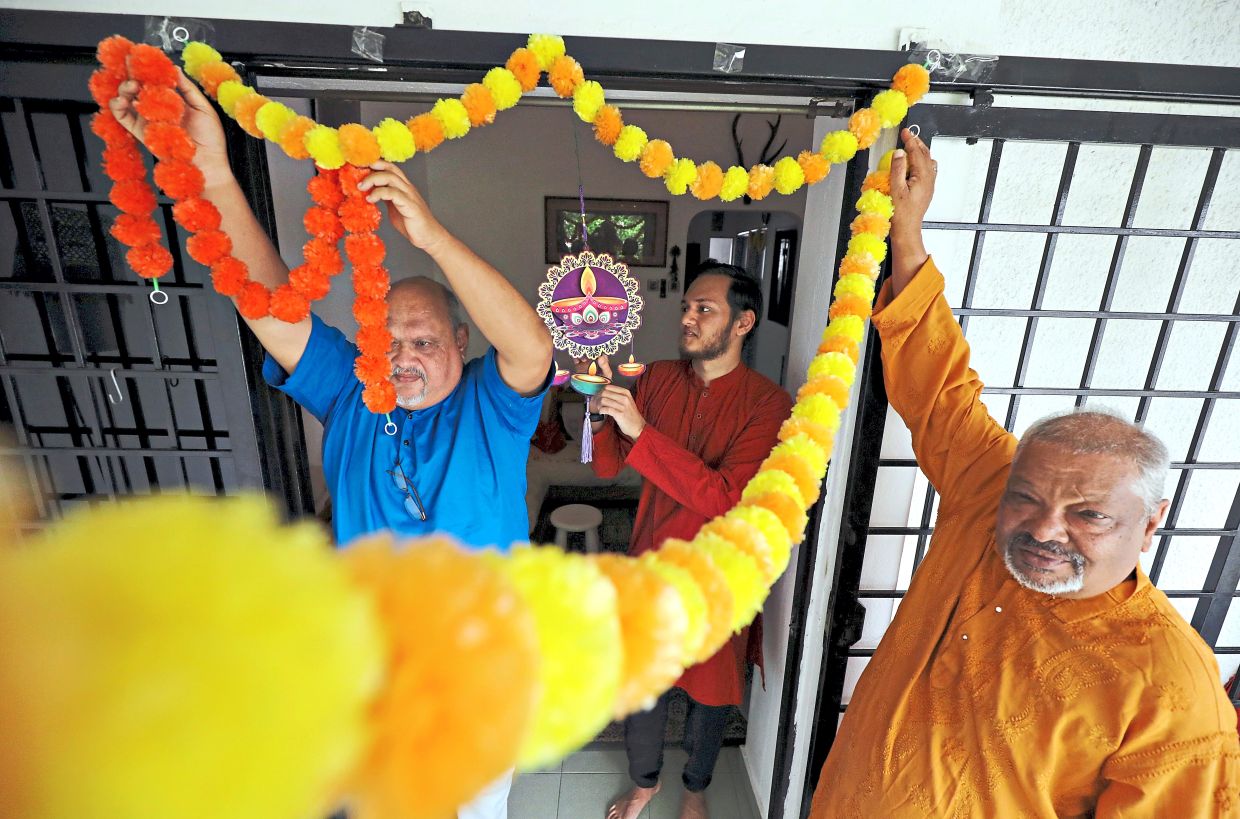
Out on the porch, Prodeep, 61, his brother, IT consultant Pulok Kumar Roy, 59, and nephew, data analyst Projeet Roy, 25, are busy hanging plastic marigold garlands.
It is a scene that is common before Deepavali, as family members come together to prepare for the celebrations, filling the house with festive cheer.
"Before Deepavali, we spring-clean the house to purify our home and invite peace and prosperity. We decorate our home with marigolds and clay lamps, which symbolise good fortune, purity and new beginnings," says Prodeep, a technical support manager, when met at his home in Setapak, Kuala Lumpur.
Prodeep's ancestors came to Malaysia in the 20th century from Bengal, a region spanning parts of eastern India and Bangladesh. They worked on plantations, including in supervisory roles and as medical assistants, in Negri Sembilan, Melaka, Penang and KL.
Although Bengalees are one of the world's largest ethnolinguistic (shared language, culture and ethnic identity) groups, the community in Malaysia is relatively small, with about 200 families, according to Prodeep.
At the entrance to the family home, his daughter, Priyankita Roy, 22, puts the finishing touches to an intricate alpana, a traditional Bengalee art form in which patterns are drawn on the floor using rice flour paste.
Two clay pots filled with water and mango leaves stand beside her artwork. In Hindu traditions, clay represents the earth, water symbolises the essence of life, while mango leaves are associated with purity.
Priyankita's alpana features swirling floral and leaf motifs along its border. She also draws a pattern resembling footprints of Goddess Kali, who is associated with power, protection and transformation.
"The foot motifs symbolise the divine feet of Goddess Kali. During Deepavali, the alpanas are believed to guide her into our homes, bestowing blessings of protection from negative energies, freedom from ego, love, courage and spiritual purification," says Priyankita, who is pursuing her studies in creative multimedia at a private university in Setapak.
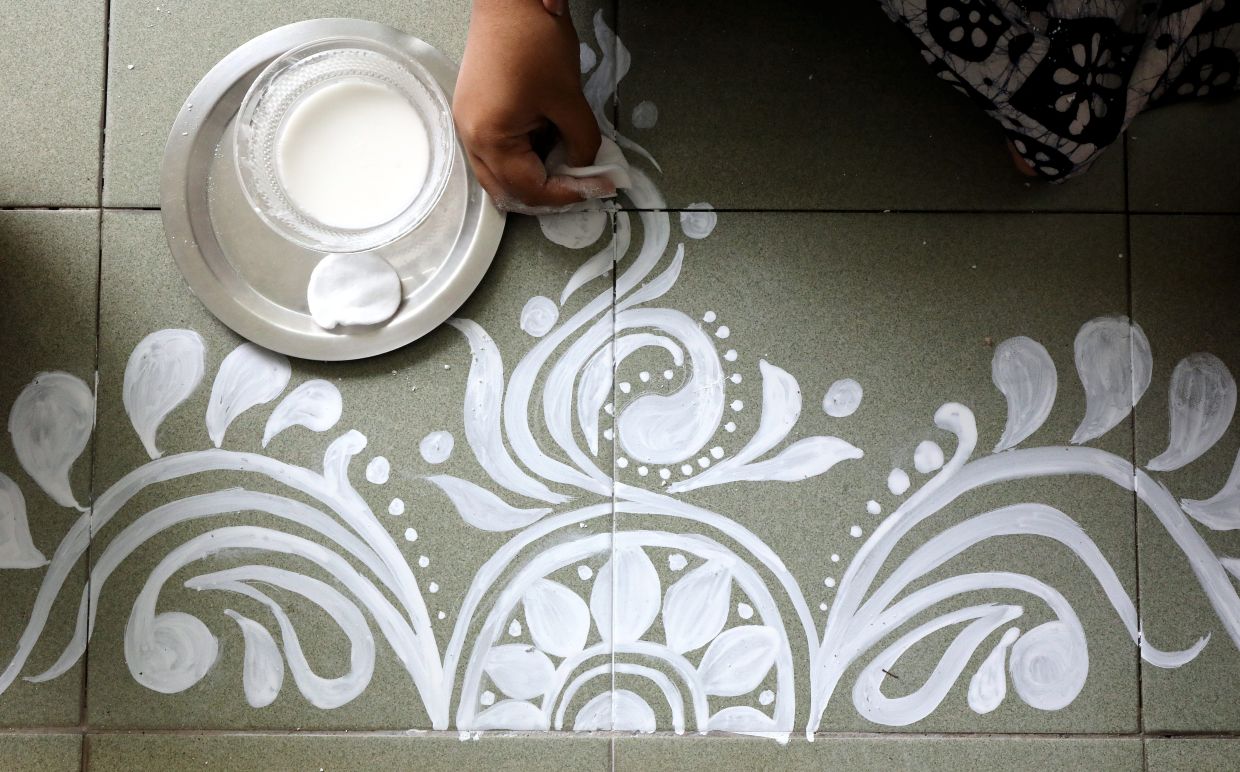
Alpana is made by mixing rice flour with water. Priyankita dips a small piece of cotton into the mixture and uses it to draw patterns freehand.
"Alpana is a traditional Bengalee art form. Other Indian communities create similar floor designs, known as kolam or rangoli, using materials like semolina, rice flour and coloured rice grains.
"We use plain rice flour because white symbolises prosperity. It can also feed small insects, pets and birds," she says.
Steeped in tradition
Deepavali is celebrated by Hindus, Jains, Sikhs and some Buddhists, with customs varying across communities. The festival is widely associated with the triumph of good over evil and is marked by the lighting of oil lamps, or diyas, in homes and public spaces.
Also known as the festival of lights, Deepavali falls on Sunday this year.
Before Deepavali, many Hindus observe Navaratri, a nine-night festival dedicated to the worship of goddesses Durga, Lakshmi and Saraswati, who represent strength, prosperity and wisdom respectively.
Prodeep looks forward to Deepavali every year, which his community celebrates with traditions that differ in some ways from those of many other Hindu communities in Malaysia.
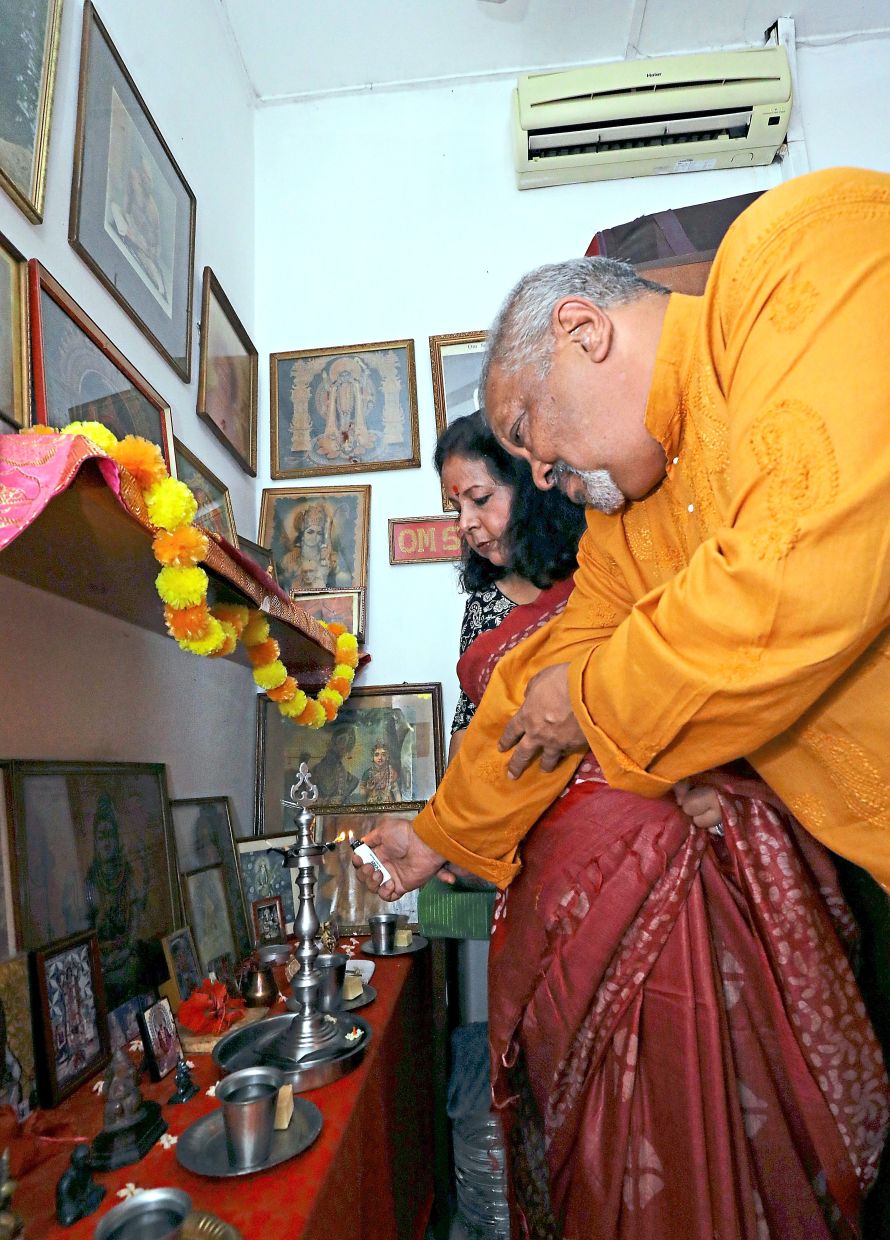
While many Hindu families worship Lakshmi, the goddess of wealth and prosperity, during Deepavali, many Bengalee Hindu families also observe Kali Puja, where prayers are offered to Goddess Kali.
The rituals are traditionally held at night, during the new moon, which may fall on the eve of, or coincide with, Deepavali, based on the Hindu calendar.
"Depending on the Hindu almanac, Kali Puja may fall a day before Deepavali. This year, however, both occasions fall on the same day, so we will hold prayers and rituals dedicated to Goddess Kali on Deepavali," says Prodeep.
Unlike many Hindu families who celebrate Deepavali at home, many Bengalee families gather at Bengal House, a community-owned building in Port Dickson (PD), Negri Sembilan, to celebrate together. They are all members of the Malaysian Bengalee Association (MBA), which was formed in 1952.
"Usually, around 100 families, particularly those from the Klang Valley, Melaka, Perak and Penang, gather for the celebrations. We stay in hotels around PD and come together at Bengal House to welcome the festival of lights. The best bit is sharing meals and spending time as a community," says Prodeep.
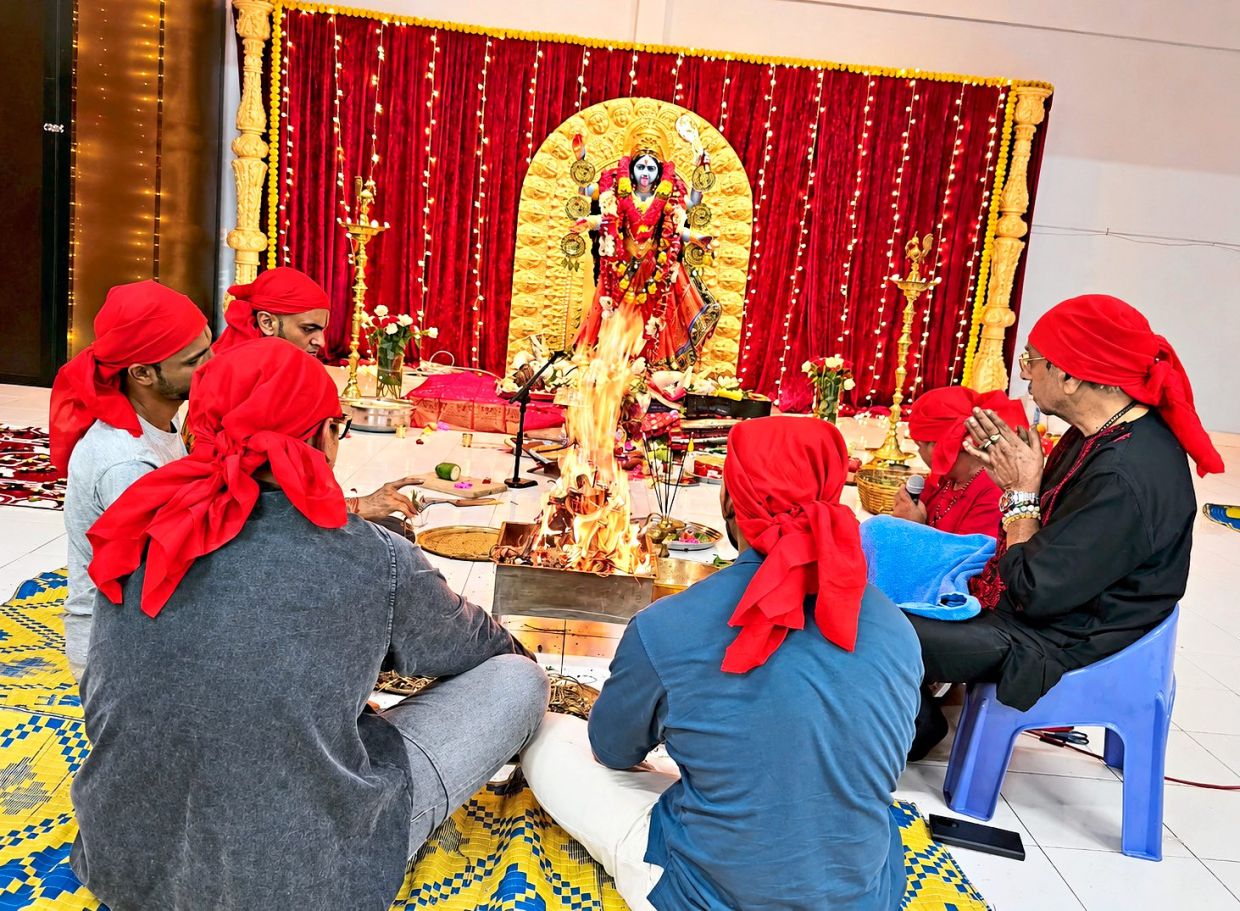
The father of one adds that the community gathers at Bengal House several times a year for religious and cultural celebrations, including Saraswati Puja, held in January or February, to honour the goddess of knowledge, and Poila Boishakh, the Bengalee New Year, celebrated in April.
Prodeep, a former president of the MBA, says a committee is formed each year to organise the Deepavali gathering, overseeing logistics, food, prayers, gifts and entertainment.
"We have celebrated Deepavali in PD for over seven decades. Everyone chips in where they can. The women help with the cooking, while children and men help clean up the place on Deepavali eve. Others lend a hand wherever needed," shares Prodeep, who is a committee member for this year's Deepavali celebrations.
"It is all about community spirit and helping one another like family. That is what Deepavali is all about," he says, adding that the Roys will leave for PD early tomorrow morning to help prepare for the gathering.
Community celebrations
Ranjita and Sangita are among those tasked with preparing meals for the gathering.
Feeding about 150 people over three days requires careful planning, and Ranjita has already drawn up a menu.
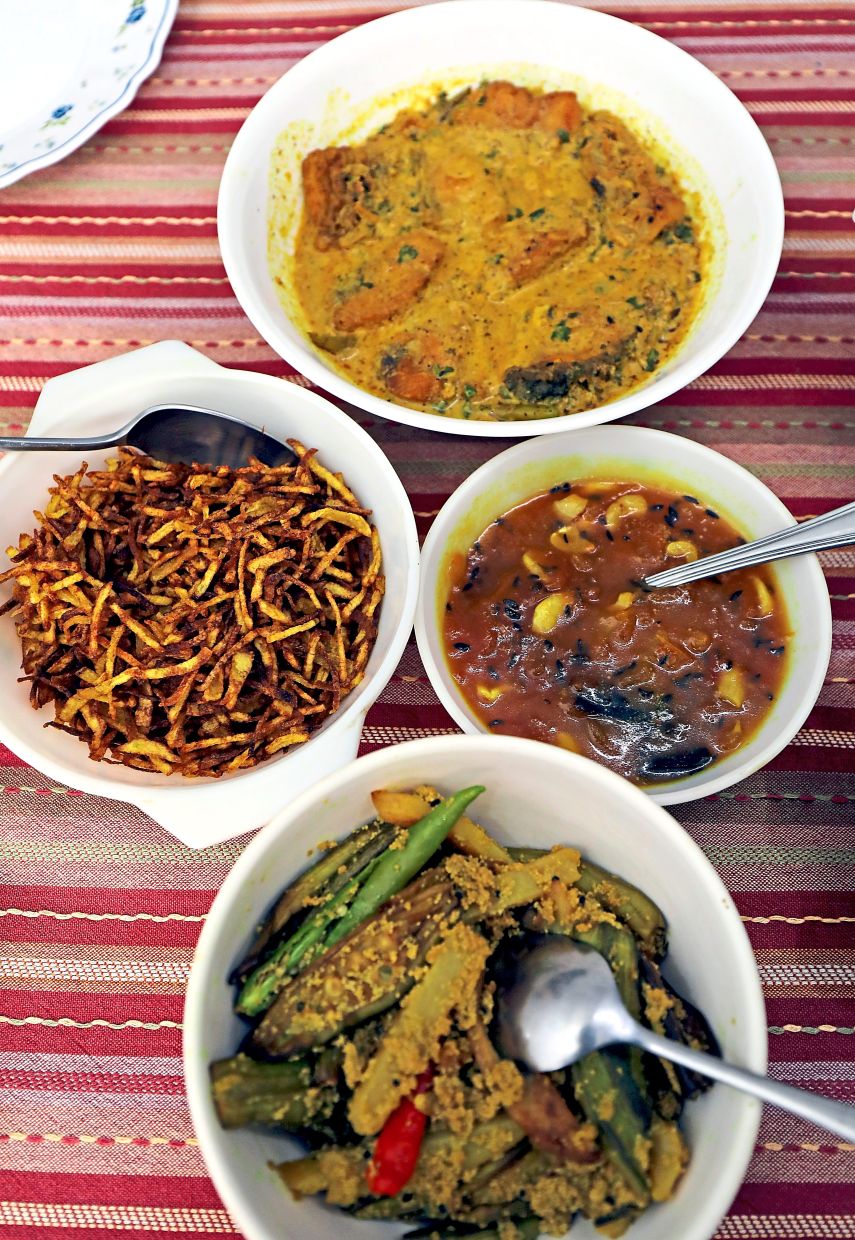
"Some of the must-haves are mutton curry, labra (a mixed vegetable dish cooked with mustard oil and spices), dhal, fried potatoes, tomato chutney, fish curry with mustard paste and egg curry," says Ranjita, adding that 50kg of mutton, 45kg of fish and 35kg of rice have been ordered to feed the crowd.
While cooking for such a large group may seem daunting, Ranjita, Prodeep's wife, is not worried.
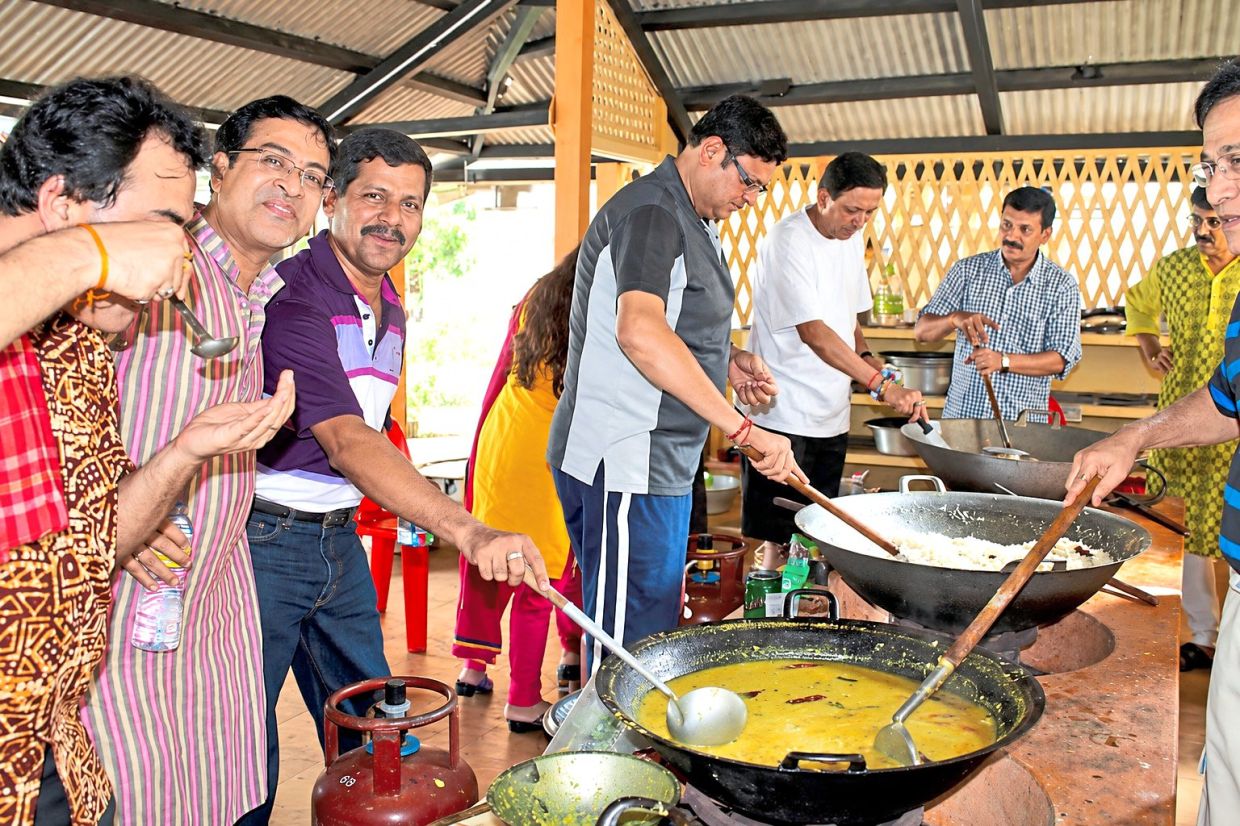
"Everyone chips in, with teams handling cooking, preparation and cleaning. The men help stir the large pots of curry. It is like a huge family gathering to celebrate Deepavali on a larger scale," says Ranjita, who is from Calcutta, India and has lived in Kuala Lumpur for close to 25 years.
"For Bengalees, food is a very important part of Deepavali celebrations. We are foodies, so the dishes have to be as authentic as possible. Otherwise, you will hear complaints from the community," adds Prodeep with a laugh.
For those with a sweet tooth, there is also gulab jamun, a sweet made from milk solids and soaked in sugar syrup; payesh, a Bengalee rice pudding; and rasgulla, soft cheese dumplings cooked in a light sugar syrup.
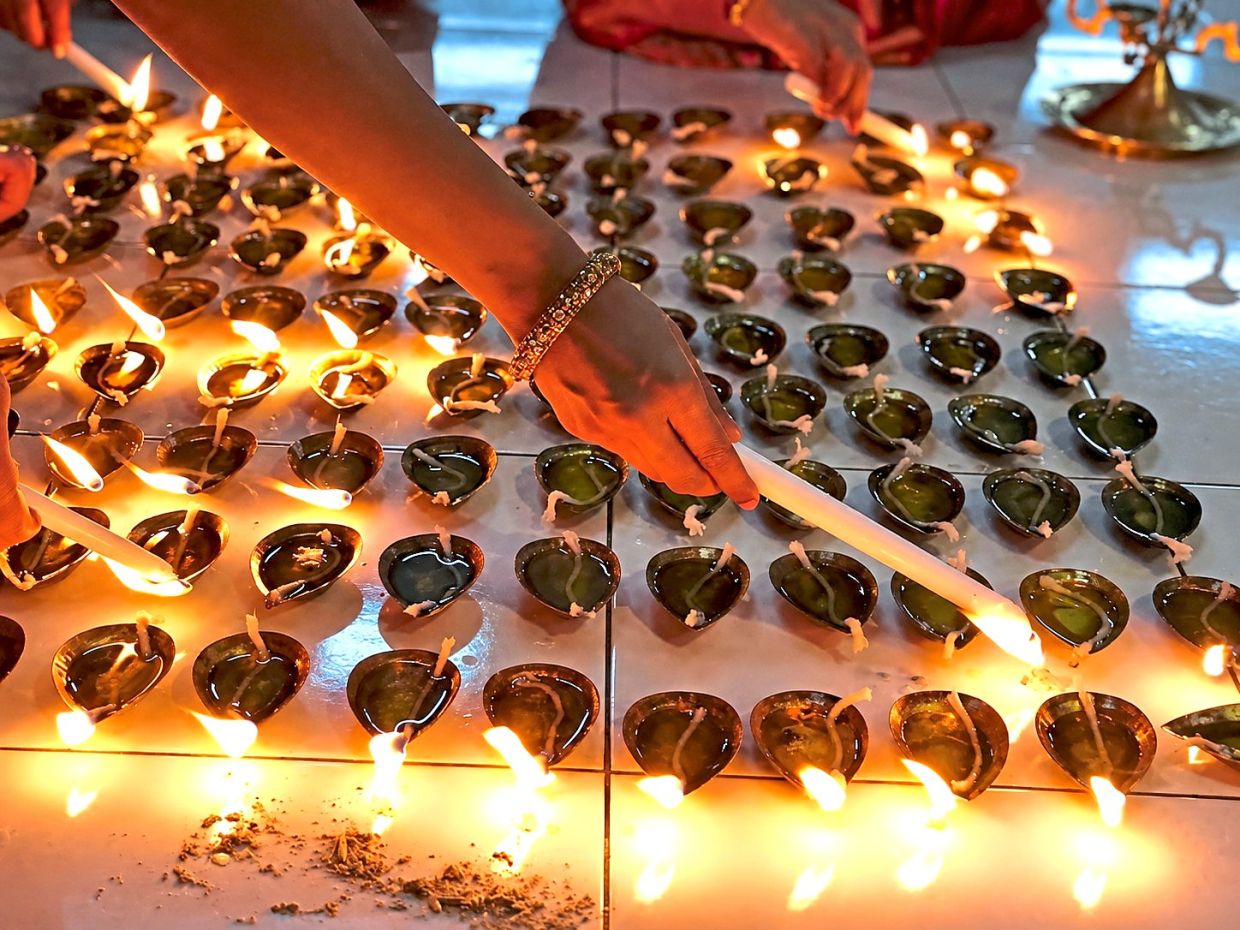
Tomorrow, the festivities begin with Chothyo Prodeep, during which 14 earthen lamps (diyas) are lit inside Bengal House to honour 14 generations of ancestors.
On Deepavali morning, the community will offer prayers to Goddess Lakshmi before enjoying food and festivities together. Everyone dresses in new clothes, and Ranjita, Sangita and Priyankita have already picked out their sarees, lehengas and salwar kameez for the celebrations.
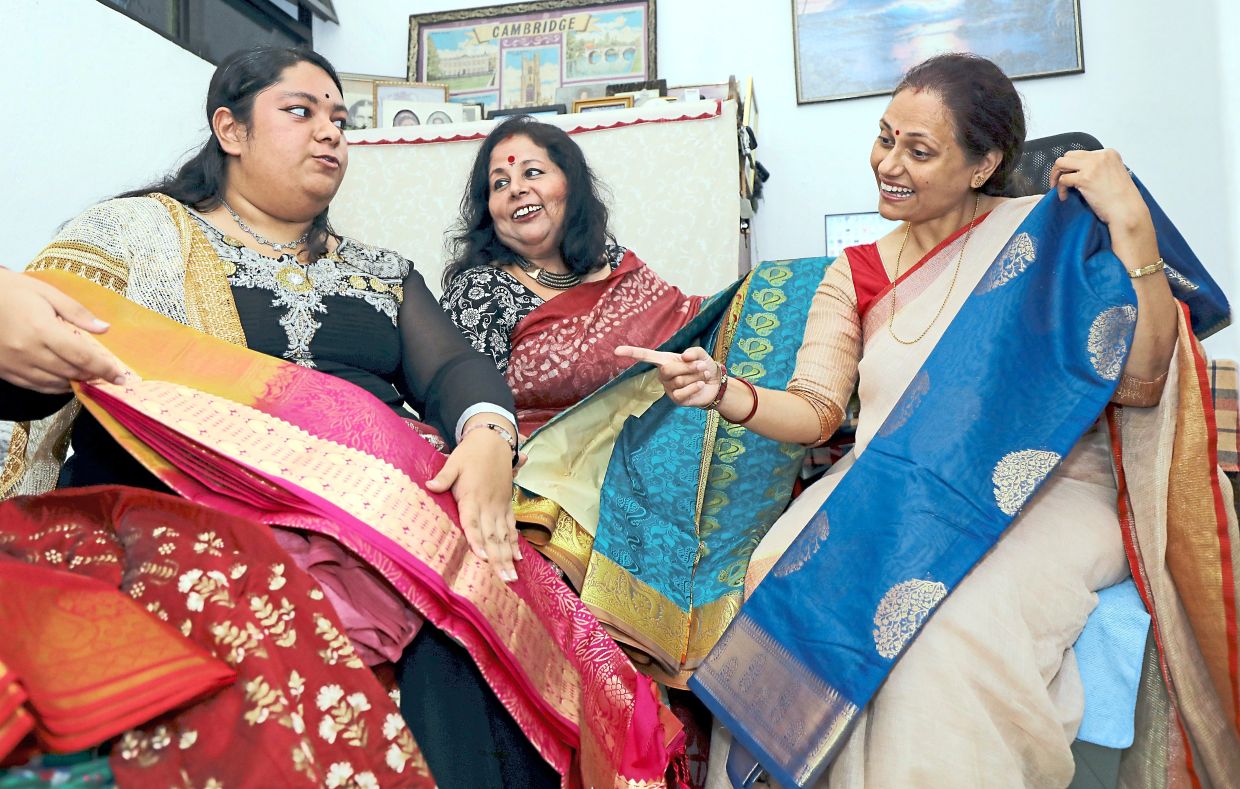
"This is the only time we get to dress up and enjoy the celebrations with our community," Ranjita confesses.
"Unlike some South Indian communities, we do not observe the oil bath ritual. We put on new clothes and offer traditional sweets and flowers to the gods on Deepavali morning. At night, from around 10pm to 3am, Kali Puja prayers are held to mark the new moon," she adds.
Bengalee celebrations continue with Bhai Phota on Nov 11, a festival that celebrates the bond between brothers and sisters. On this day, sisters apply a sandalwood mark, or phota, on their brothers' foreheads and pray for their long life and safety.
Ranjita hopes the community will continue to uphold its traditions despite its small numbers and the demands of modern life.
"I'm teaching my daughter, Projeet and her sister, Progoti, how to prepare traditional dishes. The celebrations here are similar to those in Calcutta, and I hope they will continue for generations to come," says Ranjita, as she continues to fry another batch of nimki for the gathering in PD.
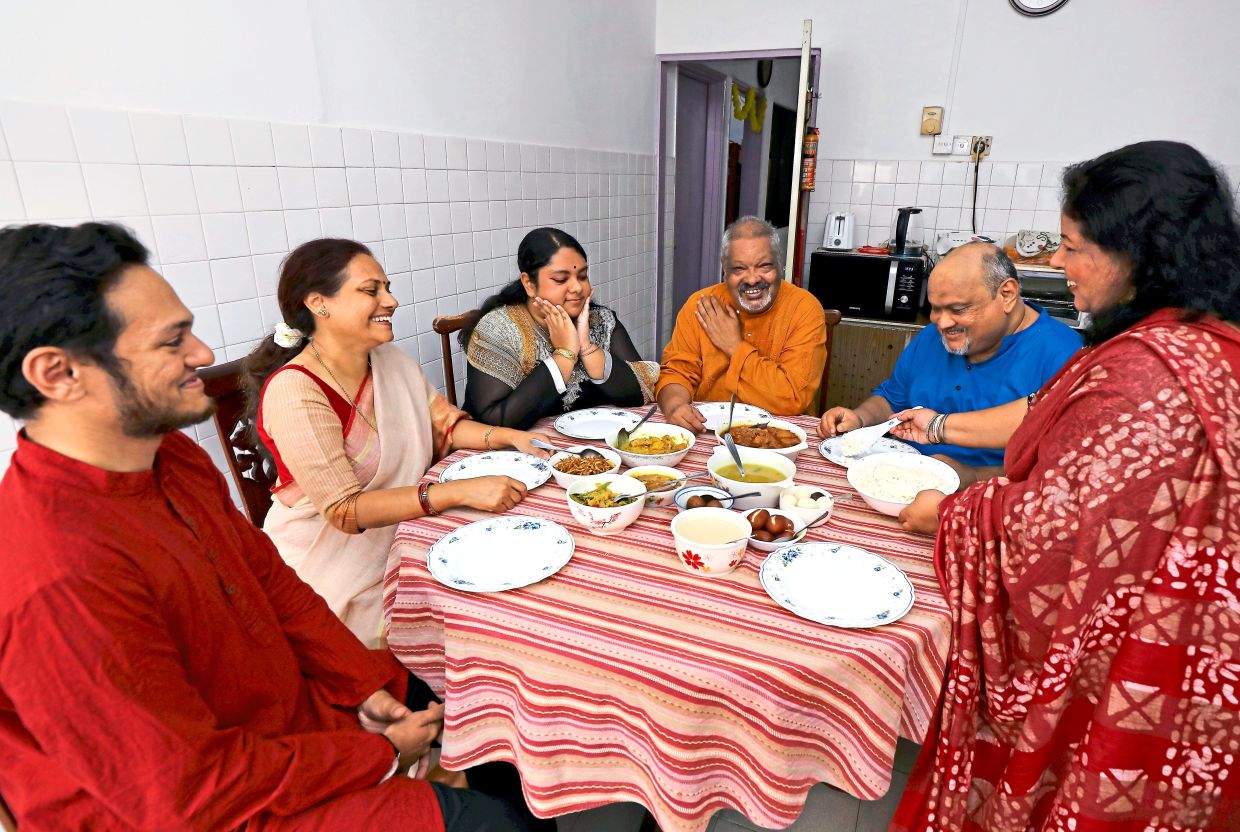
Upholding cherished traditions
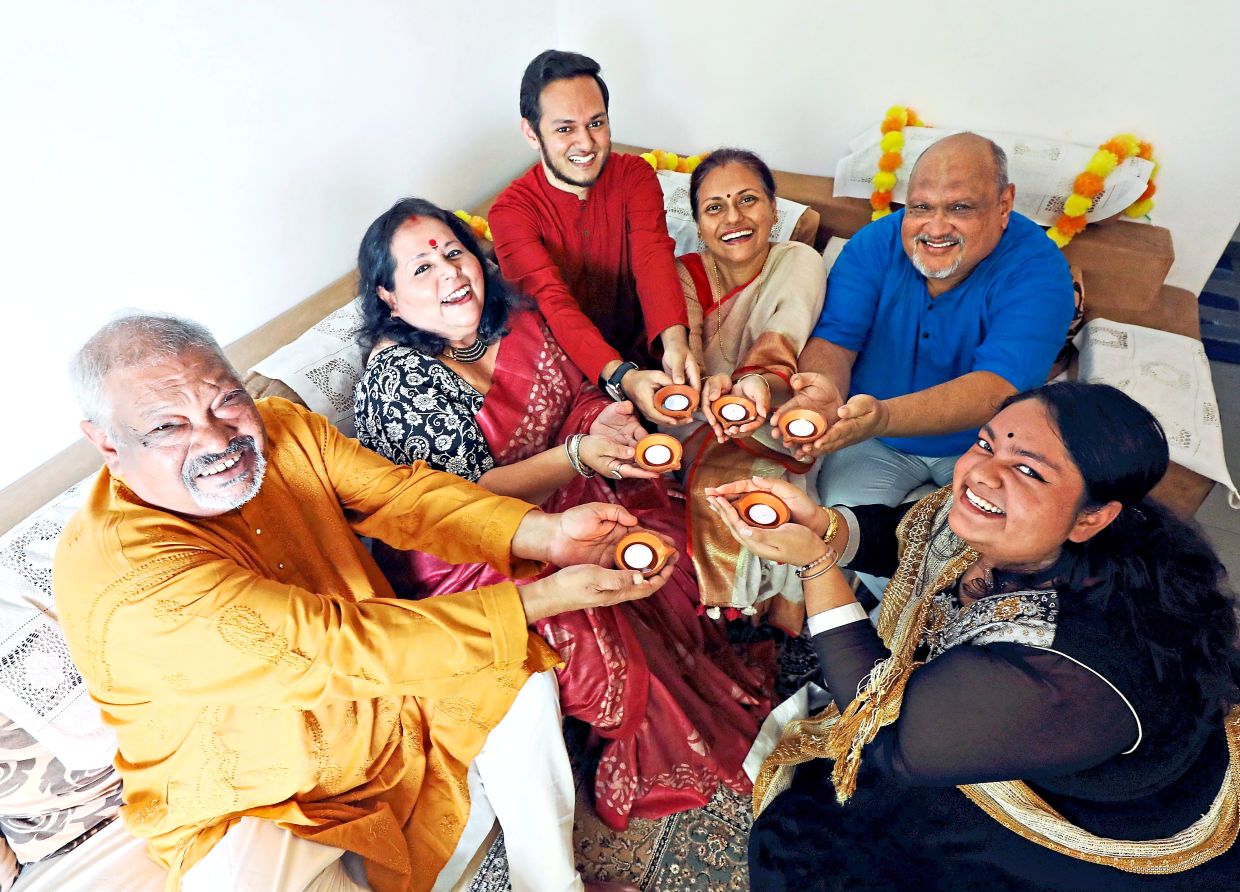
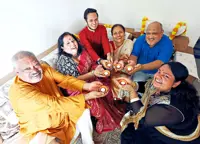
Clockwise from right: Sangita, Pulok, Priyankita, Prodeep, Ranjita and Projeet celebrate Deepavali by coming together to honour their Bengalee heritage. Photos: The Star/Azlina Abdullah
Prodeep (right), Projeet (centre) and Pulok hang colourful marigold garlands to decorate their home for the festival of lights.
Photo: The Star/Azlina Abdullah
Sangita (left) and Ranjita savour homemade nimki.
Photo: The Star/Azlina Abdullah
From left: Priyankita, Ranjita and Sangita look through their traditional outfits as they decide what to wear for the upcoming celebrations.
Photo: The Star/Azlina Abdullah
Clockwise from top right: Fish curry with mustard paste, tomato chutney, pointed gourd with poppy seeds and fried potatoes are tantalising Bengalee dishes.
Photo: The Star/Azlina Abdullah
The Bengalee community offers prayers to Goddess Kali during Deepavali. Photo: Malaysian Bengalee Association
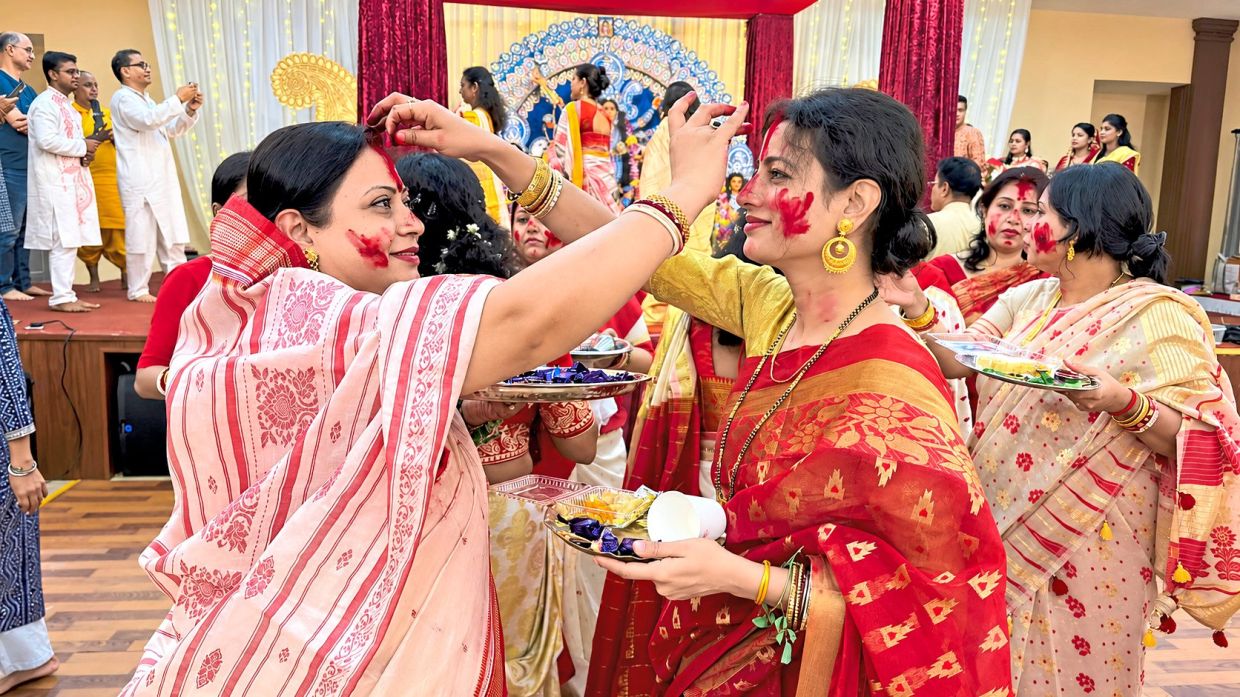
During Durga Puja (prayers to Goddess Durga), women apply sindoor (red vermilion powder) to one another's faces, wishing each other happiness, prosperity and a long married life. Photo: Malaysian Bengalee Association
Clay oil lamps are lit as part of Kali Puja as the Bengalee community offers prayers to Goddess Kali. Photo: Malaysian Bengalee Association
The cooking team comes together to prepare festive dishes for the celebrations. Photo: Malaysian Bengalee Association
Deepavali, also known as the festival of lights, symbolises the triumph of light over darkness and good over evil.
Photo: The Star/Azlina Abdullah
'Deepavali is all about preserving our culture and strengthening our bonds,' says Prodeep (third from right).
Photo: The Star/Azlina Abdullah
Nimki is made from wheat flour and spices.
Photo: The Star/Azlina Abdullah
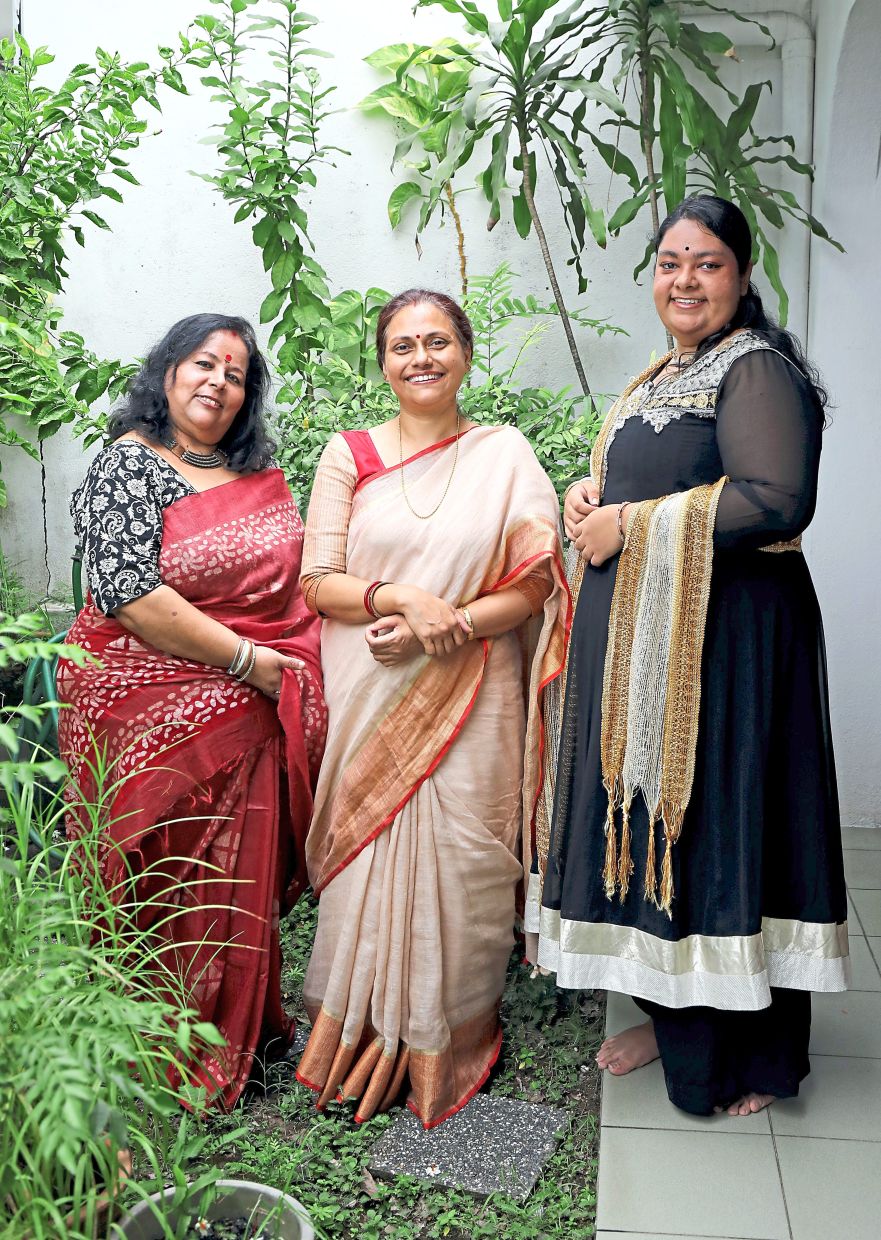
Ranjita (left), Sangita (centre) and Priyankita look forward to the upcoming festivities with their Bengalee community.
Photo: The Star/Azlina Abdullah
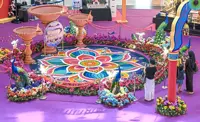
Alpana, a traditional Bengalee art form, features decorative patterns usually drawn on floors, courtyards or at the entrances of homes. Created using rice flour paste, the artwork symbolises prosperity and happiness as Hindus prepare to celebrate the Festival of Lights on Sunday.
Photo: The Star/Azlina Abdullah