As children move through a world that is completely new, it’s natural for them to be curious.
They want to know why their bodies feel a certain way, why their loved one is sick, or why they are suddenly overcome by a certain emotion they couldn’t name.

While parents are used to answering more simple and straightforward questions, the bigger questions can definitely be harder to navigate, especially when it involves sensitive subjects.
However, experts note that while children may not be able to explain something, it doesn’t mean they are not aware of it.
“Children are often very perceptive. Even when they may not have the vocabulary to explain their feelings, they can pick up on changes in their parents’ emotions, daily routines or the atmosphere at home,” says consultant child and adolescent psychiatrist Dr Wan Asyikin Wan Azlan.
Their emotions may surface instead through their behaviour, such as tantrums, withdrawal, anger and refusal to communicate.
“This is why developing emotional literacy – helping children recognise and name what they are feeling, is such an important first step towards learning how to manage those emotions.”
Consultant paediatrician Dr Sanjay Woodhull also explains that bottled-up emotional stress can sometimes manifest physically through difficulties sleeping, appetite changes, tummy aches or headaches.
“By encouraging open conversations from an early age, we can help children gradually develop the confidence and vocabulary to recognise and communicate what they are experiencing,” he says.

“This also allows parents to better understand their child’s needs and identify potential concerns earlier.”
This is why, according to Dr Woodhull, children should be taken seriously when they ask questions, even if they may seem too young to fully understand the answers.
“When we explain the reasons behind healthy behaviours, rather than simply telling them what they should or should not do, they are often more willing to understand and participate,” he says.
A challenge parents might face is finding ways to approach these conversations without overwhelming their children.
Dr Woodhull highlights the importance of finding the right balance, with the goal being not to oversimplify health information, but to explain heavier subjects in a relatable way.
“Parents can introduce information gradually, based on their child’s age and understanding, and let the child’s questions guide the conversation.
“Ultimately, we want children to feel informed and reassured, rather than confused or fearful.”
A safe space for curiosity
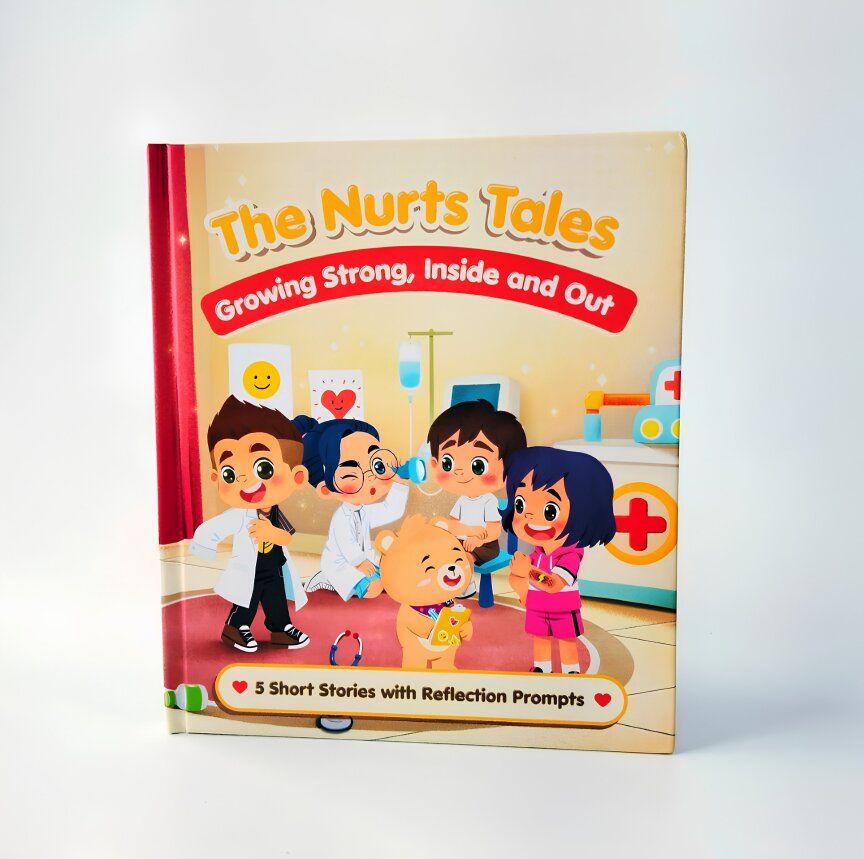
Turning these conversations into something less intimidating is the main idea behind The Nurts Tales: Growing Strong, Inside And Out, created by The Nurts in collaboration with a private hospital.
The book – launched earlier this month in Subang Jaya, Selangor – is a collection of five illustrated stories covering emotions, healthy habits, nutrition, body safety and understanding illness.
The stories use young characters and situations to introduce the complex topics while giving parents a natural starting point for further discussion.
“Storytelling can be particularly powerful because children can often relate to a character before they are ready to talk directly about themselves,” says Dr Wan Asyikin.
“By asking questions such as, ‘How do you think the character is feeling?’ or ‘What do you think made them feel this way?’, parents can create a safe and gentle space for children to explore different emotions.”
For author and The Nurts co-founder Adrian Tan, the stories also draw from his own personal experience.

One of them is inspired by his own feelings of fear, helplessness and frustration when his father was diagnosed with cancer, with the story intended to help children understand that they can offer support without feeling responsible for fixing the situation.
Tan says the first step to tackling heavy subjects like this is to first place the young readers in familiar, childlike settings they would have personally experienced, such as building sandcastles at the beach or attending a fair.
In the storytelling, he also makes sure to avoid putting the child at fault when they make mistakes.
“The narratives are focused on improving understanding and helping the characters be better, rather than berating them for wrongdoing or bad choices.
“Stories that are delivered in a positive and supportive manner will avoid children from feeling defensive or shamed, improving the likelihood that they will be receptive to the message.”
With this book, Tan hopes families will normalise curiosity and open discussion, even around uncomfortable subjects.
“A parent who makes it safe for a child to ask any question and makes the time to entertain those questions raises a child who is well-equipped for continued self-learning and self-improvement throughout their lifetime.”
Most importantly, Tan assures parents to not be afraid of not having all the answers.
“Sometimes, saying ‘I don’t know, let’s find out together,’ is one of the most valuable lessons we can give our children.”