My wife and I are in our mid 50s. We have been married for 26 years and live happily with our three lovely juveniles.
I worked as a marketing and sales senior manager in a consumers goods company. My job requires me to travel outstation monthly.
My wife was a secretary in a construction company but quit her job to be full-time housewife 19 years ago to take care of our kids. I have provided her a monthly allowance (more than her last-drawn salary) since then. I really appreciated her sacrifices and she handles family matters well. Our house is always clean and comfortable.
Our family goes overseas for holidays together almost every yearend without fail.
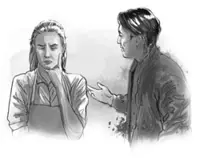
I was shocked with her aggressive behaviour initially but tried to compromise as I realised it could be caused by the menopause. But occasionally I lost my temper too, so we ended up with heated arguments and a cold war for a few days.
Every time, I am the one who took the initiative to break the ice and our relationship would go back to normal again. But the tug of war would resume frequently due to her unnecessary misunderstanding.
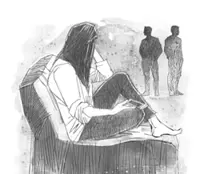
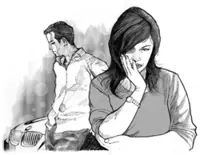
A few months ago, she broke down and revealed that she was depressed and had reason to suspect I have another woman. She was very sad and accused me of cheating on her for so long. I was very shocked to hear her accusations, as below:
1) That I bought a laptop for “that woman” as she accidentally saw a receipt for the purchase of a laptop. But she was unable to show me the receipt when I requested to see it. I explained that the newly purchased laptop was for our daughter. But she refused to accept my explanation.
2) That I had dinner with “that woman” when I showed her my credit card receipt for a meal at a restaurant near our house. In fact, it was dinner with our family.
3) That I was influenced by “that woman” on bed skills as sometimes I spoke sexy words during our romance time nowadays to stimulate our sex life as I feel it has deteriorated due to increasing age.
4) Whenever I returned home after working slightly later than usual (due to traffic jam), she suspected that I already had my dinner in “that woman’s” house.
5) She suspected my branded perfume was given by “that woman” as I normally purchased non branded. In fact, it was my redemption gift with credit card points.
6) Whenever I brought home some food, she suspected it was prepared by “that woman”.
She suspected many other small petty matters related to “that woman”.
I firmly denied all her wrongful accusations as I never flirt around nor do I have any other woman. I explained to her all the reasons and assure her that no such things happened. However, she told me she would never forget all the “incidents” and warned that she would do something unexpected if she caught me red-handed. Since then, she would easily suspect my actions whenever I do something new.
I feel upset that she has lost her trust in me. I feel very sorry for her suffering which was created unnecessarily by herself but I am unable to help her. I am trying my best to be tolerant about her mood swings in view of the menopause, but she insisted that I have changed and that I am the culprit who made her suspicious and suffer.
I believe we still love each other. But her changing behaviour (maybe mine too as she accused but I did not realise) and the tense relationship is affecting us.
Really appreciate your opinion on how to eliminate her suspicious behaviour and improve our quality of life.
Confused husband
I'm so sorry that you are in this difficult and perplexing situation.
The menopause affects women differently. Some sail through it and barely notice the change whereas others find it comes with frightening and upsetting changes of mood and perception.
In some cases, the menopause can result in temporary depression and anxiety. Both of those mental health issues can lead to the surfacing of secret fears. As the woman becomes driven by stress, she will then act on those secret fears, sometimes in rather extreme ways.
For example, someone who is secretly afraid of being unattractive, will become convinced they need plastic surgery.
It may be that this is your wife's case. Not only is she going through the menopause but there's the additional stress of the pandemic.
If this is the issue, then a trip to your family doctor or gynaecologist is a good first step. Have your wife talk openly about what's going on and see if she might benefit from temporary medication to manage the changes her body is going through.
In addition, I think it's helpful for both of you to understand that your relationship is entering a new stage. You're getting into the retirement part of life, and that means you will change how you see yourselves as individuals as well as your bond.
A very practical way to move towards happiness is to rekindle your connection. You can do this effectively by recreating all the things you did at the start of your relationship. That means going on dates, spending quality time together, and bonding by doing things together that you both love.
Also, as you're both getting older, you might start a new hobby. I strongly suggest dancing as it helps you be a couple, gives you something to do, leads to making new friends, and it's also good fun exercise.
However, I also have a second thought. Frankly, I hesitate to mention it because it's a rare issue that affects some 0.2% of the population. Still, in the spirit of covering all the possibilities, your description also fits a delusional disorder known as "Othello syndrome".
Othello syndrome is named after Shakespeare's tragic hero Othello, who at the start of the play is happily married to Desdemona. However, when their enemy Iago steals Desdemona's handkerchief and puts it in another man's belongings, Othello instantly decides that his loving loyal wife is a cheating, lying adulterer.
As I said, Othello syndrome is rare but those who have it, have a fixed belief that their spouse is cheating on them. We're not talking about a secret fear that you can reason with; people who have this are completely convinced they are right. They are unwavering, no doubts at all. For onlookers, it's quite a frightening break with reality.
Typically, this condition affects people who are over 40 years old and who have no history of mental illness. It is often found together with other conditions, including Alzheimer's disease, strokes, multiple sclerosis, epilepsy, tumours, and accidents that result in brain injury or trauma. This is why doctors think there is a neurological component, although what exactly is uncertain.
Management approaches vary. However, in terms of talk therapy, delusions need very gentle handling because you can't just tell clients to ignore their thoughts. Reassurance is a major factor in management.
Having mentioned the remote possibility, it's sensible to rule it out. When you say your wife has changed, that she is often angry and has outbursts, do you get the sense that there is something going on that's more than menopause? That perhaps she may have early dementia, a stroke or some other issue? If yes, then you should talk to your family doctor and get a complete check-up.
I do hope I haven't frightened you. Most likely this is a plain and simple misunderstanding that comes from the awful combination of the menopause and the pandemic. But as you are concerned enough to write to me, I think a sensible safe approach is to start by talking to your family doctor. Then, when you have a better sense of what's going on, you can both get back to a happier place.
Already a subscriber? Log in
Get 20% OFF The Star Digital Access
Cancel anytime. Ad-free. Unlimited access with perks.