For centuries, Mutanabbi Street in Baghdad, Iraq was a zenith for book lovers, boasting titles from all corners of the world, such that it gave birth to the Arab adage: “Cairo writes, Beirut publishes, Baghdad reads.”
But on a quiet summer morning in June, traces of that rich history appeared to be fading, and booksellers like Hussein Ali, whose wares were spread across the pavement, bemoaned depleting sales as readers increasingly opt for online copies.
“Thirty-five years ago, I would sell more than 50 copies on a day like this,” said Ali, speaking on a Friday, which marks the start of the weekend and is usually the busiest day in the book market.
“Today, I can barely sell five.”
Despite Baghdad’s long-held reputation as having one of the most avid reading populations in the Arab region, there was little evidence of that tradition remaining.
The street, named after the famed 10th century poet Abu al-Tayeb al-Mutanabbi, is packed with stall after stall containing endless shelves of books in Arabic and English.
But the signs declaring some volumes – many of which had now gathered a layer of dust – to cost the equivalent of less than a dollar did little to attract more customers.
Beyond the rows of shelves containing books on astrology, psychology and yoga lay hidden treasures, including rare collections unavailable anywhere else in the world.
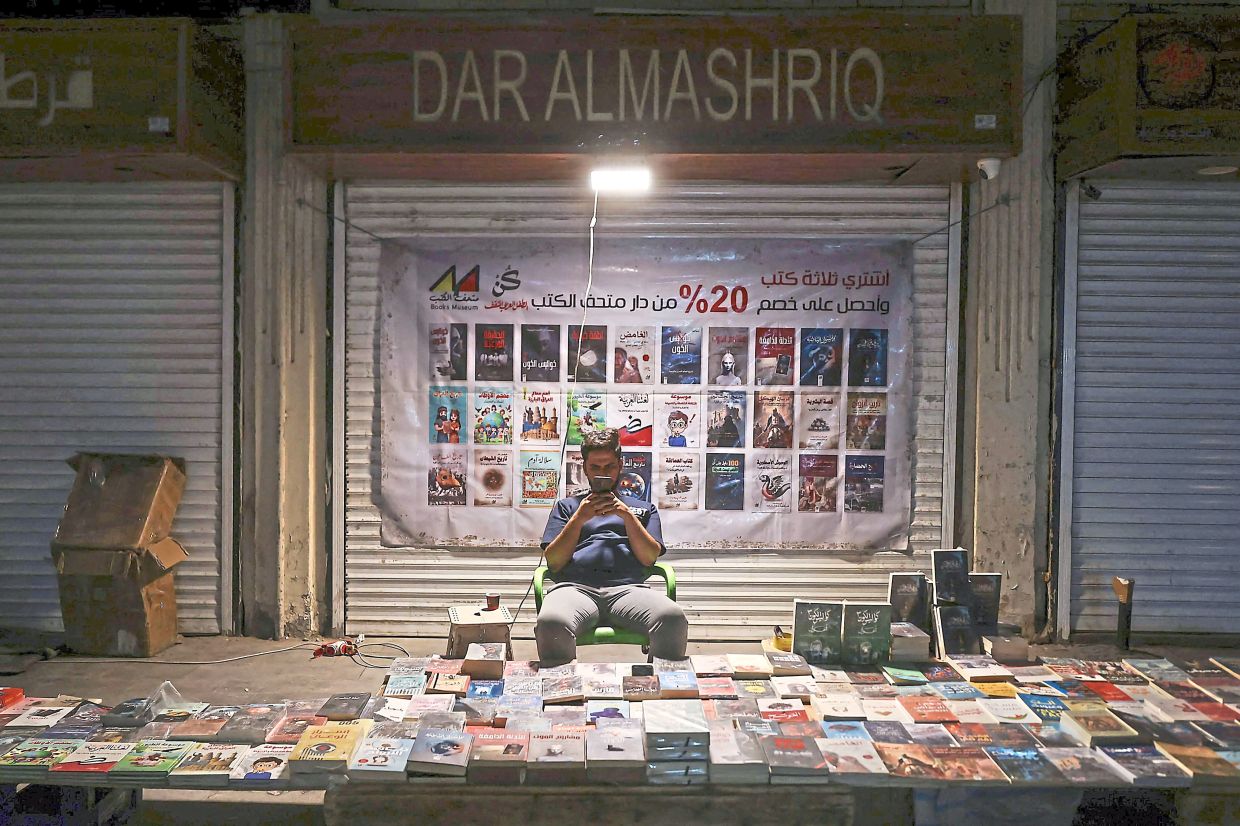
One such volume, Ali said, was The Great Treasure, a religious text revered by the Sabian Mandaeans, an ancient religious minority spread mainly across Iraq and Iran.
The man in his 70s described feeling “sorrow that I work hard without any return”, saying he continued to work because he had grown accustomed to it and to “seeing old friends who visit Mutanabbi”.
He mourned what he described as the death of creativity, attributing it in part to “the spread of social media”.
Speed and efficiency
The first forms of written text were believed to have appeared more than 5,000 years ago in Mesopotamia, in the ancient city of Uruk, now known as Iraq’s southern city of Al-Warkah.
Issa Adnan, a computer engineer, said he found it easier and faster to find books online rather than to go to Mutanabbi Street.
He added that he is no longer as interested in reading novels and philosophy as he once was “because we have come to worship speed and efficiency”.
Throughout the decades of war and violence that gripped Iraq since the 1980s, Mutanabbi Street largely remained a beacon brimming with life and letters, until a 2007 suicide bombing there killed 30 people and destroyed many shops and stalls.
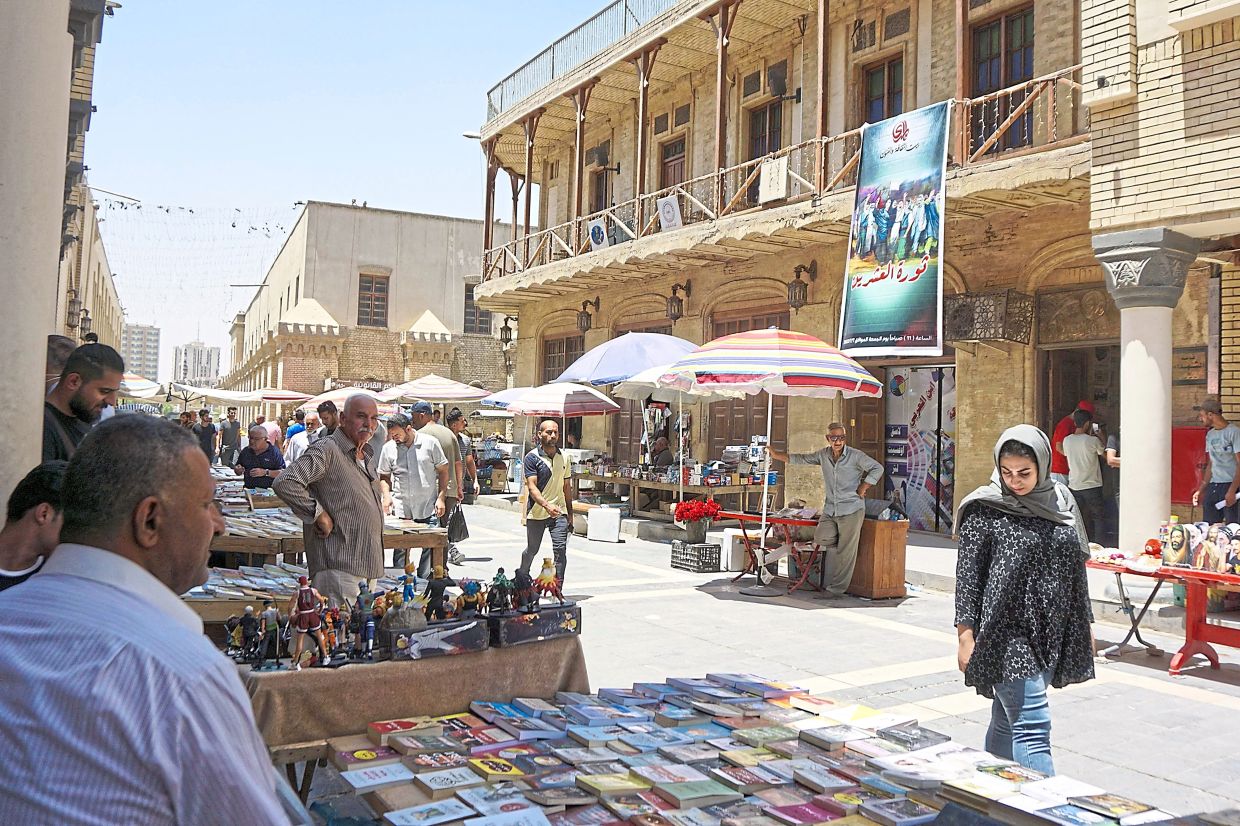
The street even got a major facelift, undergoing renovations just a few years ago.
But like other booksellers, Abdullah Abdulazim still pointed to a “great decline” in the number of readers and visitors.
Abdulazim, 26, has taken to social media to promote his bookshop, but still complains that “sometimes profits are meagre, others they are nonexistent”.
“A home without a library lacks imagination and innovation,” he said.
Author Hakim al-Shammari said he had begun distributing his latest book to ministries and institutions for free due to the declining interest in reading.
At a cafe frequented by literati from across Iraq, Ismail al-Bayati said “there is currently no demand for books in Mutanabbi”, despite their low price points.
But Bayati, who is now in his 70s and proclaims to have read more than 500 books in his life, says he nonetheless tries to buy any book “even if only on the basis of its title”, to feed his lifelong passion for reading and support the booksellers.
He said the world today
“is in a state comparable to a drug addict if he loses access to drugs ... if we don’t have Internet, it’s as if we’ll die”. – AFP