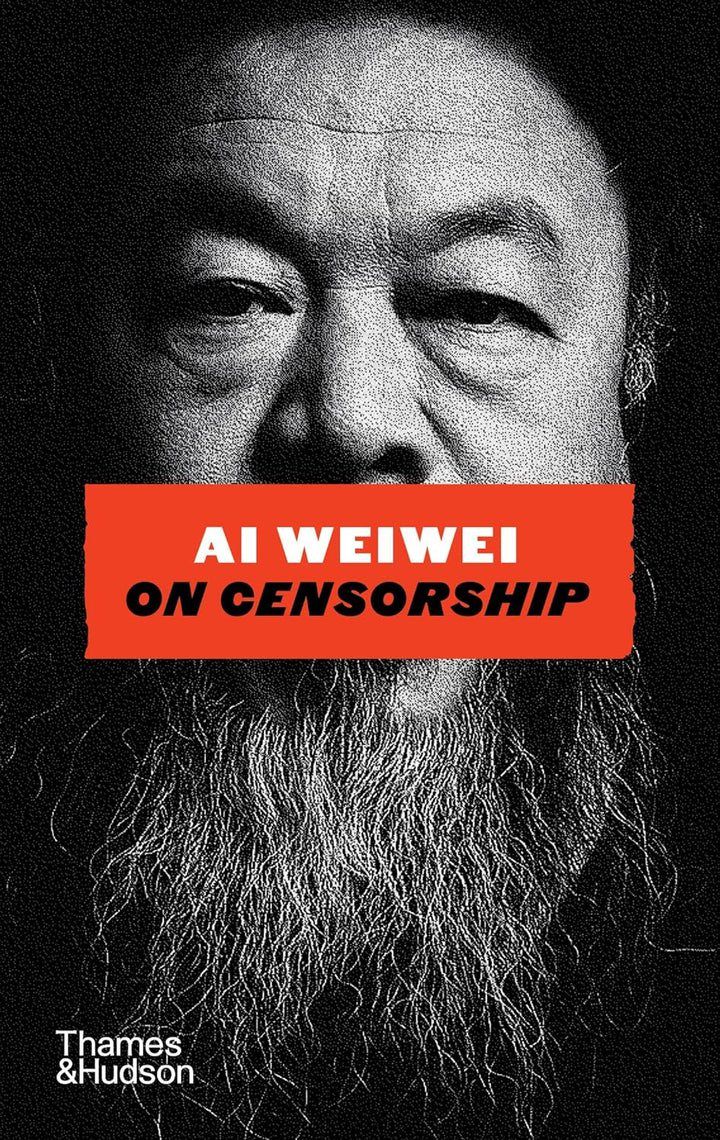
Censorship has been a constant in Ai Weiwei’s life. The 68-year-old Chinese dissident, whose activist art has made him among Beijing’s most prominent critics, has seen his films, sculptures and other works restricted for their criticisms of China as well as his outspoken advocacy for human rights around the world.
Speaking with in London ahead of the launch of his new book On Censorship, he discussed returning to China for the first time in a decade, the impact of AI on freedom of expression, and what he sees as the erosion of free speech in the West.
This conversation has been edited and condensed for clarity.
You’ve experienced censorship in China in many forms, including having your exhibitions cancelled and your name and artistic contributions erased online. What similarities, if any, have you observed in the West?
In China, censorship relates to red lines. You cannot cross some red lines. It’s about state policy and discussions (about) state power. It’s also related to what they would call minority or religious issues, which can be very sensitive, so people would not touch those topics. If touched, it could cause you different levels of damage. But in the West, especially now, you also see censorship everywhere – not necessarily just from the state but from companies, from institutions, from schools or museums.
You argue in your book that the ‘right not to be watched no longer exists’. As the world becomes increasingly reliant on artificial intelligence, do you see these technologies worsening surveillance – or could they help counter it?
It’s like you are playing a (game of) poker – the other side knows what you are hiding in your hands, so how can you play the game? It’s not possible, because they always know what you have. The sense of privacy is essential for personal life, in relationships; we need a corner to just be ourselves. Technology has completely destroyed that. When we have lost a sense of privacy, then what really happens? It means we have lost humanity, because we are no different from one another. We are just numbers.
British Prime Minister Keir Starmer was the latest European leader to visit China recently as Britain seeks to reset relations. How do you view these kinds of visits, given ongoing tensions over issues like Hong Kong, espionage accusations, and cyberattacks?
Globally, politics is like a chess game. (It’s about) how to balance power. The tendency of European leaders to go to China will (increase), and China’s policy has been tested and is more acceptable in international relations than the US, because the US just wants to (pursue) American interests, and (that’s) not so acceptable by its own partners in Europe. I think Britain’s head of state made a very good move (to go to China). It’s not just about business interests; (it’s) very rational and practical to see China as a state of its potential.
Would you want Western leaders to bring up issues such as censorship when he or she goes to China?
Ten or 20 years ago, when (then-President Barack) Obama (went) to China, I warned that every deal you make (will) hurt the human rights condition(s) in China. I (thought) they should openly denounce that. But today I changed my mind completely. I will say the West is not even in the position to accuse China. (They must) check on their record, what they did on international human rights, freedom of speech.
You recently returned to China for the first time in a decade. How did it feel to be back?
It’s a very strange feeling because you’re going back somewhere you’re so familiar with, but at the same time it’s so different now because China has become a very powerful state in the international (setting). It’s a very strange feeling.
(But when you are) in a state like China, you miss discussion(s) on a higher ideological or philosophical level. You cannot discuss anything in a meaningful way, because certainly people are not used to it, and they know that (could lead) to a problem.
Aside from being questioned at length at Beijing airport, I understand your stay was largely trouble-free. Why do you think that was? Has China become more accepting of your work and your views?
The way they treat(ed) me was very courteous. I just told them, very humbly, (that) I wanted to see my mum. That was my purpose to come back. So they acted very friendly. I would say the trip was smooth.
I don’t think (they are more accepting of my work). I think they have more confidence in dealing with me because they know me better. I just have ideological differences, and I argue about social justice, human rights, freedom of speech, so somehow they understand me. That’s what I hope.
Your work has consistently challenged authority. Do you expect it to become harder to produce such work in the years ahead?
Challenging the powerful and challenging authority is not a total life. You hope you don’t have to do that all the time, but we all have to be alert about this. It doesn’t matter if it’s in the West or in a democratic society – we can see it’s deteriorating fast.
It’s obviously getting harder (to work) if you want to touch (on) those so-called sensitive issues, and it’s a test and a challenge (to) your integrity. Do you want to give up your integrity for obvious profit or (do) you want to still say: “I’m a person (who will) protect human integrity”?
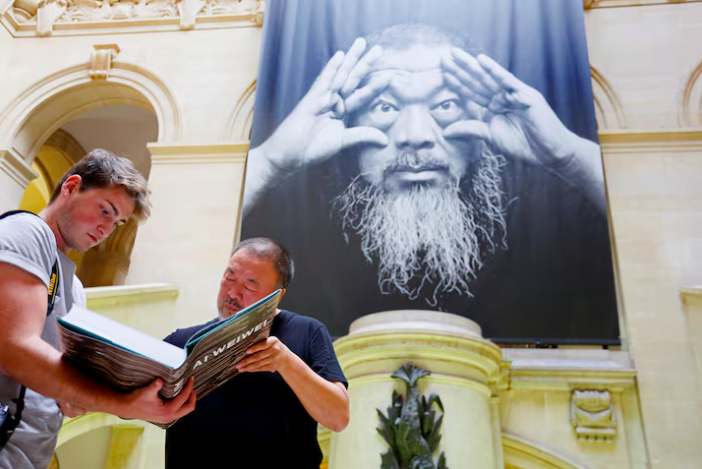
What message would you give to younger generations of artists who may want to follow in your footsteps, but fear the risks to their reputation or safety?
I did it only because my nature is like that, but I don’t encourage everybody to do that because I don’t know if you can pay the cost of losing the means to survive. And to speak the truth very often (it means putting yourself) in an extremely difficult situation.
If I fight so relentlessly, the only hope is that the next generation does not have to do the same thing(s) I do.
Is there anything that gives you hope?
If people act (to) protect their own consciousness and to protect very essential rights, I think that is the only possibility (for us to) remain as individuals that can be associated with humanity. Otherwise, we are going to, in this fully developed technical world, easily disappear. – Reuters