
Fashion designers, stylists, and models flocked to the Islamic Arts Museum Malaysia (IAMM) in Kuala Lumpur on a recent Tuesday for a talk on traditional Malay attire.
Held alongside the exhibition Busana: Traditional Costumes Of The Malay World, the session showcased how local dress continues to inspire and evolve in contemporary life.
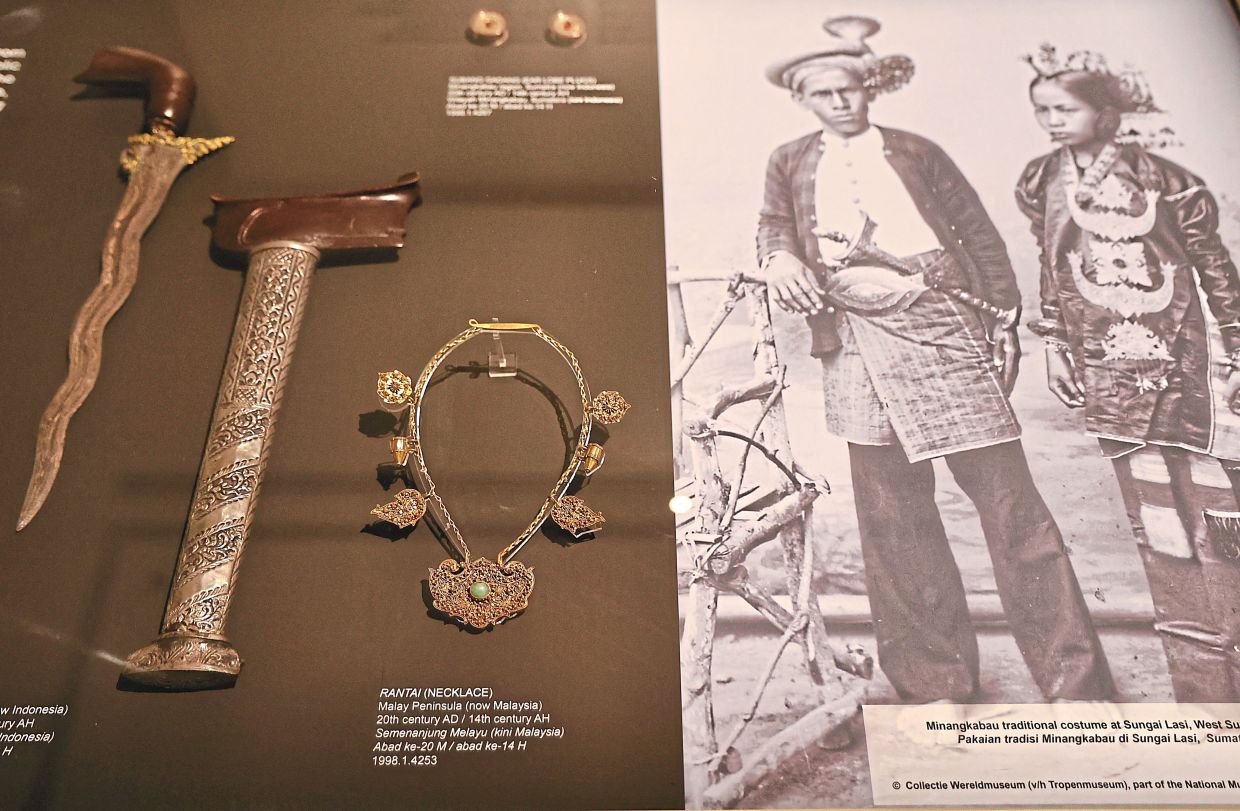
Running in IAMM’s Special Gallery 1 until April 12, the Busana exhibition celebrates this living heritage, featuring 72 garments, 36 accessories, 56 historical photographs, and 17 archival records that trace how trade, faith, and local artistry shaped a rich textile legacy.
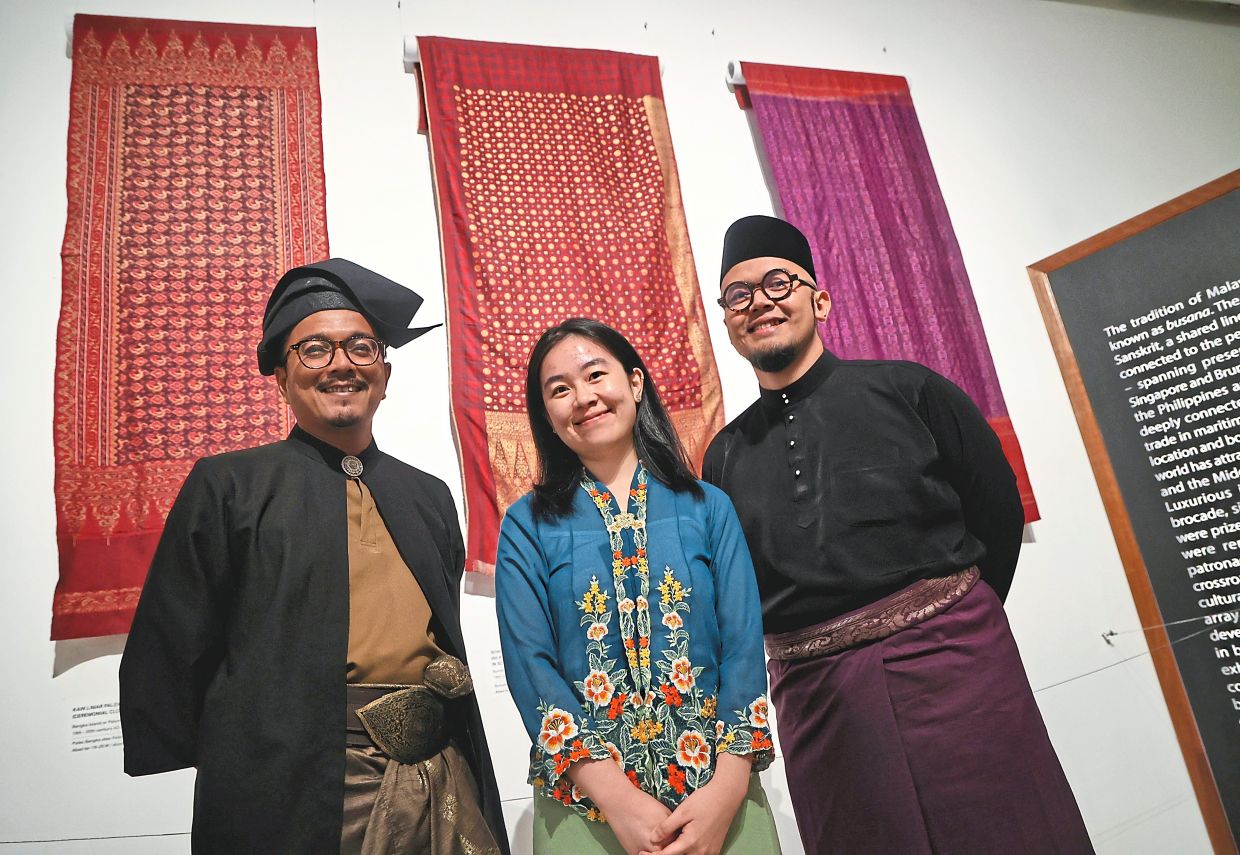
A special tour was led by project manager Izuan Fadzli Mohammad, alongside curators Yeoh Wen Fei and Hariz Ahmad Kamal.
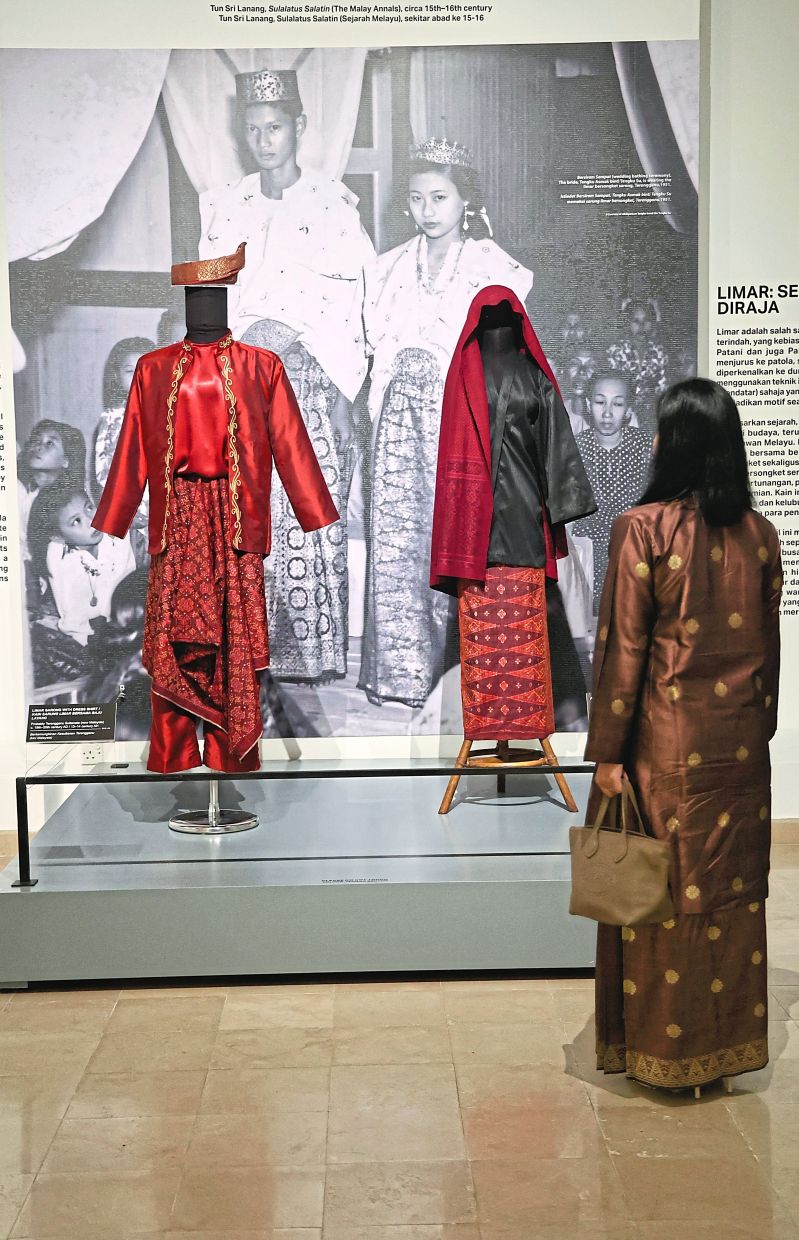
Upon entering the gallery, visitors are immersed in radiant silks, shimmering threads, and intricate patterns.
The term “busana”, rooted in ancient Sanskrit, evokes a shared cultural heritage spanning modern-day Malaysia, Indonesia, Singapore, Brunei, southern Thailand, and the Philippines – a region long shaped by its role as a maritime crossroads.
“The traditional Malay attire is not static but a dynamic art form refined through centuries of maritime trade with India and China. Foreign trade and the availability of luxury materials such as fine silk led the Malay tradition to transition, elevating textiles into a status symbol for royalty and nobility,” says Izuan.
“You can think of the formation of Malay textiles like a shared culinary recipe: India and China provided the exquisite ingredients, but the Malay artisans were the master chefs who adjusted the flavours and presentation to create a unique dish that remains a point of pride today,” he adds.
Izuan’s culinary analogy extends to the political landscape of the textiles on display. He notes that the exhibition pieces primarily date from a time before modern national borders existed in the region.
While the exhibition notes provide essential context, it is ultimately the exquisite artistry of the textiles that leaves a lasting impression.
“Most of the collection displayed dates from the 19th century. It is crucial to recognise that the 19th century is a period that precedes the creation of modern nation-states such as Malaysia or Indonesia. Consequently, this exhibition showcases a shared textile tradition that flourished throughout the Malay world both, before and during the colonial era,” says Izuan.
“Our selection process reflects the historical reality that these artistic expressions were not confined by the borders we see today. Our approach acknowledges that this was fundamentally a maritime civilisation; for the people of the archipelago, where the sea does not divide, but it unites,” he adds.
The exhibition also includes garments from the late Tun Endon Mahmood, wife of Malaysia’s fifth Prime Minister, the late Tun Abdullah Ahmad Badawi.
On loan from Yayasan Budi Penyayang and preserved under IAMM’s custodianship, these pieces provide a rare glimpse into a collection shaped by a devoted champion of Malaysian textile heritage.
A particularly evocative section is dedicated to the nyonya kebaya, drawn from Endon’s personal collection. These pieces symbolise the Peranakan Chinese culture, a vibrant blend of Chinese, Malay and European influences.
“Seeing these contemporary pieces helps us understand that Malay (world) attire is not a static inheritance but a living tradition. It demonstrates that the sophisticated ‘sartorial lexicon’ of the region continues to engage with traditional techniques to keep them dynamic and relevant rather than allowing them to become mere historical artefacts,” says Yeoh.
This dynamic interplay between tradition and modernity is also mirrored in the spiritual dimension of the textiles.
“They are silent prayers rendered in threads, often with verses from the Quran. This emphasis on sacred script over figural representation is a direct reflection of Islamic teaching, demonstrating how the core tenets of the faith are embedded within the very creative process anda symbolic language of Malay Islamic art,” says Hariz.
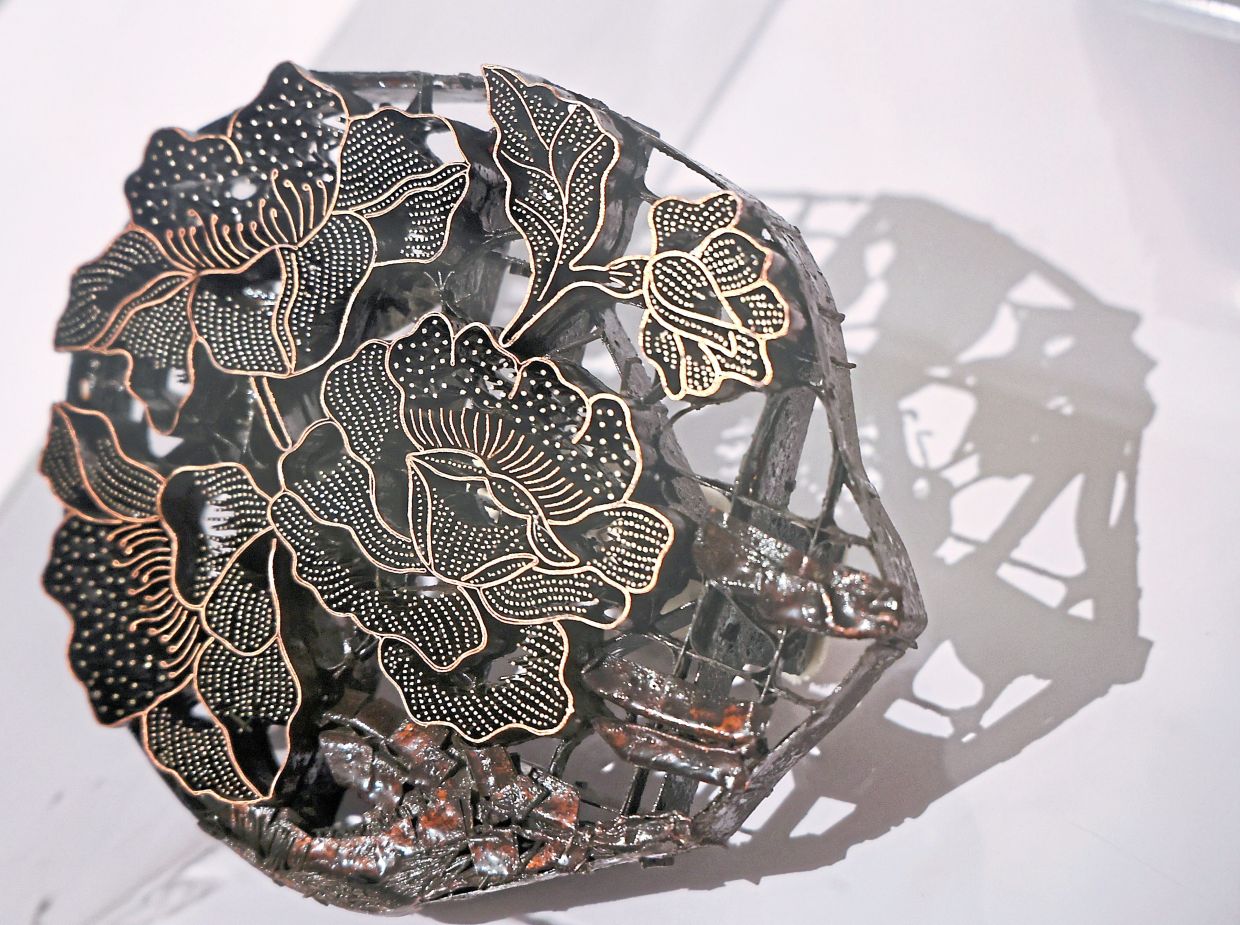
Through the exhibits, visitors will learn how Malay artisans blended motifs of local flora and fruits in accordance with Islamic aniconism, connecting the Malay world to its natural environment while reflecting a spiritual devotion.
Inspired by the region’s unique plants, these patterns marry beauty and faith – exemplified by the tampuk manggis (mangosteen corolla) in songket, where botanical forms are transformed into intricate, visually striking geometric designs.
Everyday garments like the sarong quietly balance modesty and local artistry, yet Hariz highlights a ceremonial piece where this blend of craftsmanship and spirituality is most fully realised.
“Any sarong cloth in the exhibition – whether tenun or batik – shows how everyday artistry meets the spiritual duty of modesty, covering the parts of the body that should remain modest while reflecting local craftsmanship.
“For a deeper, more intricate expression, however, the telepuk kain destar stands out. Adorned with delicate gold leaf using the telepuk technique, this ceremonial headcloth exemplifies both refined artistry and spiritual depth,” he concludes.
Busana: Traditional Costumes Of The Malay World runs at the Islamic Arts Museum Malaysia in KL until April 12, featuring talks, workshops, and children’s activities. More info: iamm.org.my.