
From a listening dome echoing with diverse pre-Merdeka music to a mini cinema unspooling Malaysia’s journey to nationhood, the newly opened Seri Negara in Kuala Lumpur showcases a range of meaningful encounters.
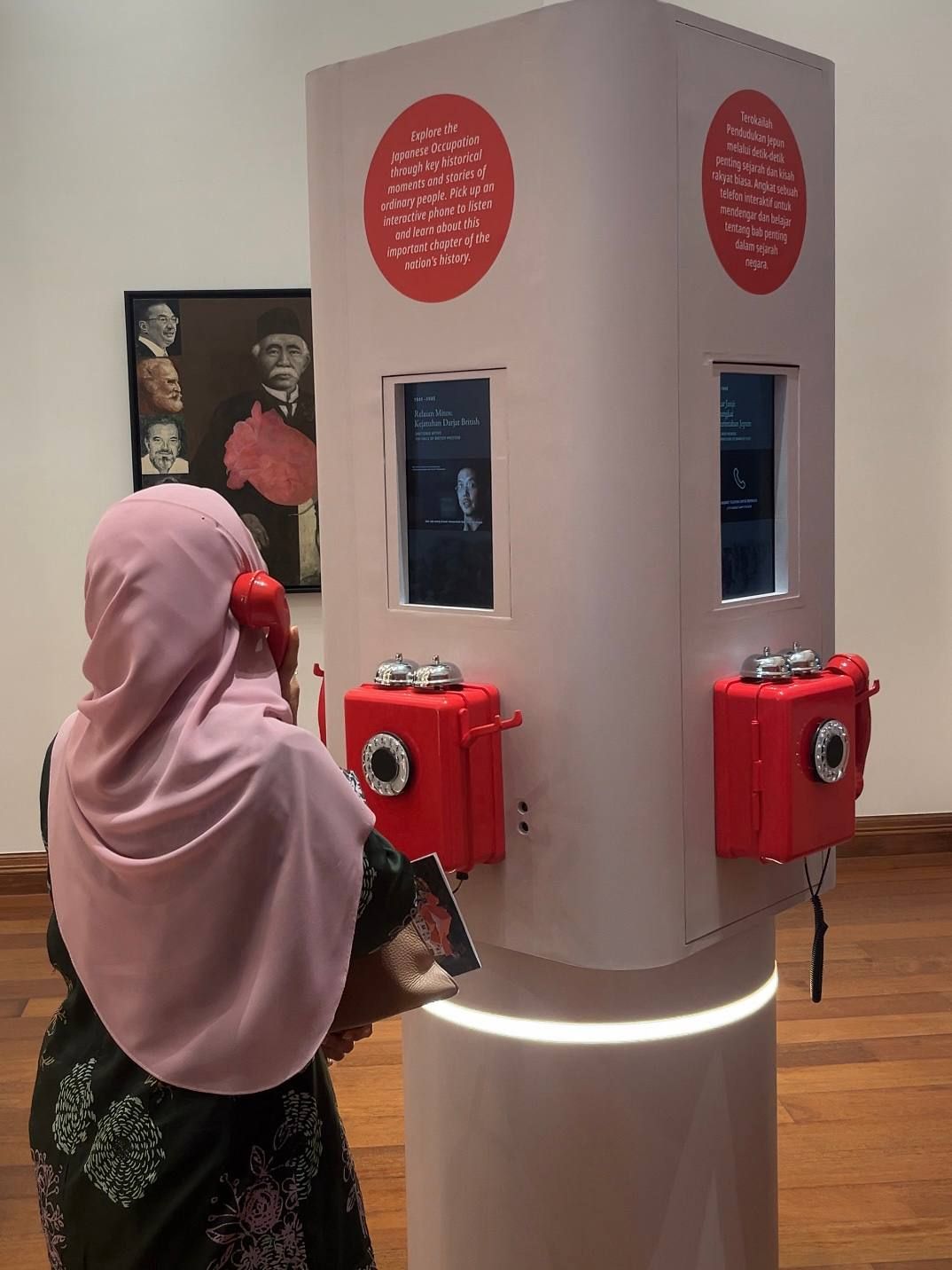
A set of red telephones allows visitors to dial back through time, tuning in to the events that sowed the seeds of independence.
Since opening on Dec 20, Seri Negara gallery's exhibits - spanning two floors - have given guests the chance to discover a fresh interpretation of the national narrative, one that is intertwined with the building’s architecture and history.
Upon entering the building, visitors are immediately drawn into the Seri Negara: Charting The Course Of Merdeka exhibition.
Although it’s still early days, the Seri Negara transformation – part of the government’s RM600mil conservation initiative, via Khazanah Nasional, for eight heritage buildings in KL – marks a renewed effort to preserve and showcase the country’s history.
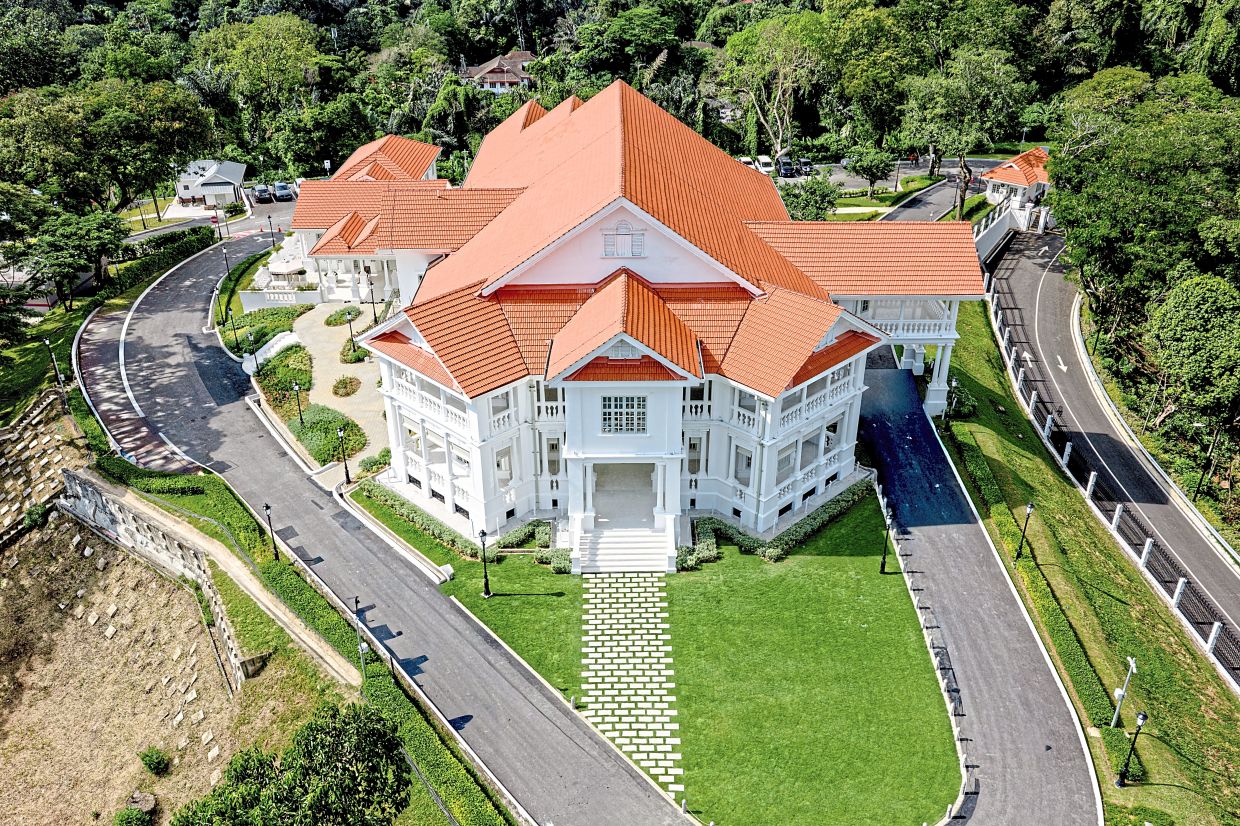
Carcosa and Seri Negara are colonial-era mansions situated on 13.3ha near the Perdana Botanical Gardens. Built in 1896, Carcosa was the residence of Frank Swettenham, the first Federated Malay States Resident-General.
Seri Negara, meanwhile, was completed in 1913 and served as the residence of the High Commissioner, the highest-ranking British officer in the Federated Malay States. In its later years, it hosted royalty and dignitaries.
Both buildings are gazetted as National Heritage sites under the 2005 National Heritage Act.
Heritage in focus
In an era of contemporary museum design, Sarah Abu Bakar, one of the exhibition curators focusing on art, says the Seri Negara gallery balances clear storytelling with careful attention to conservation requirements.
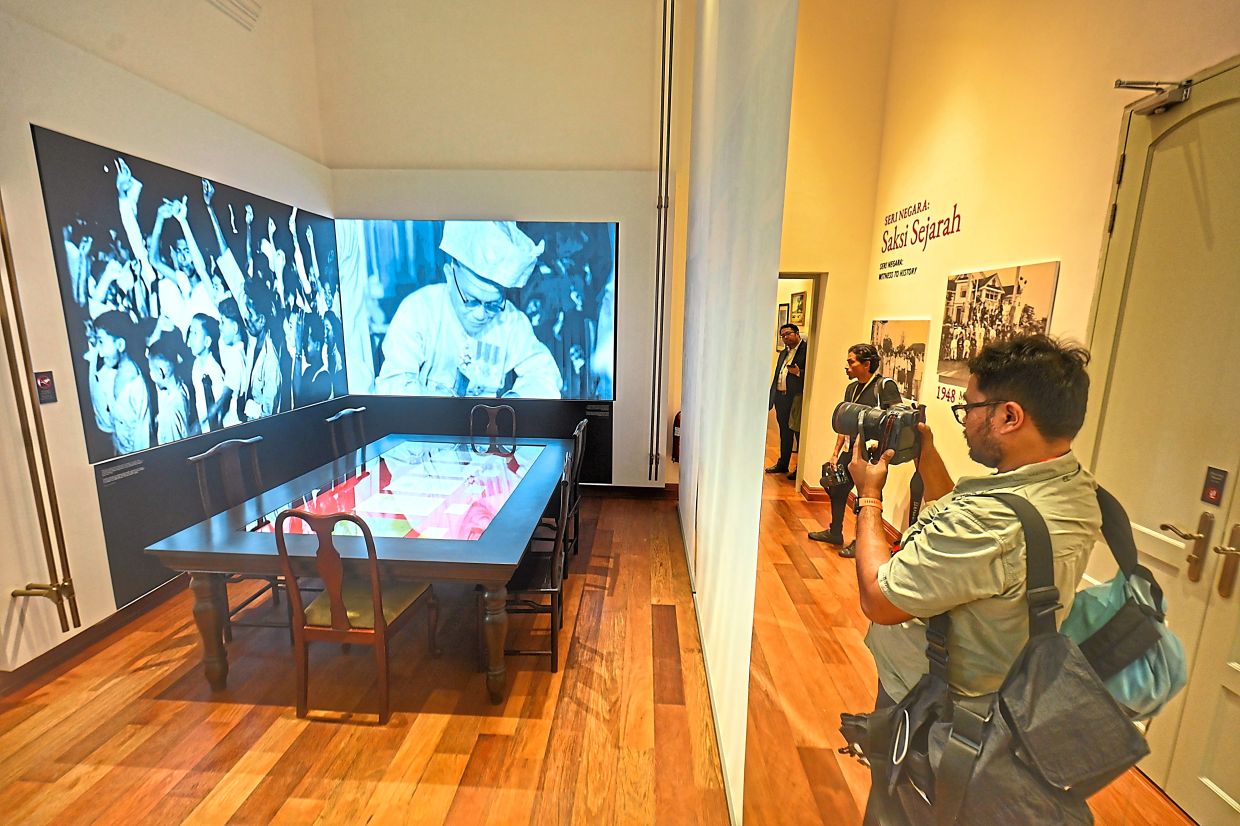
The building is one of Malaysia’s most historically significant sites. On Aug 5, 1957, the Federation of Malaya Agreement was signed at Seri Negara (then known as King’s House) by Sir Donald MacGillivray, representing the British government, together with the Malay Rulers and the Yang di-Pertuan Besar of Negri Sembilan.
A table recreating this historic moment has been installed in the gallery, accompanied by artefacts and a wall video to evoke a sense of the occasion.
“A strong storytelling framework was developed to ensure a clear, logical flow from one gallery to the next, allowing visitors to move chronologically while engaging with different perspectives and mediums,” says Sarah.
As you ascend the building’s steps and enter, the four themed galleries guide visitors through key moments in the country’s political, social and cultural development.
“Each gallery focuses on a distinct chapter of Malaysia’s journey, tracing key moments from the advent of British rule in the 1800s – from colonial administration and grassroots movements to constitutional milestones, independence and post-Merdeka identity,” says Sarah.
“Together, these spaces provide historical context, help orient visitors to Seri Negara’s architectural and national significance and present selected artworks from Khazanah Nasional’s collection that explores Malaysia’s identity, historical reflection, and imagination,” she adds.
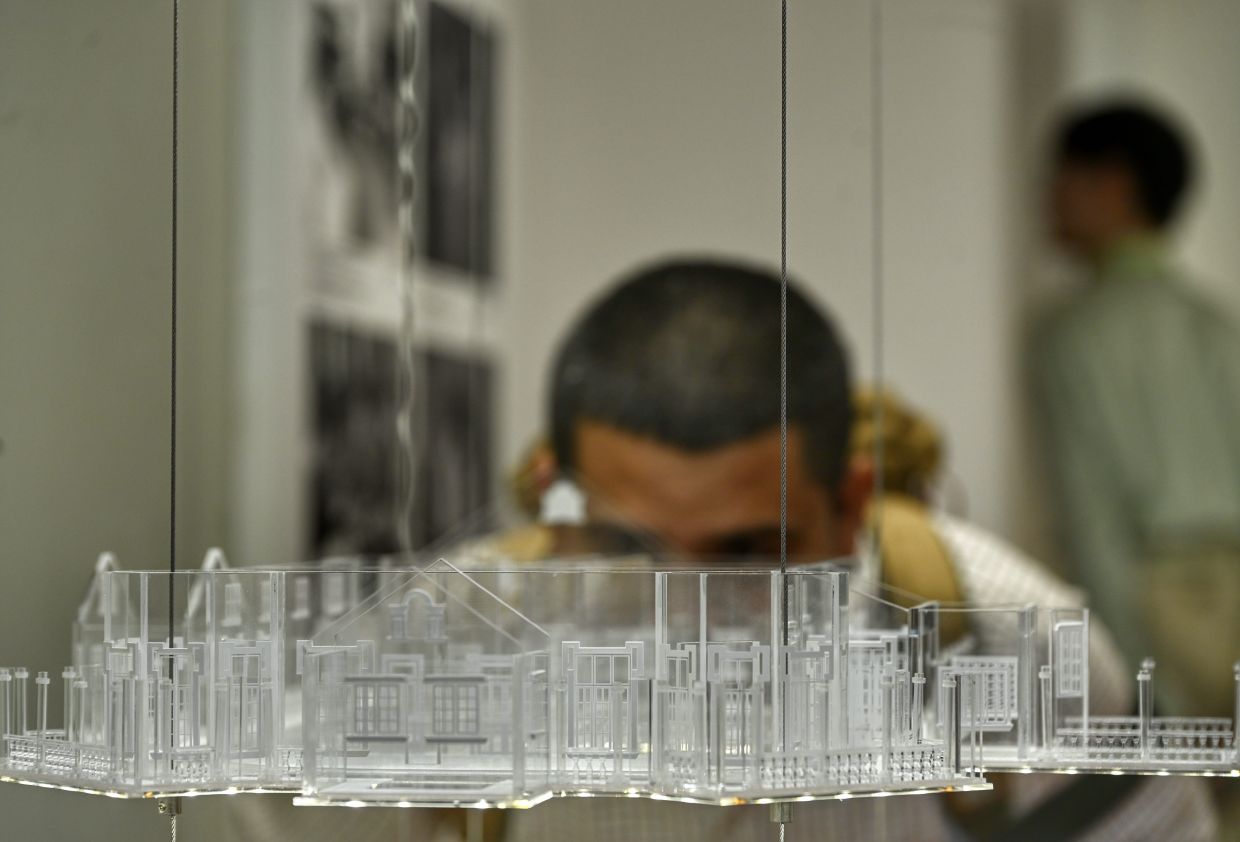
The curatorial and exhibition design of Seri Negara was guided by Shin Tseng, whose practice is known for reimagining heritage buildings through sensitive and contemporary interventions.
Working within the constraints of a protected structure and a 10-month time frame, Shin, Urban Agenda Design Group director, approached the project as a dialogue between space, history and narrative.
“We carefully studied the original hierarchy and flow of rooms and assigned new gallery functions that create a seamless journey which permeates through the narrative," says Shin.
“The architecture features such as natural lighting, proportions, and views from this vantage point was carefully weaved together as part of the experiential design as if the building is talking to the visitors,” he adds.
The exhibition’s content and archival research, along with the gallery’s internal spaces, were conceptualised, curated and designed by Urban Agenda Design, cultural group Pusaka, and Zakti Strategic Design, while William Harald-Wong & Associates handled the graphic design, all undertaken in close consultation with Khazanah.
Room to explore
Within the museum, interactive displays, digital projections and multimedia features are paired with audio guides and QR codes that encourage deeper exploration.
The galleries blend visual and sound design, dioramas of human stories – from a women’s Home Guard brigade to a rubber plantation – archival photographs with period music and artefact replicas enhanced with digital media.
Visitors begin their journey on the ground floor or Ruang Merdeka, where a selection of modern and contemporary local artworks from the Khazanah collection sets the tone.
In total, 14 artworks by 12 artists, including M. Zain Idris, Reza Piyadasa, Mad Anuar Ismail, Jalaini Abu Hassan and Ahmad Zakii Anwar, are featured in the exhibition Shifting Landscapes: Mapping Space, Time And Memory.
A social media-savvy feature at Seri Negara is a digital collaboration between Winnie Cheng, a 2018 Khazanah Artist Associate, and Abdul Shakir of new media outfit Filamen, bringing innovative visual engagement to the heritage setting.
“I collaborated with Winnie to add a multimedia and interactive element to her artwork The Dragon’s Servant (2019). Her painting tells a story about the female struggle, and through motion sensors and projection mapping, a visitor flapping their arms can introduce a new character that flies across the painting,” says Shakir.
As you make your way to Gallery 1 upstairs, you are greeted by a 15-minute immersive film, The Walls Speak, which employs shifting art styles and layered mixed-media techniques.
Stories, rhythms and voices
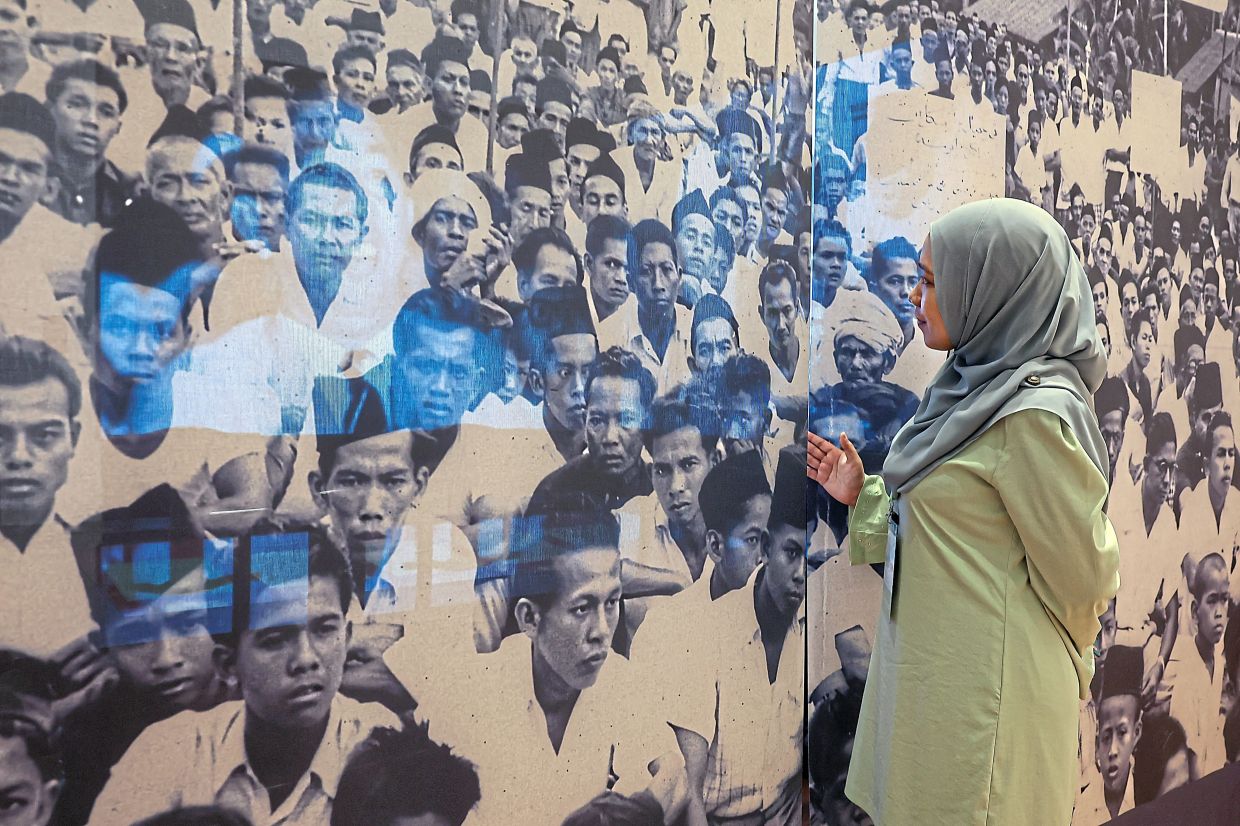
Gallery 2, titled People, Power And Place, focuses on the communities that shaped Malaysia’s social fabric. Pillars and dioramas highlight grassroots leaders, early intellectuals, pioneering women, and cultural movements, while interactive elements invite visitors to explore narratives often marginalised in mainstream histories.
In consideration of young visitors, the dioramas have been designed from a child’s eye level to enhance engagement and comprehension.
One of the gallery’s most immersive features is the Sound Dome, where music serves as a gateway to the pre-Merdeka period. The curated soundscape captures the era’s cosmopolitan hybridity, spanning languages, regions, and social contexts.
Pusaka creative director Pauline Fan, representing the gallery’s curatorial team, describes the Sound Dome as a space where music functions as both archive and narrative.
“The Sound Dome is a portal that transports visitors back in time through pre-Merdeka music. We curated a playlist spanning genres and reflecting the era’s cosmopolitan hybridity, from keroncong songs performed by Bangsawan stars in the 1930s to a song encouraging voting in the first general elections in 1955,” says Fan.
Some of the rarely heard Radio Malaya recordings and music from the period were sourced from the Paul Augustin Collection, a private archive.
“We tell the broader story of Malaysia’s journey to Merdeka and beyond, but we focus on creating moments where visitors encounter lesser-known figures and stories," says Fan.
“In Gallery 2, for example, we highlight local pioneers, writers, intellectuals, influential women, resistance fighters, and staff who served at Carcosa and Seri Negara, rather than colonial figures, while also showing the impact of British rule on land, economy, and communities,” she adds.
Another contribution to the Sound Dome playlist comes from filmmaker Gogularaajan Rajendran (Gogu), whose revived Tamil folk song grew out of a community-based research and documentary project, Araro Ariraro, which traces its roots to Thanjavur, India.
Tracing oral histories tied to the Malaysia’s rubber plantation industry, his work highlights the lived experiences of Indian communities whose labour shaped the nation’s economic foundations.
“The song in the Sound Dome is Ele Elo, a celebratory folk song traditionally sung during Indian festivals. It introduces life on the plantation, mapping the social hierarchy from the colonial supervisor down through the layers of labour, land, soil, fruit, and animals,” says Gogu.
Presented at Seri Negara, the song highlights lost histories and fosters reconciliation, linking the rubber plantation economy to the cultural memory and enduring presence of Indian communities in Malaysia.
“Presenting this work in the gallery creates a critical way of engaging with history. Being inside the actual building encourages visitors to question what they are seeing and to look more closely at the past.
"These counter-narratives from the colonial period are important, because they invite a culture of curiosity, reflection and resistance, rather than passive acceptance,” he concludes.
Admission to Seri Negara is currently free. However, visitors must book a slot for the 90-minute curated walkthrough. The gallery is open from Tuesday to Sunday, 10am to 6pm.