
The Arka Kinari, a 70-tonne sailing ship turned floating cultural platform, will soon dock in Langkawi, Kedah with its timely message about climate change impacts and reviving ancestral practices.
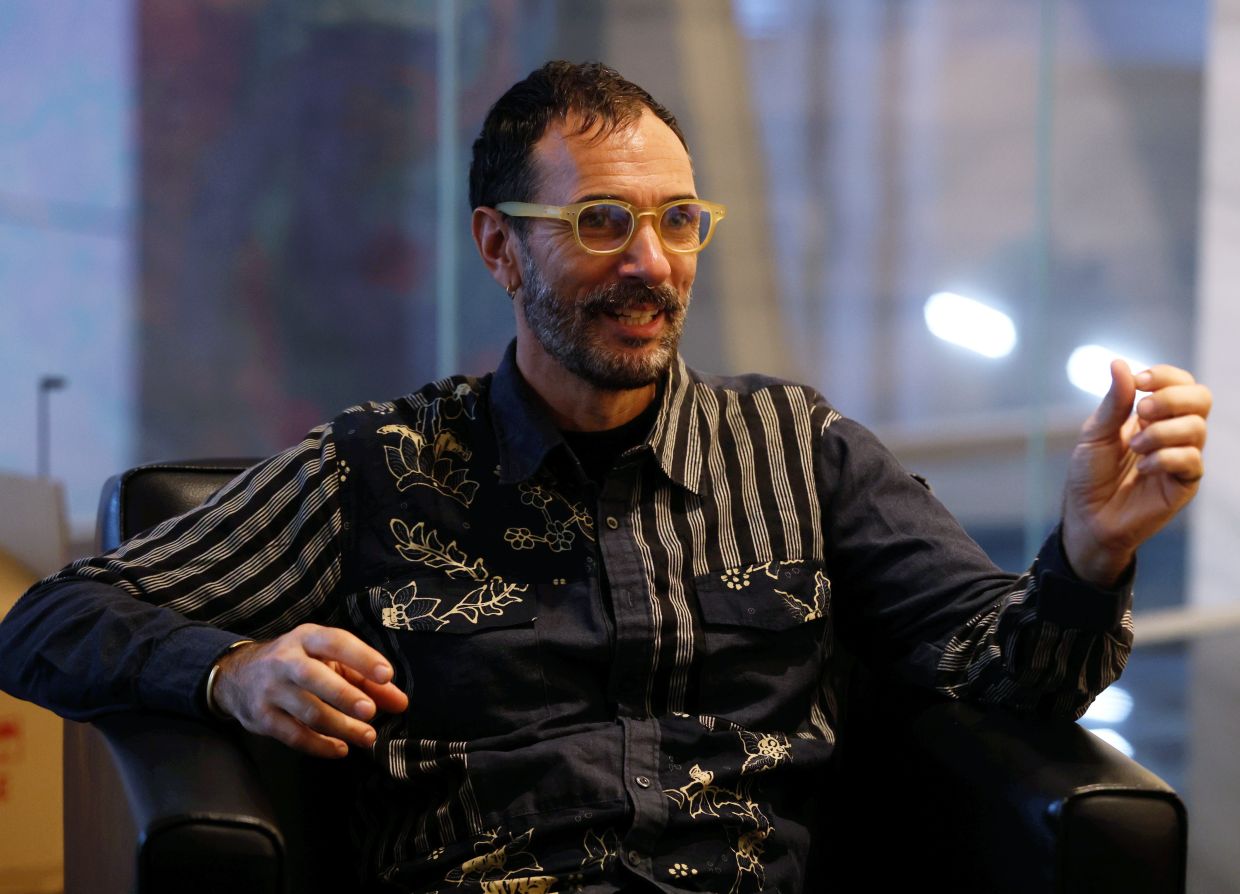
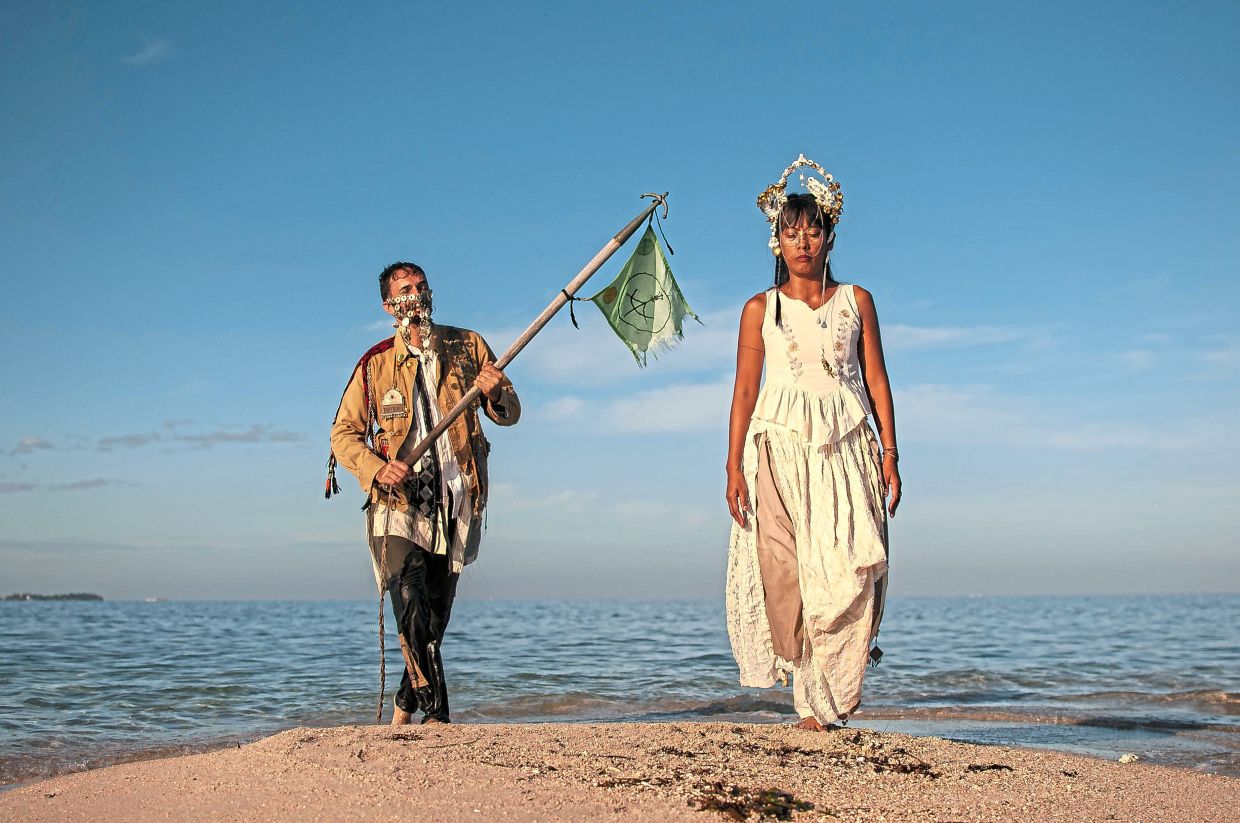
The husband-and-wife creative duo behind the project, Grey Filastine, 53, and Nova Ruth, 43, have been sailing around the world since 2019. Their ship is named after the Latin word arka, meaning “vessel,” and kinari, the Sanskrit term for a mythological half-human, half-bird musician that guards the Tree of Life.
After five years of slowly touring the Indonesian archipelago, the Arka Kinari has finally made its way to Malaysian shores, where Filastine and Nova will perform live shows, host environmental sustainability workshops and kickstart conversations with the local community about climate-resilient practices.
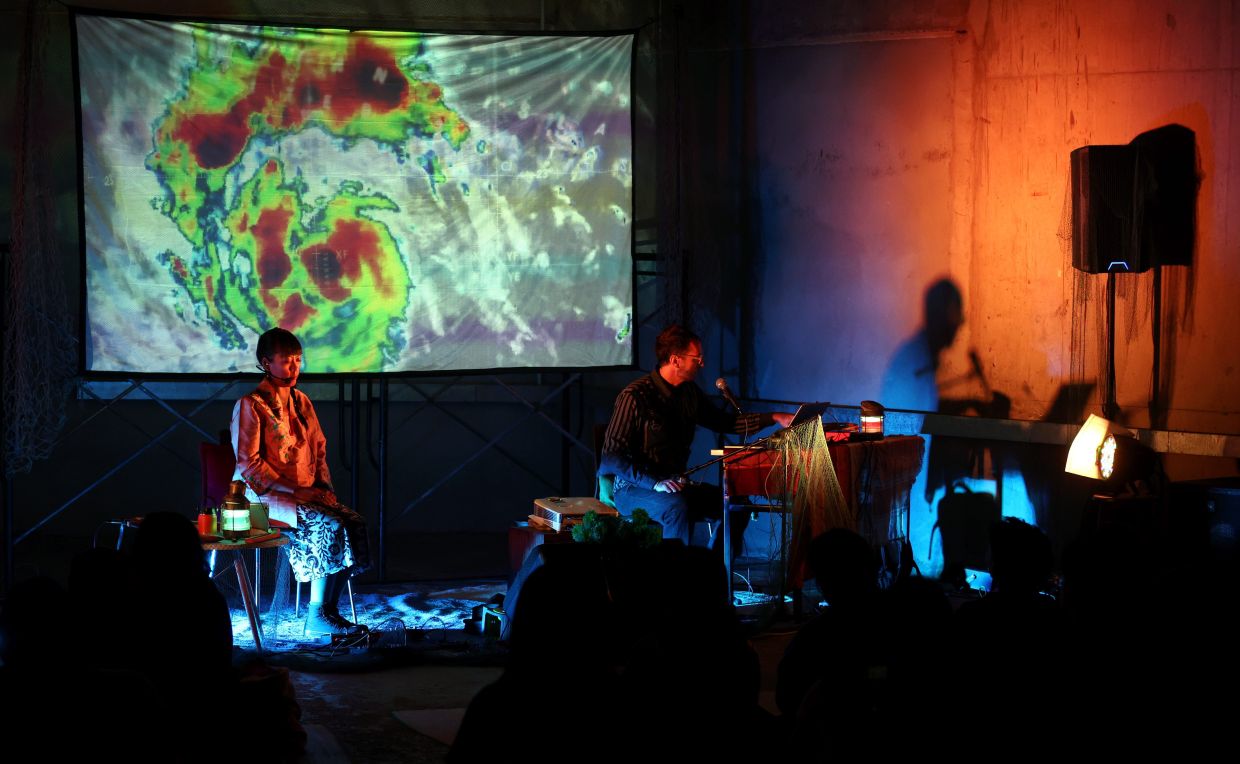
Yesterday, the duo previewed the Artivism At Sea project at a small gathering in Ilham Gallery, Kuala Lumpur, where it was met with a highly receptive audience.
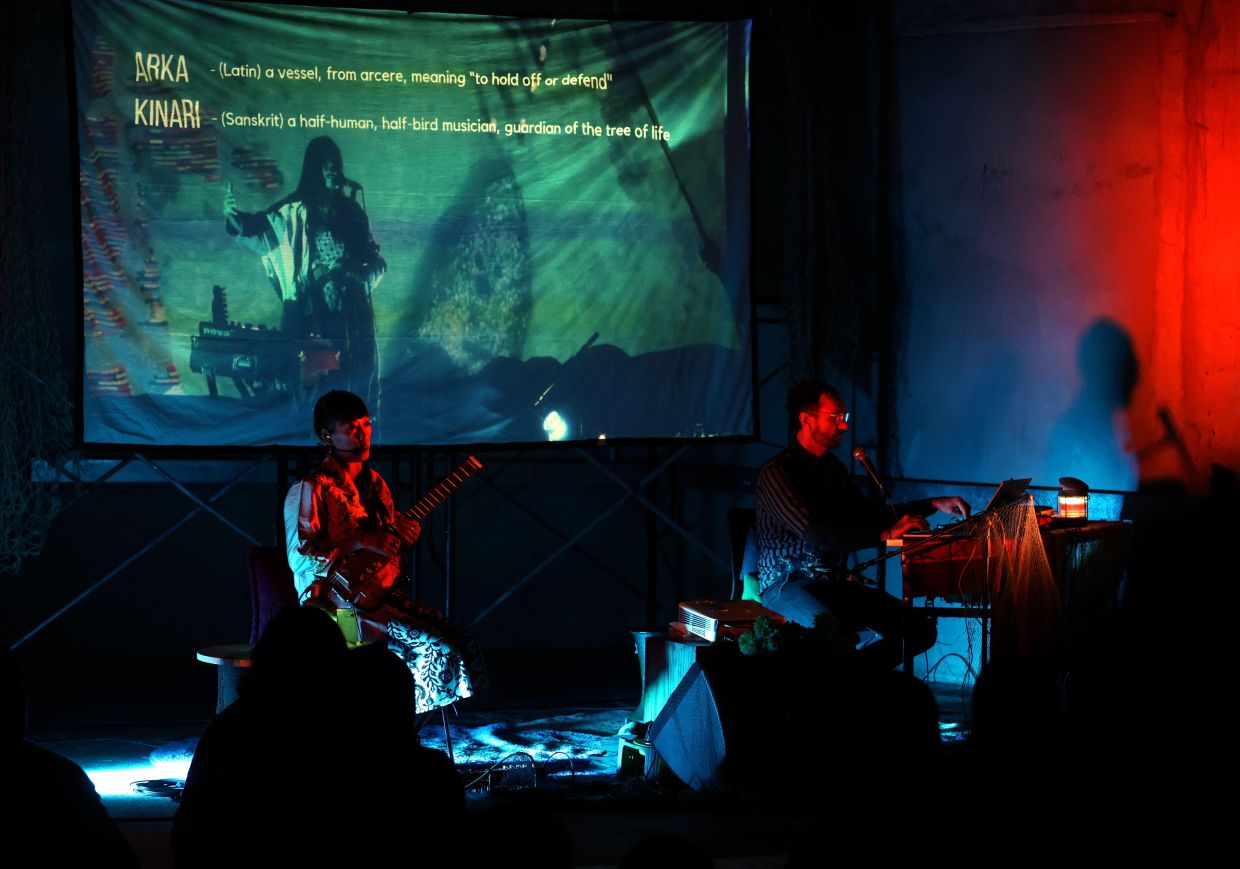
On Jan 1, they take the series up north to Natty Langkawi, Pantai Tengah, for an intimate storytelling event that blends narration, live music, and documentary footage, revealing tales from seedy ports in Morocco to Mexico and the strange legacy of nuclear testing in the Pacific.
Then on Jan 4, the public can catch the Arka Kinari concert at Langkawi Cruise Terminal, Pantai Tengah, staged from the ship’s deck for a waterfront audience.
The events supported by Goethe-Institut Malaysia and the National Art Gallery Langkawi, are free admission – all you have to do is follow Arka Kinari’s social media accounts for the latest updates.
Message and method
As performance artists, Filastine and Nova are known for their unique sound combining psychedelic rhythms and Javanese folk music with ethereal audio-visuals. The duo has appeared at festivals such as Sonar (Spain), Downtown Cairo Arts (Egypt), Decibel (US), Les Vieilles Charrues (France), Foreign Affairs (Germany), Mutek (Japan), and Mona Foma (Australia).
However, as discussions about climate change and the music industry’s high carbon footprint intensified, Filastine and Nova paused to reflect on their own impact, ultimately embarking on the Arka Kinari as a way to put their principles into practice.
For the past six years, the old schooner that they fixed up has been their home, performance stage and mode of transportation from port to port.
“I stopped counting the miles a few years ago ... around 80 thousand nautical miles,” says Los Angeles-born Filastine in a recent interview in Kuala Lumpur.
“To give some reference, the circumference of the earth is about 20,000 nautical miles.
“We don’t aim for zero emissions, as I think perfection can be the enemy of good, but we do time our voyages to use the oscillating Indian Ocean trade winds and local weather systems to sail as much as possible instead of using the motor. Also, we do manage to support our life onboard and power the performances from the solar-charged batteries,” he adds.
Nova, from Malang, Indonesia, also credits her grandmother as a source of inspiration for adopting their seafaring lifestyle.
"Growing up, my grandma, who was from Sulawesi, inspired me the most. She was a Javanese language master while her mother tongue was Bugis language.
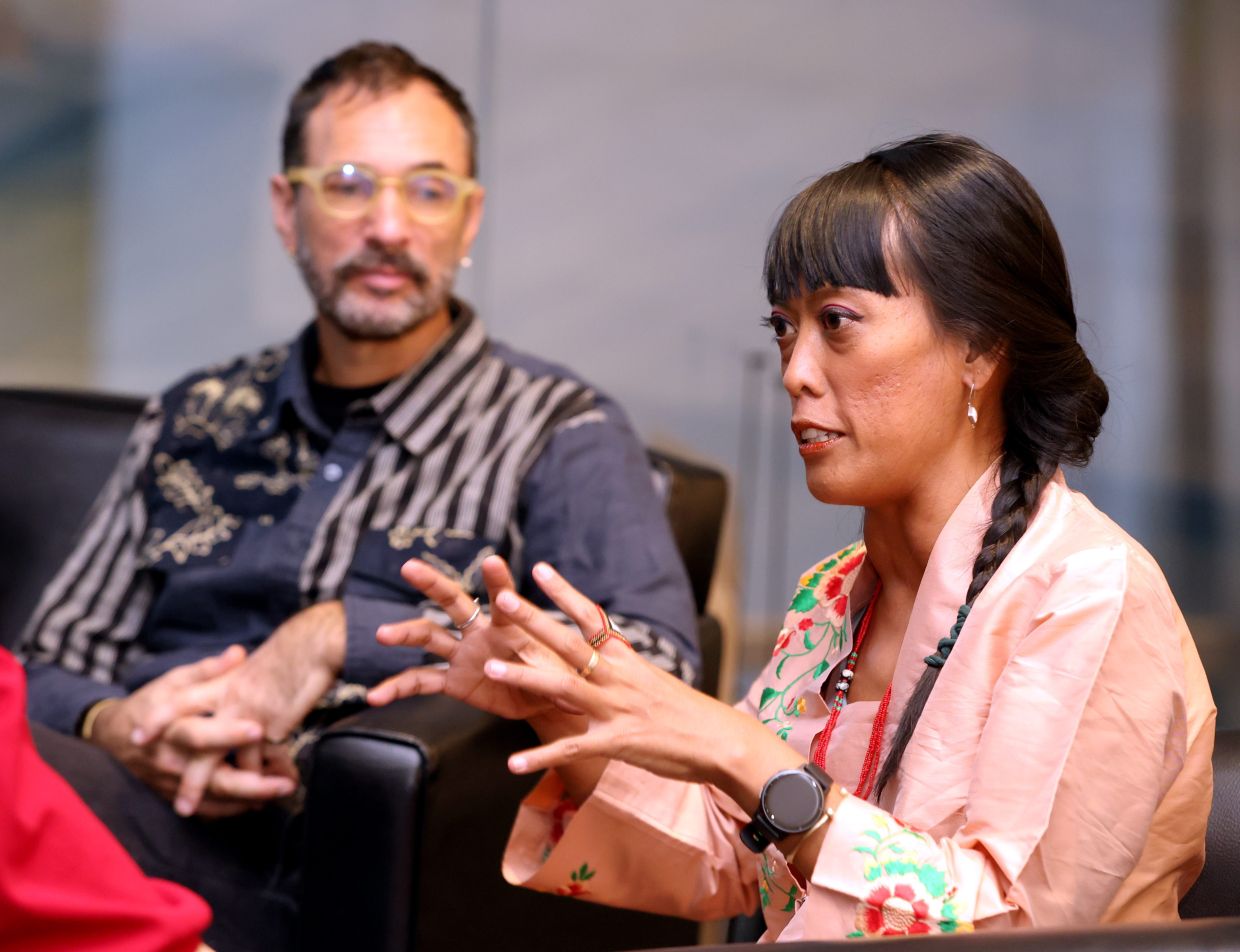
"I used to fear the sea, but her courage to let the sea connect two islands, and accept the culture where she was living, has been an endless inspiration to me until now. Today, I cherish my life living onboard the ship, respecting the sea and all its contributions to our lives,” she says.
‘Keep sailing forward’
The Arka Kinari has voyaged to over 20 countries with a small crew of only six people, including Filastine and Nova, who didn’t know anything about sailing before embarking on this project.
For the first two years, the Arka Kinari was kept afloat purely through volunteer efforts and personal credit cards. It was only once they were able to prove that the project was sustainable and effective that grants and funders began stepping forward to help.
Filastine, who is based in Barcelona when not at sea, adds that one of their toughest challenges is the ocean itself.
“I learned that the sea is neither ally nor enemy, but an immense presence indifferent to our survival. Earlier this year, we nearly sank in the wild seas south of Java, and spent the following 40 days fighting to save the ship, tearing apart the steel hull and welding on new plates,” he recalls.

Living on a ship is also a lot harder and “a lot less romantic than you’d imagine.”
“In ports, we meet at 8am and decide the day's work, then work on the ship until dinner time. At sea, we have shifts 24-hours a day, steering the ship, adjusting the sails, and of course, the cooking and tasks of daily life,” says Filastine.
However, as an artist, he acknowledges that this kind of disciplined lifestyle has its upsides.
“It leaves no space for sloppy creative habits or doomscrolling. Our time is highly structured and the gaps are precious, so we use our time with care.”
Nova adds that they learned a lot from their time in Indonesia, where they stopped by small fishing villages and seaside towns.
“Not every good deed can be translated easily. We learned that we have to take it slowly, patiently explain our message on climate change to the communities that we visit, and listen more to what they need, rather than forcing our perspective.
“We were welcomed and accepted by some communities, rejected by others, but now we know that a legacy should be passed on. So this year, we organised the first Coastal Community Conference as an annual platform for communities to gather and reflect.
"We are also planning to make a land-based headquarters – one that doesn’t sink – in the eastern part of Indonesia, in the hopes that it could be a hub for the communities that we meet along the way,” she says.
So what’s next? Besides touring the ports across India, the Arabian Peninsula and the Mediterranean in 2026, Nova says that she plans to compile the recipes she’s learned while cooking onboard the Arka Kinari into a storytelling cook book.
As for Filastine, he’s putting together a long-form audio story of all their adventures out at sea, which will be released as a serial podcast named “Hell & High Water”.
“It will have the natural and unnatural history of the islands we visit, the cultures we find and the relationships we build,” he says.
Many things keep them motivated, and this global journey has given them a deeper sense of purpose and perspective.
“I feel like Arka Kinari is the most I can do, and the least I can do. It’s the biggest response we can muster to the collapse of nature and disfigurement of the global climate," says Filastine.
“Also, let’s be honest, the commitment to living and touring by sea took so many sacrifices to our former way of life that it left no form of retreat – we can’t back out, so even in the most difficult moments, we can only keep sailing forward,” he concludes.
The Arka Kinari will be at Pantai Tengah, Langkawi in Kedah in early January 2026. Check its social media accounts for event updates. More info here.