KWAY CHAP is a comforting noodle soup that traces its roots to the Teochew community of southern China.
Broad rice sheets (kway) are served with braised offal (chap) in a piping hot, aromatic broth (lor) flavoured with dark soy sauce and five-spice powder.
The dish is commonly sold by hawkers in Penang, Johor and Sarawak, and is especially popular in Singapore, home to a large Teochew community.
A similar version can also be found in Thailand, although the broth is clear rather than the dark, soy-based soup associated with the Singaporean style.
Regardless of its colour, the broth should be fragrant and, most importantly, the innards must be meticulously cleaned so they do not impart unpleasant odours that spoil the dish.
For that reason, I had never been particularly fond of the chap in the dish.
That changed when I discovered a vegetarian version.
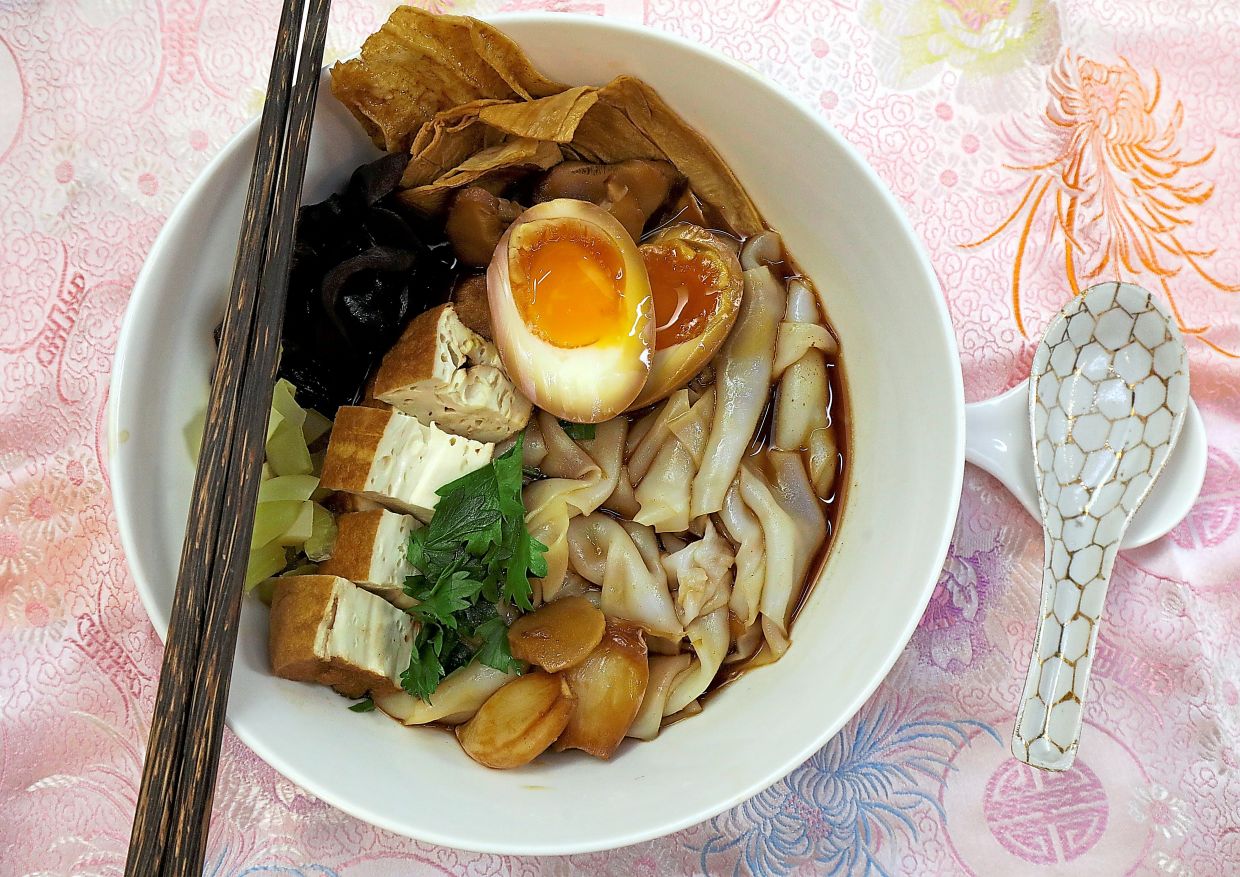
Gone was the lingering smell of offal, replaced by a rich, aromatic broth packed with savoury flavours.
My favourite part of kway chap has always been the egg.
I often wondered how hawkers managed to produce eggs with firm whites stained a deep brown by the braising liquid, while keeping the yolk deliciously runny.
The secret is timing.
Boil the eggs for exactly seven minutes before plunging them into iced water to stop the cooking.
Once completely cooled, peel them and immerse them in the braising liquid, ensuring they are fully submerged by placing a small plate over the top.
Leave them to marinate for at least two hours, although overnight will allow the colour and flavours to penetrate deeper.
And what is kway chap without the kway?
Look for Thai rice flake noodles, sometimes labelled kuay chap, which curl into ribbons after about five minutes of boiling.
If unavailable, chee cheong fun cut into bite-sized squares makes a respectable substitute.
Or if you are able to get a hold of whole sheets of fresh kuey teow, you can cut them to size, as factory-cut kuey teow is often too narrow to replicate the traditional texture.
Although purists may insist that kway chap is incomplete without braised offal, this vegetarian version proves that the soul of the dish lies just as much in its fragrant broth, silky rice noodles and richly flavoured accompaniments.
It is every bit as comforting, making it a bowl you’ll happily return to, whether you’re a lifelong fan or trying kway chap for the first time.
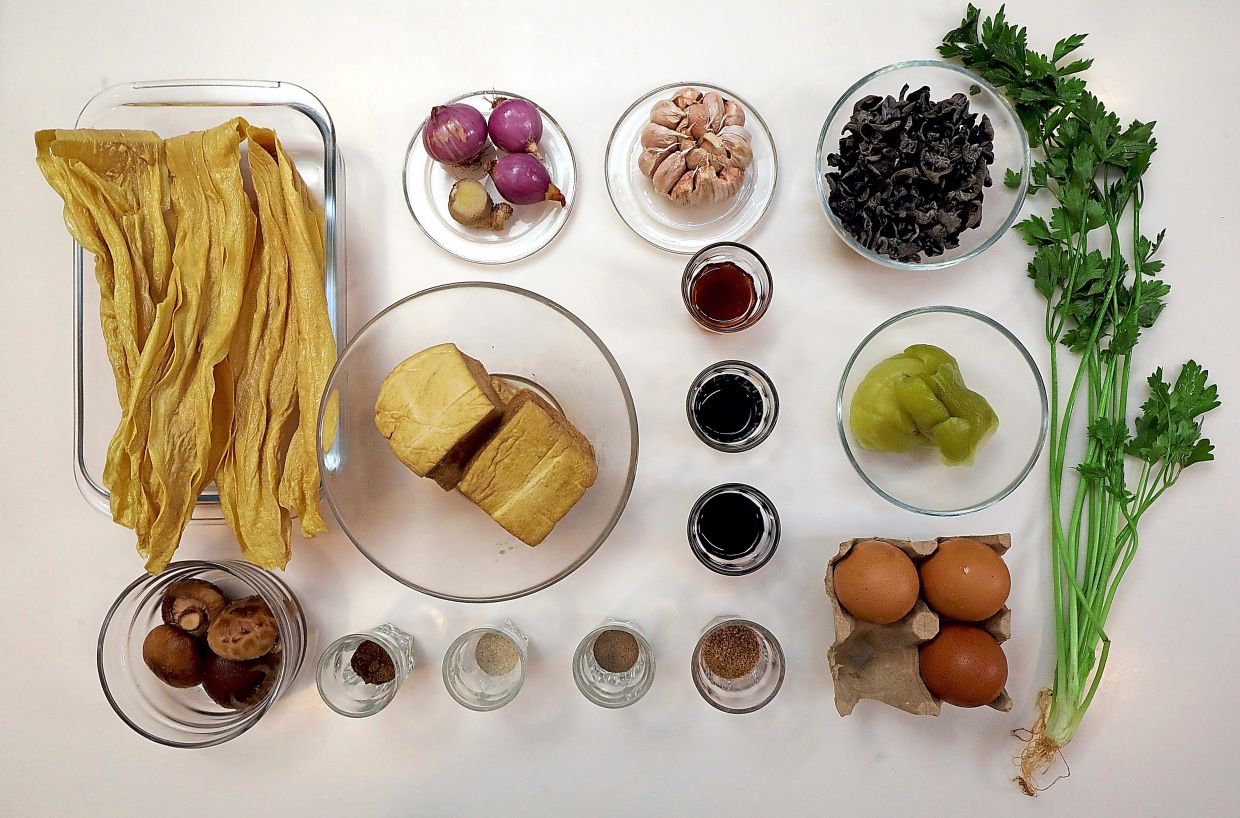
Vegetarian kway chap
Ingredients
3 bulbs shallots, diced
4 caps dried shiitake mushrooms, soaked overnight and sliced
50g cloud ear fungus, soaked
3 sticks dried beancurd skin, cut into short lengths
3 blocks firm tofu or five-spice tofu
1 whole bulb garlic, separated but unpeeled
30g fresh ginger, sliced
3 tbsp sesame oil
3 hard-boiled eggs, peeled
300g kway chap noodles
100g salted mustard greens, blanched
1 sprig Chinese parsley, chopped
Seasoning
4 tbsp light soy sauce
3 tbsp dark soy sauce
1 tsp black pepper
1 tsp white pepper
1 tbsp brown sugar
1 tsp five-spice powder
Directions
Heat the sesame oil in a wok and saute the unpeeled garlic until fragrant.
Add the ginger, shallots and mushrooms, and continue sauteing until lightly seared.
Deglaze the wok with the mushroom soaking liquid.
Add the cloud ear fungus, dried beancurd skin and enough water to cover the ingredients.
Stir in the seasoning and bring to a boil.
Place the boiled eggs in a bowl and ladle enough braising liquid over them to cover completely. Refrigerate for at least two hours, preferably overnight.
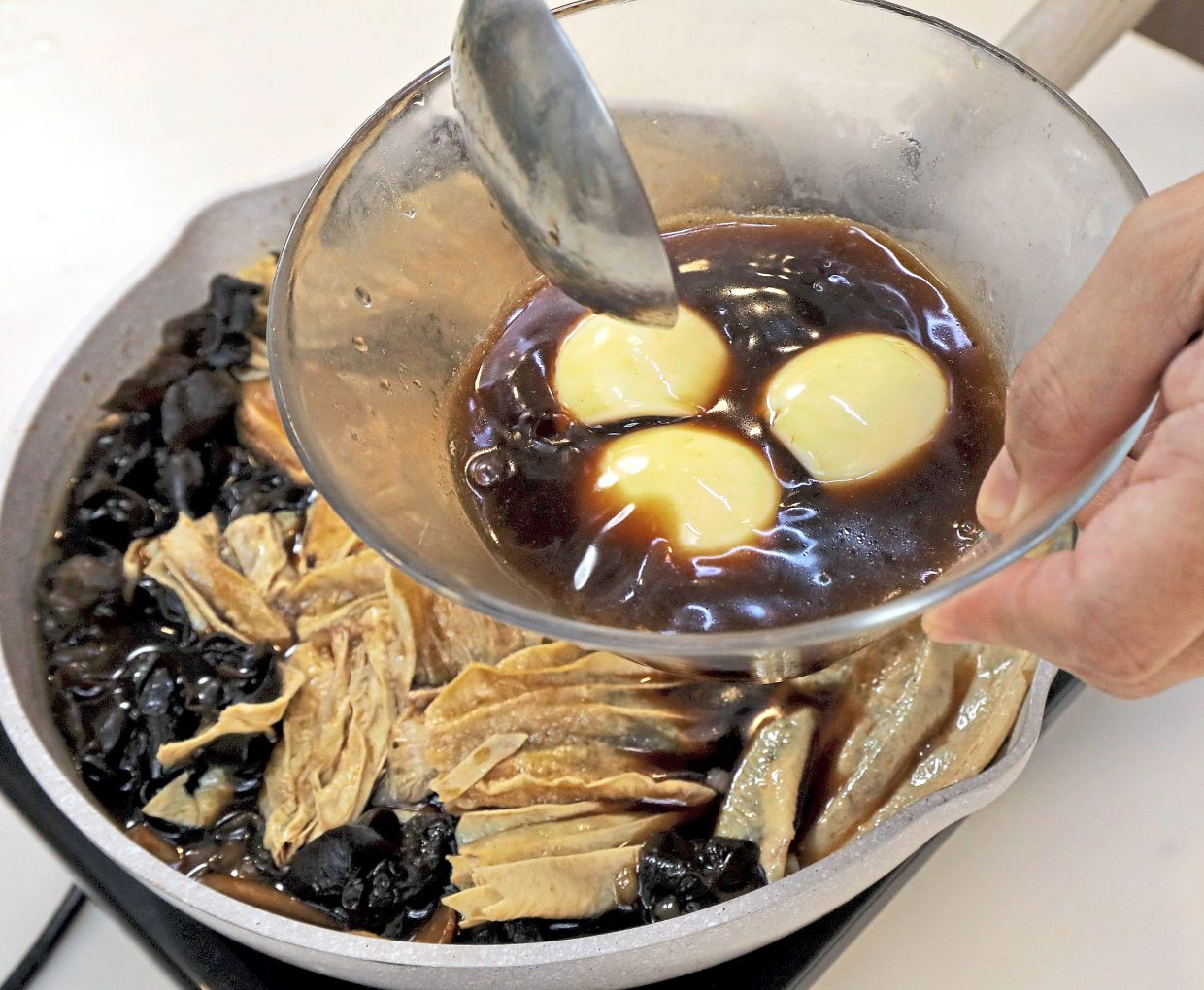
Halve the eggs just before serving.
Cover the pot and simmer gently for one hour.
Add the tofu and cook for a further 10 minutes.
Simmering the tofu for the full hour creates tiny holes throughout, allowing it to absorb more of the braising liquid.
If you prefer a smoother, silkier texture, add the tofu only during the last 10 minutes.
Then remove from the heat and cut into cubes.
Cook the kway chap noodles according to the packet instructions.
Divide the noodles among serving bowls.
Arrange the beancurd skin, cloud ear fungus, tofu, mushrooms and salted mustard greens neatly around the noodles.
Ladle over the braising broth, top with a halved marinated egg, garnish with Chinese parsley and serve with sliced red chillies on the side.