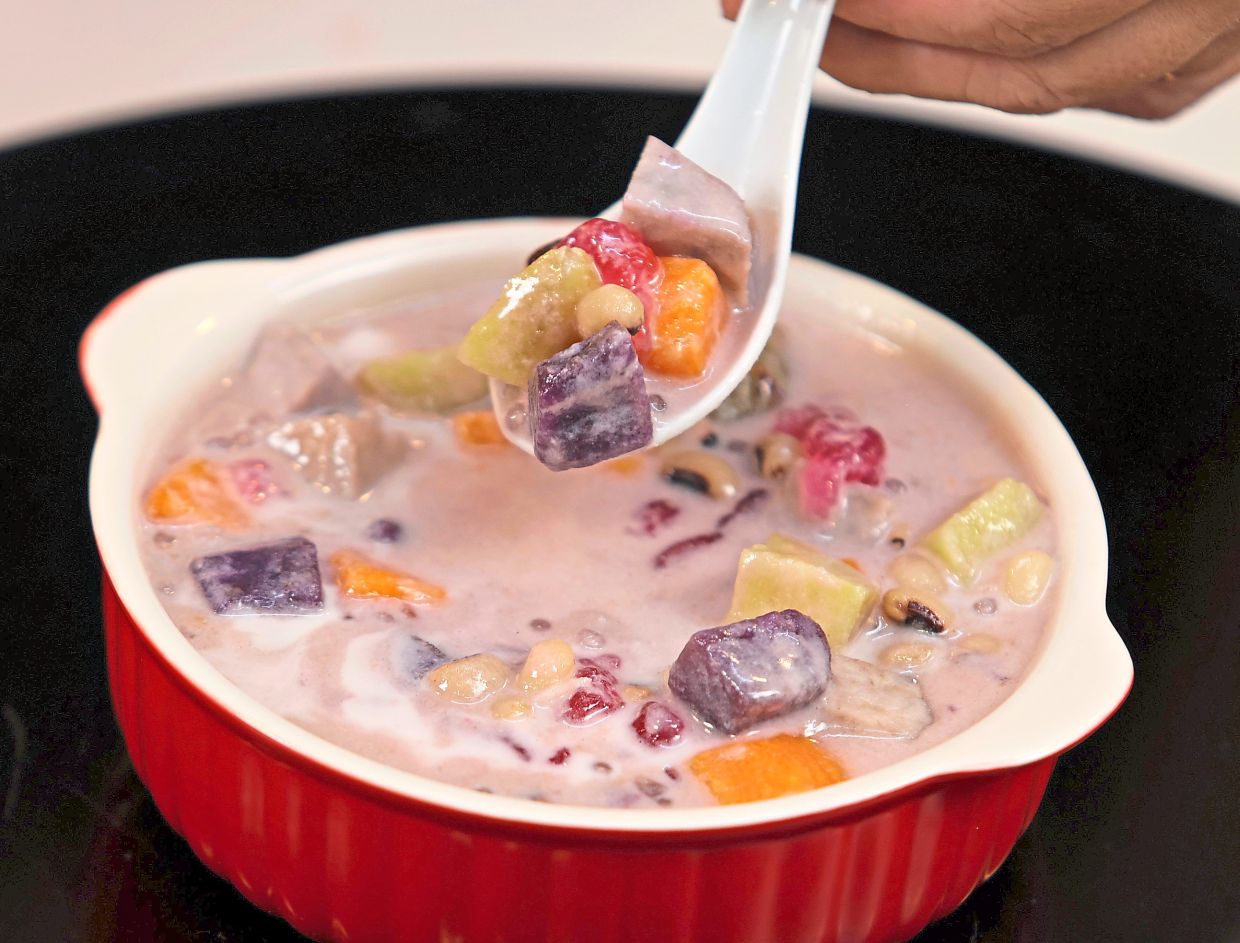
Sweet potato chunks, tapioca beads add texture, visual appeal to dessert ideal for celebrating National Day
Made with taro and sweet potatoes, along with sago pearls and black-eyed peas, bubur cha cha is a Malay and Peranakan dessert.
Bubur means porridge, referring to the dessert’s thick, creamy consistency.
The origin of cha-cha, however, is harder to pin down because reliable documented records are scarce.
One theory traces it to the Hokkien che che, meaning “abundance”, while another suggests a connection to a Portuguese dessert called cha za, a sweet bean soup found in Macau.
The suggestion that the name is linked to the Cuban cha-cha-cha is more contentious, particularly because the dessert predates the dance, which emerged in the early 1950s.
What surprised me was discovering that the bubur cha cha I grew up eating was missing one ingredient that now seems almost essential: tapioca jelly.
I discovered that dried tapioca pellets are sold as cha-cha.
Some Malay families boil these with coconut milk and sugar, calling the resulting dessert, bubur cha cha.
This mind-blowing discovery meant I had to include these colourful tapioca jewels if I was going to make the dish properly.
Looking at the colourful bowl, I cannot help thinking how aptly Malaysian it is, particularly with the prominence of our flag colours in the natural ingredients.
To further celebrate National Day, I have also broken from my usual practice of using natural dyes and used a little artificial food colouring to make the red gems more vivid.
I wish everyone Happy National Day.
Bubur cha cha
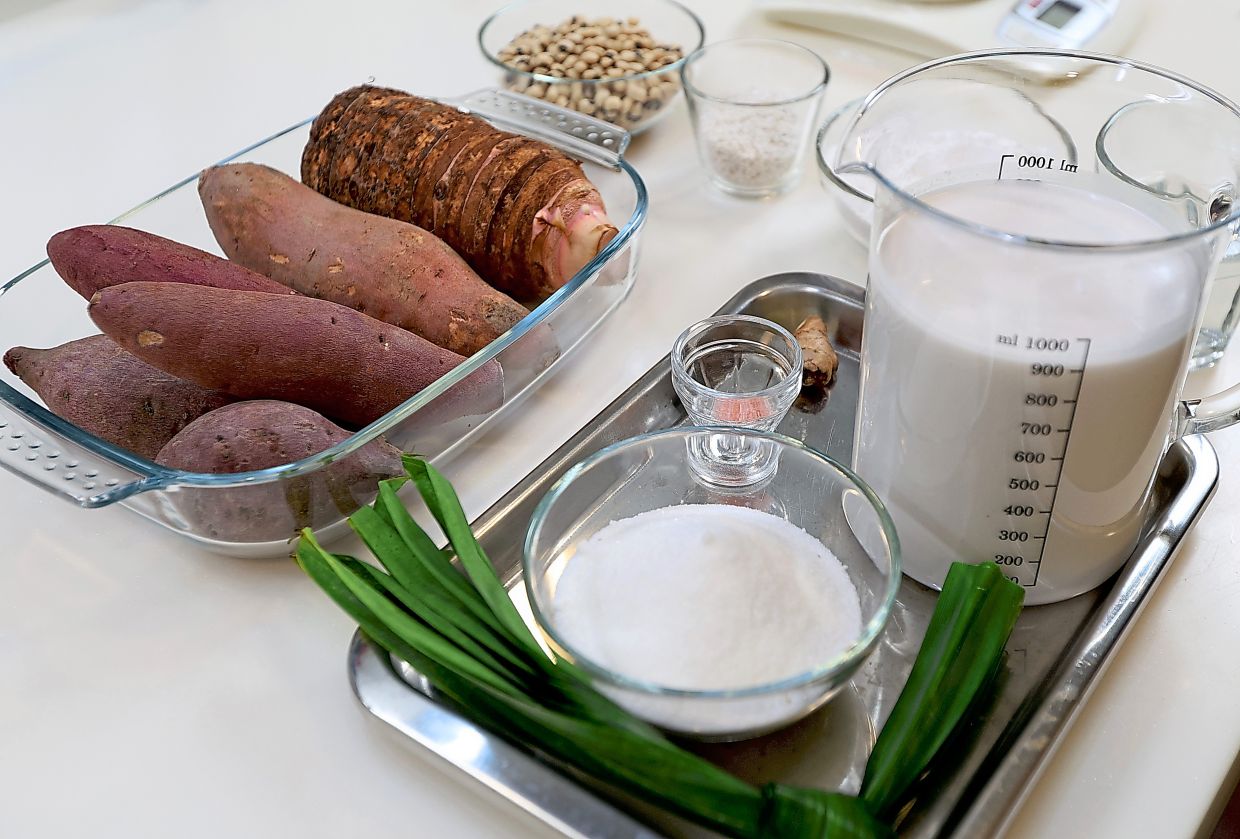
Ingredients
200g yellow sweet potato
200g orange sweet potato
200g purple sweet potato
400g taro
200g black-eyed peas, soaked for 1 hour
50g sago pearls
Cha-cha
100g tapioca flour, plus 50g for dusting
100ml boiling water
1 drop red food colouring, optional
Bubur
1 litre first-press coconut milk
150g caster sugar
5 pandan leaves, knotted
10g ginger
¼ tsp salt, or to taste
Directions
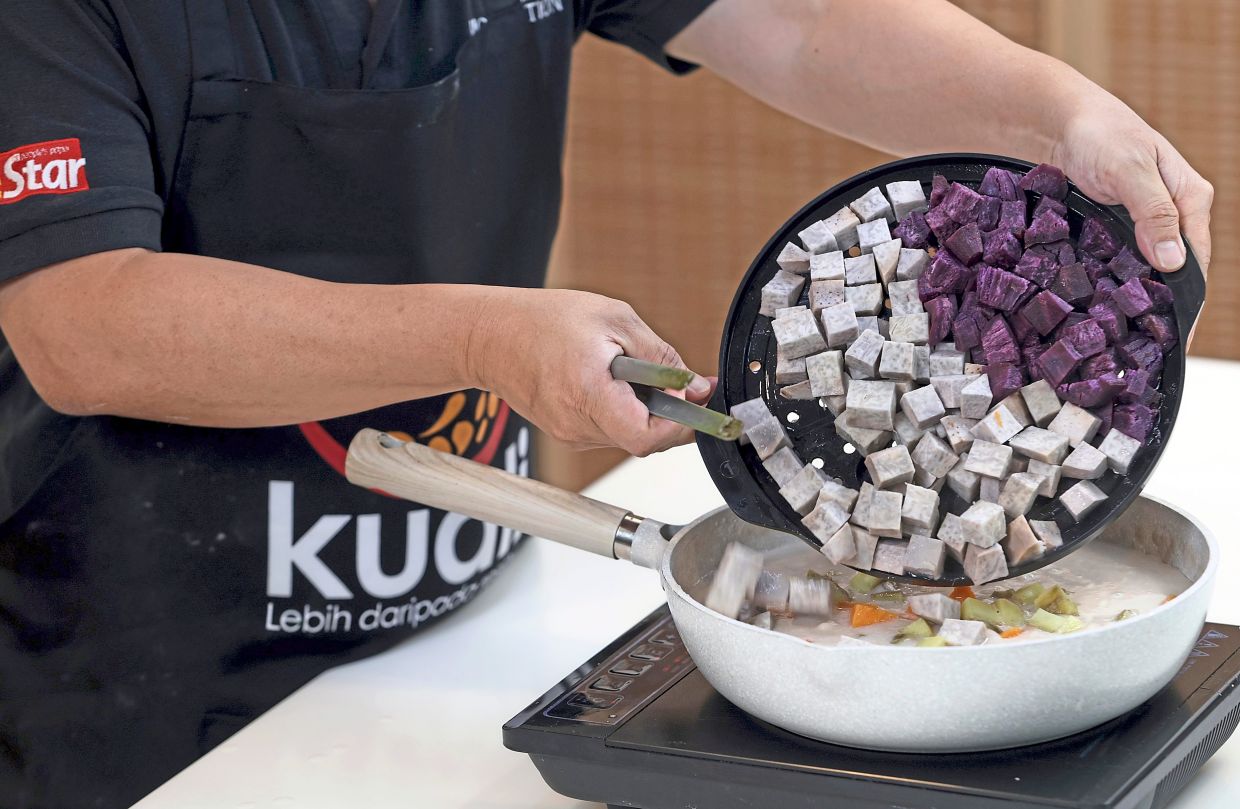
Peel and cut the sweet potatoes and taro into cubes. Steam for about 20 minutes or until tender.
Boil the black-eyed peas in water for about 1 hour or until tender. Drain and set aside.
Cook the sago pearls in boiling water until translucent.
Strain, then plunge into iced water to prevent them from sticking together. Set aside.
To make the cha-cha, gradually drizzle the boiling water into the tapioca flour, stirring until a dough forms.
Add the food colouring, if using, and knead until evenly incorporated.
Allow the dough to cool enough to handle, then roll it out evenly on a surface dusted with tapioca flour.
Cut into small, desired shapes.
Bring a pot of water to the boil. Add the cha-cha pieces and simmer until translucent.
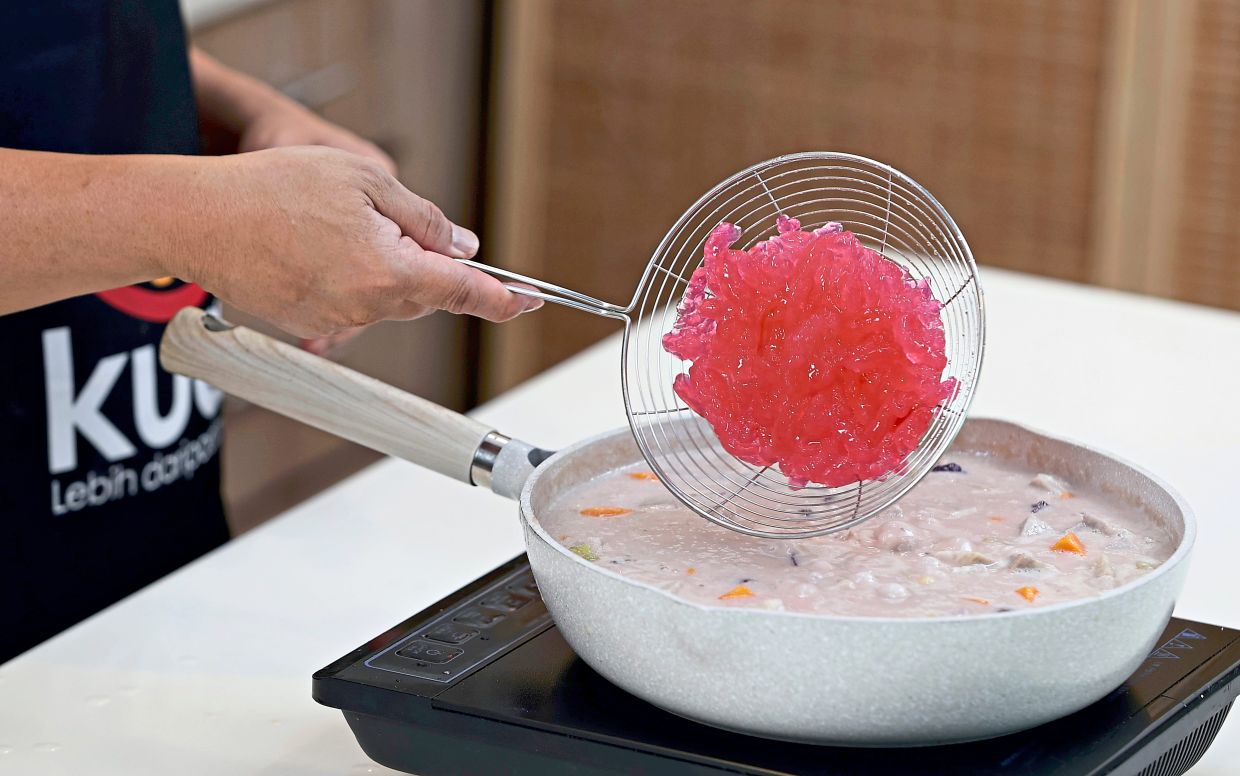
Strain and plunge into iced water. Set aside.
Place the coconut milk, sugar, pandan leaves, ginger and salt in a large pot.
Heat gently, stirring until the sugar dissolves.
Add the black-eyed peas, sweet potatoes and taro and simmer gently for about 10 minutes, allowing the flavours to infuse.
Turn off the heat and stir in the sago pearls and cha-cha.
Drizzle with coconut milk for extra creaminess and serve warm as a soothing dessert or chilled for a refreshing treat.