
Imagine, if you will, a chap called Marty. Marty is not a villain. He does not chain-smoke in busy restaurants, nor does he kick puppies for sport. He is, by all metrics, a reasonable fellow – he pays his taxes, diligently rinses yoghurt pots for recycling, and occasionally even “likes” alarming climate-change posts on social media as a member of the “concerned citizens” club.
But every Sunday evening, Marty sits down to a large steak, convinced that his personal carbon footprint has been compensated by the sheer moral weight of a reusable water bottle he bought in 2019.
Marty, like millions of others, has been sold a comforting, velvet-lined lie: that the most significant climate actions are the ones that happen in far-off lands, pushed by people like Greta Thunberg.
But his dinner is a neutral zone, a sanctuary of personal freedom where the laws of thermodynamics and atmospheric chemistry apparently do not apply.
The truth, however, is far less sanguine. The beef on his plate is not just dinner; it is a slab of protein from a global supply chain that stretches from the smouldering remains of Brazilian rainforests to the methane-heavy air of industrial feedlots.
It involves millions of cows, oceans of soybeans, global industrial pollution, resulting in a sky that is warming faster than Marty’s oven chips.
Despite this, Marty feels a warm glow of virtue. He has watched documentaries about the horrors of industrial farming, thought sadly, “Gosh, how horrible,” and then ordered a double cheeseburger with a side of cognitive dissonance.
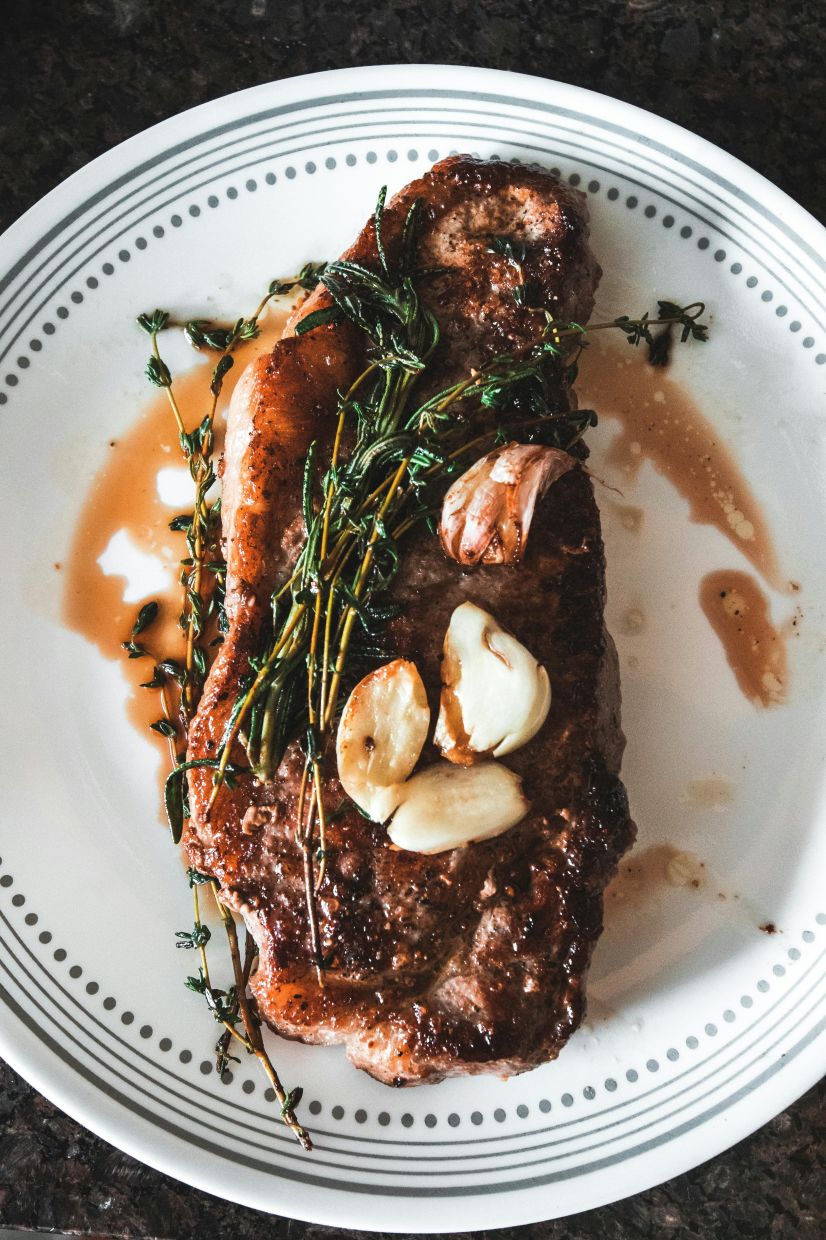
He reads headlines about the environmental apocalypse and decides, with a casual shrug, that this is a problem for someone more extreme – someone willing to survive on a diet of quinoa, kale, and whatever else climate protesters eat.
This is the central irony of our modern age: we are willing to contemplate the literal end of the world, yet we find skipping the Sunday steak to be an unthinkable tragedy.
Hidden geography
To understand why Marty’s dinner is such an ecological disaster, we must take a brief tour of the hidden geography of his steak.
If we imagine Marty’s plate as a map, the steak occupies a space far larger than its dimensions on the dish.
It is a nexus of global systems, each subtly corroding our planet every day.
The journey starts with the cow. Far from being passive victims, cows are active, if unintentional, participants in the climate crisis.
Through a biological process called enteric fermentation, cows burp and fart methane – a greenhouse gas with a global warming potential of 80-85 times that of carbon dioxide over a 20-year period.
A single cow can emit more methane than a car in a year.
When Marty multiplies that by the hundreds of millions of cows raised for meat worldwide, his steak begins to look less like dinner and more like a geoengineering experiment gone horribly wrong.
But the cow’s digestive tract is only the beginning.
To feed them, vast swaths of land are cleared for pasture and for the cultivation of feed crops like soy and corn.
On a global scale, livestock occupy about 80% of all agricultural land, yet they provide only a meagre 18% of our calories and 37% of our protein.
This is the spatial equivalent of renting a sports stadium to host a poker night for eight people and then calling it an “efficient use of space”.
In Brazil, this inefficiency turns into an ecological tragedy.
Cattle ranching causes 80% of Amazon deforestation, effectively converting the “lungs of the Earth” into alien pasturelands.
Also, when forests are cleared by burning, they release carbon that the trees have stored for centuries, resulting in a “double whammy”: (1) loss of a vital carbon sink, and (2) the addition of more greenhouse gases into the atmosphere.
Indeed, it can take up to 100 times more land to produce 1 calorie of beef than it does to produce the same calorie from plants.
Even the best organic chicken causes around eight times more climate damage than the highest-impact plant products.
Logistics ballet
After a cow is slaughtered, the logistics begin. The meat must be processed, stored in chilled warehouses, and transported via refrigerated trucks, ships, and planes, all of which burn fossil fuels.
By the time Marty’s beef reaches the butcher’s shop, it has likely travelled thousands of miles and left a sprawling trail of emissions in its wake.
Contrast this with the geography of a bowl of chickpeas. Chickpeas are legumes that have the almost magical ability to fix nitrogen in the soil, which reduces the need for synthetic, carbon-intensive fertilisers.
Any plant-based meal uses dramatically less land and water while generating a fraction of the emissions.
Large studies, including a 2023 Oxford-led paper, have found that plant-based diets generate about 75% less greenhouse gas emissions than meat-heavy diets.
They can also use 75% less land, 54% less water and have a 65% lower impact on biodiversity.
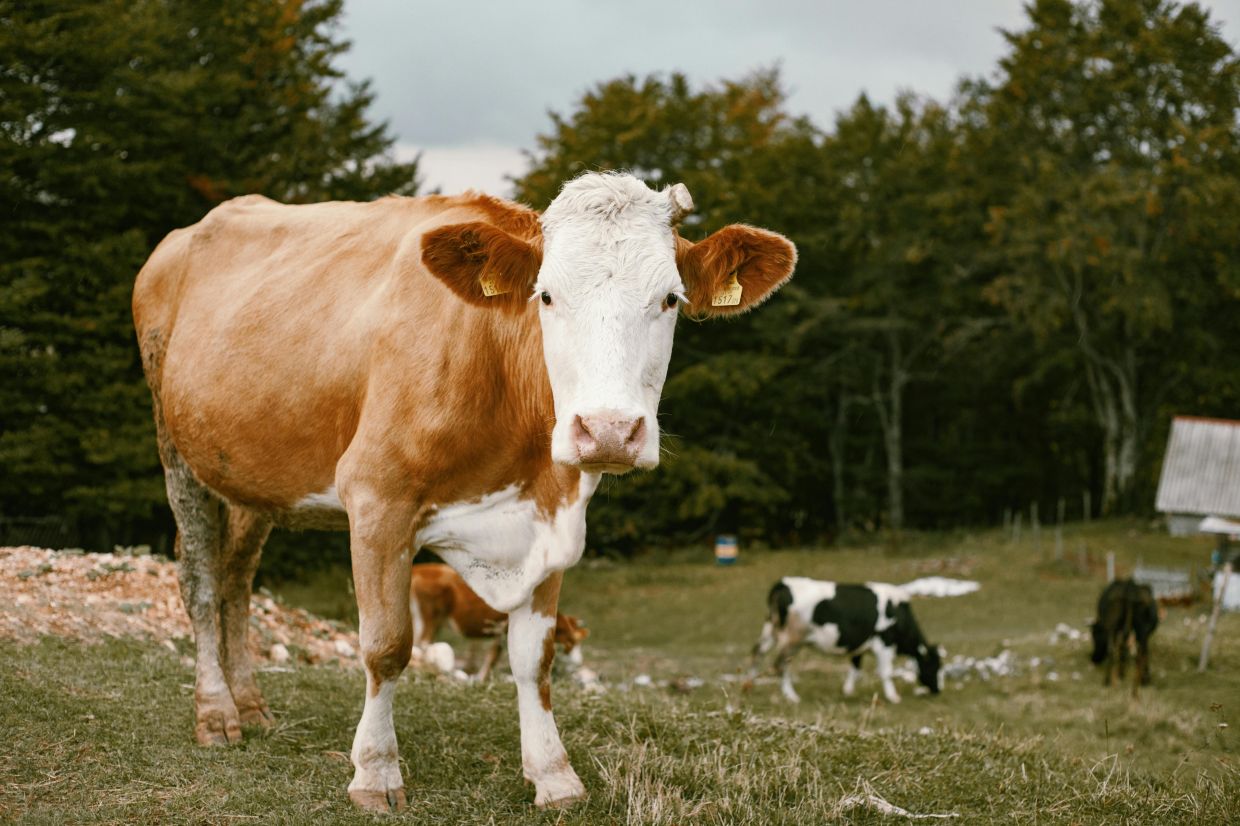
In short, Marty could slash his food-related climate footprint by simply eating more plants and less cows.
Steady small changes
Despite these staggering facts, we probably will not see large crowds around the supermarket vegetable aisles.
Instead, we see Marty sitting in front of a dish containing three days’ worth of protein, explaining that he “needs his strength”.
Many people are unwilling to give up meat because of pleasure, habit, or the sheer horror of being labelled a “vegan” in group chats.
This is where the Subtle Substitution Strategy (SSS) enters the discussion.
It is a simple, pragmatic proposal that asks nothing of Marty except that he treat meat as a condiment rather than the main event.
It is the climate-friendly diet for people who still want to feel like they are eating like “proper humans”.
It recognises that most people are not ready for a dietary revolution, but that small, incremental shifts can add up to something meaningful.
Marty can put this into practice in several unheroic ways:
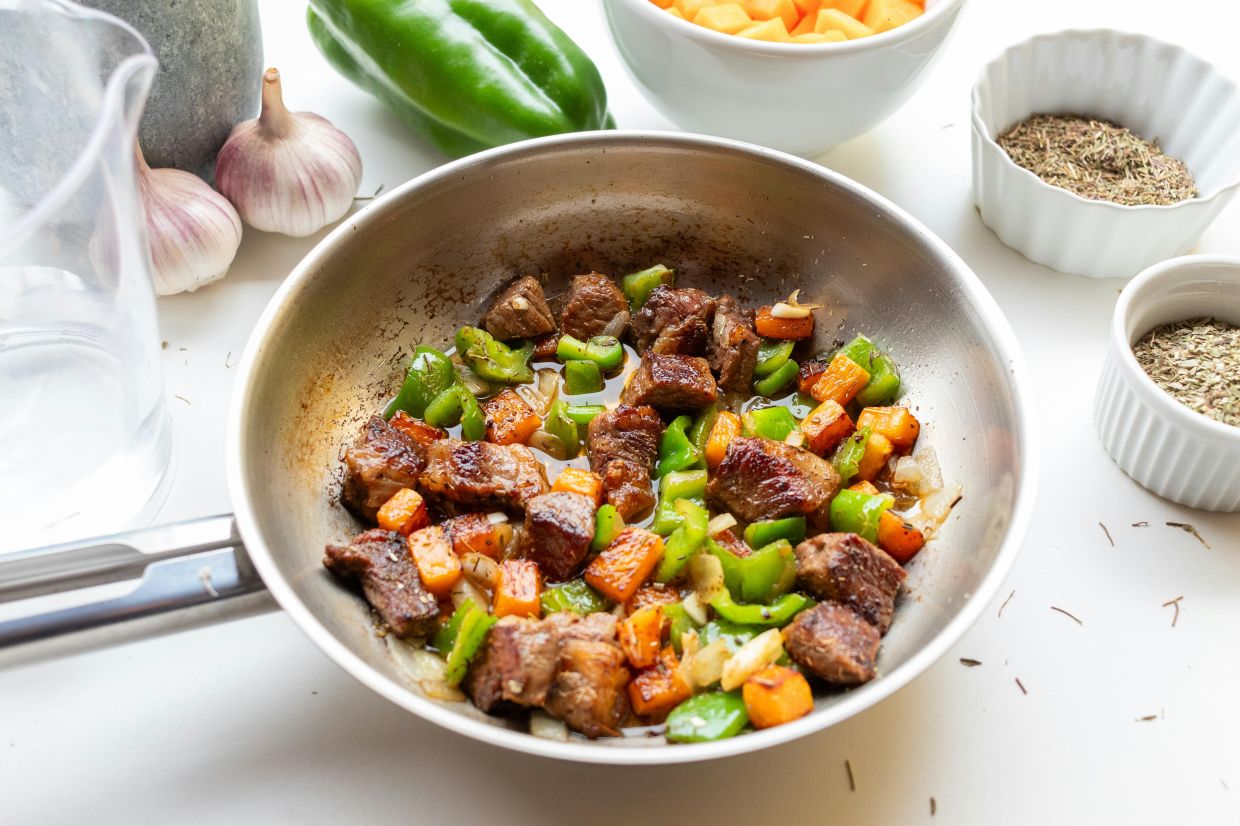
• Meat as a condiment: Instead of a 450g steak, Marty can use smaller amounts of meat to flavour vegetable-heavy dishes – perhaps stir-fried greens with a few slices of chicken, or pasta loaded with vegetables and a modest scattering of bacon.
• Plant-based proteins: Marty can incorporate beans, lentils, and tofu – foods he currently insists “taste like sadness” – into his routine. They are nutritional powerhouses that can cut dietary emissions by up to 75% relative to meat-heavy patterns.
• Meatless days: Participating in “Meatless Monday” is not a radical manifesto; it can be just an after-weekend habit. And statistically, even a day of vegan eating per week can have a positive climate impact.
• Portion control and quality: Choosing smaller portions of higher-quality meat (like pasture-raised or organic) does not convert meat into salad, but it is still a small step backwards from ecological disaster.
Cultural fortress
The obstacles to this change are not merely logistical; they are often psychological.
For decades, advertisers have portrayed meat as a symbol of strength, status, and masculinity, as if proteins and iron can only exist in animal-shaped forms.
A plate without meat is too often viewed as a sign of deprivation or a lack of gastronomic refinement.
Furthermore, there is the terror of social labelling.
Marty can happily discuss apocalyptic climate projections, but the moment he mentions eating less meat, he fears being seen as the “extremist” at the BBQ – the person who arrives with a lentil salad and no friends.

The SSS is designed to slip under these concerns. Marty does not have to declare a new identity; he can simply eat more beans and less meat nonchalantly with a cheerful smile.
Conclusion
Individual dietary choices will not single-handedly “fix” the climate, but they matter because they can scale and signal demand. When people move from meat-heavy to plant-based diets, they cut food-related emissions very significantly.
As larger populations follow suit, such trends become strong economic and commercial signals to food producers.
The next time Marty sits down to his steak, he should imagine a warning label over the plate: “Warning: Contents linked to widespread deforestation and four times the climate impact of a plant-based option”.
The SSS does not require Marty to become a saint; it merely invites him to be less of an environmental saboteur with his knife and fork.
He can keep his personality, his friends, and even his Sunday dinner – just less of it, and less often.
He may never post pictures of tofu on social media, but quietly, he is nudging his diet in the right direction for our planet.
The views expressed here are entirely the writer’s own.