In the history of natural medicines, some may suggest that few plants boast a lineage as old, profound, and with as much scientific potential as “boswellia serrata”. This remarkable tree, commonly known as Indian frankincense, has graced human history for millennia, offering its fragrant, resinous extract as a balm for inflammation, a tonic for respiratory issues, and curiously, also as a sacred element in religious rituals.
Despite its rich history and compelling track record, boswellia serrata remains on the fringes of mainstream Western medicine, often overlooked for more conventional pharmaceutical solutions. The column today explores its ancient origins, the unique science behind its efficacy, its wide-ranging therapeutic applications, and the hurdles preventing its wider acceptance, alongside its promising future in modern healthcare.
Origins
Boswellia serrata is a medium-sized deciduous tree native to the dry, mountainous regions of India, particularly states like Rajasthan, Madhya Pradesh, Jharkhand, and Chhattisgarh, as well as parts of North Africa and the Middle East.
It thrives in harsh environments, and its struggle against environmental stress mysteriously and paradoxically leads to the production of its medicinally valuable compounds.
The tree’s fragrant oleogum resin is sometimes referred to as a “gift to humanity”. The resin is exuded when its bark is cut or scored.
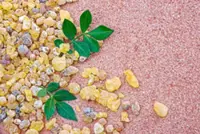
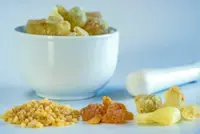
Known as “salai guggul” in Ayurveda or simply “frankincense”, this golden-amber sap hardens into tear-shaped droplets.
The practice of harvesting this resin dates back thousands of years, typically involving incisions made in March or April, with collection continuing through summer and autumn.
Historically, a tree could yield high-quality resin for only about three consecutive years before its production diminished.
The historical use of boswellia serrata is exceptionally rich, stretching back at least 4,000 years, and potentially as far as 5,000 years, with archaeological evidence pointing to its use in the Indus Valley Civilization around 3000 BCE.
In Ancient Egypt, it was prized for its aroma and used in embalming and rituals.
In Indian Ayurveda, boswellia (known as Salai guggul or Shallaki) was prescribed for inflammatory and joint disorders, lung diseases, and wounds – noted for reducing swelling without the digestive upsets of other herbs.
In Traditional Chinese Medicine, its close relative Boswellia carterii was used for pain relief and improved circulation, while early European physicians, including Hippocrates, recommended frankincense for inflammation and digestive issues.
Ancient texts like the Charaka Samhita and Sushruta Samhita documented its use for inflammatory disorders (“shotha”), joint disorders (“sandhivata”), arthritis, diarrhoea, lung diseases, respiratory problems, and even as a wound healer.

In the Middle East, it is used in traditional medicine, perfumes, and incense, valued for soothing sore throats and coughs, and its anti-inflammatory effects.
Beyond its medicinal applications, the resin held significant spiritual and commercial roles, being burned in temples and homes for purification and calming the mind. Its widespread use across diverse cultures underscores a universal recognition of frankincense’s therapeutic potential.
However, despite its sacred aura and historical prominence, boswellia serrata did not become as deeply integrated into Western herbal medicine as some other botanicals, possibly due to limited exchanges between South Asian and European medications until recent decades.
The colonial period in India even saw a decline in its use, being proscribed by the British, with modern research only systematically beginning in the late 20th century.
Unusual chemistry
What truly distinguishes boswellia serrata in the realm of natural medicine are its active compounds, primarily a unique collection of pentacyclic triterpenes known as “boswellic acids”.
These molecules are structurally distinct from conventional pharmaceuticals, offering an entirely different and somewhat unique approach to managing inflammation.
The key bioactive compounds are:
• Boswellic acids: These are the most studied components found in boswellia serrata. The notable boswellic acids include:
• Acetyl-11-keto-β-boswellic acid (AKBA): Considered the most potent compound, it powerfully inhibits an enzyme called 5-lipoxygenase (5-LOX). 5-LOX is responsible for producing highly potent pro-inflammatory molecules called leukotrienes, which aggravate conditions such as asthma and arthritis.
• β-boswellic acid (BA): Supports joint health and may protect cartilage.
• Acetyl-β-boswellic acid (ABA).
• 11-keto-β-boswellic acid (KBA).
• Terpenes & Essential Oils: These compounds contribute to boswellia’s anti-microbial and anti-anxiety effects.
• Polysaccharides: These are heteropolysaccharides composed of neutral sugars such as galactose and arabinose, along with significant amounts of D-glucuronic acid.
They are different from the polysaccharides in other foods (which are mainly starches and cellulose) and may enhance immune modulation through means unknown at present.
• Incensole Acetate: Another key compound that contributes to the resin’s anti-inflammatory and neuroprotective effects, potentially protecting neurons, reducing tumour formation, and acting as a natural anti-depressant.
Boswellia compounds are unique because most pharmaceutical anti-inflammatories, such as NSAIDs (Non-Steroidal Anti-Inflammatory Drugs – eg, ibuprofen), typically arrest pain by inhibiting cyclooxygenase (COX) enzymes.
However, boswellic acids target the pathway modulated by the enzyme 5-lipoxygenase (5-LOX), significantly reducing leukotriene production.
This distinct mechanism offers several advantages:
• They do not damage the gut (unlike NSAIDs, which can cause ulcers and gastrointestinal side effects).
• There is evidence they protect brain cells by reducing neuroinflammation.
• They show anti-cancer potential by blocking tumour growth pathways.
• Boswellia compounds appear to preferentially affect diseased or inflamed tissue while leaving healthy cells largely unaffected, which can explain the historically low numbers of reported side effects.
• Modulation of multiple pathways: Recent research indicates that Boswellia compounds can modulate multiple inflammatory pathways simultaneously, including nuclear factor-kappa B (-κB) signalling and various cytokine networks.
There are modern synthetic drugs which also target the 5-LOX pathway, notably “zileuton”, which is an approved drug for treating asthma in the US.
But zileuton has potentially serious side effects which include liver damage, behavioural changes, allergic reactions, nausea, etc, and is currently not approved by other countries or the EU. As a comment, zileuton is also expensive and can cost over US$15 (RM64) per tablet.
By comparison, the broad effect on human inflammatory pathways, and the general absence of negative side effects, makes boswellia a compelling alternative or adjunct to conventional anti-inflammatory drugs. And high-quality boswellia pills cost much less than US$0.20 (85 sen) each.
Extraction methods and standardisation
The initial step in obtaining boswellic acids involves making incisions in the boswellia serrata tree’s bark, allowing the thick, milky sap to slowly ooze out and harden into oleogum resin. This raw resin is then processed into various forms, including powder, capsules, and topical creams.
For therapeutic use, standardisation is crucial. Raw Boswellia serrata resin typically contains only 1% to 10% AKBA.
These days, supplements are often “standardised” or purified to contain specific percentages of boswellic acids.
The better supplements usually contain 60-65% boswellic acids, of which at least 10% is AKBA. Prior to standardisation, the concentration of active compounds varied significantly between products due to differences in extraction methods, seasonal variations in resin composition, and geographic variations in tree genetics.
This variability made it difficult to determine optimal dosages and ensure consistent therapeutic effects across boswellia products from various producers. Modern advanced extraction techniques are therefore crucial for producing highly consistent, potent preparations to meet the required minimum efficacy requirements.
Optimal dosages and bioavailability considerations
The optimal dosage of boswellia serrata extract varies depending on the specific condition being treated and the concentration of boswellic acids in the extract. Clinical studies have used a wide range of doses, typically standardised to contain at least 30-65% boswellic acids.
For general anti-inflammatory purposes, the usual dosage is between 300 to 1,000mg of standardised 60-65% boswellia extract per day, and it must be taken with oil or fats. Improvements should start to be noticed within days, though it may require a few weeks to attain the maximum effect.
A significant challenge with boswellic acids, particularly AKBA, is their poor absorption in the human gut. This is due to their chemical structure as pentacyclic triterpenoids, which makes them extremely hydrophobic (water-hating).
They have a large, rigid, multi-ring backbone with predominantly nonpolar hydrocarbon regions and only a few polar functional groups, resulting in very poor water solubility and a strong affinity for nonpolar (oily) environments. This is why they are impossible to dissolve in water and require ethanol-based solvents for extraction.
To improve/maximise the bioavailability of boswellia, a suggestion is to pull apart the pills and dissolve the extract powder in one or two teaspoons of good quality oil/fats prior to ingesting the mixture.
The efficacy may be improved by adding some curcumin (derived from pure turmeric powder) and freshly-ground pepper to the mixture. The fats also facilitate micelle formation, thus improving intestinal absorption, which allows boswellic acids to be transported around the body. More on this subject later.
To improve the taste, perhaps add some cream cheese or non-diet fruit yoghurt to the mixture. The timing of doses also appears crucial, with research suggesting that two to three daily doses over several hours have a more consistent effect than single large doses.
However, be aware that a very small percentage of the population can have some allergic reactions to boswellia, so please always take medical advice before starting the compounds.
This column shares research findings for public interest. It is not medical advice. Always consult a qualified healthcare provider before starting supplements. The views expressed here are entirely the author’s own.