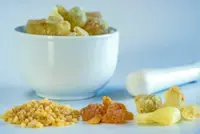
I had never heard of Boswellia serrata until over a year ago. I was then having significant difficulties walking any distance, and the medications provided were not helpful and caused irksome side effects.
In frustration, I did days of research and tested various compounds over several months, including turmeric (curcumin) teas, ginger extracts, collagen supplements, etc.
But none worked until I came across some high-grade boswellia pills.
Fortunately, my research had already pointed out the extremely hydrophobic (water-hating) nature of boswellia, so I always took the pills mixed with a tablespoon of olive oil from the beginning. Amazingly, it worked. The knee pains subsided within days and have been improving ever since. From being able to walk unaided for only about 100m, my knees can now support walks of 5km. It is still far from the 10–15 km hikes I used to do, but my knees generally feel normal at last.
When the weather is cooler, I will try hiking longer distances later this year, though maybe I’ll skip carrying the picnic and bottle of wine in the rucksack. Note that the above is just one person’s anecdote. It is far from scientific rigour, and I must stress that it is statistically unsafe to pursue any course of action based on a single sample or tiny sets of results.
But my unexpectedly good outcome from taking boswellia prompted more digging into scientific studies of boswellic acids. It turns out that not much research was done until the last few decades despite the use of boswellia for thousands of years. This is likely due to the lack of genomic or molecular data about boswellic acids until recently, and the countries producing boswellia being too poor or disorganised to undertake detailed scientific studies.
However, proper scientific studies over the past few decades are increasingly validating many of Boswellia serrata’s traditional therapeutic claims across a remarkably wide range of conditions.
Some summaries of the research into boswellia and the findings are as follows:
1. Arthritis and joint pain (Osteoarthritis & Rheumatoid Arthritis)
This is the most well-researched use of Boswellia serrata. Multiple clinical trials demonstrate its ability to reduce pain and stiffness in both osteoarthritis (OA) and rheumatoid arthritis (RA), often matching or exceeding the effectiveness of NSAIDs without the associated side effects.
• Mechanism: boswellia blocks inflammatory cytokines (such as T -α and IL-1β) and protects cartilage from degradation. Its ability to reduce synovial fluid MMP-3, a marker of cartilage breakdown, even suggests a disease-modifying potential.
• Evidence: A 2020 meta-analysis in Phytomedicine found boswellia significantly improved knee pain and mobility. Another study in Phytomedicine noted significant pain reduction within just seven days of Boswellia serrata extract use.
A randomised, double-blind, placebo-controlled trial found boswellia extract significantly improved pain, physical function, and joint stiffness in OA and RA patients.
2. Asthma and chronic obstructive pulmonary disease (COPD)
Since leukotrienes play a key role in bronchial constriction and airway inflammation, boswellia’s inhibition of their production can help ease asthma symptoms.
• Evidence: A 1998 study in the European Journal Of Medical Research showed a 70% improvement in asthma symptoms with boswellia. Another double-blind, placebo-controlled trial found that Boswellia serrata extract reduced asthma symptoms, improved lung function, and decreased attack frequency.
3. Inflammatory bowel disease (IBD) – Crohn’s & Ulcerative Colitis boswellia selectively reduces gut inflammation without suppressing the entire immune system, unlike steroids.
• Evidence: A 2001 trial found boswellia as effective as “mesalazine” (a standard IBD drug) with fewer side effects for Crohn’s disease. For ulcerative colitis, one study showed 90% of patients had symptom improvement with 70% achieving remission. While some studies found similar efficacy to another drug called “sulfasalazine”, a 2011 study found mixed efficacy in maintaining Crohn’s disease remission.
4. Potential anti-cancer effects
Emerging research suggests AKBA may possess significant anti-cancer properties:
• Mechanisms: Inducing apoptosis (programmed cell death) in cancer cells, blocking angiogenesis (tumour blood supply), inhibiting DNA, RNA, and protein synthesis in cancer cells, and suppressing the invasion and metastasis of cancer cells.
• Most studied in: Colon, pancreatic, and brain cancers (preclinical models show promise). In vitro and animal studies also show effects against breast and prostate cancers. However, clinical data are still preliminary and insufficient to recommend boswellia as a cancer treatment.
5. Brain health & neuroprotection
Chronic inflammation contributes to neurodegenerative diseases like Alzheimer’s and Parkinson’s. Boswellia’s ability to cross the blood-brain barrier makes it a candidate for neuroprotection.
• Evidence: A 2022 study found AKBA reduced amyloid plaques (linked to Alzheimer’s) in animal models. A 2023 study reported that boswellic acids improved cognitive scores and reduced systemic inflammation in patients with mild to moderate Alzheimer’s disease. Animal models also indicate potential benefits in Parkinson’s disease and brain ischemia by reducing oxidative stress and inflammatory markers.
6. Other potential uses
• Wound healing, skin diseases, and anxiety: Traditional uses exist, but robust modern studies are lacking.
• Cardiovascular health: May reduce inflammation and improve endothelial function, potentially lowering cholesterol levels and heart disease risk.
• Chronic inflammation: Some recent research suggests Boswellia serrata may mitigate persistent inflammation in mild to moderate cases by modulating immune responses and reducing pro-inflammatory cytokines.
Supplementing with other compounds
A 2018 study suggested that combining boswellia and curcumin in oil-based formulations could improve therapeutic outcomes. Curcumin is also highly lipophilic (fat-loving) and face similar challenges as boswellia with poor water solubility and normally low bioavailability. Ingesting both compounds together in oils can have synergistic anti-inflammatory effects, as both target similar pathways (eg, 5-lipoxygenase or 5-LOX and -κB).
The oils/fats used should ideally contain high levels of inflammation-lowering Omega-3 fatty acids for enhanced benefits
Additionally, including “piperine” (from black pepper), which is known to enhance the absorption of curcuminoids by inhibiting certain liver enzymes and promoting intestinal metabolism, could theoretically enhance the absorption of both boswellia and curcumin, though it should be noted that specific studies on this combination are limited.
Ingesting the compounds with oil promotes the production of micelles in the digestive system. Micelles are aggregations of molecules called “amphiphiles” which have both hydrophilic (water-attracting) and hydrophobic (water-repelling) parts.
This structure allows micelles to encapsulate hydrophobic substances like boswellia and other fat-soluble nutrients, making them behave as if they are soluble in water and transportable via the bloodstream.
Hurdles to becoming a mainstream medication
Despite its impressive therapeutic potential and ancient legacy, Boswellia serrata remains a niche supplement, largely absent from mainstream Western medical practice. This is due to several interconnected factors :
• Standardisation challenges: Not all boswellia extracts are equal, and concentrations of active compounds, particularly boswellic acids, vary significantly. This complicates consistent dosing and efficacy, which mainstream medicine and regulators require. There are still no official standards or quality regulations for boswellia.
• Big pharmaceutical companies generally prefer single-molecule drugs that are easier to patent and control, and far more profitable. They are also wary of multi-purpose compounds with several therapeutic effects outside a single target condition.
• Lack of multiple large-scale clinical trials: Most studies on boswellia are small, short-term, or preclinical, often funded by supplement firms or smaller research groups. Without the billion-dollar backing typical of blockbuster drugs, large, independent human trials are rare.
• Economic factors and patentability: Natural remedies cannot be patented in their original form, significantly reducing profit incentives for drug companies to invest the massive capital (often exceeding US$1bil (RM4.19bil)) required for full clinical development.
• Regulatory hurdles: Herbal supplements often exist in a “grey zone” between foods and drugs. In many countries, they are regulated as foods, meaning they do not undergo the same rigorous testing and approval as pharmaceuticals, limiting their growth as mainstream therapeutic agents.
• Medical education and culture: Most physicians receive limited training in natural products, and boswellia’s multi-target mechanisms do not fit neatly into conventional pharmacological models that favour single-target drugs.
• Misinformation and poor-quality supplements: The supplement industry has faced quality control issues, with studies finding some commercial products contain little to no active boswellic acids or are adulterated. This inconsistency fosters scepticism among healthcare providers and consumers.
• Competition from established therapies: Conditions like arthritis and IBD have well-established, though often side-effect-prone, treatments (NSAIDs, biologics, corticosteroids). Boswellia’s milder effects, while remarkable, may seem less appealing compared to faster-acting pharmaceuticals.
• Bioavailability issues: The poor aqueous solubility and low oral bioavailability of boswellic acids present a pharmacokinetic challenge that complicates consistent efficacy in clinical settings, despite ongoing efforts to improve delivery systems.
• Side effects and interactions: While generally safe, in rare cases boswellia can potentially cause digestive issues (nausea, diarrhoea, heartburn) and allergic reactions. It may also interact with medications metabolised by liver enzymes (eg, Warfarin, some chemotherapy drugs), raising concerns for patients on multiple drugs (especially blood thinners) and deterring widespread adoption without clearer safety profiles.
• Lack of awareness: There is a general lack of awareness among both healthcare professionals and the public regarding boswellia serrata’s potential benefits.
All the above hurdles are currently real, but not insurmountable, especially if boswellia lives up to its potential as shown by scientific studies.
The main impediment may be the low cost of boswellia compared to expensive patented modern pharmaceuticals, which limits profits and widespread marketing.
This column shares research findings for public interest. It is not medical advice. Always consult a qualified healthcare provider before starting supplements. The views expressed here are entirely the author’s.