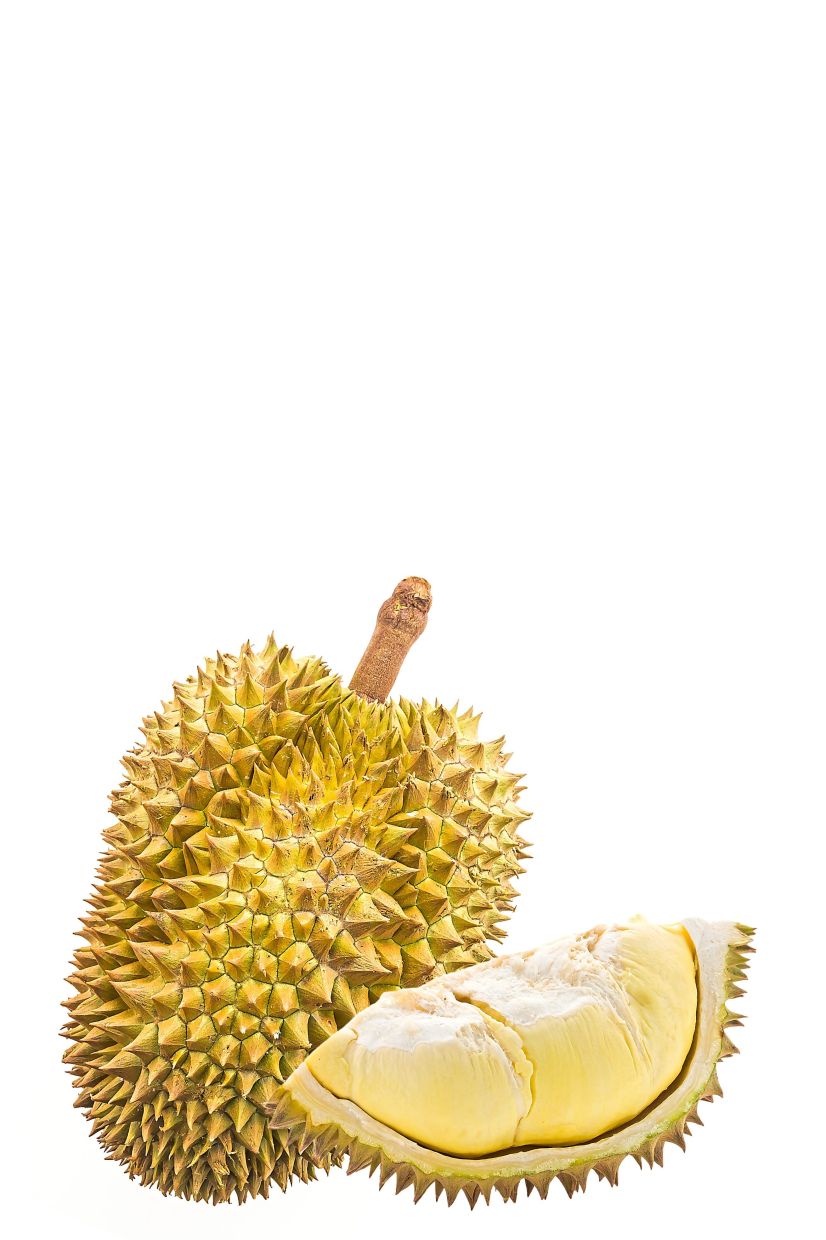
For various reasons, I have not been able to return to the UK for four months, and oddly, one of the main things I really miss is the frozen durian from an Asian supermarket some 20 miles (12km) from my house there. Finding durian in France – especially in our remote rural village – is impossible. My only chance to reconnect with my favourite fruit is during visits to the UK.
Durian is not cheap in the UK, around £23 (RM130) for a small box of frozen Musang King, but I make a couple of boxes last a while by blending it with ice cream (which must be the type made from full cream).
It may sound bizarre, but even a small amount of well-mixed durian can enhance the flavours of many ice creams, especially salted caramel, cookies & cream, vanilla, strawberry, and pistachio. It even works with mint chocolate and coffee, though it can taste a tiny bit funky, but I still like it.
I had not wondered before about the reasons why durian would enhance the flavours of ice creams until now, and it turned out the explanations are scientifically quirky and interesting.
Lots of sulphur
Nobody needs to be reminded that many Westerners would probably describe the smell of durians as a mix of sewage, garlic, and overripe fruit, or something along those lines. At best, they may say the odour is “unique” and no one can possibly quibble with that. And to make it somewhat worse, the smell would linger for hours.
In 2017, a team of researchers at the Malaysian Agricultural Research and Development Institute (MARDI) used gas chromatography-mass spectrometry to analyse the volatile compounds in durian pulp, particularly from the prized Durio zibethinus variety known as Musang King. The outcome was the discovery of over 50 volatile compounds, with complex sulphur-containing molecules featuring prominently. Examples are:
• Ethanethiol: A highly volatile thiol with an intense odour of skunk. It is very odorous even in remarkably low concentrations.
• Diethyl disulfide and diethyl trisulfide: These molecules contribute garlicky, onion-like aromas and are also found in cooked
alliums like garlic and onions.
• 1-(ethylsulfanyl)ethane-1-thiol: A rare thiol with both fruity and sulphurous notes, reflecting a complexity which captures the multifaceted sensory experience of durian.
• Methanethiol: This compound is known as a key contributor to the smell of stinky farts and decaying seafood.
• Hydrogen sulphide: The famous compound behind the smell of rotten eggs and decomposing food.
• Acetoin and various esters: These compounds round out the aforementioned harsh sulphur notes with buttery and fruity scents. In short, durian can smell like sewage, but presented with a lovely buttery aroma.
Surprisingly, many of these sulphur compounds are also found in high-end gourmet ingredients, such as black garlic, truffles, and aged cheeses.
What sets durian apart is not just the presence of these molecules, but their unusually high concentrations and unique combinations, which creates a dramatic, often overpowering, olfactory impact.
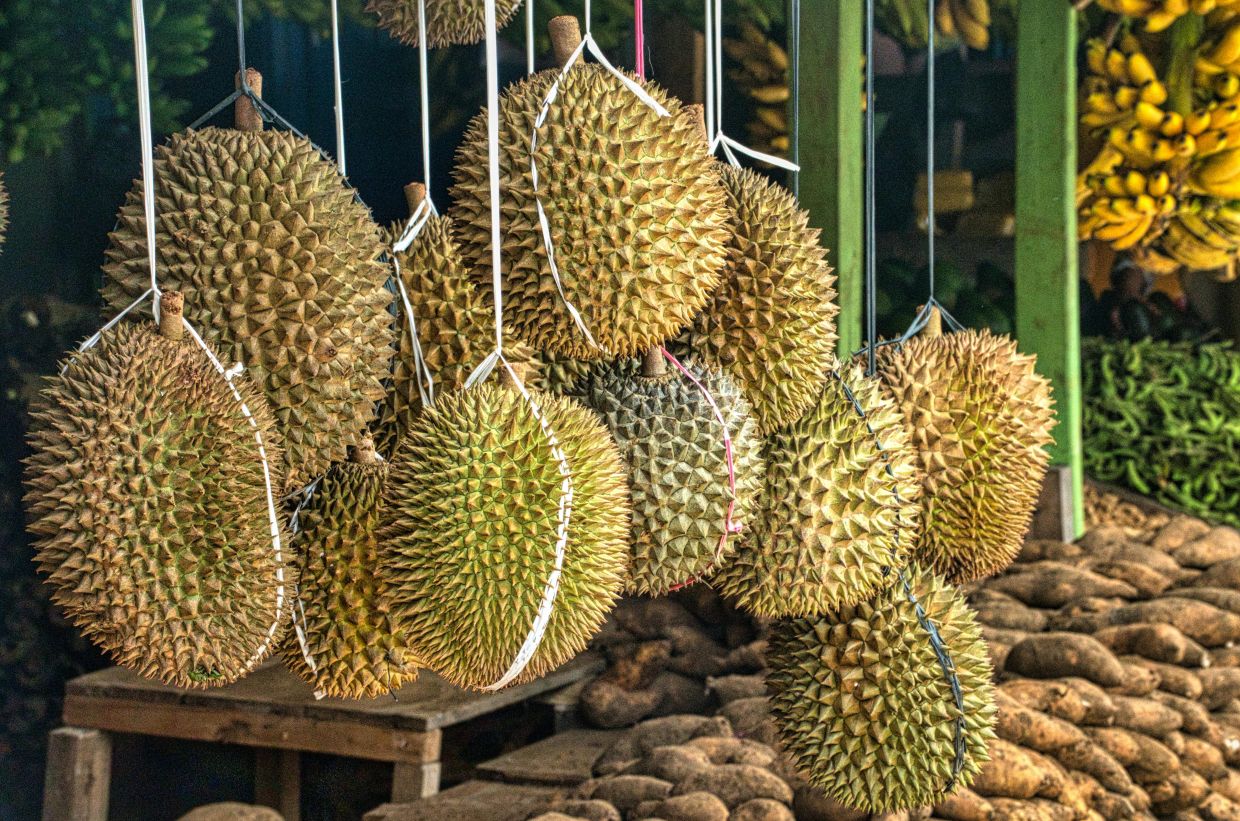
This impact can be addictive or repulsive, and the outcome is usually determined by a person’s background. Human noses can detect sulphur compounds at concentrations as low as a few parts per billion, making durian’s scent impossible to ignore.
Retro-nasal
The magic of durian lies not just in its smell but in how it reshapes our perception of taste. The effect of durians is particularly dramatic also because our sense of taste is deeply intertwined with smell. When we eat, aroma molecules travel retro-nasally – through the back of the throat to the olfactory receptors – and this profoundly shapes how we perceive flavours.
In a 2019 study published in Food Chemistry, researchers from the National University of Singapore found that the binding of durian’s sulphur compounds to the olfactory receptors causes an interaction with the brain’s gustatory cortex. This has the curious effect of amplifying significantly the intensity of other flavours in a dish. Additionally, the compounds stimulate the olfactory receptors in other unusual ways:
1. Sweetness enhancement: Neuroimaging studies using functional Magnetic Resonance Imaging have shown that intense aromas, even complex or borderline unpleasant ones, can activate the orbitofrontal cortex, a brain region involved in reward and decision-making.
The brain’s valuation system appears to be highly responsive to sulphur compounds such as ethanethiol, particularly when balanced with sugar and fat. This might explain why a durian custard can taste sweeter, feel richer or more decadent than a similar dessert made without it.
2. Umami boost:
Some durian sulphur compounds interact with glutamate receptors, deepening savoury notes. This makes durian a surprising ingredient for umami-rich desserts, like durian caramel or chocolate truffles with durian.
3. Contrast effect:
Durian’s sulphurous undertones create a flavour tension that makes the contrast between sweet and fatty food elements more pronounced. This is similar to how honey or sweet chutneys served with blue/aged cheeses enhances a cheeseboard.
It goes further.
In addition to olfactory stimulation, thiols and sulphides also engage the trigeminal nerve, which senses chemical irritants (eg, menthol, capsaicin, wasabi, etc).
Light trigeminal stimulation from durian’s sulphur compounds can invoke a mild “irritation response” that paradoxically enhances awareness of taste texture and contrast. It is a little like how spicy chilli often heightens the perception of flavour depth.
Furthermore, a 2021 study in the Journal of Sensory Studies curiously found that introducing the aroma of durian alone can increase the perceived sweetness of a dish by up to 20%, even when sugar levels of the dish remain unchanged.
Multisensory event
The brain interprets flavour not as simple taste profiles, but as a multisensory event – a neural symphony of smell, taste, touch, sounds, and memory. In this context, it is plausible that durian is a master manipulator of some of our major experiences of flavour.
• Olfactory coding: Olfactory receptor neurons are encoded to detect thousands of odorants, and durian’s rich chemical makeup often overpowers this system. The sheer diversity of durian’s molecular signals can overwhelm or enrich, depending on the individual’s neural sensitivity and prior exposure.
• Reward circuitry: The interaction of durian’s aroma compounds with dopaminergic pathways helps explain its “addictive” appeal to fans. In various studies, presenting small doses of durian to fans triggered powerful anticipatory pleasure sensations and salivation even before the durian is eaten.
• Memory and emotion: Because smell is closely tied to the limbic system, particularly the amygdala and hippocampus, even a fleeting whiff of durian may trigger intense emotional responses – revulsion, nostalgia, craving – depending on one’s personal and cultural background.
Nicer and funkier
By now, you should have an inkling why the curious chemistry of durian can enhance the taste of other foods, and for example, why ice creams of different flavours can taste much nicer and funkier with a spoonful of durian mixed in. This may be considered a personal opinion, except that several of the best restaurants in Asia (mainly Singapore and Bangkok) are now adding durian compounds to their dishes to introduce unique taste and flavour sensations to their clients. And soon there may be durian culinary compounds available without the smell.
A possible future
As a peek into a plausible future, food technologists at Universiti Putra Malaysia (UPM) have pioneered a method to extract and refine durian’s flavour compounds, selectively removing the fruit’s notoriously pungent odour while preserving its creamy, umami-rich taste compounds.
By isolating specific esters and reducing sulphur-based volatiles responsible for the strong smell, the researchers have created odour-mild durian extracts that retain the fruit’s unique depth and texture. This innovation should soon open up new culinary possibilities, allowing durian to be used in foods that would otherwise be overwhelmed by its aroma.
UPM has been researching and improving this technology since 2006 and hopefully their decades-long work will gain some critical commercial momentum soon.
The refined durian extracts are designed to be incorporated into a variety of products. In cocktails, they can add a tropical creaminess and complexity without the off-putting scent. In vegan cheeses, durian’s natural richness and umami mimic the mouthfeel and flavour of dairy, resulting in plant-based cheeses that are mild in smell but bold in taste. The extracts are also designed to be used in desserts, baked goods, and spreads, thanks to their versatility and ease of integration.
The quirky appeal of these innovations may soon make durian more accessible to a global audience. Far from being a polarising delicacy, the compounds in durian may one day turn into a versatile ingredient for modern, health-conscious, and adventurous foodies around the world.
If you have never tasted durian before, a suggestion would be to get some quality durian from an Asian supermarket, defrost a portion into a creamy paste, and mix it well into your favourite soft ice cream. At the very least, it would be an interesting introduction to the king of fruits if you have never tried the magic of durian before.
The views expressed here are entirely the writer’s own.