




An American student considering studying in China attended a briefing with a senior FBI official at a Washington think tank last month to address her concerns about whether such an experience could jeopardise her prospects for a career in the federal government.
The official’s message: travelling to China would not automatically disqualify her.
She welcomed the clarification but said she wasn’t “completely reassured”.
“I’m still wondering if it’s a good idea to go,” said the student, who requested to remain anonymous because of the issue’s sensitivity.
Her hesitation illustrates a dilemma for Washington: the US needs more Americans with first-hand knowledge of China to navigate the growing US-China rivalry, but students and educators say fears about future security clearances are discouraging some young Americans from gaining that experience.
She was among a group of students and professors who attended the special briefing with Joshua Obstfeld, a senior executive in the FBI’s Counterintelligence and Espionage Division, organised by the US-China Education Trust.
“Definitely do keep records of where you are going and what you are doing and who you are interacting with, so that you can then report it to us,” Obstfeld told his audience.
With Washington and Beijing locked in an increasingly securitised geopolitical competition, the US is struggling to maintain its China expertise and cultivate the next generation of specialists.
This is happening amid declining numbers of American students studying in the country, cuts to federal funding for related programmes and US efforts to sever research ties between universities in both countries.
“The United States is facing a genuine policy paradox,” said Denis Simon, a professor at Schwarzman College at Tsinghua University in Beijing.
He said the US wants “more Americans who understand China”, yet the “increasingly securitised atmosphere” could discourage “precisely the kinds of educational and professional experiences necessary to develop that expertise”.
“Students pick up on the geopolitical climate, and when they hear that time in China might count against them, many just don’t go,” said Rosie Levine, executive director of the US-China Education Trust, who moderated the discussion with the US Federal Bureau of Investigation (FBI) official.
“Many students now believe time in China could be treated as a liability rather than an asset.”
During the discussion with the students, Obstfeld stressed that the FBI expects prospective candidates with experience in China to be “open and honest” about their interactions while in the country.
“Are you a trustworthy person? Are you somebody that we can rely on and depend on as part of our mission to protect the American people?” he asked rhetorically.
The official said the FBI valued experience and expertise gained abroad but cautioned students to be mindful of personal and professional relationships that could expose them to foreign influence.
“Who do you have in your life that could influence you? And I’m not trying to suggest that any of this is fair,” he said. “That’s not really what this is about. This is about protecting national security.”
He also distinguished between developing contacts overseas and being approached to establish clandestine ties, urging students to report any such attempts.
“If anybody asks you to enter a covert relationship, those are the types of things that are definitely concerning to us. So report it.”
However, the student said she was not “convinced” that, if she decided to go to China, she would be “completely aware of what is going on” around her all of the time.
“The FBI couldn’t say you’ll definitely get a security clearance, and when you do go to China, you’re more at risk of meeting people who might lead you to have a greater chance of getting disqualified, and this could be totally out of your control,” she added.
The FBI’s Counterintelligence and Espionage Division did not respond to a request for comment.
Dennis Wilder, a former senior US intelligence official and a professor at Georgetown University, concurred that “American students are very worried” that “travel to China will either extend the security clearance process indefinitely or even make it impossible to get a clearance”.
“Such a perception is difficult to verify because there are many possible reasons why an individual is denied a clearance,” he said.
Wilder advised students to go to China only on “programmes sponsored by reputable US academic institutions where there are US citizens who can vouch for their activities” in the country.
“They should not, under any circumstances, take Chinese government or university funding,” he added.
Simon from Tsinghua University emphasised that “responsibility for managing national security risks should not be placed entirely on individual students”.
“The US government should provide clear, consistent and accessible guidance about what is expected of students before, during and after their visits to China,” he said.
Simon added that while the FBI’s advice was “fundamentally sensible” and students should be transparent about their activities, he would be concerned if such guidance “inadvertently creates the impression that travelling to China is inherently suspicious”.
“There is a danger that students will interpret the FBI’s guidance as suggesting that virtually every interaction with a Chinese academic, university official, government representative or business-person could eventually become a potential security problem,” he warned.
“We should not create a situation in which young Americans conclude that the safest career decision is to avoid China altogether.”
The number of American students studying long-term in China has fallen from about 11,000 in 2019 to fewer than 2,000 currently, according to research by the US-China Education Trust.
Conversely, more than 265,000 Chinese students enrolled in US universities during the 2024-25 academic year.
“Fewer Americans studying in China today means fewer people with the language skills, cultural fluency and on-the-ground understanding the United States will need to manage the relationship,” Levine said.
However, the situation has also been compounded by China’s pandemic-era visa restrictions, tighter controls on Western researchers and heightened risks of detention and arrests.
Last week, the US State Department added a “wrongful detention” warning to its travel advisory for China, alerting Americans to the risk of being detained arbitrarily under Chinese law.
“The [department] has determined that Americans are at serious risk of wrongful detention in China,” the State Department told the SCMP.
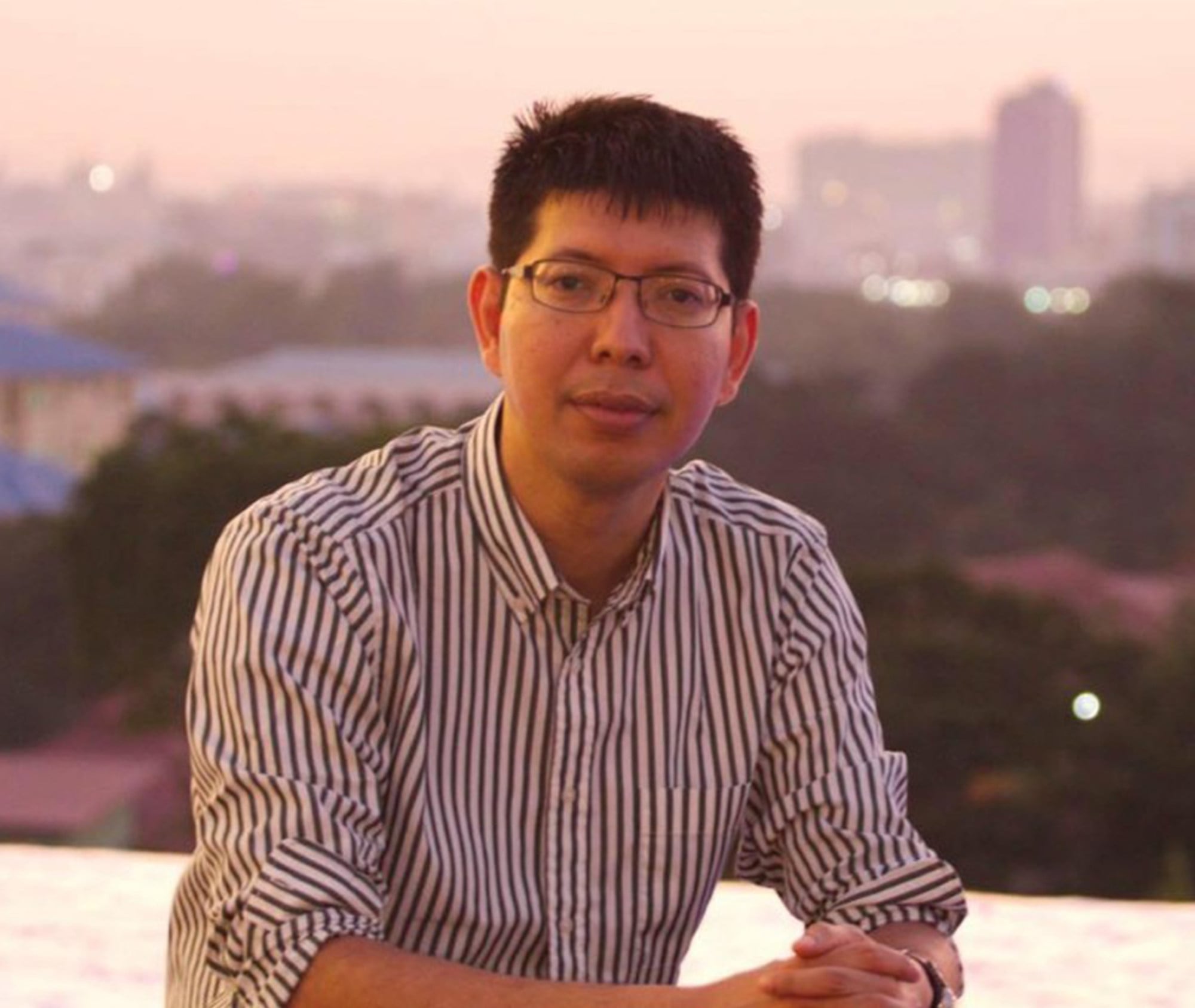
US media reports linked the advisory to the detention in China of two US scholars, Chen Youlin and Min Zin, both of whom the US government has designated as wrongfully detained.
“China is creating this problem,” Wilder said.
“Heightened security concerns about studying or doing research in China are very real as the recent case of a US professor in Southwest China demonstrates,” Wilder added, citing Min Zin’s detention in June in the country’s Yunnan province.
The Chinese embassy in Washington denied the allegations, saying that the country’s judiciary handles cases in accordance with the law.
During the discussion, the FBI official noted that while credible risks exist, most visits to China take place without incident.
“There are millions of people who go to China every year, every month, and everything, and nothing happens,” the FBI official said.
Beyond the sharp decline in student numbers, the Trump administration has halted or disrupted several federal programmes designed to help build China expertise.
The State Department’s Critical Language Scholarship experienced funding interruptions, while the National Resource Centres and Foreign Language and Area Studies Fellowships, which provided millions of dollars in grants, tuition help and stipends to university students nationwide, lost federal funding.
Washington is also accelerating efforts to sever academic ties with Beijing, with growing scrutiny of research partnerships between universities in the two countries.
The Pentagon’s push for greater oversight has resulted in more than 80 termination-related actions at 30 American colleges, prompting some institutions to scale back collaboration with Chinese counterparts.
Simon argued that “academic suspicion” is hurting the professional networks that make international research productive.
“The United States risks weakening its own scientific competitiveness,” he said, stressing that collaboration benefits both countries.
“The decline in educational engagement could create a dangerous knowledge gap in Washington,” he warned, noting that the strategic rivalry made deeper expertise essential.
“Yet we risk producing a generation of American policymakers who know more about China as a strategic adversary than as a country.” -- SOUTH CHINA MORNING POST


