
Hong Kong’s security chief has vowed to implement tougher enforcement against unauthorised shutdowns of fire safety systems and a structural overhaul of the Fire Services Department (FSD) after it was criticised for relying on a “passive, paper-driven” audit regime.
The independent committee that investigated the Wang Fuk Court fire said in its report released on Thursday that the department had received notices that the estate’s fire hydrant and hosepipe reel system had been deactivated for maintenance, but its officers paid only “cursory initial visits” and relied on verbal reports rather than conducting inspections themselves.
“Though the members of the FSD had demonstrated great heroism in carrying out the firefighting and rescue operations on the day of the fire, the FSD had failed its supervisory duty,” the report said.
“Lax enforcement of the regulatory regime would inevitably lead to lax and poor performance of, or even exploitation by, the corresponding contractors.”
Secretary for Security Chris Tang Ping-keung proposed a statutory pre-approval system to replace the current notification system, which the report said had been “gravely abused” in Wang Fuk Court with the deactivation of fire safety features.
The new system would be handled electronically with the help of artificial intelligence (AI), while deactivation of fire safety installations for more than 60 days and falsified applications would result in enforcement action, Tang said, adding that the department would also step up inspections.
Tang proposed that fire contractors’ licences should be subject to a review every five years, while violators could have their permits suspended.
Property management companies and property owners would become the statutory entities responsible for fire service installations.
A new Major Fire Prevention and Control Command would be established within the department to formulate contingency plans for high-risk scenarios, monitor and control fire risks in buildings undergoing major maintenance or renovation works, and coordinate technological measures for fire safety.
The department would also use AI and robotics to enhance its firefighting capabilities and its system for handling complaints, Tang said.
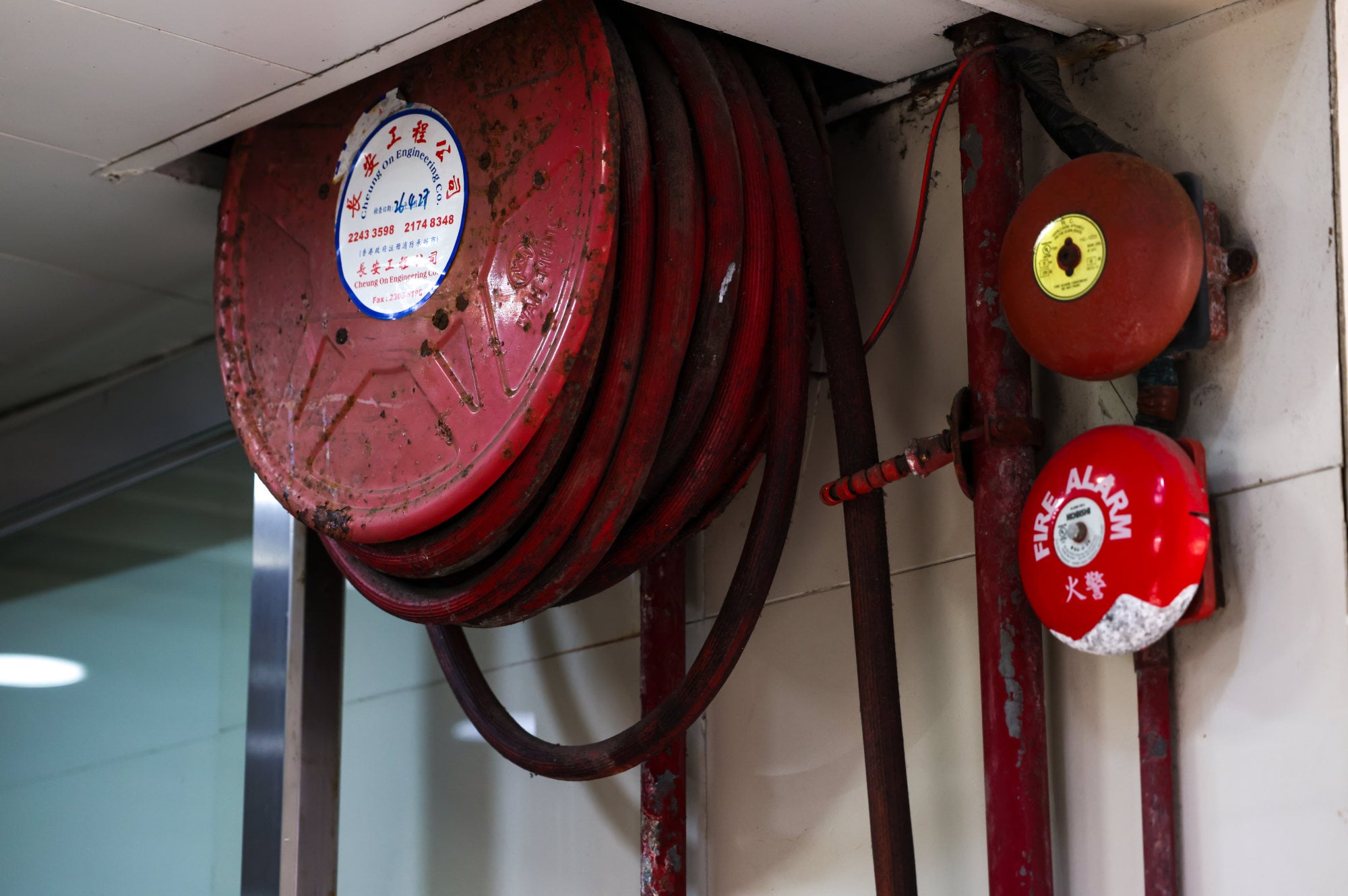
The committee criticised the FSD for limiting its remit to active fire service installations, such as fire alarms and hosepipe reel systems, and for lacking a “sense of a crisis”.
The department had argued that building materials and passive fire service installations, such as emergency staircases, fell under the remit of the Buildings Department and the Housing Bureau’s Independent Checking Unit.
The committee said this created a vacuum and left fire safety issues in Wang Fuk Court in a grey area, with complaints passed from one department to another without anyone actually dealing with them.
“[This] exemplified the departmental ‘merry-go-round’ attitude,” the report said.
According to the report, the FSD failed to address foreseeable risks ahead of the blaze, including combustible styrofoam boards and scaffolding nets, and conducted no meaningful inspections of fire safety provisions such as the fire alarms and emergency staircases.
In fact, the department had failed to inspect the staircases or enter the fire service pump rooms to check the hosepipe reel system during its 26 visits, according to the report.
The committee recommended that the department should physically examine the fire service installations and actually verify and test them, rather than relying on verbal assurances or perfunctory visual checks.
The committee also noted that the scaffolding at Wang Fuk Court itself contributed materially to the intensity and upwards spread of the fire.
Recognising that reducing reliance on bamboo scaffolding was complex and potentially contentious, the committee said an outright ban would have significant financial and logistical consequences.
It recommended exploring a transition from traditional bamboo scaffolding and combustible plastic wraps to metal scaffolding systems and fire-rated fibreglass mesh. It also called for the government to establish a strategic task force with industry stakeholders to look at the issue. -- SOUTH CHINA MORNING POST
Already a subscriber? Log in
Get 20% OFF The Star Digital Access
Cancel anytime. Ad-free. Unlimited access with perks.