




China urged the United States to drop its latest Section 301 investigations into alleged excess capacity, calling the probe legally flawed at a Washington hearing just days before a planned summit between Donald Trump and Xi Jinping.
“[It] lacks sufficient statutory basis and supporting evidence” and “circumvents several established multilateral mechanisms”, Michelle Zang, speaking on behalf of the China Chamber of International Commerce (CCOIC), a state-backed trade body, told the hearing.
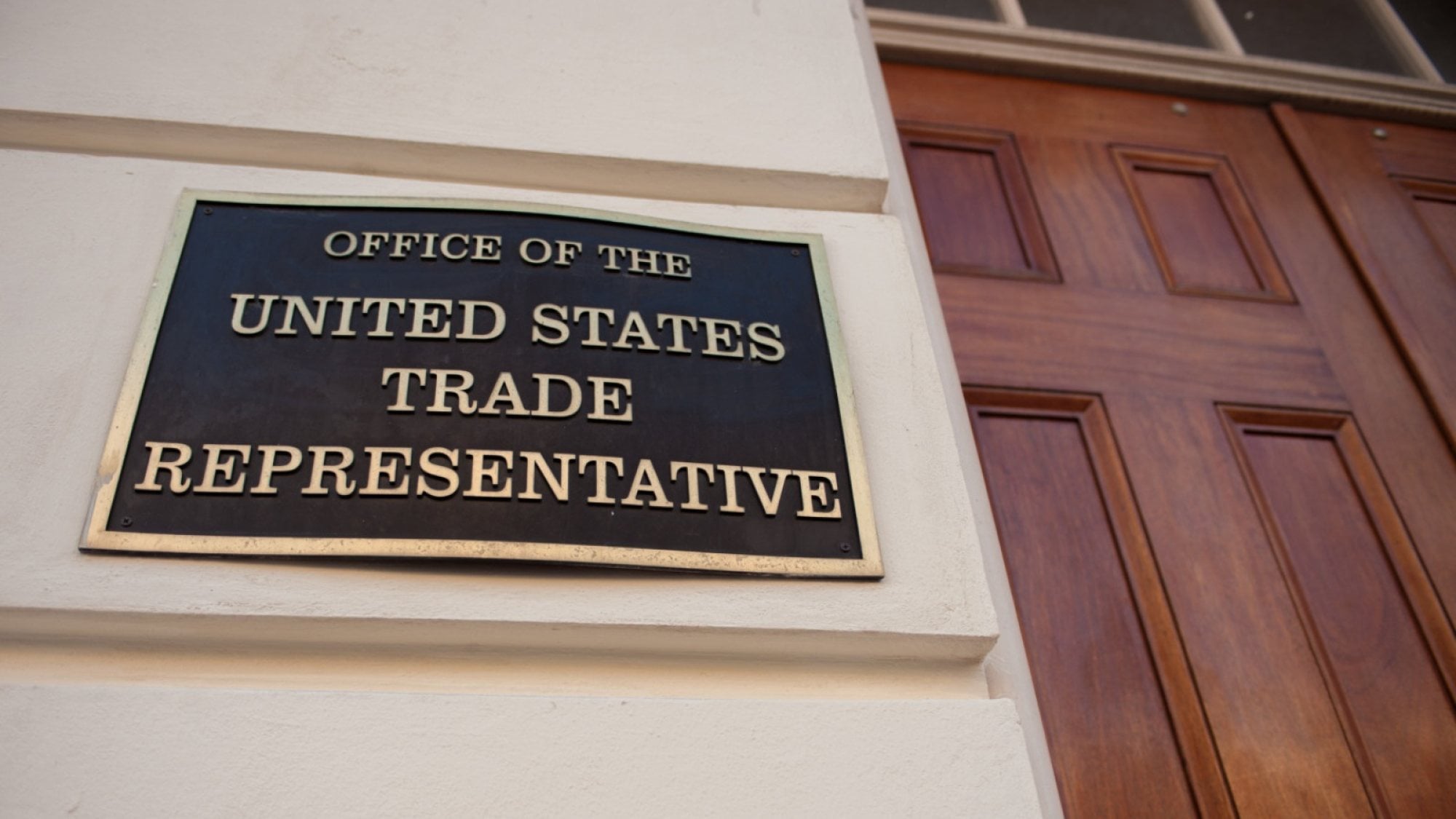
The US Trade Representative (USTR) launched on March 11 investigations under Section 301 of the Trade Act of 1974 into structural excess capacity among 16 trading partners, including China, India, Japan, South Korea, Mexico, the European Union and several Southeast Asian countries.
Tuesday’s hearing comes less than two weeks before Trump’s planned visit to China, where trade disputes are expected to feature prominently in talks with Xi. If the investigation finds unfair trade practices, defined as “unreasonable acts”, it could give the White House a legal basis to impose new tariffs on China and other major trading partners.
Zang, who is also a senior lecturer in international trade law at New Zealand’s Victoria University of Wellington, was speaking on behalf of the CCOIC, which operates under China’s Ministry of Commerce as the trade promotion arm of the state-supervised China Council for the Promotion of International Trade.
“Excess capacity is an economic condition, not a government conduct,” Zang said. “We urge the investigation to accurately identify government conduct with specificity, not merely point to aggregate economic outcomes.”
If Washington genuinely intended to “address the trade concern of excess capacity”, she added, it should “resort to the established mechanism” referring to anti-dumping and countervailing duty proceedings and the World Trade Organization (WTO) dispute settlement mechanism.
“We respectfully request to terminate this investigation,” Zang urged in concluding her testimony.
Joining the call to end the probe was Seungheon Lee, commercial counsellor at the South Korean Embassy in Washington.
“This overcapacity investigation against Korea is neither appropriate nor necessary,” Lee told officials from multiple US government departments during the hearing.
Tuesday’s session was the first hearing held by the USTR regarding its investigations into overcapacity.
Section 301 of the Trade Act of 1974 is used to address trade practices deemed unfair, giving the USTR authority to impose tariffs or other retaliatory measures. Before Trump’s “Liberation Day” tariffs on April 2 last year, Section 301 was the primary tool the US used in its trade tensions with China.
The Trump administration has framed that excess capacity in foreign economies is a key driver of US trade deficits that creates unfair trade.
But that link came under challenge at Tuesday’s hearing.
“The US tariffs have succeeded primarily in pushing the burden of China’s excess capacity to other markets,” said Emily Kilcrease, a senior fellow at the Centre for a New American Security and a former deputy assistant US Trade Representative.
“The US trade deficit with China in 2025 was the lowest recorded since China joined the WTO. At the same time, China’s trade surplus with the world hit record highs.
“A coordinated approach with US partners is the path forward,” Kilcrease added, urging the administration to negotiate plurilateral agreements with allies.
“The main goal of plurilateral agreements in strategic sectors should be to align policies that can build demand for critical goods not produced in China, including policies related to government procurement, supply chain security restrictions and tariffs,” Kilcrease said.
The announcement of the Section 301 investigations in March came weeks after the US Supreme Court issued a ruling overturning the tariffs that Trump imposed last year.
The ruling reduced tariff rates on imported goods into the US and stripped the president of the power to raise tariffs almost at will.
Beijing has expressed its opposition to the investigations and, in response, launched two trade barrier investigations against the US in late March.
China’s Ministry of Commerce stated at the time that the investigation would focus on US measures deemed to have caused harm to global industries and supply chains, including those that hinder trade in green products.
At Tuesday’s hearing, representatives from sectors including seeds, soybeans, and steel and aluminium opposed additional tariffs, citing the damage trade disputes have inflicted on US agriculture and industry.
By contrast, sugar industry groups and plastics producer Nan Ya Plastics voiced support for the new probe, citing subsidised imports and foreign overcapacity that have closed US plants.
Two labour advocates separately stated that China’s excess capacity is built on the sacrifice of workers’ rights and should therefore be subject to trade sanctions. -- SOUTH CHINA MORNING POST


