




SCMP (HONG KONG): For five decades, Chow Yun-fat has been two people.
There is the global superstar: the impossibly cool anti-hero of John Woo Yu-sum’s action classics such as The Killer (1989) and Hard Boiled (1992); the stoic, high-flying warrior of Ang Lee’s Crouching Tiger, Hidden Dragon (2000); and one of the highest-paid actors in Chinese-language cinema.
And then there is the man Hongkongers simply call “Fat Gor” (Big Brother Fat), the down-to-earth celebrity spotted running marathons, riding the MTR and buses, eating in traditional Hong Kong-style cha chaan teng cafes, and cheerfully taking mobile phone selfies – with his own left hand – with anyone who asks for one.
This humility, a defining feature of his public persona, is rooted in a past far removed from the glamour of Hollywood or the neon-lit streets of his films.
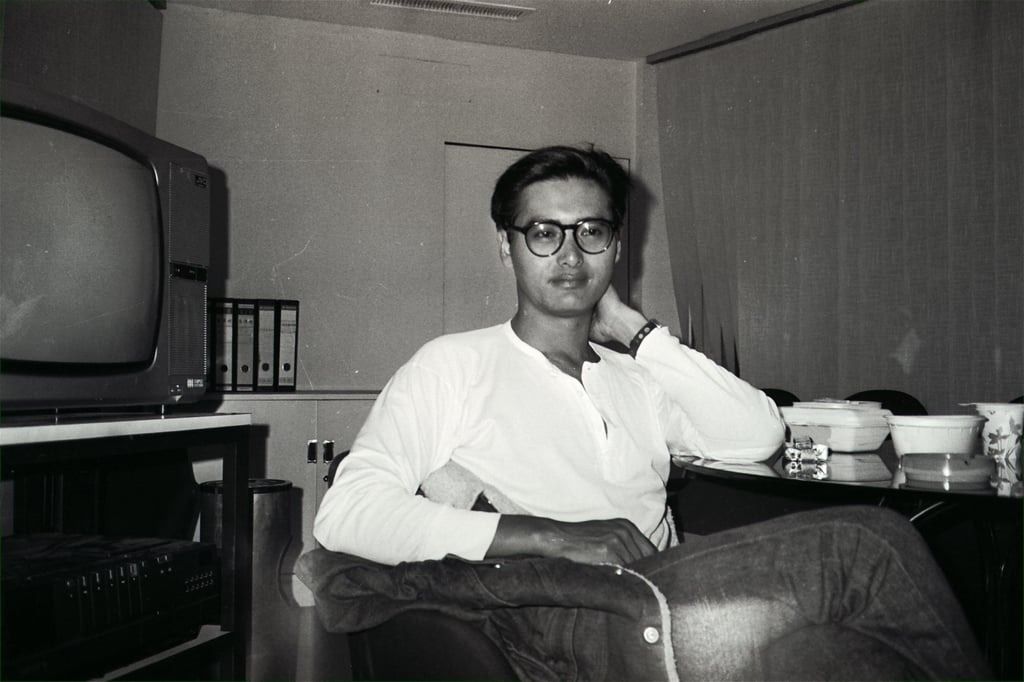
Chow grew up in a farming community on Hong Kong’s Lamma Island and dropped out of school at 17 to help support his family. He worked a series of odd jobs, from bellboy and factory hand to taxi driver and postman.
It was only in 1973, after joining the artist training programme at Hong Kong broadcaster TVB, that his path turned towards the limelight. Following a series of small roles in soap operas, he gained recognition in TVB series such as The Killer and Hotel (both 1976), and began to try his hand at film with minor roles.
However, his first exposure to performance was not film or TV, but the dreamlike Cantonese opera performed by oil lamplight on his native Lamma Island.
In a 2012 interview with film journalist Edmund Lee, now the Post’s film editor, Chow recalled that his cinematic education only began after he moved to the city, where, as a self-described “country bumpkin”, he would sneak into discount screenings of Hollywood blockbusters such as 633 Squadron.
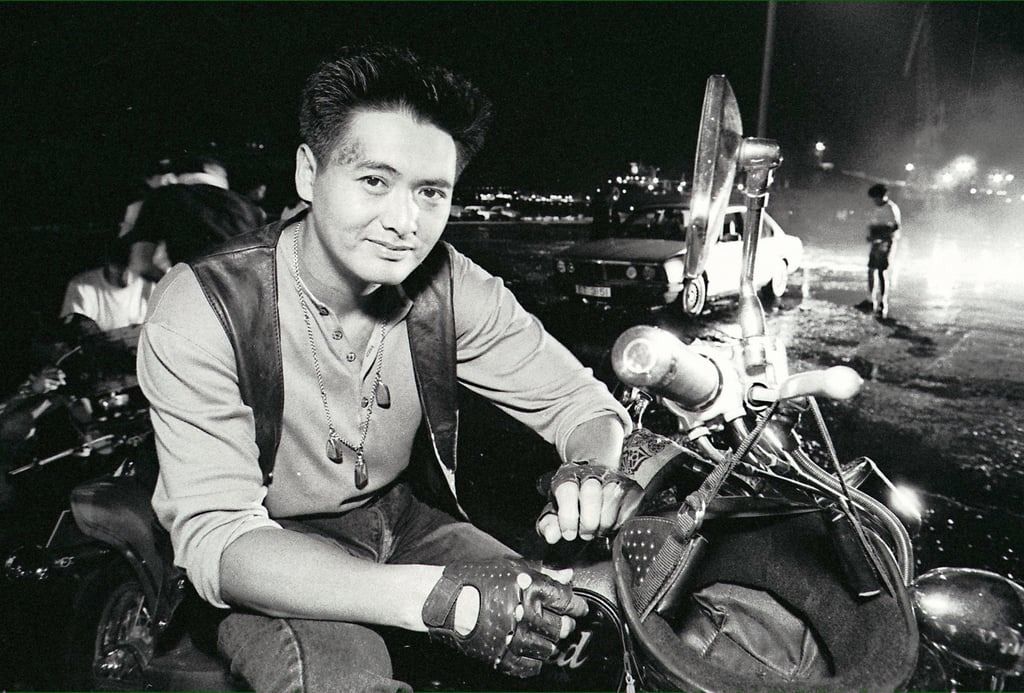
Later, as a TVB trainee in the 1970s, he delved into Hong Kong’s own cinematic heritage, watching Shaw Brothers classics such as Killer Clans and Blood Brothers while working as an extra.
Ironically, his ascent to stardom marked the end of his filmgoing; it was the beginning of the golden age of television in Hong Kong, and Chow took every acting opportunity he could get.
“TV’s exciting, but it’s hard,” he told the Post in 1982. “Sometimes we’ll go three or four days without sleep, filming or recording all the time to keep up the production schedule. At times, shooting ends at midnight. You just get time to grab a couple of hours’ sleep.”
Chow’s big television break came in 1979, when he starred in Wong Jing’s The Good, the Bad and the Ugly. The following year, he played the lead role in The Bund, a now classic series set in Shanghai’s 1930s gangster world that became widely loved in East Asia.
His transition to film in the early 1980s was a gamble on less commercial productions. While Ann Hui On-wah’s Love in a Fallen City (1984), adapted from Eileen Chang’s novel of the same name, was a success, other projects failed, briefly earning Chow the label of “box-office poison”.
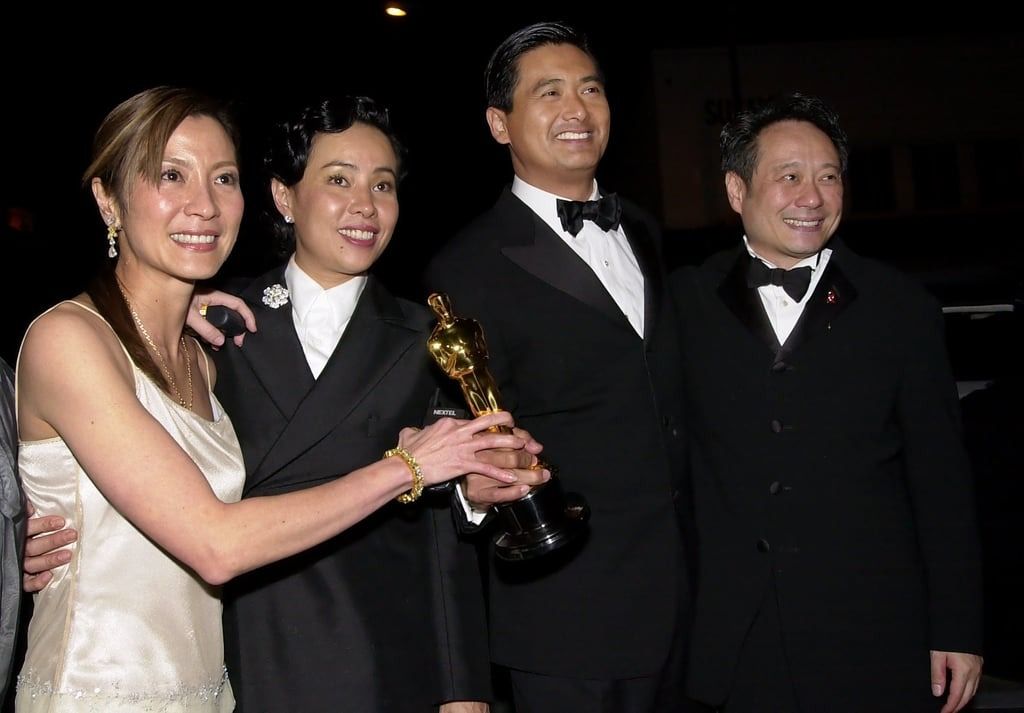
The latter half of the decade marked his ascent to superstardom, capped by an extraordinary run of best actor awards.
He won his first Hong Kong Film Award for John Woo’s A Better Tomorrow (1986), in which he left an indelible mark on the viewers as the honourable gangster Mark Gor.
He followed it with further wins for Ringo Lam Ling-tung’s City on Fire (1987) and Johnnie To Kei-fung’s All About Ah-long (1989), and took home the top acting prize at Taiwan’s Golden Horse Awards for World War II drama Hong Kong 1941 (1984) and the New York-set An Autumn’s Tale (1987).
Wong Jing’s 1989 crowd-pleaser God of Gamblers, the first smash hit of the Hong Kong gambling comedy genre, solidified his regular tough guy persona and earned him another of his 15 career best actor nominations at the Hong Kong Film Awards – the latest being for Project Gutenberg (2018).
In the meantime, the veteran actor became gradually disillusioned with the Hong Kong film industry, citing local filmmakers’ tendency to “forsake quality for quantity”, which he found to be “a disheartening phenomenon”.
In a 1993 interview with the Post, Chow said: “I am not happy with the Hong Kong market. Before, I was like an acting machine. I can’t believe it. I’ve made more than 900 episodes for the television stations. That’s a lot.”
In 1991, Chow began planning a move to Hollywood, eventually relocating to Los Angeles in 1993 to take English lessons and prepare for the Western market. Reportedly, some of the US producers he worked with had plans to turn him into “a Chinese James Bond”.
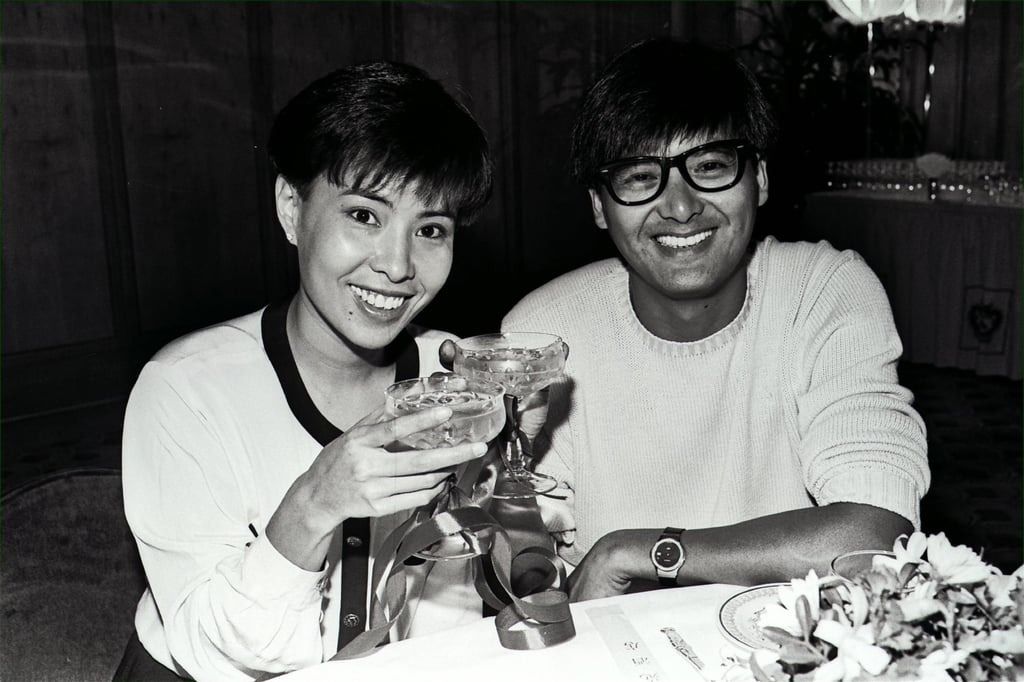
“To have had the chance to try out Hollywood already makes me very happy. We’ll analyse the results later,” he said in 1998, ahead of the release of his United States debut, Antoine Fuqua’s The Replacement Killers.
Working in Hollywood meant “a bigger budget”, he added, but he also appreciated the flexibility in Hong Kong and considered it “a blessing” to “try both methods of working”.
Chow’s initial foray into Hollywood proved challenging; The Replacement Killers (1998), The Corruptor (1999) and Anna and the King (1999) all underperformed at the box office, as did 2003’s Bulletproof Monk, though the action-comedy later developed a cult following.
His global breakthrough finally came with Crouching Tiger, Hidden Dragon, which won best foreign language film at the Academy Awards and became an international martial arts classic.
After he relocated back to Hong Kong in 2003, Chow’s notable roles included the lead in Zhang Yimou’s wuxia epic Curse of the Golden Flower (2006), which also became another crowd favourite, and the part of a Singaporean villain in the Hollywood blockbuster Pirates of the Caribbean: At World’s End (2007).

All of his Hong Kong and Hollywood fame aside, Chow has maintained a low-key personal life.
After divorcing his first wife, Hong Kong actress Candice Yu On-on, to whom he was married for only nine months, he remarried a Singaporean, Jasmine Tan Hui-lian, in 1986. The pair have shared a serene lifestyle since.
Describing their day-to-day life, Chow said: “It’s a very simple life. We wake up, read the papers and go to the market in Kowloon City to buy food. Then I will potter around the house and see what needs to be fixed … water the plants, trim the trees and then watch a little television.”
In recent years, Chow has embraced his off-screen roles with equal passion.
Photography has become one of his most significant hobbies. He started taking photos because “making movies brought me to different places”, he told the Post at his solo photography exhibition, “Hong Kong Morning”, in 2024.
He added that he often woke up at 5am to capture the quiet streets before Hong Kong’s hustle and bustle emerged, and after five decades as an actor, with over 100 titles in his filmography, he was “happy to play the role of a photographer”.
An avid runner, Chow also completed the Standard Chartered Hong Kong Marathon in February in under two and a half hours. Now, at age 70, he said his goal for next year was to shorten his personal record by 10 minutes. -- SOUTH CHINA MORNING POST


