The scheduled summit next week between US President Donald Trump and Chinese President Xi Jinping will almost certainly include proclamations about cooperation, friendship and respect between the leaders of the world’s two largest economies, but beneath the surface, major trade conflict is building, said trade experts on Wednesday.
In the past, a weaker China was forced to grit its teeth and grudgingly accept US tariffs, export restrictions and other restrictions, but Beijing has quietly and methodically amassed increasingly effective tools it believes will counter what it sees as Washington’s heavy-handed behaviour.
“It kind of looks calm, like OK, maybe the summit could cement this agreement, and everything will be fine. But actually, underneath the surface here, we see a lot of pressure brewing,” said Marcus Noland, executive vice-president with the Peterson Institute of International Economics (PIIE).
“It’s a very dangerous game of chicken that we’re getting into here.”
Semiconductors are a prime example of the high-stakes face-off, analysts said. Over the past decade, starting with Huawei and ZTE, the US built an entity list that would eventually include over 1,000 Chinese companies, which were forbidden from buying advanced chips or semiconductor manufacturing equipment.
Trump stopped updating these, banned Nvidia’s H20 chip, then, a few months later, unbanned the H20 and subsequently allowed the much more advanced H200 chip. The administration sought to counter this by imposing restrictions on the subsidiaries of entity-list companies, but China retaliated.
“The US would put export controls on, and China would respond with nothing. But that really began to change,” said Noland.
“Every time we talk to Chinese interlocutors, they say we have found our counter weapon,” added Noland, a former member of the US Council of Economic Advisers.
“And so we think that now the US will not dare to increase its controls. And that is what we’ve actually seen, that China seems to have got the US into a stalemate.”
Fuelling China’s growing confidence has been its grip over rare earths, leading to the ratcheting up of its own export controls and Chinese anti-sanction regulations that penalise any company that follows US sanctions.
“Trump came into office last year with the sense that he was going to reduce Chinese influence and force them to acknowledge his power over them,” said Jake Werner, Quincy Institute’s East Asia programme director.
“He discovered that he could not do that, because the Chinese were able to fight back effectively with the embargo on rare earth elements.
“What Trump basically decided was, ‘OK, I’m going to deal with them from a position of certainty, of respect for their power, and more or less treating them as a peer competitor.’”
While the May 14-15 summit in the Chinese capital will seek to project harmony, the gloves are increasingly off, analysts said.
“The trade war may be downplayed in Beijing, but the conflict is coming to new fronts,” said Mary Lovely, a PIIE fellow. “Stay tuned.”
As trade and tariff wars have intensified between the two giants, the focus has shifted to connector countries as more trade is increasingly routed through Vietnam, Mexico and Malaysia.
Some of these shipments are classic transshipments in which Chinese goods travel to a third country, where a “made in Vietnam” or “made in Mexico” label is slapped on, and then head to the US.
But that often misses genuine change in these connector countries, analysts said, which have worked in recent decades to educate their people, encourage foreign investment, sign new trade agreements and improve their infrastructure, allowing them to become stronger exporters in their own right.
A pathway proposed by the Trump administration has been a vaguely defined Board of Trade championed by US Trade Representative Jamieson Greer that will attempt to manage the flow of sensitive goods between the two giants.
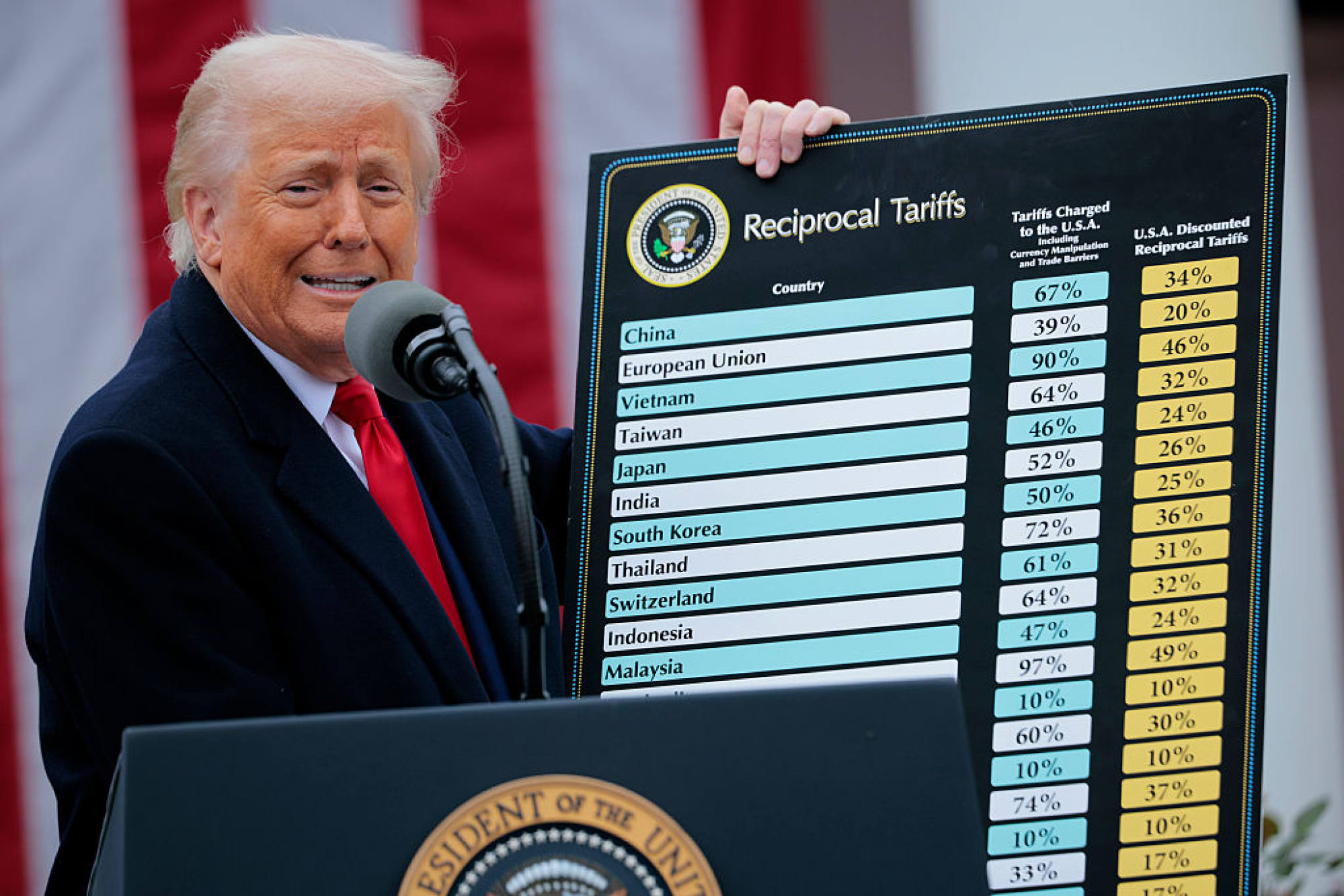
In addition to market distortions created by managed trade, other problems with this model include how to define “sensitive”, what incentive China has to import US products and how it might compare to the failed phase one and phase two agreements hammered out in 2020 during the first Trump administration.
“How do you get this to work better than the first one?” said Chad Bown, a PIIE fellow.
“Part of the problem with the first one is that China kept all the tariffs in place, so the private sector in China didn’t get the signals that it should resume ties with American companies.”
The record is not very good when attempts are made to manage trade flows from the top, analysts said.
While Trump touted the resumption of US soy purchases after he met with Xi last October in South Korea, these have not returned to pre-trade war levels, a similar picture seen with cotton, beef, pork and other US exports, said Bown.
“We look forward to the summit next week and think there will be a large number of topics discussed,” including the war in the Middle East, Taiwan, export controls and Chinese-mandated purchases of soy and aircraft.
“But I expect the big issues will be kicked down the road again,” said Lovely. -- SOUTH CHINA MORNING POST