The revival of Chinese hanfu, or traditional dress of the Han people, in recent years has drawn attention to the complicated etiquette surrounding buttons.
As the Xinzhongshi, or neo-Chinese style clothing, took over the market in recent years, some people complained online that they had bought clothes that would bring bad luck.
The telltale sign was the number of buttons on a garment.
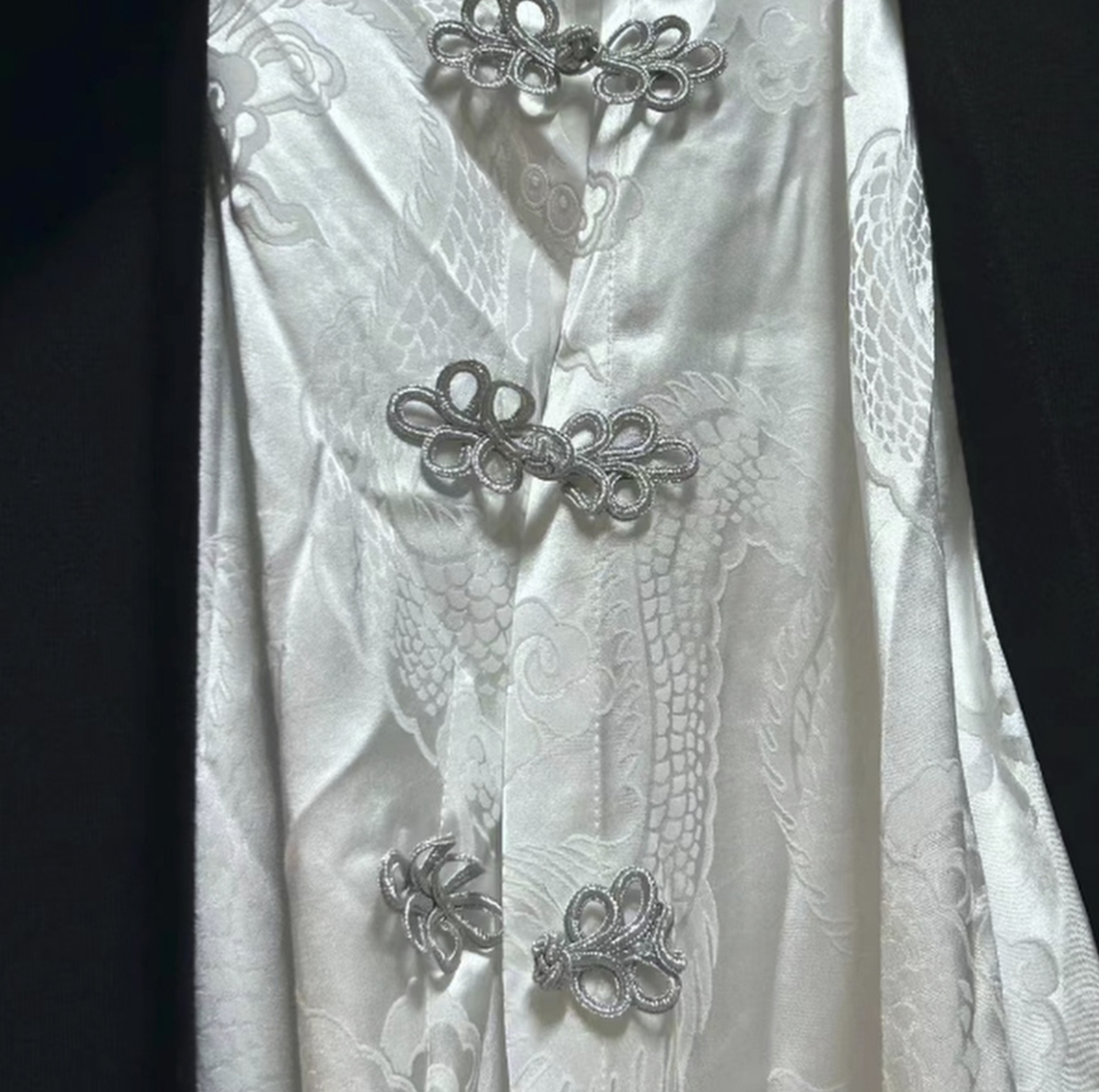
In some Chinese regions, a folk belief existed which held that if the number of buttons is four or six, this would hinder the wearers’ career success because of the old saying “four or six, neither one thing nor the other”.
As the number of buttons on a garment is usually limited, the belief was also passed down that an even number of buttons would bring bad fortune.
There are also theories that odd numbers of buttons are for the living and even number is for the dead.
However, it is also thought that a shroud should have no buttons at all, as the Chinese character for button, kou, also means “hold back” and the dead’s offspring fear to be “held back” by their ancestors.

In some regions, it was believed that men should not wear three buttons and women should not wear four.
Some would remove one button to save the clothes.
Apart from the number of buttons, there is also the belief that coats which button on the left side are for the dead.
This is because of the traditional Chinese belief that left is the sky, the sun, the higher and right is the earth, the shade and the lower.
Buttoning on the left side places the garment’s right piece on top of the left piece, thus believed to be the shade suppressing the sun.
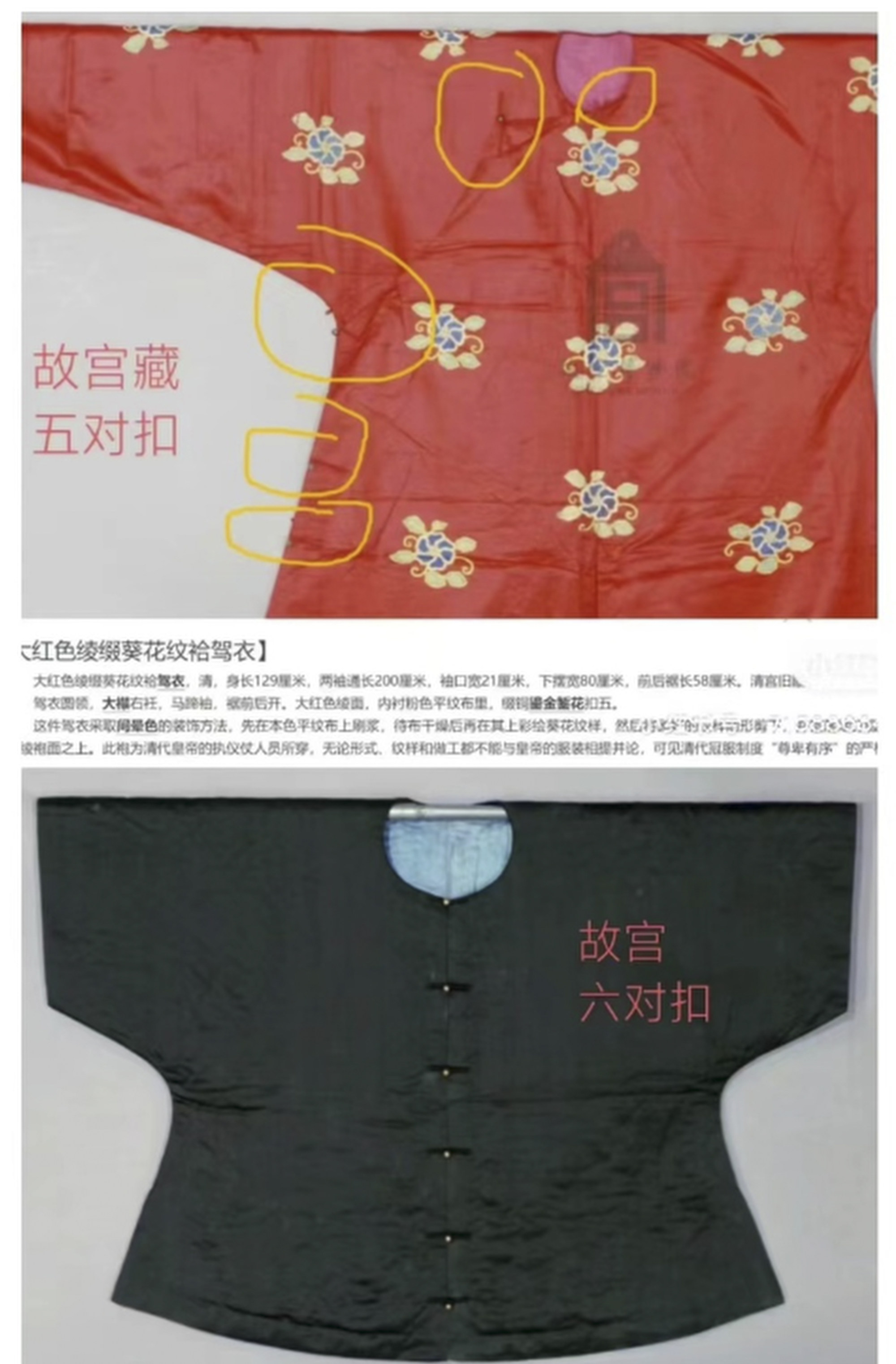
According to researcher at the Shanghai Art & Design Academy, Fang Yun, modern round buttons did not appear on Chinese clothes until at least the Yuan dynasty (1271–1368).
Before that, hanfu, or Chinese Han people’s clothing, mainly used ropes or ribbons to tie the garments. This reflected their belief in natural harmony and the creation of ethereal beauty.
Fang said that the rules on buttons varied in different time periods and regions.
For example, in Shanghai during the Republic of China period (1912–1949), the number of buttons denoted social rank.

According to Wang Xuegen, an expert in homespun fabric weaving and tailoring in the old Shanghai, five buttons were worn by ordinary people, seven by hooligans, six and 11 for people practising kung fu and 13 for kung fu masters.
Wang said if ordinary people wore eleven buttons, they would take a beating for nothing.
There is also a superstition that people cannot mend a button when the garment is being worn.
If one insists on doing so, then the person wearing the clothes should hold a straw in their mouth, otherwise the two would become enemies. -- SOUTH CHINA MORNING POST