




Xiaomi unveiled a series of new products on Sept 7 – from a flagship foldable phone featuring proprietary chips to new models of its premium Skynomad SUV – underscoring the Chinese giant’s intensified push to compete against rivals including Tesla, Apple and Huawei Technologies.
Beijing-based Xiaomi launched the 18 Fold, a foldable phone featuring a 7.58-inch inner display, a proprietary Xring O3 system-on-chip (SoC), and LPDDR6 memory chips from ChangXin Memory Technologies (CXMT), said Lei Jun, founder and CEO, at an event held in Beijing.
Lei said the 18 Fold was built for durability with a new hinge structure to protect the inner display, a high-strength aluminium frame and strengthened cover glass.
He also touted the phone’s performance gain thanks to the adoption of its Xring O3, an AI processor packed with 24 billion transistors, a 26% increase from its predecessor Xring O1 launched last year.
Lei said the Xring O3’s CPU performance was 60% higher than that of O1, while power consumption in certain tasks was reduced by 25%.
The Xiaomi 18 Fold will sell from 10,999 yuan (US$1,639/RM6,668), with sales kicking off at 10am on Sept 10.
While acknowledging challenges it faces in its chip push, Lei said that Xiaomi had a long-term plan for making its proprietary chips, with a total of 50bil yuan (RM30.13bil) earmarked for the initiative.
The company’s overall research and development was also growing, with 105.5bil yuan (RM63.84bil) invested in the past five years and a plan to invest a further 200bil yuan (RM120.5bil) over the next five years, Lei said.
The 18 Fold’s launch comes amid an unusually busy week for foldable smartphones, as global major smartphone vendors double down on the growing segment.
Huawei earlier on Sept 7 unveiled the Mate XT 2, its latest trifold handset powered by its in-house developed Kirin 9050 Pro SoC, the first to feature the company’s new LogicFolding architecture. The model sells from 19,999 yuan (RM12,102).
Richard Yu Chengdong, chairman of Huawei’s Consumer Business Group, said at the unveiling that Huawei’s trifold series had sold more than 1 million units globally.
US tech giant Apple is scheduled to hold its annual product event on Sept 9 in California, where it is expected to introduce its first foldable iPhone, reportedly to be called the iPhone Ultra.
The Apple device could sell from US$2,099 (RM8,539) to US$2,299 (RM9,353), according to estimates by market researcher TrendForce.
The intensified competition comes as the overall smartphone market faces a difficult year.
A global shortage of memory chips has driven up component costs, forcing manufacturers to raise prices, trim lower-end product lines or absorb pressure on margins. The squeeze has been particularly acute for budget phones, as price-sensitive consumers delay upgrades or turn to refurbished devices.
Market research firm Counterpoint said in February that global smartphone shipments would decline 12.4% this year, making it the market’s sharpest annual contraction on record.
Foldables are a rare bright spot. Counterpoint said in a research note on Sept 7 that the global foldable segment would hit over 100 million cumulative shipments by the end of the year, a milestone since the category first emerged in 2019.
Apple’s market entry and releases from vendors including Samsung and Huawei would further boost demand for foldables, it said, adding that global shipments were poised to rise 37% year on year in 2027, with the next 100 million foldables shipping within the next three years.
“Foldables are still a very small part of the overall smartphone market, so there is room for the category to grow well beyond current volumes,” said Tarun Pathak, a research director at Counterpoint, in the note.
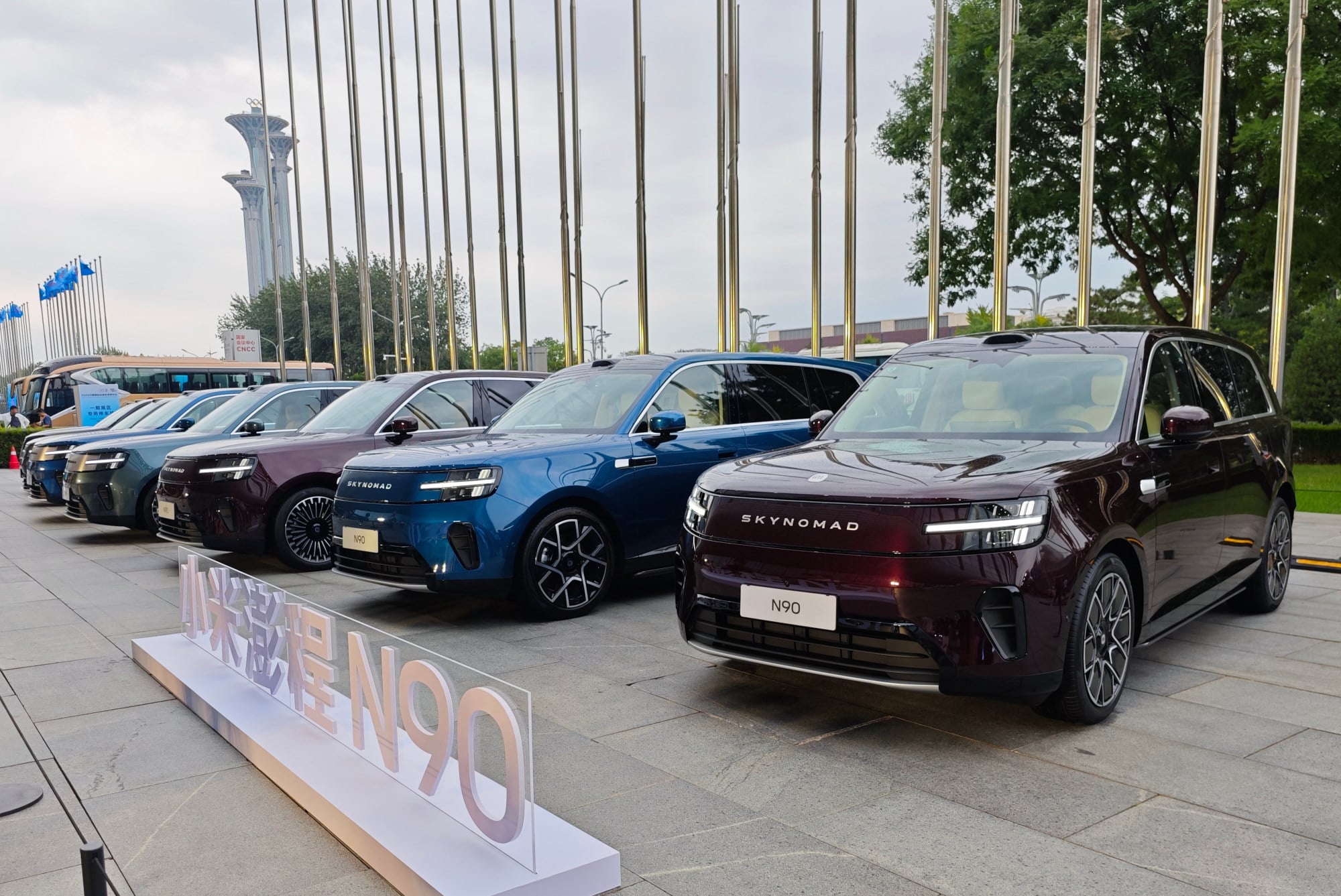
Xiaomi also unveiled various models for its new extended-range Skynomad SUV series, which the company first made public in late July.
Extended-range vehicles can travel more than 1,000km on a single charge, using a small petrol engine to recharge the battery rather than drive the wheels.
Xiaomi has priced its Skynomad models at a discount to US carmaker Tesla’s Model Y L SUV, which starts at 339,000 yuan (RM205.149).
The five-seat N70 Pro under the Skynomad series would sell from 209,900 yuan (RM126,466), while the seven-seat N90 Max would start at 269,900 yuan (RM162,616), Lei said at the event.
Among the other products unveiled on Sept 7 was the Xiaomi Pad 9 Pro Max tablet, which also uses the Xring O3 chip and starts at 4,799 yuan (RM2,891). – South China Morning Post


