FIFTY isn’t just a number for many men – it heralds an age of heightened awareness about health and wellbeing, especially one aspect that almost always goes unnoticed in the prime years: the prostate.
The prostate is a small gland located below the bladder, in front of the rectum.
It surrounds part of the urethra, the tube that carries urine out of the body, and produces fluid that nourishes sperm and forms part of semen.
In younger men, the prostate is often described as being about the size of a walnut (about 20 grams).
Hospital Picaso consultant urologist Dr Fam Xeng Inn emphasises that unlike many other organs, the prostate tends to enlarge with age.
And because of its position around the urethra, this growth can interfere with the flow of urine.
“This growth is a physiological change that occurs naturally. There’s nothing wrong or abnormal about it,” he explains. “However, for some men, this enlargement may lead to problems.”
After the age of 50, the prostate gland may be affected by two main conditions: benign prostatic hypertrophy (BPH) and prostate cancer.
A ‘normal’ enlargement
One of the most common prostate conditions is BPH, a non-cancerous enlargement of the prostate.
It becomes increasingly common as men age, particularly relevant after 50. However, not all men with an enlarged prostate experience significant or troublesome symptoms.
“Men who do experience symptoms could have difficulty starting urination, a weak or interrupted stream, hesitancy or straining, dribbling after urination, a sensation that the bladder has not emptied completely, increased frequency and a sudden urge to urinate,” says Dr Fam.
Waking repeatedly at night to use the toilet, known as nocturia, is another common complaint.
Not every enlarged prostate requires active treatment. Men with mild symptoms may simply be monitored, particularly if their quality of life is not significantly affected.
According to Dr Fam, when symptoms are more troublesome, medications can help relax the prostate and bladder outlet or help reduce the size of the prostate.
Such medications include alpha blockers, PDE5 inhibitors and 5-alpha reductase inhibitors.
For men who do not respond adequately to medication, or who develop complications such as bladder stones, bleeding from the prostate, frequent urinary tract infections, or renal function deterioration, surgical treatments are available.
The most established treatment is a transurethral resection of the prostate using bipolar electrical loop (bipolar TURP).
![Dr Fam says, “Men with a family history may need this [prostate] conversation earlier, at 45 years.”](https://apicms.thestar.com.my/uploads/images/2026/09/06/4095162.jpg)
He says that besides bipolar TURP, there are other minimally invasive options (HoLEP, laser, water-vapour therapy), which are advised depending on the individual patient.
The important message is that men do not have to quietly tolerate years of disrupted sleep, urgency or difficulty urinating simply because they are getting older.
Beware prostate cancer
The condition that causes the greatest anxiety is prostate cancer. The risk increases with age, and family history is important.
Dr Fam says that a man with a family history of prostate cancer faces a much higher risk of the disease.
Interestingly, he reveals that some research has suggested that more frequent ejaculation may be associated with a lower risk of prostate cancer.
A crucial point about this cancer is that early prostate cancer may not lead to symptoms. This is why waiting for urinary problems before thinking about prostate cancer can be risky.
In fact, urinary symptoms in older men are frequently caused by benign enlargement rather than early cancer.
The prostate-specific antigen, or PSA, is a blood test that measures a protein produced by prostate cells.
Dr Fam says that a raised PSA level can be associated with prostate cancer, but it is not a cancer diagnosis.
PSA may also rise because of BPH, prostatitis and other factors. Hence, it is important to stress that a raised PSA does not automatically mean cancer.
Depending on the circumstances of a raised PSA test, he notes that a doctor may decide to examine the prostate further for any suspicious lesion with an MRI.
If the MRI confirms a suspicious lesion, then a biopsy is required.
“This is carried out through a transperineal biopsy, where a needle is passed through the skin between the scrotum and anus (the perineum) to collect small tissue samples from the prostate, under ultrasound guidance.
“Compared with the older transrectal biopsy, where the needle passes through the rectal wall, the transperineal approach has a lower risk of serious infection and sepsis because the needle does not pass through the bowel,” explains Dr Fam.
For many average-risk men, the 50s is an appropriate time to discuss the potential benefits and limitations of prostate cancer screening with a doctor.
“Men with a family history may need this conversation earlier, at 45 years,” he advises.
Not all prostate cancers require immediate treatment
Men should also understand that some prostate cancer tumours grow very slowly, while others are aggressive and can spread rapidly.
This wide variation is one reason screening and treatment decisions require careful discussion.
Dr Fam says that the biopsy tissue is sent for histopathological examination to confirm the diagnosis and assess the cancer’s aggressiveness (Gleason score).
The score traditionally ranges from six to 10 for prostate cancer in current clinical reporting.
For suitable men with low-risk, localised prostate cancer, active surveillance may be recommended instead of immediate surgery or radiotherapy.
“Active surveillance involves consistent monitoring, which include repeated PSA tests, clinical reviews, MRI scans and, when necessary, repeat biopsies”, he emphasises.
“If there are signs that the cancer is progressing, curative treatment can then be considered”.
Hence, for early-stage/localised prostate cancer, options may include active surveillance for low-risk disease, or curative treatment with surgery (robotic-assisted prostatectomy) or/and radiotherapy.
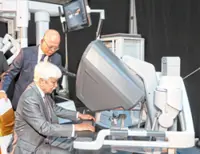
He says that robotic-assisted prostatectomy is a minimally invasive operation to remove the prostate gland.
The surgeon controls robotic instruments through small incisions, allowing precise movements and enhanced magnified vision. It generally offers less blood loss, smaller wounds and fast recovery.
In advanced or metastatic prostate cancer (disease spread assessed using PSMA PET scans), treatment may include androgen deprivation therapy (hormone therapy), chemotherapy (for suitable patients), or radioligand therapy, depending on the extent and biology of the cancer.
At this stage, the aim is to slow its progression, reduce symptoms and complications, prolong survival, and maintain quality of life for as long as possible.
In recent times, prostate cancer diagnosis and management has seen a shift towards risk-adapted, imaging-led and more personalised care.
MRI helps identify suspicious areas before biopsy; transperineal techniques allow safer and more targeted tissue sampling; and PSMA PET scans can detect the spread or recurrence of disease with greater sensitivity.
At the same time, men with low-risk cancers may be safely monitored through active surveillance, while those requiring treatment can increasingly receive therapy tailored to the stage and biological behaviour of their disease, with less complications and better outcomes.
It’s your wellbeing
Many men hesitate to seek help because they fear embarrassment or worry that prostate treatment will affect sexual function. That shouldn’t affect health-seeking behaviour.
Men should feel able to ask not only, “Will this treatment work?”, but also, “How might it affect my urination, erections, ejaculation and daily life?”
There is no diet, supplement or exercise programme that can prevent prostate disease.
“Men should also be very cautious about products marketed as ‘prostate support’ or natural cures,” warns Dr Fam. It is true though that the broader foundations of healthy ageing still matter.
Regular physical activity, maintaining a healthy weight, not smoking and eating a balanced diet support overall health and help reduce the burden of chronic disease.
For men entering their 50s, this is a good time to become more aware of urinary changes, understand personal risk factors and discuss prostate cancer screening with a doctor where appropriate.
Hospital Picaso, No 110, Jalan Professor Khoo Kay Kim, Seksyen 19, 46300 Petaling Jaya, Selangor Darul Ehsan
KKLIU: 3519 EXP 31.12.2028