




Miti ensures NIMP 2030 targets stay on track
MALAYSIA is on a decisive path towards industrial transformation, navigating an era defined by rapid technological disruption, shifting global supply chains and intensifying global competition.
For the nation to rise above these challenges, its industrial action plans must be bold, resilient and strategically future-ready.
This is precisely the ambition driving the New Industrial Master Plan 2030 (NIMP 2030). Much of the operational groundwork for this nationwide industrial upgrade rests with the Investment, Trade and Industry Ministry (Miti).
Miti deputy secretary-general (Industry) Datuk Hanafi Sakri views NIMP 2030 not merely as a policy, but as a national catalyst – one designed to uplift industries, empower small and medium enterprises (SMEs), advance the sustainability of Malaysia’s manufacturing landscape and elevate the country’s competitive standing on the world stage.
“NIMP 2030 is about building an industrial ecosystem that can adapt, innovate and thrive in a rapidly evolving world. Our goal is simple: to prepare Malaysia for the industries of tomorrow,” he emphasises.
Against this backdrop, NIMP 2030’s mission-oriented approach distinguishes itself through its clarity, strategic depth and steadfast commitment to inclusivity.
Track record
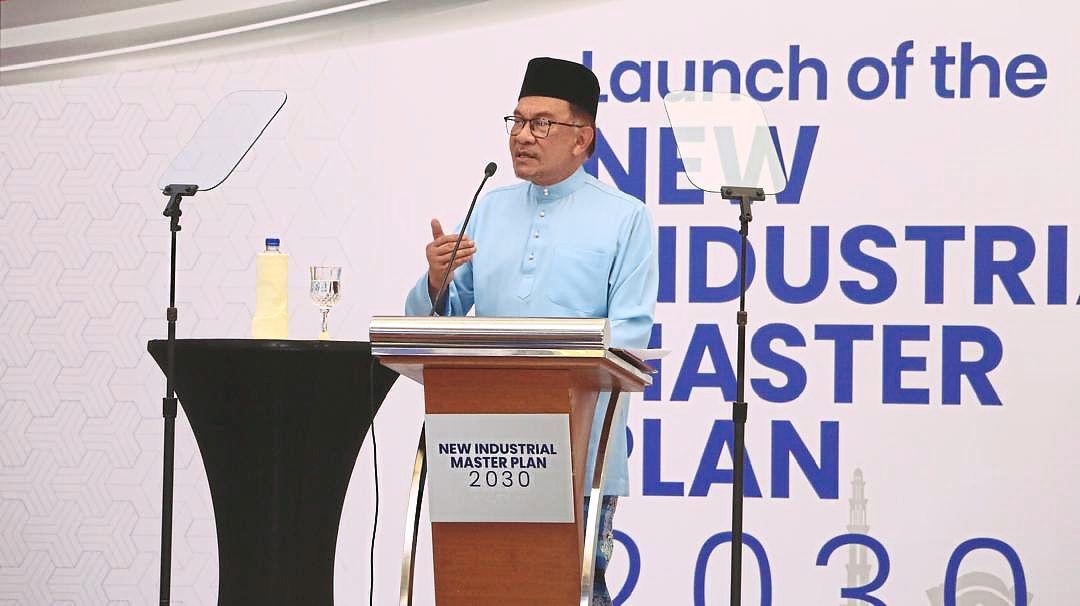
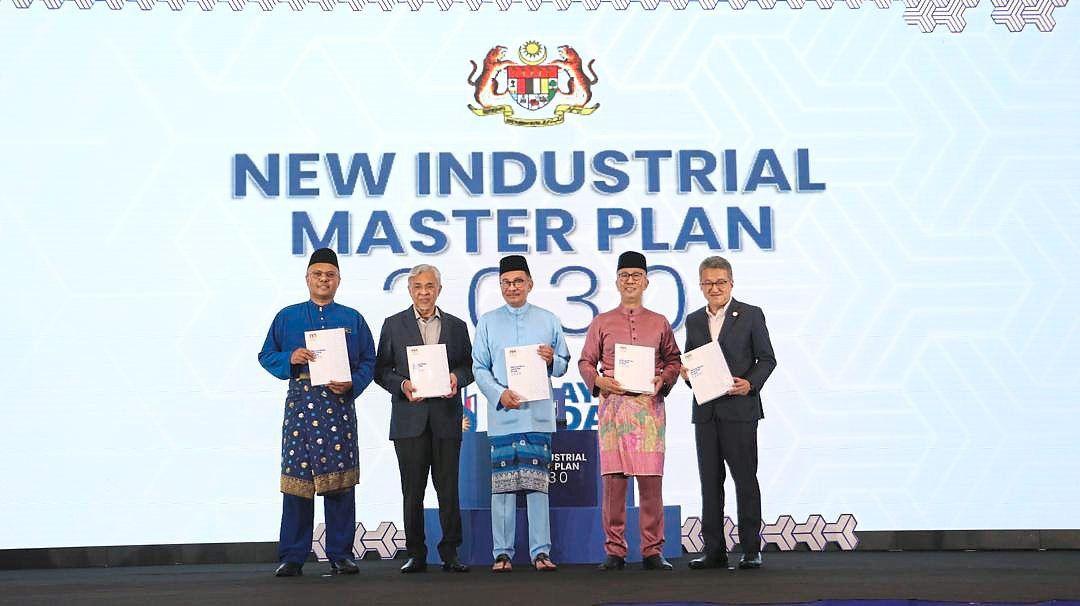
Now more than two years into implementation since its launch on Sept 1, 2023, by Prime Minister Datuk Seri Anwar Ibrahim, NIMP 2030 has shown strong early momentum towards its three main 2030 targets.
The government aims for the manufacturing sector’s value added to reach RM587.5bil, driven by high-impact sectors like electrical and electronics (E&E), pharmaceuticals and aerospace, alongside new growth areas such as electric vehicles (EV), renewable energy (RE) and advanced materials.
The plan also focuses on inclusive prosperity – targeting 3.3 million manufacturing jobs and raising the median salary to RM4,510 through high-skilled employment and productivity-led wage growth.
Based on monitoring data up to the second quarter of 2025, the government’s targets are on track.
The manufacturing sector’s value added (gross domestic product or GDP) increased by a robust 3.7% (an additional RM3.5bil) to reach RM96.9bil.
This growth is mirrored by the workforce expansion, with employment rising by 0.9% (an additional 27,000 people) to 2.83 million.
Crucially, the median salary has seen a 5.4% increase from RM2,360 in 2023 to RM2,490 in 2024, aligning wage growth with rising productivity and the demand for higher-skilled jobs.
Flagship projects and initiatives under the plan are also showing significant progress.
The Smart Tech-Up and Recognition Programme continues to accelerate industrial digitalisation, with 42 companies recognised as “smart factories” as of February 2026.
Furthermore, key Mission-Based Projects are transitioning successfully from planning to execution: Perodua’s EV development is 100% completed with the launch of the Perodua Q-EV on Dec 1, 2025.
The National Carbon Capture (NCC) Pilot Project, a cornerstone for the Carbon Capture, Utilisation and Storage (CCUS) growth sector, is currently advancing through its Front-End Loading (FEL) 2 engineering study phase.
Major challenges
To ensure this momentum is sustainable, NIMP 2030 must overcome two significant challenges: industry readiness and the shortage of high-skilled technical talent.
The primary obstacle lies in the slow pace of digitalisation among SMEs, which are constrained by the high costs of investing in automation and new technology, uncertainty over long-term returns and a continued reliance on traditional financing models.
To address this financing gap, Miti launched the NIMP Strategic Co-Investment Fund (CoSIF) with an allocation of RM131.5mil in February 2025.
CoSIF is designed to co-invest with the private sector into high-impact projects, facilitating capital access for SMEs and mid-tier companies (MTCs).
As of October 2025, six fundraising campaigns have been completed and 40 new campaigns have been identified with a target total fundraising amount of RM160mil.
“However, even with financial support, the industrial transformation requires skilled technical ‘superheroes’.
“The transition to automation, digitalisation and Artificial Intelligence (AI) demands workers with specific skills in data science, automation, advanced engineering and AI – an area where the current talent supply is still insufficient to meet industry demand.
“We need more talent ready to deal with modern technology,” Hanafi says.
He explains that the urgent need to reskill and upskill existing workers is central to achieving NIMP 2030’s aspirations.
“This is the reason Miti is actively promoting careers in the industrial sector among the younger generation and helping companies adopt modern manufacturing technologies.
“We want this sector to become more attractive for highly skilled young talent.”
Future-proofing smart factories
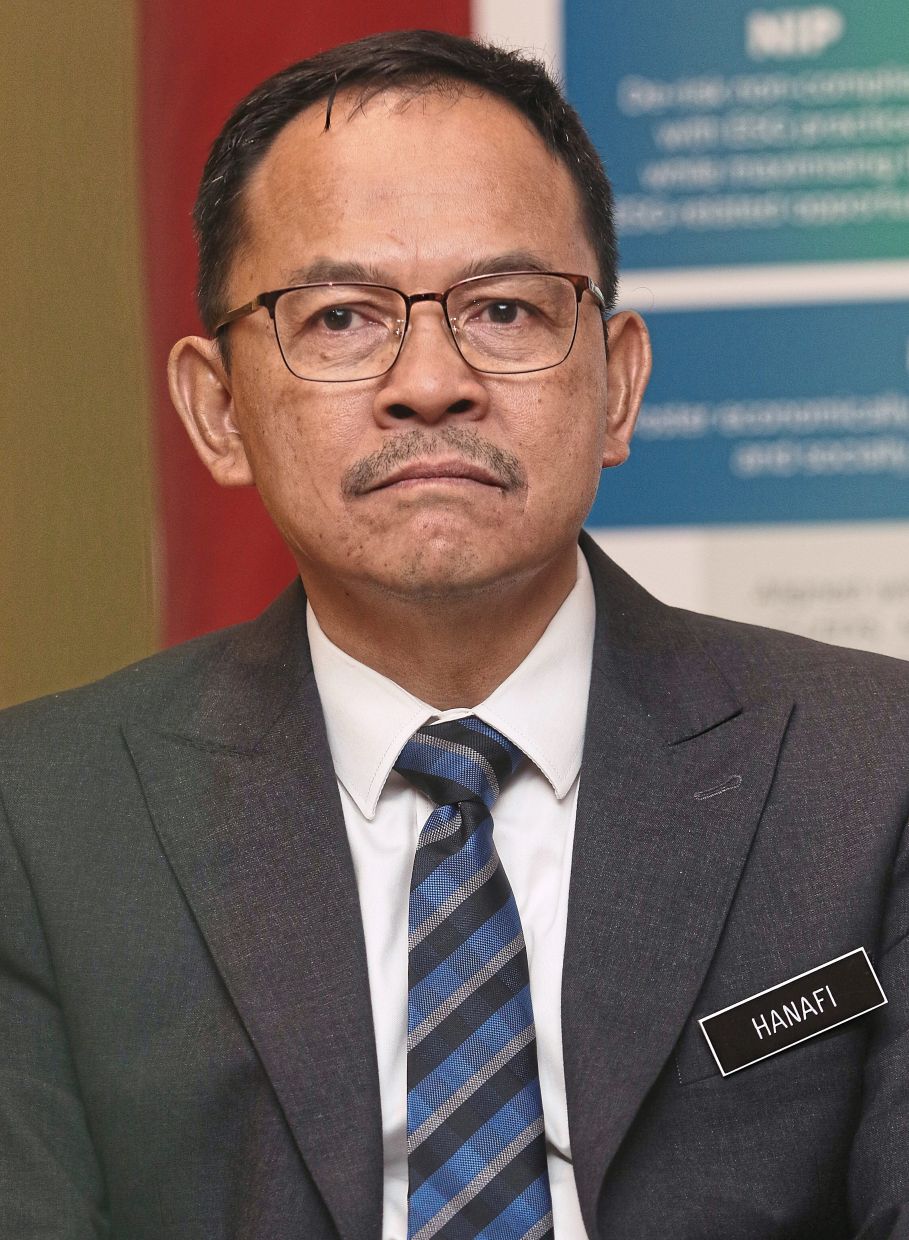
Hanafi highlights this as a national priority, noting that Malaysia cannot afford smart factories that are technologically stagnant.
Instead, they must be designed for evolution, capable of upgrading seamlessly as new technologies emerge.
To guide this, Miti outlines several core principles.
> Modular and scalable technologies: Smart factories are encouraged to use technology that is modular and easily scalable systems.
This allows factories to integrate new automation tools, upgrade robotics, add advanced analytics and deploy AI solutions without overhauling their entire operating systems.
This approach ensures Malaysia’s factories stay contemporary, flexible and globally aligned with Industry 4.0 and beyond;
> A workforce that keeps pace: Workers must be continuously trained and upskilled to operate advanced technologies, interpret data and optimise digital processes – ensuring long-term talent readiness;
> Resilience supply chains: To safeguard against any disruptions in global supply chains amidst geopolitical tensions and economic uncertainty.
Hanafi explains that to safeguard Malaysia’s industries, smart factories are encouraged to adopt:
> digital supply chain platforms;
> predictive analytics for demand and risk management;
> multi-source supplier diversification;
> greater automation to reduce single-point dependencies.
These strategies enable manufacturing operations to remain stable and agile – no matter how uncertain the global environment becomes.
Preventing regional disparities
While smart factories are naturally more concentrated in developed states, Miti is actively working to prevent regional development imbalances.
The Smart Tech Up roadshows nationwide have allowed participation from SMEs in every state, ensuring equal visibility and access to industrial modernisation programmes.
The goal is balanced growth – uplifting communities everywhere, from Sabah to Kedah.
Empowering SMEs
Malaysia’s industrial transformation must be broad-based – not confined to developed states or large manufacturers.
Thus, Miti champions a strong inclusivity agenda under NIMP Mission 4, ensuring SMEs nationwide can participate in modernisation:
> Closing the digital divide: Miti, in collaboration with the Digital Ministry, works to strengthen digital infrastructure and internet access in underserved regions.
This ensures rural SMEs can participate in automation, e-commerce, digital supply chains and cybersecurity readiness;
> Tailored technical guidance and strategic financial support: SMEs frequently struggle with both capability and capital constraints.
Through partnerships with SIRIM and other agencies, SMEs receive diagnostic assessments, consultancy on process improvements, digital and automation transitions and structured technology implementation plans.
Financial instruments like CoSIF reduce the cost burden, enabling SMEs to scale gradually toward smart factory standards;
> Workforce development: Upskilling rural communities not only support factories – it stimulates local economies and builds long-term regional competitiveness.
Through Technical and Vocational Education and Training (TVET) institutions, industry partners and various ministries, Miti ensures SMEs get access to reskilling programmes, specialised training and talent development initiatives.
Hanafi emphasises: “Inclusivity is not an option; it is an economic strategy.
“It means every region – and every entrepreneur – must have the opportunity to grow with the nation, ensuring a broad-based, prosperous industrial foundation.”
Driving sustainability
Modern factories must be greener – not just smarter.
Malaysia’s smart factories are aligned with net zero aspirations and circular economy principles by embracing measures such as:
> energy-efficient technologies;
> digital monitoring;
> waste, resource and energy optimisation;
> emissions reduction via automation;
> compliance with the National Industry, Environmental, Social and Governance Framework (i ESG Framework) standards;
> clean technologies supported by green financing.
“These measures create a more sustainable industrial ecosystem, positioning Malaysian manufacturers as responsible, future-ready global players,” he points out.
Hanafi stresses that sustainability is now an economic
imperative: “Green is the new competitive advantage.
“The industries that embrace sustainability will be the industries that lead.”
Adaptive industrial strategy
Hanafi highlights the importance of continuous monitoring and policy recalibration as crucial enablers for the long-term success of NIMP 2030.
He explains that several mechanisms support this approach:
> Technology roadmaps and advisory support: This is provided by a premier quality and technology solutions provider, SIRIM.
It provides readiness gap assessments, digitalisation roadmaps, automation guidance and best-practice implementation models through the Smart Tech Up programme, helping manufacturers evolve sustainably;
> Strong policy and financial ecosystem: Financing is often the biggest barrier to modernisation.
To close this gap, mechanisms such as CoSIF and targeted incentives promote innovation, flexibility and long-term competitiveness;
> Continuous industry engagement: Miti and its partners constantly monitor global manufacturing trends to ensure Malaysia remains aligned with shifts in technology, markets and talent needs.
Hanafi notes that industry participation is crucial:
“Transformation cannot happen in isolation.
“The more we collaborate with industry, the stronger and more relevant our industrial strategy becomes.”
Long-term aspirations
NIMP 2030 is expected to reshape Malaysia’s industrial future in three major ways.
> Global competitiveness: Malaysia aims to become a producer of high-value, advanced products – moving industries further up the technology and innovation ladder;
> Inclusive economic growth: A more balanced industrial landscape ensures prosperity is shared across regions and business sizes;
> A sustainable and circular industrial ecosystem: Factories of the future must be energy-
efficient, environmentally responsible and aligned with global sustainability expectations.
Sustaining the impact
The establishment of Miti’s Delivery Management Unit (DMU) provides systematic oversight, progress tracking and strategic recalibration based on real-time insights to ensure sustained momentum.
Combined with cross-industry engagement, continuous evaluation and strong public-private collaboration, Malaysia is well-positioned to secure the long-term impact of NIMP 2030.
Hanafi concludes: “Industrial transformation is not a finish line – it is a continuous journey. With NIMP 2030, we are laying the foundation for a resilient, innovative and prosperous Malaysia for generations to come.”
NIMP 2030 represents more than an economic blueprint – it is a national commitment to unlocking Malaysia’s next era of industrial excellence.


