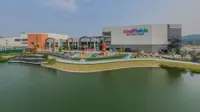
SET across 1,342 acres in Rawang, Selangor, Gamuda Gardens demonstrates how a masterplan grounded in engineering, ecology and social intent can regenerate degraded land into a living, sustainable township.
Its success lies not in the speed of delivery, but in the precision of planning – an approach that begins by listening to the land, respecting its character and designing around its natural topography.
“Every piece of land has a story to tell. Our role is to listen first, understand its contour, water flows and ecological memory before deciding what to build.
“This philosophy has guided every decision in the development of Gamuda Gardens. We designed with the land, not against it,” said Gamuda Land chief operating officer Wong Siew Lee.
Mindful and innovative planning has given the township a distinct personality and a strong sense of identity and belonging, earning Gamuda Gardens the prestigious Malaysia Property Award 2025 in the Housing Master Plan Category.
Working with the land and not against it
A former rubber estate marked by uneven terrain and depleted soil, Gamuda Land made a deliberate choice to work with the land’s contours instead of reshaping them for convenience.
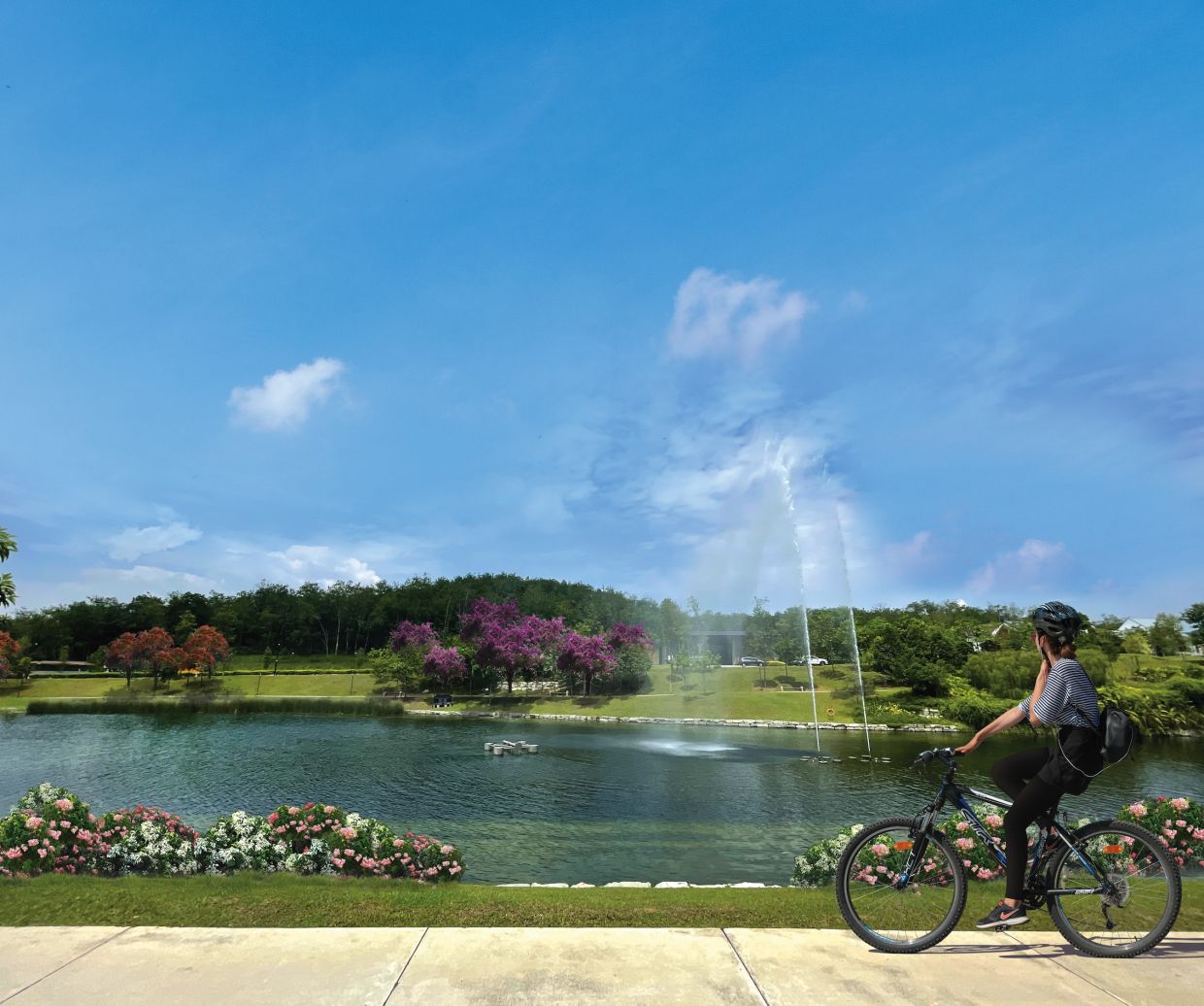
The masterplan’s spine follows a natural depression that collects surface runoff, now transformed into a 50-acre Central Park with five cascading lakes and a connected system of wetlands.
This decision was not aesthetic alone. By preserving the valley as a hydrological corridor, the masterplan integrates natural stormwater management, flood mitigation and groundwater recharge to reduce reliance on hard infrastructure.
The upfront investment to complete the park before any homes were built exemplifies a planning philosophy where liveability and resilience precede commercial gain.
The lakes and green infrastructure were engineered to mimic natural hydrology. Water is filtered through constructed wetlands and bioswales before re-entering the system – a practical demonstration of how landscape and engineering can jointly deliver ecological performance.
Data-guided ecological regeneration
Under the Gamuda Parks Biodiversity Policy, the township’s environmental recovery was both deliberate and data-driven.
Baseline biodiversity studies informed the Advanced Tree Planting (ATP) programme, where over 193,000 trees from 96 native species were propagated and acclimatised in on-site nurseries.
This ensured root maturity and local adaptation before planting. Miyawaki reforestation methods were applied selectively to accelerate canopy growth and restore soil health, creating microhabitats that now support returning fauna species.
Within a decade, biodiversity monitoring data shows measurable improvements in canopy density, bird species diversity and ambient temperature regulation across the township.
What was once a depleted plantation now functions as a living, self-sustaining urban environment that cools, filters and regenerates – proof that ecological design and urban development need not be mutually exclusive.
Framework for sustainable urban systems
Beyond landscape and hydrology, the township’s physical framework was structured around human-scaled mobility and low-carbon infrastructure.
A 68km network of interconnected cycling and pedestrian paths forms a green mobility network, linking homes, schools and commercial areas without the need for vehicles.
The masterplan integrates transit-oriented principles with feeder connectivity to KTM Kuang, electric shuttle routes and future-ready provisions for autonomous vehicles.
Homes are charger-ready for electric vehicles (EV) and built with solar-ready features to reduce retrofit costs and enable the shift toward renewable energy.
Gamuda Gardens is certified as a 4-Diamond township under Malaysia’s Low Carbon Cities Framework (LCCF) by Malaysian Green Technology and Climate Change Corporation (MGTC) – targeting a 30% carbon reduction by 2030 versus business-as-usual.
Progress is audited annually across five measurable domains: urban transport, energy, water, waste and planning.
Gamuda Land remains the only Malaysian developer to conduct continuous LCCF performance tracking at township scale, making sustainability a quantifiable, engineering-led discipline rather than a slogan.
Phasing with purpose
Phasing in Gamuda Gardens was executed with intent. The Central Park was completed first to establish ecological maturity and community identity before the launch of its residential precincts.
Village Homes introduced low-density landed living while GAIA Residences provided vertical options for younger households, both within walkable reach of green and commercial amenities.
The Waterfront Village beside the Central Park was planned as the township’s first social nucleus, integrating F&B, retail and community spaces overlooking the lakes.
This early activation ensured social vibrancy from day one, rather than waiting for population catch-up.
The subsequent Gardens Square expanded the masterplan with daily conveniences, anchored by Lexel International School by Taylor’s Education Group – a model partnership where shared facilities from the township’s clubhouse reduce the school’s capital outlay, translating into more accessible tuition fees for residents.
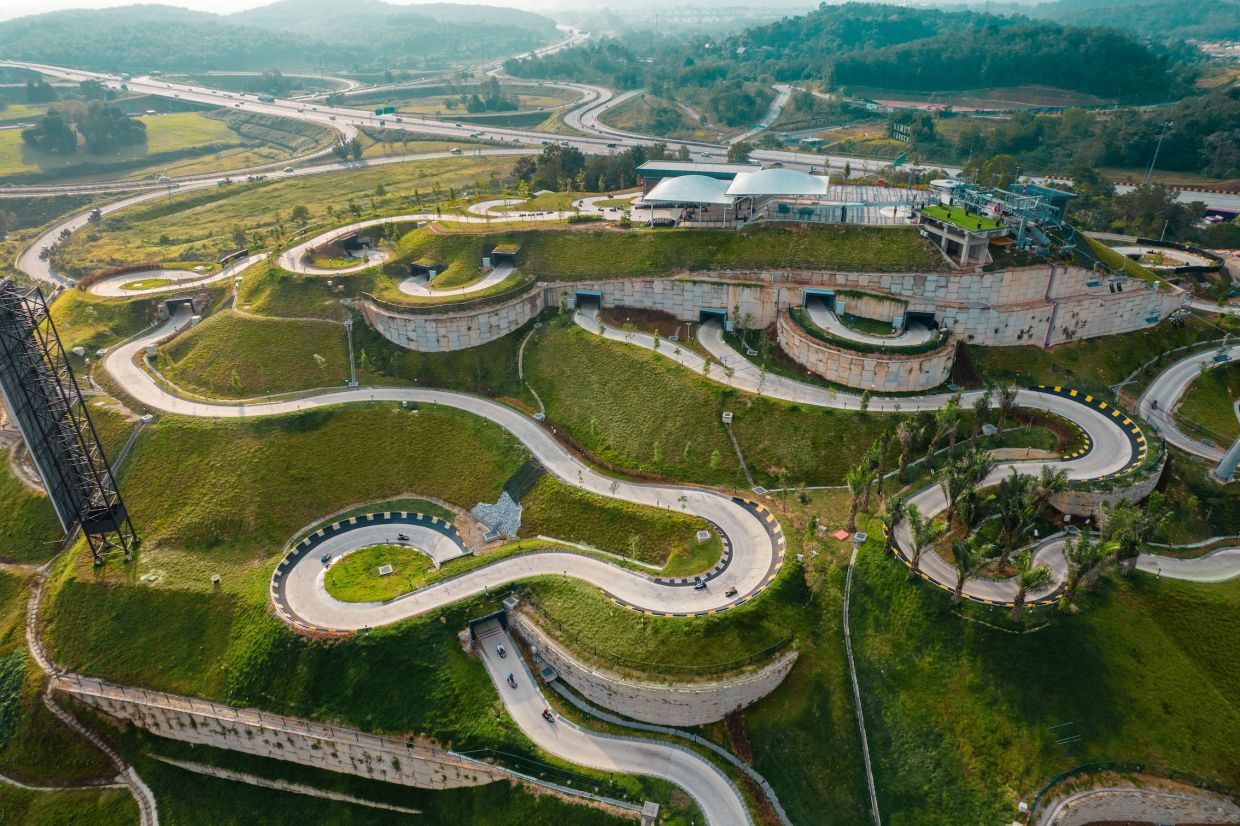
To the north, Gamuda Luge Gardens leverages the site’s natural slopes for Malaysia’s first Skyline Luge attraction, transforming natural topography into a tourism asset while creating new employment opportunities.
The upcoming Atrium commercial hub with its visibility along major corridors, continues this principle of layered activation – each precinct designed to reinforce the township’s social, economic and ecological resilience.
Long-term commitment to stewardship
Gamuda Gardens’ impact extends beyond its borders. The township has catalysed growth in northern Rawang, generating over 3,200 jobs, and uplifting local infrastructure through developer-funded projects including the widening of Jalan Lagong, upgrades to the Rawang Selatan Interchange and flood mitigation along Sungai Serai.
“Town-making is never finished. What defines a well-masterplanned township is not only about how it begins, but how it endures and how the systems we put in place continue to serve people and the environment long after the last home is built,” said Wong.
Redefining nature-led urbanism
Gamuda Gardens exemplifies a new paradigm for Malaysian town-making, one that integrates hydrological design, biodiversity restoration and community-centric urbanism into a coherent masterplan.
It shows how engineering precision and ecological empathy can coexist – how a degraded site can evolve into a thriving ecosystem and how design rooted in place can create long term social and environmental value.
The township stands today as living proof that when we listen to the land, plan with intent and build with respect, we create not just homes but habitats that endure.