




WHILE 2025 brought a fresh wave of geopolitical tensions that unsettled markets and weighed on global growth, Malaysia navigated the year with relative stability and resilience.
This steady domestic backdrop provided an enabling environment for FGV Holdings Bhd (FGV) to clarify its strategic direction and reaffirm its core purpose, particularly after its delisting from Bursa Malaysia and the transfer of ownership back to the Federal Land Development Authority (Felda) on Aug 28 last year.
Emerging from its delisting and realignment under Felda’s ownership, FGV entered 2025 on firmer financial footing, with early results reflecting the group’s strengthened operational discipline and renewed strategic clarity. In FY24, FGV recorded a profit after tax and minority interest (Patami) of RM276mil, a 171% increase from RM102mil a year earlier.
Revenue rose to RM22.2bil from RM19.4bil in FY23, while operating profit before fair value changes in land lease agreements and impairment climbed 89% year on year to RM1.2bil.
In Q1 ending March 31 2025, profit before tax rose to RM83mil from RM50mil in the same period a year earlier. Revenue grew 11% to RM5.04bil, while Patami swung to a profit of RM36mil from a loss of RM13mil previously, driven mainly by stronger performance in the Plantation Division. The division benefited from a 6% improvement in fresh fruit bunch (FFB) yields, a 24% increase in FFB prices and a higher average crude palm oil price of RM4,784 per metric tonne.
The momentum continued into the second quarter ended June 30 2025, with profit before tax rising 48% to RM209mil from RM141mil a year earlier. Revenue increased 5% to RM5.79bil, supported by a higher average crude palm oil (CPO) price of RM4,218 per metric tonne, although this was partly offset by softer contributions from downstream segments, particularly the Oils and Fats Division
Since its delisting from Bursa Malaysia, the Malaysia-based agribusiness group has moved decisively to strengthen its operational foundations and accelerate digitalisation, while embedding sustainability and good governance across its value chain.
One of the earliest moves came in September, when its technology subsidiary, FGV Prodata Systems, rolled out a fully certified digital weighbridge system. The system measures every kilogramme of produce precisely and transparently, addressing longstanding issues around disputes, errors and potential manipulation under the previous manual process.
FGV Prodata also developed the group’s proprietary traceability platform, FGV TOP (Traceability of Product system), which enables products to be tracked at every stage, from plantation to export manifest. This capability is particularly critical in light of the European Union Deforestation Regulation (EUDR), which was being implemented over 2025 and this year, and requires companies exporting into the European Union to provide detailed geolocation data, full traceability and due diligence assurances, with penalties for non-compliance.
In October, FGV hosted the sixth Asean-EU Policy Dialogue on Human Rights delegation at its Krau Complex, where it showcased its ongoing efforts to strengthen responsible business practices through robust human rights policies and sustainable palm oil production standards.
To further enhance traceability across the industry, FGV also collaborated with the Malaysian Palm Oil Board (MPOB) to improve the effectiveness and usability of national platforms such as GeoPALM and the Sawit Intelligent Management System (SIMS) through the integration of advanced technologies.
Renewable energy as a growth lever
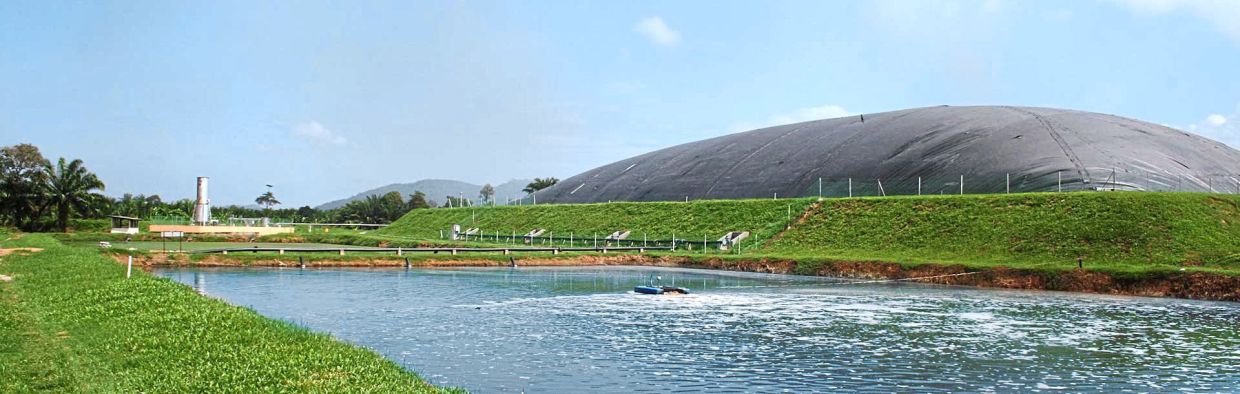
FGV has also been expanding its renewable energy footprint as part of its longer-term transition strategy. The group converts organic waste from its operations into biogas and biomass-based energy, which is fed back into the national grid via Tenaga Nasional Berhad.
It currently operates 24 biogas plants that process residues, such as palm oil mill effluent, empty fruit bunches, mesocarp fibre and kernel shells.
The remaining biomass is used to generate steam and heat for milling operations, improving overall energy efficiency.
Collectively, these investments now generate the equivalent of around 150 megawatts, with roughly two-thirds coming from electricity produced via biogas and biomass and the remainder from biofuel output using palm kernel shells.
This places FGV firmly on track towards its longer-term target of 200 megawatts in support of its Net Zero 2050 ambition.
Investing in communities
Alongside operational transformation, FGV continues to place significant emphasis on community development, particularly through education-focused initiatives aimed at easing financial pressures on lower-income families.
Throughout 2025, the group rolled out several community programmes, including the “Welcome to School 2025” initiative in Gua Musang, Kelantan on Feb 5, jointly organised with Yayasan Felda, and the “SAJI Seikhlas Hati, Back to School 2025” programme in Puchong, Selangor on Feb 12. These efforts provided school supplies, uniforms, stationery and bags to children from underprivileged families at the start of the academic year.
The group’s broader FGV Seikhlas Hati platform supports inclusive economic and social development, with charitable investments framed as long-term contributions to community resilience rather than one-off donations.
Among the year’s highlights was a RM6.87mil contribution in business zakat payments and corporate social responsibility (CSR) initiatives to the Pahang Islamic Religious Council and Malay Customs and the Jerantut community on Sept 24.
Another is the collaboration with the Federal Territory Islamic Religious Council Zakat Collection Centre for zakat distribution to asnaf beneficiaries during the FGV Ziarah Kasih ceremony in Kuala Lumpur on Aug 14.
FGV continued to strengthen its Gender Equality and Women Empowerment (GEWE) framework by embedding it more deeply into training, planning and governance, fostering more inclusive work environments across plantations and corporate offices. As part of this broader commitment to employee wellbeing and inclusion, FGV also organised the FGV Movember Fun Run 2025 for the first time, to raise awareness of prostate cancer, men’s mental health and the importance of psychosocial support.
Strengthening settler and smallholder relations
Since its delisting, FGV’s shareholder base has shifted from public investors to Felda, state governments and Koperasi Permodalan Felda Malaysia Bhd.
However, its primary stakeholders remain the Felda settlers and independent smallholders who supply more than 70% of the FFB that are processed at FGV’s mills.
The group has continued to recognise their central role through engagement programmes and community events such as the FGV 2025 Festival, held in conjunction with Felda Settlers’ Day during the 3-Dimensional Mega Carnival at the Malaysia International Trade and Exhibition Centre from July 30 to Aug 3 last year.
Governance and compliance
Following the United States Customs and Border Protection (CBP) import ban imposed in 2020, FGV had undertaken extensive remediation to address the 11 International Labour Organisation indicators of forced labour.
On Jan 15, 2026, the CBP modified the Withhold Release Order (WRO), clearing FGV, its subsidiaries and joint ventures to resume exporting palm oil and palm‑oil products to the United States, after confirming the group’s compliance with all applicable US laws.
The decision reflects FGV’s sustained efforts, including strengthened recruitment procedures, reimbursement of recruitment fees to more than 23,000 workers, improved housing and water facilities, wider internet access in remote estates, and digital systems to monitor labour‑standard adherence.
On the regulatory front, FGV successfully produced its first EUDR-compliant crude palm kernel oil in 2024 for use in food and personal care products in the European market. It has also concluded negotiations with the Terengganu state government over alleged land encroachment involving 10 plantations covering about 15,000 hectares, with talks concluding positively on Jan 5.
The group reinforced its governance credentials by co-organising the Chief Integrity and Governance Officer Symposium 2025 with the Malaysian Anti-Corruption Commission, Felda and MSM Holdings Berhad, supporting the National Anti-Corruption Strategy 2024–2028.
A more agile future
FGV’s journey through 2025 reflects a transformation gaining definition and momentum. As a Felda‑owned private enterprise, the group remains focused on long‑term value creation through sustainable practices, responsible governance and innovation‑led growth.
With the modification of the US WRO marking a strong start to the new year, FGV enters its next chapter with renewed confidence – working closely with its shareholders to drive commercial resilience, uphold environmental and social commitments and continue delivering value across its ecosystem.


