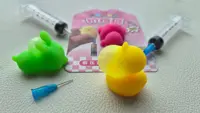
SQUISHY toys have swept across store shelves and online marketplaces, becoming an ubiquitous favourite for children and adults seeking a quick focus boost or anxiety relief.
Affordable and readily accessible, these tactile trinkets seem like harmless novelties. However, their rapid proliferation, often from untraceable or unregulated manufacturers, is raising urgent public health and safety concerns.
Typically crafted from polyurethane foam, thermoplastic rubber, silicone elastomers or polyvinyl alcohol, they are filled with gel mixtures containing water beads, corn syrup, glycerin/glycerol or mineral oil.
They appear benign, but physical hazards abound. A simple tear can lead to chemical leakage, posing an acute hazard if ingested by young children, or severe ocular irritation and damage if splashed into the eyes.
Unregulated manufacturing has led to widespread adulteration, contamination and subsequent global product recalls. Investigations have uncovered alarming contaminants, including asbestos fibres, elevated levels of carcinogenic benzene and hazardous concentrations of phthalates.
Prolonged skin contact during repeated squeezing allows these toxic substances to penetrate the skin barrier, a risk magnified in young children. Phthalates, in particular, are well-documented endocrine disruptors linked to neurodevelopmental impairments, motor skill deficits and behavioural issues in growing children.
The threat is further compounded by counterfeit markets. Warnings issued by consumer safety authorities, including the US Consumer Product Safety Commission, highlight that fake squishies frequently off-gas harmful volatile organic compounds (VOCs) like formaldehyde, toluene and methylene chloride. Inhaling these vapours can trigger respiratory distress, severe eye irritation, dizziness and chronic headaches.
Protecting families from these silent hazards requires vigilance. Parents and consumers should carefully vet the origin of toys, opting strictly for certified products such as those displaying the Malaysian Certification (MC) mark that adhere to rigorous safety standards.
Routine checks for tears or leaks, discouraging mouth contact and enforcing thorough handwashing after play are essential defences against toxic exposure. Affordable comfort should never come at the expense of our children’s long-term health.
ASSOC PROF DR GOH CHOON FU
School of Pharmaceutical Sciences
Universiti Sains Malaysia
Already a subscriber? Log in
Get 20% OFF The Star Digital Access
Cancel anytime. Ad-free. Unlimited access with perks.