THE Northeast Monsoon is just around the corner. Before we experience some of the heaviest precipitation of the year, let’s take a look at where we stand.
The Northeast Monsoon is well recognised for its negative impacts, particularly in the east coast of Peninsular Malaysia, western Sarawak and eastern Sabah from November to March.
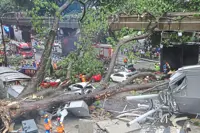
Past floods and thunderstorms have caused severe physical destruction to infrastructure and transportation systems alongside massive tree failures, raising unresolved fears.
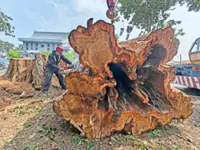
Crucially, the Fire and Rescue Department (Bomba) recently revealed that national tree failures have consistently remained high, fluctuating between 4,400 and 5,200 cases annually.
According to the department’s director-general Datuk Seri Nor Hisham Mohammad, in the first half of 2026 alone, a worrying 1,912 cases have already been recorded nationwide, resulting in four deaths and 20 injuries.
From the 26,001 cases recorded from 2021 until June 2026, fallen tree incidents have resulted in 50 deaths and 243 injuries while 360 victims were successfully rescued unharmed.
Nor Hisham has called for local authorities and premises owners to conduct regular tree safety audits, particularly in high-risk areas such as main roads, schools, hospitals, public parks and crowded places.
Speaking at the Dewan Rakyat in 2024, Deputy Minister of Housing and Local Government Datuk Hajah Aiman Athirah Sabu urged all local councils to employ at least one arborist to manage trees in their areas by 2030.
To date, there are 171 certified arborists in Malaysia. However, not all them are actively practising arboriculture nor are they tasked with regular tree risk assessments or monitoring work.
Many are researchers or lecturers serving within academia. While others work within local government authorities, they are primarily bogged down by administrative tasks.
Back in 2018, the government had announced a target to expand the number of certified arborists in Malaysia to 450 by 2020. But it has taken eight long years for the nation to grow from 109 certified arborists in 2018 to 171 in 2026.
But while we cannot win in quantity, we can choose to work smarter by embracing modern, scalable solutions.
The Malaysian Society of Arborists (PArM) recently organised the International Tropical Arboriculture Conference (Intac) 2026 in Seberang Perai, Penang.
This crucial event brought together more than 300 participants, including arborists, urban planners, researchers, policymakers and landscape architects.
The conference’s knowledge-sharing sessions provided invaluable insights and latest information in modern arboriculture, covering arboriculture policy, urban tree resilience, climate adaptation, technology and innovations, and ecological-based solutions.
To advance tropical arboriculture towards sustainable cities, multidisciplinary collaboration and science-based approaches are undoubtedly non-negotiable.
Furthermore, integrating artificial intelligence (AI) and remote-sensing technology has emerged as a smart solution with potential to overcome the workforce deficit currently plaguing Malaysia’s arboricultural industry.
There is clearly massive room for improvement in Malaysia’s natural disaster and urban tree management frameworks. True structural reform surely does not happen overnight, but this monsoon season is the ultimate reminder to act fast.
We must begin implementing what we have learned from the experts immediately. At the end of the day, it is a matter of saving lives.
TAN KIM HOCK
Certified arborist
International Society of Arboriculture (ISA)
PhD Candidate (Plant Pathology)
Faculty of Science
Universiti Putra Malaysia
Already a subscriber? Log in
Get 20% OFF The Star Digital Access
Cancel anytime. Ad-free. Unlimited access with perks.