IN the span of 30 days, three warnings arrived in three different forms.
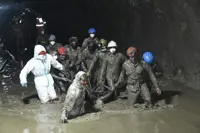
On June 19, a freak thunderstorm tore through Bercham in Ipoh ("Bercham freak storm causes over RM1.2mil in losses"). Initial reports said more than 200 homes were damaged across seven locations, with roofs ripped off, trees uprooted, and electricity poles toppled. Tenaga Nasional Berhad temporarily cut power. Later reports put affected homes at about 460 and estimated residents' losses above RM1.2mil.
Six days later, on June 25, Bangkok's heat index reached 51.9℃ ("Bangkok heat index reaches 51.9°C, heightening heatstroke risk"). Thai authorities classified it as "danger" level and warned of heatstroke.
Then, on July 18, a downpour flooded the Klang Valley (Video: "Flash floods hit several parts of the Klang Valley following heavy rain"). The Star reported water about 2m deep at Medan Selera 223 in Petaling Jaya, vehicles nearly submerged, and traffic disrupted across Petaling Jaya and Kuala Lumpur.
Storm, heat, and flood. They look like separate news items. For institutional investors, they are one balance-sheet story.
Three events, one portfolio risk
Each event shows a different path from physical hazard to financial loss. The Bercham storm damaged property, displaced tenants, interrupted electricity, and triggered repair and insurance costs. Bangkok's heat threatened worker health and safe working hours while raising cooling and power demand. The Klang Valley floods disrupted roads and access to businesses, exposing vehicles, property, and supply chains.
Physical climate risk does not arrive as one standard metric. It travels through assets, workers, utilities, transport networks, suppliers, and insurers. A company may escape direct damage and still lose production because employees cannot reach a site, power is unavailable, or a critical supplier has stopped operating.
The three events matter together because they compress that reality into a single month. The precise date, location, and form of the next event may be uncertain. The exposure is not.
Yet institutional stewardship remains heavily weighted towards transition risk. Investors challenge emissions targets, Scope 3 disclosures (a company's mandatory or voluntary reporting of indirect greenhouse gas emissions across its entire value chain), decarbonisation timelines, and capital expenditure inconsistent with net zero emissions. The frameworks and escalation tools are increasingly established.
Physical risk barely registers.
Many stewardship policies still do not ask which operating sites face flood, heat, or storm exposure; whether those sites have been stress-tested; what failure would mean for revenue, workers, and customers; or whether adaptation is funded.
Investors have built accountability around the climate risks companies cause. They have not built equivalent accountability around the climate risks companies face.
That gap is now a financial risk in its own right. The Department of Statistics Malaysia estimated flood losses of RM636.9mil in 2025. Public assets and infrastructure accounted for RM380.2mil, up from RM303.4mil the year before. A World Bank study estimated that a hypothetical one-in-20-year flood could cost Malaysia up to 4.1% of GDP in 2030 and raise unemployment by as much as 2.2 percentage points.
What urgent adaptation looks like
Investors cannot prevent next month's storm through an annual general meeting vote. But they can prevent foreseeable exposure from remaining unpriced, unmanaged and unfunded.
First, engagement must move to asset level. Investors should require companies to identify material sites, supply routes, and workforce groups exposed to flood, heat, and severe storms. Scenario analysis should test not only direct damage but cascading failures: a flooded access road, a power outage during extreme heat, or a supplier interruption that stops production elsewhere.
Second, disclosure must lead to a financed adaptation plan. Companies should explain what resilience measures are needed, what they will cost, when they will be delivered, and who on the board is accountable. Depending on the asset, that may mean flood-resilient design, drainage upgrades, roof reinforcement, backup power, heat-safe work practices, cooling systems, alternative logistics routes, or revised insurance cover.
Third, investors must create consequences for inaction. Where a board acknowledges material exposure but provides no credible response, stewardship escalation should include votes against relevant directors, challenges to remuneration, shareholder resolutions, and, where risk cannot be reduced to an acceptable level, changes to capital allocation.
For private markets, the discipline must begin before investment. A toll road, industrial park, hospital, warehouse, or housing development should be stress-tested during due diligence. Adaptation capital expenditure, insurance availability, and business-continuity requirements belong in the investment case and contractual protections, not in a post-disaster review.
Malaysia's National Sustainability Reporting Framework provides an opening by adopting IFRS S1 and IFRS S2 as the baseline for phased reporting. IFRS S2 explicitly covers physical and transition risks. But disclosure is only the starting point. A flood map in an annual report is not resilience, and listing a heat risk without changing work practices is not adaptation.
Act before the next warning
Public authorities remain responsible for drainage, flood control, emergency response, and resilient infrastructure. Companies and investors remain responsible for the decisions within their control: where assets are built, how operations are protected, whether workers are kept safe, and whether adaptation is funded before a loss occurs.
Not every climate impact can now be avoided. That makes urgent adaptation more important, not less. Institutional investors should ask their managers to show where physical risk sits in engagement, due diligence, voting, and portfolio construction. Managers should be able to identify exposed assets, funded responses, and escalation steps when companies fail to act.
Bercham, Bangkok, and the Klang Valley were not three isolated surprises. Together, they were a regional stress test conducted in real time. The next event will not wait for stewardship frameworks to catch up. Investors should stop treating physical risk as tomorrow's disclosure problem and start governing it as today's balance-sheet risk.
ISSAC LIEW WENG HOOI
Kuala Lumpur
The writer is a stewardship professional at a Malaysian government-linked investment company where his work focuses on advancing corporate ESG accountability and promoting responsible investment practices across diverse markets.
Already a subscriber? Log in
Get 20% OFF The Star Digital Access
Cancel anytime. Ad-free. Unlimited access with perks.