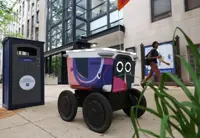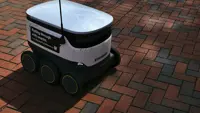
DURING a visit to China in July, I ordered something while staying in a hotel. I expected to collect it from the lobby. Instead, a small robot entered the lift, travelled to my floor, and stopped directly outside my room. It even called me through the guest phone in my room! It was efficient, polite in its own mechanical way and wonderfully convenient.
Yet after I closed the door, a thought popped up: if almost everything can come to us, what reasons will we have to go out?
A friend in China told me that many people around her increasingly order their everyday purchases online. When they go to a shopping centre, it may be to eat or spend time with friends rather than to buy necessities. Her comment was a personal observation, not a national statistic, but it raised an important urban question.
China’s National Bureau of Statistics reported that online sales of physical goods accounted for 26.1% of the country’s total retail sales in 2025. That is a very large share, but it does not mean that most shopping has disappeared from physical places.
What it does suggest is that the relationship between digital convenience and urban life is becoming impossible for planners to ignore.
When we order items online, movement does not simply disappear. Some of the items change hands. Instead of every customer travelling to a shop, couriers, vans, motorcycles, and, increasingly, robots move goods towards customers. Cities must manage more parcel deliveries, loading activity, collection points, and competition for limited kerb and pavement space.
The change also reaches land use. Traditional shops may become showrooms, experience centres, or collection points. Shopping centres may rely more heavily on food, entertainment, and events. At the same time, warehouses, dark stores (physical retail spaces or mini warehouses closed to the public and used exclusively to fulfil online orders), parcel lockers, and small distribution hubs may need to move closer to residential neighbourhoods to meet expectations of rapid delivery.
Built infrastructure is changing. Hotel lifts communicate with delivery robots. Apartment lobbies need secure parcel storage. Streets must accommodate delivery riders without pushing pedestrians aside. Technology that appears effortless on a phone screen is supported by a large and very physical urban system.
This does not mean that technology is making everyone antisocial, nor should delivery services be treated as the enemy. They help older people, people with mobility difficulties, busy families, and anyone needing urgent supplies. Convenience can remove unnecessary journeys and give people back valuable time.
The more important question is what we do with that time. If our neighbourhoods offer welcoming parks, libraries, sports areas, cafes, and community spaces, convenience may allow people to spend less time running errands and more time with others. Online communities can offer real friendship and support, but they cannot provide every benefit of sharing a physical neighbourhood. If the only offline alternatives are home, work, and expensive commercial venues, convenience may make withdrawal from public life much easier.
This is where land-use planners, transport planners, and urban designers must work together. We need space for efficient logistics, but also lively local streets. We need safe areas for deliveries, but also uninterrupted pavements. We need technology- friendly buildings, but also neighbourhoods that reward walking, meeting, and exploring.
A truly smart city should not be measured only by how quickly a product reaches our door. It should also be measured by whether technology improves human life beyond that door. The best city of the future will not force us to leave home for every small necessity. It will give us much better reasons to leave.
NUR AULIA ROSNI
YONG ADILAH SHAMSUL HARUMAIN
Senior lecturer
Faculty of Built Environment
Universiti Malaya
Already a subscriber? Log in
Get 20% OFF The Star Digital Access
Cancel anytime. Ad-free. Unlimited access with perks.