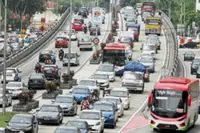
THE Cabinet’s decision in principle to amend the Road Transport Act 1987 to empower courts to order offenders convicted of serious traffic offences to compensate victims or their families is a welcome and progressive step. It reinforces an important principle: those whose reckless or dangerous actions cause death or serious injury should bear greater personal responsibility for the consequences.
Some legal experts have expressed concerns about how the proposed mechanism would operate alongside the existing compulsory motor insurance system, and whether offenders who are financially unable to pay could realistically fulfil such court orders.
The new compensation mechanism should complement, not replace, the existing motor insurance framework. Insurance should continue to provide timely financial assistance to victims, while court-ordered compensation can serve as an additional measure of personal accountability for those convicted of serious traffic offences. The two systems perform different but complementary functions.
The courts should also be given flexibility in determining how compensation is paid. Where an offender genuinely lacks the financial means to make an immediate payment, the court could order instalment payments over a reasonable period. Compensation should remain a legally enforceable debt until fully satisfied, ensuring that offenders do not escape responsibility simply because of temporary financial hardship.
Nevertheless, compensation is essentially a reactive measure that comes into effect only after lives have been lost or people have been seriously injured. Greater emphasis should therefore be placed on preventing accidents before they occur.
Courts should be empowered to impose mandatory rehabilitative measures on convicted offenders, including certified defensive driving courses, road safety education programmes, and community service involving road safety awareness. These measures address the underlying causes of dangerous driving and are more likely to reduce repeat offences than financial penalties alone.
For offenders whose reckless behaviour results in fatalities or permanent disabilities, rehabilitation should go further. They should be required to participate in supervised programmes where they engage with road crash survivors, rehabilitation centres, trauma units or families affected by road tragedies. Experiencing first-hand the devastating human consequences of irresponsible driving can leave a lasting impression that no fine or prison sentence alone can achieve.
The government should also consider establishing a road accident victims compensation fund to provide immediate financial assistance where offenders are uninsured, abscond, or are genuinely unable to make prompt payments. Any amount advanced by the fund should subsequently be recovered from the offender through appropriate legal mechanisms, ensuring that victims receive timely support while preserving the principle that responsibility ultimately rests with those who caused the harm.
Malaysia recorded more than 273,000 road accidents in just the first four months of this year, a stark reminder that stronger action is urgently needed. Financial compensation alone will not reverse this trend. However, when combined with meaningful rehabilitation, sustained public education and effective enforcement, it can become part of a more comprehensive strategy to improve road safety.
The proposed amendment therefore represents more than a new legal penalty. If implemented thoughtfully, it can encourage greater responsibility among drivers, provide swifter relief for victims, and, most importantly, contribute to preventing future tragedies on Malaysian roads.
WONG SOO KAN
Petaling Jaya
Already a subscriber? Log in
Get 20% OFF The Star Digital Access
Cancel anytime. Ad-free. Unlimited access with perks.