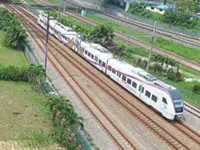
THE recent suspension of Express Rail Link (ERL) services has again highlighted how vulnerable public transport systems can be when technical failures occur. On June 6, thousands of passengers were left scrambling for alternative transport when both the KLIA Ekspres and KLIA Transit services were temporarily halted.
Over the past year, several disruptions involving the LRT, MRT, Monorail and airport rail services have occurred due to track switch failures, signalling issues, technical disruptions and even cable theft.
While it is encouraging that our rail operators have reported a significant reduction in overall disruptions through predictive maintenance programmes, commuters are less concerned with statistics and more with service reliability.
No transport system in the world is completely immune to technical faults. The question is how often they occur, how quickly they are resolved and whether sufficient preventive measures are in place to minimise disruptions. This is where Malaysia can learn valuable lessons from Japan.
During a visit to Tokyo, I had the opportunity to witness firsthand the remarkable efficiency of Japan’s railway network. Despite serving millions of passengers daily, trains arrive with astonishing precision. Delays measured in seconds are often announced with apologies, and operational disruptions are treated as serious incidents requiring immediate investigation and corrective action.
What makes Japan’s rail system exceptional is the combination of technology, maintenance culture, operational discipline and passenger responsibility. Japanese railway operators invest heavily in preventive and predictive maintenance.
Components are inspected long before failure occurs. Staff undergo rigorous training and follow detailed standard operating procedures. Advanced monitoring systems continuously assess track conditions, signalling equipment, train performance and operational risks.
Equally important is the culture of accountability. When disruptions occur, operators communicate clearly and transparently with passengers. Root-cause investigations are conducted thoroughly, and lessons learned are incorporated into future operations.
Passenger behaviour also plays a crucial role. In Tokyo, commuters queue patiently, allow passengers to exit before boarding, avoid obstructing doors and generally follow station rules.
This discipline contributes significantly to operational efficiency. A world-class rail system requires not only excellent infrastructure but also responsible users.
Malaysia’s rail operators have already taken positive steps through predictive maintenance
programmes and signalling upgrades. These initiatives should be expanded.
Investments must focus on modernising ageing infrastructure, strengthening cybersecurity,
enhancing signalling systems and deploying more advanced monitoring technologies.
At the same time, the authorities concerned should establish stronger performance benchmarks centred on punctuality, service reliability and passenger satisfaction rather than simply counting the number of disruptions.
Greater transparency in reporting root causes and corrective actions would also help build public confidence.
The issue of vandalism and cable theft, which has affected rail operations in recent months, must be addressed through stronger security measures, surveillance systems and stricter enforcement.
Public infrastructure should be treated as a national asset that deserves protection.
Significant progress has been made in expanding Malaysia’s rail network over the past two decades. However, expansion alone is not enough. The future of public transport depends on reliability, consistency and public trust.
Japan’s railway success was not built overnight. It was built through decades of commitment to precision, continuous improvement, technological innovation and operational discipline. If Malaysia aspires to become a nation where public transport is the preferred mode of travel, we
must adopt the same mindset.
Railway excellence is not merely about moving trains; it is also about building a culture where delays are unacceptable, maintenance is proactive, accountability is expected and every passenger can travel with confidence.
R. MURALI RAJARATENAM
Kuala Lumpur
Already a subscriber? Log in
Get 20% OFF The Star Digital Access
Cancel anytime. Ad-free. Unlimited access with perks.