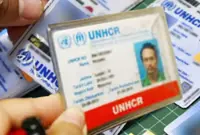
TENAGANITA acknowledges the government’s decision to temporarily suspend UNHCR (the UN Refugee Agency) refugee registrations while it develops a nationally managed refugee registration system under the Refugee Regis-tration Document (DPP) programme. Malaysia has every sovereign right to establish its own refugee management framework. However, this transition must be transparent, predictable, and firmly grounded in the protection of human rights.
A transition between registration systems must never create a protection vacuum.
For more than three decades, Tenaganita has worked alongside refugees, asylum seekers, and survivors of trafficking. Our experience consistently shows that documentation is often the first step towards protection. While UNHCR registration has never granted legal refugee status in Malaysia, it has enabled refugees to access healthcare, education, humanitarian assistance, and referral pathways, while providing a degree of recognition during interactions with enforcement authorities.
Without a functioning, accessible, and clearly communicated alternative registration mechanism, newly arrived asylum seekers and those awaiting registration risk remaining undocumented for prolonged periods. This significantly increases their vulnerability to arrest, detention, deportation, trafficking, labour exploitation, and gender-based violence.
If Malaysia is introducing a national refugee registration system, the government must urgently provide public clarification on the following: When and how the new registration system will begin; who will be eligible to register; what legal protections and services will accompany registration; what interim arrangements will exist for newly arrived asylum seekers; what safeguards will protect asylum seekers from arrest, detention, and deportation while awaiting registration or decisions.
Equally important, the government should engage meaningfully with UNHCR, civil society organisations, and refugee communities in designing and implementing the new system. A credible national framework requires transparency, accountability, strong data protection, and independent oversight.
At this critical juncture, Tenaganita further calls on the government to ensure that no asylum seeker or refugee is deported solely because they are unable to register during this transition period. Until an effective, accessible, and functioning national registration mechanism is operational, there must be clear interim protection measures to prevent people fleeing persecution from falling through the cracks.
National security and humanitarian protection are not competing priorities. On the contrary, a transparent, well-managed and rights-based refugee management framework strengthens governance, improves public confidence, and enables Malaysia to effectively manage displacement while upholding human dignity.
This transition presents an important opportunity for Malaysia to develop a comprehensive national refugee policy that balances legitimate national interests with humanitarian responsibilities and reflects the country’s long standing leadership in responding to regional displacement.
No one seeking protection should become undocumented simply because Malaysia is transitioning from one registration system to another.
GLORENE A. DAS
Executive director
Tenaganita
Already a subscriber? Log in
Get 20% OFF The Star Digital Access
Cancel anytime. Ad-free. Unlimited access with perks.